The vivo Y27 5G Is the Pragmatic Choice for High Speed Connectivity without the Flagship Price
Overview
vivo Y27 5G is a budget-tier 5G smartphone featuring a Mediatek Dimensity 6020 for stable network performance and a 5000 mAh battery for extended endurance, aimed at value-conscious users needing future-proof connectivity. Released in mid-2023, it competes with entry-level offerings from brands like Samsung and Xiaomi by focusing on core functionality over superfluous luxury.
Economically speaking, the transition to 5G infrastructure often demands a premium that many consumers find difficult to justify. The handset attempts to bridge this gap by utilizing the Mediatek Dimensity 6020 chipset. This 7nm processor isn't designed to break benchmarking records; rather, it provides the essential hardware path for SA/NSA 5G bands. By opting for a 7nm process, the silicon maintains reasonable thermal efficiency, which is critical for a device that lacks complex cooling systems found in more expensive models.
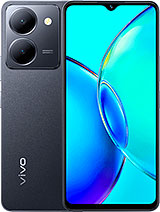
We observe that the build relies heavily on a plastic frame and back. While this might lack the cold, premium feel of aluminum or glass, it offers a pragmatic advantage in terms of weight and shatter resistance. At 190 grams, the device carries enough heft to feel substantial without becoming a burden during long commutes. The Satin Purple and Mystic Black finishes attempt to mask the material choice with sophisticated textures, though the underlying polycarbonate remains evident upon closer inspection.
The choice of the Mali-G57 MC2 GPU confirms that this is not a gaming powerhouse. It is a high-efficiency component designed to render standard UI animations and casual titles without draining the battery. For users who primarily navigate social media, email, and streaming services, the dual-core GPU provides enough overhead to prevent stuttering in everyday tasks. However, trying to push modern titles like Genshin Impact reveals the hardware's ceiling, where frame drops become frequent during intense action sequences.
Storage and memory configurations play a vital role in the device's longevity. With options ranging from 4GB to 8GB of RAM, we strongly recommend the 8GB variant to ensure the Android 13 environment has enough breathing room for background processes. A major point of contention in our analysis is the absence of a microSD card slot. In the budget sector, users typically rely on expandable storage to manage large media libraries. Forcing users to rely solely on the 128GB or 256GB internal flash storage is a strategic move that favors cloud service subscriptions or higher-tier model purchases, which may frustrate value-seeking buyers.
Running on Funtouch 13, based on Android 13, the interface offers a high degree of customization. We noticed that the software includes several pre-installed applications, often referred to as bloatware, which is a common trade-off in the budget segment to keep the initial purchase price low. While most of these can be uninstalled or disabled, their presence initially clutters the experience. The OS itself is responsive, and the updated privacy features of Android 13 are well-integrated, providing users with more granular control over app permissions.
One specific annoyance involves the notification management system. Out of the box, the handset can be aggressive with background app closures to save power. Users may need to dive into settings to ensure that essential apps like WhatsApp or Slack aren't put to sleep prematurely. Once configured, the daily experience is consistent, though it lacks the high-refresh-rate smoothness found on competitors that offer 90Hz or 120Hz panels. The standard 60Hz refresh rate on this IPS LCD feels dated as we move further into 2023.
The 5000 mAh battery is undoubtedly the highlight for those who prioritize uptime. In a typical work-day scenario involving mixed 5G and Wi-Fi usage, the handset easily clears the 24-hour mark with plenty of capacity to spare. The efficiency of the Cortex-A55 cores pays dividends here, as background tasks consume very little power. For a student or a professional constantly on the move, this endurance provides a layer of security that many flagship phones struggle to match.
However, the economic efficiency stops when it's time to recharge. The 15W wired charging speed is a significant bottleneck in 2023. While competitors are increasingly offering 33W or even 67W charging in this price bracket, this model requires nearly two hours for a full charge from zero. This necessitates an overnight charging habit, as a quick 15-minute top-up before leaving the house will only yield a negligible increase in battery percentage. It's a clear cost-cutting measure that impacts the user's daily rhythm.
Audio performance is functional but uninspiring. The single bottom-firing loudspeaker provides adequate volume for calls and podcasts, but it lacks the depth and stereo separation required for an immersive movie-watching experience. Thankfully, the inclusion of a 3.5mm headphone jack is a win for budget-conscious users who prefer reliable wired audio over the added expense of Bluetooth earbuds. This physical port remains a staple of the value hunt.
Connectivity is where the device justifies its name. Support for a wide array of 5G bands ensures that users will have access to high-speed data across various carriers. In our assessment, the signal stability is commendable, likely due to the mature modem integrated into the Dimensity 6020. NFC support is region-dependent, so buyers must verify this feature if they intend to use the phone for contactless payments, which is becoming a standard requirement even in budget tiers.
The camera system is a study in simplicity. The 50 MP f/1.8 main sensor serves as the primary workhorse. In well-lit environments, the hardware potential allows for decent detail capture and accurate color reproduction. The PDAF (Phase Detection Auto Focus) works quickly enough for stationary subjects, making it a reliable tool for quick snapshots or document scanning. However, without OIS (Optical Image Stabilization), low-light performance suffers significantly. The sensor struggles to gather enough light without introducing grain or motion blur if the user's hand isn't perfectly still.
The auxiliary lens is essentially a filler sensor, used to assist with software-based depth effects rather than providing a secondary focal length. We would have preferred a dedicated ultra-wide lens, which offers far more utility for landscapes or group photos. The 8MP selfie camera is adequate for video calls, but the fixed-focus nature and limited dynamic range mean that backlit selfies will often result in blown-out backgrounds. Video recording is capped at 1080p at 30fps, which is the bare minimum for 2023 and highlights the device's focus on utility over creativity.
From a durability perspective, the plastic construction is a double-edged sword. It won't shatter like the back of an iPhone or Galaxy S-series, but it is prone to micro-scratches from dust trapped inside a case. The side-mounted fingerprint sensor is snappy and more reliable than the cheap under-display optical sensors often found in this price range. It provides a natural ergonomic experience, as the thumb rests exactly where the sensor is located.
Long-term software support remains the biggest question mark. While vivo has improved its update cadence, budget devices rarely see the three or four years of major OS upgrades promised for flagships. Users should expect a couple of years of security patches, making this a phone designed for a 24-to-36-month lifecycle. For the price, that is a fair economic trade-off.
The vivo Y27 5G is a calculated piece of hardware that ignores the spec-war of high refresh rates and fast charging to provide a stable, long-lasting 5G experience. It is a tool for the pragmatic buyer who views a smartphone as a gateway to the internet rather than a status symbol or a mobile gaming console.
The Price of Entry into 5G
Economically speaking, the transition to 5G infrastructure often demands a premium that many consumers find difficult to justify. The handset attempts to bridge this gap by utilizing the Mediatek Dimensity 6020 chipset. This 7nm processor isn't designed to break benchmarking records; rather, it provides the essential hardware path for SA/NSA 5G bands. By opting for a 7nm process, the silicon maintains reasonable thermal efficiency, which is critical for a device that lacks complex cooling systems found in more expensive models.
We observe that the build relies heavily on a plastic frame and back. While this might lack the cold, premium feel of aluminum or glass, it offers a pragmatic advantage in terms of weight and shatter resistance. At 190 grams, the device carries enough heft to feel substantial without becoming a burden during long commutes. The Satin Purple and Mystic Black finishes attempt to mask the material choice with sophisticated textures, though the underlying polycarbonate remains evident upon closer inspection.
Silicon Under the Hood and Daily Utility
The choice of the Mali-G57 MC2 GPU confirms that this is not a gaming powerhouse. It is a high-efficiency component designed to render standard UI animations and casual titles without draining the battery. For users who primarily navigate social media, email, and streaming services, the dual-core GPU provides enough overhead to prevent stuttering in everyday tasks. However, trying to push modern titles like Genshin Impact reveals the hardware's ceiling, where frame drops become frequent during intense action sequences.
Storage and memory configurations play a vital role in the device's longevity. With options ranging from 4GB to 8GB of RAM, we strongly recommend the 8GB variant to ensure the Android 13 environment has enough breathing room for background processes. A major point of contention in our analysis is the absence of a microSD card slot. In the budget sector, users typically rely on expandable storage to manage large media libraries. Forcing users to rely solely on the 128GB or 256GB internal flash storage is a strategic move that favors cloud service subscriptions or higher-tier model purchases, which may frustrate value-seeking buyers.
The Software Landscape and Funtouch 13
Running on Funtouch 13, based on Android 13, the interface offers a high degree of customization. We noticed that the software includes several pre-installed applications, often referred to as bloatware, which is a common trade-off in the budget segment to keep the initial purchase price low. While most of these can be uninstalled or disabled, their presence initially clutters the experience. The OS itself is responsive, and the updated privacy features of Android 13 are well-integrated, providing users with more granular control over app permissions.
One specific annoyance involves the notification management system. Out of the box, the handset can be aggressive with background app closures to save power. Users may need to dive into settings to ensure that essential apps like WhatsApp or Slack aren't put to sleep prematurely. Once configured, the daily experience is consistent, though it lacks the high-refresh-rate smoothness found on competitors that offer 90Hz or 120Hz panels. The standard 60Hz refresh rate on this IPS LCD feels dated as we move further into 2023.
Endurance and the Charging Bottleneck
The 5000 mAh battery is undoubtedly the highlight for those who prioritize uptime. In a typical work-day scenario involving mixed 5G and Wi-Fi usage, the handset easily clears the 24-hour mark with plenty of capacity to spare. The efficiency of the Cortex-A55 cores pays dividends here, as background tasks consume very little power. For a student or a professional constantly on the move, this endurance provides a layer of security that many flagship phones struggle to match.
However, the economic efficiency stops when it's time to recharge. The 15W wired charging speed is a significant bottleneck in 2023. While competitors are increasingly offering 33W or even 67W charging in this price bracket, this model requires nearly two hours for a full charge from zero. This necessitates an overnight charging habit, as a quick 15-minute top-up before leaving the house will only yield a negligible increase in battery percentage. It's a clear cost-cutting measure that impacts the user's daily rhythm.
Sound and Connectivity
Audio performance is functional but uninspiring. The single bottom-firing loudspeaker provides adequate volume for calls and podcasts, but it lacks the depth and stereo separation required for an immersive movie-watching experience. Thankfully, the inclusion of a 3.5mm headphone jack is a win for budget-conscious users who prefer reliable wired audio over the added expense of Bluetooth earbuds. This physical port remains a staple of the value hunt.
Connectivity is where the device justifies its name. Support for a wide array of 5G bands ensures that users will have access to high-speed data across various carriers. In our assessment, the signal stability is commendable, likely due to the mature modem integrated into the Dimensity 6020. NFC support is region-dependent, so buyers must verify this feature if they intend to use the phone for contactless payments, which is becoming a standard requirement even in budget tiers.
Optics and Sensor Reality
The camera system is a study in simplicity. The 50 MP f/1.8 main sensor serves as the primary workhorse. In well-lit environments, the hardware potential allows for decent detail capture and accurate color reproduction. The PDAF (Phase Detection Auto Focus) works quickly enough for stationary subjects, making it a reliable tool for quick snapshots or document scanning. However, without OIS (Optical Image Stabilization), low-light performance suffers significantly. The sensor struggles to gather enough light without introducing grain or motion blur if the user's hand isn't perfectly still.
The auxiliary lens is essentially a filler sensor, used to assist with software-based depth effects rather than providing a secondary focal length. We would have preferred a dedicated ultra-wide lens, which offers far more utility for landscapes or group photos. The 8MP selfie camera is adequate for video calls, but the fixed-focus nature and limited dynamic range mean that backlit selfies will often result in blown-out backgrounds. Video recording is capped at 1080p at 30fps, which is the bare minimum for 2023 and highlights the device's focus on utility over creativity.
The Plastic Shell and Longevity
From a durability perspective, the plastic construction is a double-edged sword. It won't shatter like the back of an iPhone or Galaxy S-series, but it is prone to micro-scratches from dust trapped inside a case. The side-mounted fingerprint sensor is snappy and more reliable than the cheap under-display optical sensors often found in this price range. It provides a natural ergonomic experience, as the thumb rests exactly where the sensor is located.
Long-term software support remains the biggest question mark. While vivo has improved its update cadence, budget devices rarely see the three or four years of major OS upgrades promised for flagships. Users should expect a couple of years of security patches, making this a phone designed for a 24-to-36-month lifecycle. For the price, that is a fair economic trade-off.
The vivo Y27 5G is a calculated piece of hardware that ignores the spec-war of high refresh rates and fast charging to provide a stable, long-lasting 5G experience. It is a tool for the pragmatic buyer who views a smartphone as a gateway to the internet rather than a status symbol or a mobile gaming console.
Technical Specifications
| LAUNCH | |
|---|---|
| Announced | 2023, July 12 |
| Status | Available. Released 2023, July |
| PLATFORM | |
| OS | Android 13, Funtouch 13 |
| Chipset | Mediatek Dimensity 6020 (7 nm) |
| CPU | Octa-core (2x2.2 GHz Cortex-A76 & 6x2.0 GHz Cortex-A55) |
| GPU | Mali-G57 MC2 |
| BODY | |
| Dimensions | 164.1 x 76.2 x 8.1 mm (6.46 x 3.00 x 0.32 in) |
| Weight | 190 g (6.70 oz) |
| Build | Glass front, plastic frame, plastic back |
| SIM | Nano-SIM + Nano-SIM |
| DISPLAY | |
| Type | IPS LCD, 600 nits (peak) |
| Size | 6.64 inches, 106.8 cm2 (~85.4% screen-to-body ratio) |
| Resolution | 1080 x 2388 pixels (~395 ppi density) |
| MEMORY | |
| Card slot | No |
| Internal | 128GB 4GB RAM, 128GB 6GB RAM, 128GB 8GB RAM, 256GB 8GB RAM |
| MAIN CAMERA | |
| Dual | 50 MP, f/1.8, (wide), PDAF Auxiliary lens |
| Features | LED flash, panorama |
| Video | 1080p@30fps |
| SELFIE CAMERA | |
| Single | 8 MP, f/2.0, (wide) |
| Video | 1080p@30fps |
| SOUND | |
| Loudspeaker | Yes |
| 3.5mm jack | Yes |
| COMMS | |
| WLAN | Wi-Fi 802.11 a/b/g/n/ac, dual-band |
| Bluetooth | 5.1, A2DP, LE |
| Positioning | GPS, GLONASS, GALILEO, BDS |
| NFC | Yes (market/region dependent) |
| Radio | No |
| USB | USB Type-C 2.0, OTG |
| NETWORK | |
| Technology | GSM / HSPA / LTE / 5G |
| 2G bands | GSM 850 / 900 / 1800 / 1900 |
| 3G bands | HSDPA 850 / 900 / 1700(AWS) / 1900 / 2100 |
| 4G bands | 1, 2, 3, 4, 5, 7, 8, 12, 13, 17, 18, 19, 26, 28, 38, 40, 41, 66 |
| 5G bands | 1, 2, 5, 7, 26, 28, 38, 40, 41, 66, 77, 78 SA/NSA |
| Speed | HSPA, LTE, 5G |
| FEATURES | |
| Sensors | Fingerprint (side-mounted), accelerometer, proximity, compass |
| BATTERY | |
| Type | 5000 mAh |
| Charging | 15W wired Reverse wired |
| MISC | |
| Chipset | Mediatek Dimensity 6020 (7 nm) |
| Display | 6.64-inch IPS LCD, 1080 x 2388 pixels |
| Main Camera | 50 MP, f/1.8 (wide) + Auxiliary lens |
| Selfie Camera | 8 MP, f/2.0 |
| Battery | 5000 mAh, 15W Wired Charging |
| Software | Android 13, Funtouch 13 |
| RAM/Storage | Up to 8GB RAM, 256GB Internal |
| Dimensions | 164.1 x 76.2 x 8.1 mm |
| Connectivity | 5G, Wi-Fi ac, Bluetooth 5.1, USB-C |
| Colors | Satin Purple, Mystic Black |
| Models | V2302 |