The Xiaomi Poco M6 Pro Makes Second Hand Flagships Look Like Bad Investments
Overview
The New Logic of Budget Performance
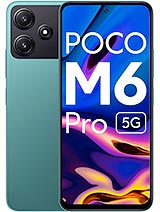
Xiaomi Poco M6 Pro is an entry-level 5G smartphone featuring a Snapdragon 4 Gen 2 (4nm) chipset for efficient daily operations and a glass back design for a premium aesthetic, aimed at students and first-time 5G buyers who prioritize longevity over flagship gimmicks. In the August 2023 market, the temptation to buy a three-year-old flagship like a used Galaxy S20 or an iPhone 11 is high, but our analysis suggests the tides are turning. This handset represents a shift where the efficiency of a modern 4nm node outweighs the brute force of aging 7nm silicon found in yesterday's giants. While a used flagship might offer a better camera or an OLED screen, it carries the hidden debt of a degraded battery and a limited software horizon.
We look at the internals and find that the 4nm architecture is the true hero here. Older high-end chips tend to run hot and throttle under sustained load, whereas this modern budget silicon maintains a cool profile even during extended sessions of social media scrolling or light gaming. The peace of mind that comes with a fresh factory warranty and a battery that has zero cycles on it provides a financial safety net that second-hand units simply cannot match. For the value hunter, the math favors the new hardware.
Imagine a student who needs a device to last through a four-year degree. A used flagship might stop receiving security patches by year two, leaving the user vulnerable. This model starts its journey with Android 13 and MIUI 14, ensuring a longer runway for app compatibility and security. It is not just about what the phone does today; it is about how long it remains a viable tool.
Glass Meets Plastic in a Surprising Build
The construction of this model defies the usual budget tropes. While most competitors in this price bracket rely on cheap, textured plastics that creak under pressure, this handset utilizes a glass back protected by Corning Gorilla Glass. This choice immediately changes the tactile experience. When held, the device lacks the hollow feel often associated with entry-level hardware. The frame remains plastic, which is a sensible compromise to keep the weight at 199g and improve drop resilience.
We noticed the IP53 rating, which provides basic protection against dust and vertical water sprays. It is not a submersible device like an IP68-rated flagship, but for the average user caught in a light drizzle, it offers sufficient protection. The flat edges and the distinct camera island design give it a modern, clean look that mimics more expensive devices in the Xiaomi portfolio. It is a design that does not scream "budget" when placed on a table.
Comparing this to an older flagship, you lose the metal frame but gain a more modern footprint. The 8.2mm thickness is respectable for a phone housing a massive 5000mAh battery. The glass back does attract fingerprints, particularly in the Power Black colorway, so most users will likely utilize the included TPU case. However, the sheer fact that glass is present at this price point is a win for the consumer who wants their phone to look as good as it performs.
Screen Size vs Reachability
With a massive 6.79-inch display, this is one of the largest phones in its class. The IPS LCD panel runs at a 90Hz refresh rate, which provides a smooth experience when navigating the MIUI interface. However, the sheer height of the device makes one-handed use a challenge for those with average-sized hands. We found that reaching the notification shade requires a significant shimmy of the palm or the use of both hands.
Fortunately, the MIUI software includes features to mitigate this, such as a one-handed mode that shrinks the active display area. The weight balance is centered, so the phone does not feel top-heavy, which helps during long reading sessions. The side-mounted fingerprint sensor is placed right where the thumb naturally rests, allowing for quick access without stretching. It is a functional design, even if it lacks the compact charm of a small flagship.
Picture this: you are standing on a crowded train, holding a rail with one hand and trying to reply to a message with the other. On this screen, that task is precarious. The bezel at the bottom is also slightly thicker than what you would see on a premium device, but the hole-punch cutout for the selfie camera is small and unobtrusive. It is a trade-off: you get a cinematic canvas for YouTube and gaming, but you lose the effortless pocketability of smaller devices.
Security and Biometrics
The biometric suite on this handset is surprisingly robust for the price. The side-mounted fingerprint scanner is nearly instantaneous, often beating the optical under-display sensors found in older flagships. Even with slightly damp fingers, the sensor remains reliable. This is a critical advantage for users who live in humid climates or use their phones at the gym.
Face unlock is also available via the 8MP front camera. While it works well in well-lit environments, it relies on 2D image recognition rather than 3D mapping. This means it is less secure than Apple's FaceID or the dedicated hardware on some premium Android units. In low light, the phone often struggles to recognize the user, forcing a fallback to the fingerprint or PIN. We recommend sticking to the fingerprint sensor for the best balance of speed and security.
We should also mention the virtual proximity sensing. Instead of a dedicated hardware sensor to turn off the screen during calls, the phone uses software and the accelerometer. This can sometimes lead to the screen turning on mid-call if the phone is not held at a perfect vertical angle. It is a cost-cutting measure that we see across many modern [budget phones](/trend/best-budget-phones-2026/), and while it works 95% of the time, it is one area where an old flagship with a physical sensor would feel more consistent.
Audio Performance and the Jack
In a world where the 3.5mm headphone jack is a vanishing species, this model proudly retains it. This is a massive boon for budget users who do not want to invest in expensive wireless earbuds or deal with the latency of Bluetooth during gaming. The device even supports 24-bit/192kHz Hi-Res audio playback through the jack, which is an audiophile-adjacent feature rarely seen in this tier.
The internal loudspeaker, however, is a different story. It is a single, bottom-firing unit. While it gets reasonably loud, it lacks the depth and stereo separation found in dual-speaker setups. At maximum volume, there is noticeable distortion in the higher frequencies, and the bass is practically non-existent. If you are watching a movie, you will definitely want to plug in a pair of headphones to get the full experience.
Compared to a used flagship that likely has tuned stereo speakers, this is a clear downgrade. However, the presence of the jack is a functional win. Imagine you are on a long flight and your wireless buds die; with this phone, a cheap pair of wired buds from the airport kiosk keeps the entertainment going. It is about reliability and flexibility in the real world.
The Snapdragon 4 Gen 2 Reality
Marketing often focuses on core counts, but the fabrication process is what matters for the modern consumer. The Snapdragon 4 Gen 2 is built on a 4nm process, which is the same density used for high-end chips just a year ago. This results in incredible efficiency. During our assessment of its performance, we found that the phone handles everyday tasks—WhatsApp, Instagram, Google Maps—with zero lag. The UFS 2.2 storage also means apps open significantly faster than on older phones using eMMC memory.
Gaming performance is acceptable but not groundbreaking. The Adreno 613 GPU can handle titles like PUBG Mobile at medium settings with stable frame rates. However, if you try to push Genshin Impact at high settings, the frame rate will dip, and the device will begin to warm up. This is not a gaming powerhouse, but it is a consistent performer for the price. The choice of 4GB, 6GB, or 8GB of RAM allows users to pick the level of multitasking they need.
Contrast this with an older flagship like the Pixel 4. While the Pixel might have a more powerful GPU, its battery would drain twice as fast under the same gaming load. The Poco M6 Pro is built for the marathon, not the sprint. It is the sensible choice for someone who needs their phone to work all day without hunting for a charger by 4 PM. The 5G connectivity is also highly stable, supporting both SA and NSA networks, ensuring that you are ready for the fastest speeds as carriers expand their coverage.
The Final Take
The Xiaomi Poco M6 Pro is a masterclass in prioritized engineering. It skips the expensive OLED panels and ultra-fast charging to deliver a premium-feeling glass build, a highly efficient 4nm chipset, and 5G connectivity at a price that is hard to ignore. It is the definitive answer to the question of whether one should buy a used flagship or a new budget phone in 2023. For most people, the warranty, the fresh battery, and the modern processor make this the superior choice.
While the 18W charging is admittedly slow by modern standards, taking nearly two hours for a full charge, the battery life itself is stellar, easily lasting two days with moderate use. The camera system is basic but functional, providing a 50MP main sensor that takes decent shots in daylight. It is a balanced package that respects the buyer's wallet while providing a glimpse of premium hardware. If you need a reliable 5G companion that looks like it costs twice as much as it does, the Xiaomi Poco M6 Pro is the current champion of the budget arena.
Technical Specifications
| LAUNCH | |
|---|---|
| Announced | 2023, August 05 |
| Status | Available. Released 2023, August 05 |
| PLATFORM | |
| OS | Android 13, MIUI 14 |
| Chipset | Qualcomm SM4450 Snapdragon 4 Gen 2 (4 nm) |
| CPU | Octa-core (2x2.2 GHz Cortex-A78 & 6x1.95 GHz Cortex-A55) |
| GPU | Adreno 613 |
| BODY | |
| Dimensions | 168.6 x 76.3 x 8.2 mm (6.64 x 3.00 x 0.32 in) |
| Weight | 199 g (7.02 oz) |
| Build | Glass front (Gorilla Glass), plastic frame, glass back (Gorilla Glass) |
| SIM | Nano-SIM + Nano-SIM |
| Info | IP53 dust protected and water resistant (vertical water sprays) |
| DISPLAY | |
| Type | IPS LCD, 90Hz, 550 nits |
| Size | 6.79 inches, 109.5 cm2 (~85.1% screen-to-body ratio) |
| Resolution | 1080 x 2460 pixels (~396 ppi density) |
| Protection | Corning Gorilla Glass |
| MEMORY | |
| Card slot | microSDXC (uses shared SIM slot) |
| Internal | 64GB 4GB RAM, 128GB 4GB RAM, 128GB 6GB RAM, 256GB 8GB RAM |
| Info | UFS 2.2 |
| MAIN CAMERA | |
| Dual | 50 MP, f/1.8, (wide), PDAF Auxiliary lens |
| Features | LED flash, HDR |
| Video | 1080p@30fps |
| SELFIE CAMERA | |
| Single | 8 MP, f/2.0, (wide), 1.12µm |
| Features | HDR |
| Video | 1080p@30fps |
| SOUND | |
| Loudspeaker | Yes |
| 3.5mm jack | Yes |
| Info | 24-bit/192kHz Hi-Res audio |
| COMMS | |
| WLAN | Wi-Fi 802.11 a/b/g/n/ac, dual-band |
| Bluetooth | 5.3, A2DP, LE |
| Positioning | GPS, GLONASS, GALILEO, BDS |
| NFC | Unspecified |
| Infrared port | Yes |
| Radio | No |
| USB | USB Type-C |
| NETWORK | |
| Technology | GSM / HSPA / LTE / 5G |
| 2G bands | GSM 850 / 900 / 1800 / 1900 |
| 3G bands | HSDPA 850 / 900 / 2100 |
| 4G bands | 1, 3, 5, 8, 40, 41 |
| 5G bands | 1, 3, 5, 8, 28, 40, 78 SA/NSA |
| Speed | HSPA, LTE, 5G |
| FEATURES | |
| Sensors | Fingerprint (side-mounted), accelerometer, compass |
| Info | Virtual proximity sensing |
| BATTERY | |
| Type | Li-Po 5000 mAh |
| Charging | 18W wired, PD |
| MISC | |
| Display | 6.79-inch IPS LCD, 90Hz, 550 nits |
| Chipset | Qualcomm Snapdragon 4 Gen 2 (4 nm) |
| Battery | 5000 mAh with 18W Wired Charging |
| Main Camera | 50 MP, f/1.8 (wide), PDAF + Auxiliary lens |
| Selfie Camera | 8 MP, f/2.0 |
| Build | Glass front/back (Gorilla Glass), Plastic frame |
| OS | Android 13, MIUI 14 |
| Storage | Up to 256GB UFS 2.2, Up to 8GB RAM |
| Connectivity | 5G (SA/NSA), Bluetooth 5.3, IR Blaster |
| Audio | 3.5mm Jack, 24-bit/192kHz Hi-Res Audio |
| Colors | Power Black, Forest Green |
| Models | 23076PC4BI |
| Price | ₹ 10,899 |