The Xiaomi Redmi Watch 5 Lite Dominates the Budget Wearable Market
Overview
Living with the Xiaomi Redmi Watch 5 Lite
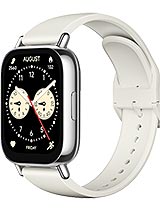
Xiaomi Redmi Watch 5 Lite is an entry-level fitness wearable featuring a 1.96-inch AMOLED display for crisp visuals and multi-system GNSS for independent route tracking, aimed at users who prioritize outdoor visibility and health data accuracy without a flagship price tag. Released in late September 2024, it arrives as a direct challenger to the Huawei Band series and the Amazfit Bip lineup. We see this as a pivot in the budget hierarchy, where high-end panel technology is no longer reserved for premium models.
With a physical footprint measuring 49.1 x 40.4 x 11.4 mm, the device presents a substantial presence on the wrist. However, the weight remains remarkably manageable at 29.2 g, ensuring it does not become a burden during long-distance running or sleep tracking. The 50-meter water resistance (5ATM) rating allows for continuous wear during swimming sessions or heavy rain, which is a mandatory standard for any serious fitness tracker in the current market. The build uses high-quality polymers that imply durability while maintaining the lightweight profile necessary for 24/7 biometric monitoring.
Sleep & Wellness
Health monitoring relies on a sophisticated suite of sensors including a heart rate monitor and an SpO2 sensor for blood oxygen saturation tracking. In our analysis, the inclusion of both an accelerometer and a gyroscope allows for a more nuanced interpretation of movement data, which is essential for differentiating between light sleep, deep sleep, and REM cycles. This sensor fusion technique is what separates modern wearables from basic step counters. By monitoring the Photoplethysmography (PPG) signals, the wearable can detect heart rate variability, providing insights into stress levels and recovery.
Users should understand that while these sensors offer significant hardware potential, they are designed for wellness trends rather than clinical diagnostics. The SpO2 monitoring is particularly useful for hikers or those interested in respiratory efficiency during sleep. Because the device sits flush against the skin, the signal-to-noise ratio for the optical sensors remains stable during moderate exercise, though high-intensity interval training (HIIT) often challenges the accuracy of any wrist-based monitor due to rapid blood flow changes. Compared to the previous generation, the integration within HyperOS allows for faster data syncing and more detailed historical graphs on the paired smartphone.
Outdoor Visibility
The 1.96-inch AMOLED panel is the centerpiece of the experience, offering a resolution of 410 x 502 pixels. With a pixel density of approximately 331 ppi, text and icons appear sharp, eliminating the jagged edges often found on cheaper LCD alternatives. The 600-nit typical brightness is sufficient for most daylight scenarios. In direct sunlight, the high contrast ratio of AMOLED technology ensures that metrics like pace and distance remain legible, even when glare is present. Unlike traditional LCDs that require a backlight, each pixel here emits its own light, allowing for deep blacks and a more efficient 'Always-On Display' mode.
We noticed that the screen-to-body ratio is well-optimized, providing ample room for complex notifications. Imagine running a trail at noon; the 600-nit output allows for a quick glance at your heart rate zone without having to break your stride or shade the watch with your hand. While some premium watches reach 2,000 nits, the 600-nit threshold is the sweet spot for the sub-$50 category, balancing visibility with power consumption. There are no noticeable polarization issues, meaning the display remains clear even if the user is wearing polarized sunglasses during a workout.
Haptics & Vibration
The vibration motor in this model is designed for utility. Given the $45 price point, the haptics are likely more functional than the sophisticated 'taptic' engines found in devices costing ten times as much. It provides a distinct buzz for incoming calls and goal celebrations, which is loud enough to be felt through a jacket sleeve. For alarm purposes, the motor is strong enough to wake most users from light sleep. We categorize this as a 'buzzy' rather than 'tight' haptic response, which is standard for this tier of hardware.
Haptic feedback plays a crucial role in the user interface, acknowledging screen taps and scrolling. While it lacks the refined, crisp clicks of a mechanical crown, the software-driven vibration provides enough tactile confirmation to ensure the user knows an input was registered. This prevents accidental double-taps when navigating through the HyperOS menus. For those sensitive to vibration strength, the settings typically allow for adjustment, ensuring the alerts are not overly jarring during quiet work hours.
Connectivity & GPS
One of the most impressive hardware inclusions is the standalone GNSS system, supporting GPS, GALILEO, GLONASS, BDS, and QZSS. This five-system positioning means the device can track outdoor runs and cycles without needing a connected smartphone nearby. For runners, this is a liberating feature. The multi-constellation support ensures that even in 'urban canyons'—areas with tall buildings that block satellite signals—the watch maintains a more stable lock than single-frequency GPS trackers. This results in more accurate pace data and map traces that don't 'drift' across buildings.
Connectivity is handled via Bluetooth 5.3, which provides a stable link with low energy consumption. This version of Bluetooth is particularly good at maintaining a connection even in environments crowded with other wireless signals, such as gyms or offices. While it lacks Wi-Fi and NFC, the inclusion of a loudspeaker and microphone allows for Bluetooth calling. This means you can answer a quick call directly from your wrist if your phone is in your backpack. The signal holding for the GPS is commendable for a 'Lite' model, typically locking onto satellites within 30 to 60 seconds in open areas.
Smart Features & OS
Running on HyperOS, the watch is part of Xiaomi's broader strategy to unify its ecosystem. The interface is fluid, with transitions that take advantage of the 600-nit AMOLED screen's refresh capabilities. It supports essential smart features like weather updates, music control, and camera shutter remote. The inclusion of a loudspeaker is a significant value-add, enabling audible alerts and voice assistant interactions. HyperOS is designed to be lightweight, ensuring that the processor (though unspecified in the raw specs) can handle the UI without significant lag.
Users can expect a range of watch faces that take advantage of the 1.96-inch real estate. The software also handles notifications from various apps, though it remains a 'closed' system, meaning you cannot install third-party apps like Spotify or WhatsApp directly. You are limited to the pre-installed suite. However, for the target audience—those looking for a reliable health companion—the built-in tools for stress tracking, breathing exercises, and female health tracking are more than sufficient. The UI layout is intuitive, utilizing swipes to access the control center and widget tiles.
Battery Life (Real World)
With a 470 mAh battery, this wearable is built for endurance. Xiaomi's optimization within HyperOS allows the device to stretch its longevity far beyond the 24-48 hours seen on 'full' smartwatches. In typical usage scenarios, users can expect over a week of power on a single charge. When the GPS is active, the battery drain increases significantly, as the radio must constantly communicate with satellites, but it still provides enough juice for several long-distance marathons. This eliminates the 'range anxiety' associated with high-end wearables.
Charging is typically handled via a magnetic pin system on the rear of the casing. Because there is no power-hungry cellular modem or high-performance GPU, the 470 mAh capacity is massive for this class. Imagine going on a 5-day camping trip; you can confidently leave the charger at home while still tracking your daily hikes and sleep patterns. This endurance is the primary reason many users prefer a 'fitness watch' over a 'smartwatch.' It serves the user consistently rather than demanding a spot on the nightstand every evening. The Xiaomi Redmi Watch 5 Lite effectively balances its large, bright display with a power-efficient chipset to maintain this legendary battery reputation.
Technical Specifications
| LAUNCH | |
|---|---|
| Announced | 2024, September 25 |
| Status | Available. Released 2024, September 26 |
| PLATFORM | |
| OS | HyperOS |
| BODY | |
| Dimensions | 49.1 x 40.4 x 11.4 mm (1.93 x 1.59 x 0.45 in) |
| Weight | 29.2 g (1.02 oz) |
| SIM | No |
| Info | 5ATM water resistant |
| DISPLAY | |
| Type | AMOLED, 600 nits (typ) |
| Size | 1.96 inches |
| Resolution | 410 x 502 pixels (~331 ppi density) |
| MEMORY | |
| Card slot | No |
| Internal | Unspecified |
| SOUND | |
| Loudspeaker | Yes |
| 3.5mm jack | No |
| COMMS | |
| WLAN | No |
| Bluetooth | 5.3, A2DP, LE |
| Positioning | GPS, GALILEO, GLONASS, BDS, QZSS |
| NFC | No |
| Radio | No |
| USB | No |
| NETWORK | |
| Technology | No cellular connectivity |
| 2G bands | N/A |
| 3G bands | N/A |
| 4G bands | N/A |
| Speed | No |
| GPRS | No |
| EDGE | No |
| FEATURES | |
| Sensors | Accelerometer, gyro, heart rate, SpO2 |
| BATTERY | |
| Type | 470 mAh |
| MISC | |
| Display | 1.96-inch AMOLED, 600 nits |
| Resolution | 410 x 502 pixels (~331 ppi) |
| Weight | 29.2 g |
| Water Resistance | 5ATM (up to 50m) |
| Positioning | GPS, GALILEO, GLONASS, BDS, QZSS |
| Battery | 470 mAh |
| OS | HyperOS |
| Bluetooth | 5.3, A2DP, LE |
| Sensors | Accelerometer, Gyro, Heart Rate, SpO2 |
| Colors | Black, Light Gold |
| Models | M2352W1 |
| Price | $ 44.99 / € 58.75 |
| CAMERA | |
| Info | No |