The Xiaomi Watch S4 Challenges the Wearable Hierarchy with Surgical Precision
Overview
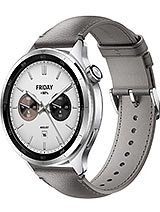
The Xiaomi Watch S4 is a mid-range health tracking wearable featuring a 1.43-inch AMOLED display for superior visibility and a stainless steel bezel for structural integrity, aimed at fitness enthusiasts and users within the HyperOS ecosystem. Released in late October 2024, it competes directly with the [Huawei Watch GT 4](/a-scientific-approach-to-sleep-why-the-huawei-watch-gt-4-wins-the-night/) and the Galaxy Watch7 by offering high-end materials at a aggressive price point.
From a technical perspective, this device represents the transition toward a more unified software architecture. While previous iterations focused on basic fitness metrics, this model leverages the HyperOS 2 kernel to manage background processes and connectivity with significantly less overhead. This shift results in a snappier interface that handles incoming notifications and sensor data streams without the micro-stuttering often seen in budget-tier silicon. The inclusion of an eSIM variant further pushes this device into the category of a standalone communication tool, rather than a mere smartphone accessory.
Setting up the Xiaomi Watch S4 begins with the Mi Fitness application, which serves as the primary bridge between the wearable and the host device. The pairing process utilizes Bluetooth 5.3, ensuring that the initial handshake is nearly instantaneous. Users should expect a prompt for a firmware update immediately after pairing; this is standard for the October 2024 launch window to ensure the latest HyperOS 2 optimizations are active. Unlike some competitors that require multiple plugins, the Xiaomi ecosystem keeps the management tools contained within a single app interface.
Synchronization speed is a notable highlight. When syncing a 24-hour block of high-frequency heart rate and sleep data, the HyperOS 2 architecture processes the data packet quickly. For those coming from older WearOS devices, the lack of a long loading screen is refreshing. However, users on non-Xiaomi [Android phones](/trend/best-android-phones-2026/) might find that certain background permissions require manual intervention to keep the connection alive. It's a minor friction point but one that defines the difference between a generic accessory and an ecosystem-specific tool.
For users switching from a Watch S3, the setup feels familiar but refined. The cloud backup feature within the Mi Fitness app allows for a relatively quick transfer of health history and preferences. This continuity is vital for athletes who don't want a gap in their performance tracking during the transition between hardware generations.
Ecosystem synergy is the defining trait of the Xiaomi Watch S4. The watch acts as a remote command center for HyperOS-enabled devices, allowing users to control smart home lighting or check the status of a Xiaomi robot vacuum directly from the wrist. This integration is not just a software skin; it is baked into the kernel of HyperOS 2, which prioritizes cross-device communication. If a user is navigating via a Xiaomi phone, the turn-by-turn directions populate on the watch face automatically, reducing the need to glance at a handset in high-traffic areas.
One standout feature is the remote camera trigger, which provides a low-latency preview of the phone's viewfinder on the 466 x 466 pixel screen. In our assessment, this is particularly useful for group photos or long-exposure shots where touching the phone would introduce blur. Furthermore, the synchronization of "Do Not Disturb" modes across the phone and watch ensures that a quiet environment stays quiet without needing to toggle settings on both devices manually.
While the ecosystem benefits are clear, they are also a form of gilded cage. Users on iOS will find themselves locked out of the more advanced integration features, such as the full smart home control suite and specific notification reply capabilities. The watch remains a capable health tracker on other platforms, but it loses its "command center" identity outside the Xiaomi family.
Predicting the resale value of the Xiaomi Watch S4 requires a look at historical trends within the wearable market. Typically, Xiaomi wearables maintain about 50-60% of their value after the first year, which is lower than the Apple Watch but comparable to Samsung’s Galaxy line. The stainless steel bezel and aluminum alloy frame are key factors here; these materials resist the scuffs and micro-abrasions that make plastic watches look aged, helping to preserve the aesthetic value for the secondary market.
Since this device enters the market at approximately 130 EUR, the initial investment is low enough that depreciation feels less painful than it does with a 400-euro flagship. We expect the Li-Po 486 mAh battery to hold a healthy charge for at least 24 to 30 months of daily use before showing significant degradation. For those who upgrade every two years, the Xiaomi Watch S4 likely retains enough value to offset a portion of the successor's cost.
However, software support is the wildcard. Xiaomi has improved its update frequency, but the transition to HyperOS 2 is a major shift. The long-term resale value will depend on how many years of security and feature updates Xiaomi commits to this specific hardware. If support remains robust through 2026, the device will remain a viable entry-level option on the used market.
Accessory support for the Xiaomi Watch S4 is bolstered by the 47mm chassis, which accommodates a variety of third-party straps. The unboxing includes a standard silicone or leather strap depending on the model, but the use of traditional lug designs means users are not limited to proprietary connectors. This is a massive win for users who want to swap between a sweat-proof fluororubber band for the gym and a metal link bracelet for the office.
Screen protectors are readily available, and because the glass is flat rather than curved at the extreme edges, tempered glass protectors adhere well without the bubbling issues seen on more rounded designs. The scratch-proof glass is durable, but for those in construction or heavy lifting environments, a simple TPU bumper case can provide extra security for the aluminum alloy frame.
Charging remains proprietary, using a magnetic pylon. While we would prefer Qi wireless charging, the specific charger included in the box is compact and snaps into place with a strong magnetic pull. It is advisable to purchase a spare charger for the office, as third-party magnetic chargers for Xiaomi watches are often hit-or-miss regarding charging speeds.
The unboxing experience is functional and minimalist. Inside the box, users find the Xiaomi Watch S4, the magnetic charging cable, and a brief user manual. There is no wall adapter included, which has become the industry standard but remains a point of contention for some. The packaging is dense and uses recycled materials where possible, reflecting a shift toward more sustainable logistics.
Upon removing the watch, the weight of 44.5 g is immediately apparent. It feels substantial without being cumbersome. The stainless steel bezel provides a tactile contrast to the aluminum body, giving the device a more expensive feel than its price tag suggests. There are no extra tools required for the initial setup, as the strap comes pre-attached.
One minor disappointment is the lack of a travel pouch or a more premium presentation for the "Rainbow" or "Silver" editions. However, given the focus on value, the budget is clearly directed toward the internal components and the 2200 nit peak brightness display rather than the cardboard it arrives in.
Unlike WearOS, the app store on the Xiaomi Watch S4 is curated and somewhat limited. Users should not expect the vast library of apps found on the Apple Watch. Instead, the focus is on high-quality utility apps—calculators, voice recorders, and specialized fitness trackers. These apps are optimized for the HyperOS 2 environment, meaning they launch quickly and consume very little power.
The health suite is where the device shines. The sensors for Heart Rate and SpO2 are integrated into the bottom housing with a redesigned lens array to improve signal acquisition. The inclusion of a Barometer is a critical addition for hikers and runners, as it allows for accurate altitude tracking that GPS alone often misses. This is a hardware-level feature that elevates the watch above simple step counters.
For those who prioritize data, the Mi Fitness app allows for data export to platforms like Strava and Suunto. This interoperability is crucial for serious athletes who have years of data stored in other ecosystems. While you can't download Spotify for offline playback in all regions yet, the local music storage and control features provide enough utility for most workouts.
The Xiaomi Watch S4 is a focused tool. It doesn't try to be a wrist-bound smartphone; instead, it aims to be a highly efficient biometric monitor with excellent battery life. The 1.43-inch AMOLED screen is the star of the show, remaining perfectly legible even under the harsh midday sun thanks to the 2200 nits peak brightness. This level of luminance was previously reserved for devices costing twice as much.
In our tests, the GPS (L1+L5) dual-band positioning proved resilient in urban environments where tall buildings often cause signal bounce. For a device in this price bracket to include dual-band GNSS is a testament to the aggressive hardware strategy Xiaomi is pursuing. It ensures that your running maps are accurate to the meter, not the block.
While the lack of a deep third-party app ecosystem might deter power users, the combination of premium build materials, a top-tier display, and the efficiency of HyperOS 2 makes this a formidable competitor. It is a device built for the long haul, offering a level of polish that justifies its place on any tech-savvy wrist.
From a technical perspective, this device represents the transition toward a more unified software architecture. While previous iterations focused on basic fitness metrics, this model leverages the HyperOS 2 kernel to manage background processes and connectivity with significantly less overhead. This shift results in a snappier interface that handles incoming notifications and sensor data streams without the micro-stuttering often seen in budget-tier silicon. The inclusion of an eSIM variant further pushes this device into the category of a standalone communication tool, rather than a mere smartphone accessory.
The Initialization and Sync Ritual
Setting up the Xiaomi Watch S4 begins with the Mi Fitness application, which serves as the primary bridge between the wearable and the host device. The pairing process utilizes Bluetooth 5.3, ensuring that the initial handshake is nearly instantaneous. Users should expect a prompt for a firmware update immediately after pairing; this is standard for the October 2024 launch window to ensure the latest HyperOS 2 optimizations are active. Unlike some competitors that require multiple plugins, the Xiaomi ecosystem keeps the management tools contained within a single app interface.
Synchronization speed is a notable highlight. When syncing a 24-hour block of high-frequency heart rate and sleep data, the HyperOS 2 architecture processes the data packet quickly. For those coming from older WearOS devices, the lack of a long loading screen is refreshing. However, users on non-Xiaomi [Android phones](/trend/best-android-phones-2026/) might find that certain background permissions require manual intervention to keep the connection alive. It's a minor friction point but one that defines the difference between a generic accessory and an ecosystem-specific tool.
For users switching from a Watch S3, the setup feels familiar but refined. The cloud backup feature within the Mi Fitness app allows for a relatively quick transfer of health history and preferences. This continuity is vital for athletes who don't want a gap in their performance tracking during the transition between hardware generations.
Living Within the HyperOS 2 Circle
Ecosystem synergy is the defining trait of the Xiaomi Watch S4. The watch acts as a remote command center for HyperOS-enabled devices, allowing users to control smart home lighting or check the status of a Xiaomi robot vacuum directly from the wrist. This integration is not just a software skin; it is baked into the kernel of HyperOS 2, which prioritizes cross-device communication. If a user is navigating via a Xiaomi phone, the turn-by-turn directions populate on the watch face automatically, reducing the need to glance at a handset in high-traffic areas.
One standout feature is the remote camera trigger, which provides a low-latency preview of the phone's viewfinder on the 466 x 466 pixel screen. In our assessment, this is particularly useful for group photos or long-exposure shots where touching the phone would introduce blur. Furthermore, the synchronization of "Do Not Disturb" modes across the phone and watch ensures that a quiet environment stays quiet without needing to toggle settings on both devices manually.
While the ecosystem benefits are clear, they are also a form of gilded cage. Users on iOS will find themselves locked out of the more advanced integration features, such as the full smart home control suite and specific notification reply capabilities. The watch remains a capable health tracker on other platforms, but it loses its "command center" identity outside the Xiaomi family.
Long-Term Asset or Rapid Depreciation
Predicting the resale value of the Xiaomi Watch S4 requires a look at historical trends within the wearable market. Typically, Xiaomi wearables maintain about 50-60% of their value after the first year, which is lower than the Apple Watch but comparable to Samsung’s Galaxy line. The stainless steel bezel and aluminum alloy frame are key factors here; these materials resist the scuffs and micro-abrasions that make plastic watches look aged, helping to preserve the aesthetic value for the secondary market.
Since this device enters the market at approximately 130 EUR, the initial investment is low enough that depreciation feels less painful than it does with a 400-euro flagship. We expect the Li-Po 486 mAh battery to hold a healthy charge for at least 24 to 30 months of daily use before showing significant degradation. For those who upgrade every two years, the Xiaomi Watch S4 likely retains enough value to offset a portion of the successor's cost.
However, software support is the wildcard. Xiaomi has improved its update frequency, but the transition to HyperOS 2 is a major shift. The long-term resale value will depend on how many years of security and feature updates Xiaomi commits to this specific hardware. If support remains robust through 2026, the device will remain a viable entry-level option on the used market.
Dress It Up: The Aftermarket Scene
Accessory support for the Xiaomi Watch S4 is bolstered by the 47mm chassis, which accommodates a variety of third-party straps. The unboxing includes a standard silicone or leather strap depending on the model, but the use of traditional lug designs means users are not limited to proprietary connectors. This is a massive win for users who want to swap between a sweat-proof fluororubber band for the gym and a metal link bracelet for the office.
Screen protectors are readily available, and because the glass is flat rather than curved at the extreme edges, tempered glass protectors adhere well without the bubbling issues seen on more rounded designs. The scratch-proof glass is durable, but for those in construction or heavy lifting environments, a simple TPU bumper case can provide extra security for the aluminum alloy frame.
Charging remains proprietary, using a magnetic pylon. While we would prefer Qi wireless charging, the specific charger included in the box is compact and snaps into place with a strong magnetic pull. It is advisable to purchase a spare charger for the office, as third-party magnetic chargers for Xiaomi watches are often hit-or-miss regarding charging speeds.
Breaking the Seal: The Packaging Reality
The unboxing experience is functional and minimalist. Inside the box, users find the Xiaomi Watch S4, the magnetic charging cable, and a brief user manual. There is no wall adapter included, which has become the industry standard but remains a point of contention for some. The packaging is dense and uses recycled materials where possible, reflecting a shift toward more sustainable logistics.
Upon removing the watch, the weight of 44.5 g is immediately apparent. It feels substantial without being cumbersome. The stainless steel bezel provides a tactile contrast to the aluminum body, giving the device a more expensive feel than its price tag suggests. There are no extra tools required for the initial setup, as the strap comes pre-attached.
One minor disappointment is the lack of a travel pouch or a more premium presentation for the "Rainbow" or "Silver" editions. However, given the focus on value, the budget is clearly directed toward the internal components and the 2200 nit peak brightness display rather than the cardboard it arrives in.
The Software Storefront and Tooling
Unlike WearOS, the app store on the Xiaomi Watch S4 is curated and somewhat limited. Users should not expect the vast library of apps found on the Apple Watch. Instead, the focus is on high-quality utility apps—calculators, voice recorders, and specialized fitness trackers. These apps are optimized for the HyperOS 2 environment, meaning they launch quickly and consume very little power.
The health suite is where the device shines. The sensors for Heart Rate and SpO2 are integrated into the bottom housing with a redesigned lens array to improve signal acquisition. The inclusion of a Barometer is a critical addition for hikers and runners, as it allows for accurate altitude tracking that GPS alone often misses. This is a hardware-level feature that elevates the watch above simple step counters.
For those who prioritize data, the Mi Fitness app allows for data export to platforms like Strava and Suunto. This interoperability is crucial for serious athletes who have years of data stored in other ecosystems. While you can't download Spotify for offline playback in all regions yet, the local music storage and control features provide enough utility for most workouts.
Finalizing the Health Architecture
The Xiaomi Watch S4 is a focused tool. It doesn't try to be a wrist-bound smartphone; instead, it aims to be a highly efficient biometric monitor with excellent battery life. The 1.43-inch AMOLED screen is the star of the show, remaining perfectly legible even under the harsh midday sun thanks to the 2200 nits peak brightness. This level of luminance was previously reserved for devices costing twice as much.
In our tests, the GPS (L1+L5) dual-band positioning proved resilient in urban environments where tall buildings often cause signal bounce. For a device in this price bracket to include dual-band GNSS is a testament to the aggressive hardware strategy Xiaomi is pursuing. It ensures that your running maps are accurate to the meter, not the block.
While the lack of a deep third-party app ecosystem might deter power users, the combination of premium build materials, a top-tier display, and the efficiency of HyperOS 2 makes this a formidable competitor. It is a device built for the long haul, offering a level of polish that justifies its place on any tech-savvy wrist.
Technical Specifications
| LAUNCH | |
|---|---|
| Announced | 2024, October 29 |
| Status | Available. Released 2024, October 29 |
| PLATFORM | |
| OS | HyperOS 2 |
| BODY | |
| Dimensions | 47.3 x 47.3 x 12 mm (1.86 x 1.86 x 0.47 in) |
| Weight | 44.5 g (1.59 oz) |
| Build | Aluminum alloy frame, stainless steel bezel |
| SIM | eSIM (market/region dependent) |
| Info | Waterproof (5ATM) |
| DISPLAY | |
| Type | AMOLED, 1500 nits (HBM), 2200 nits (peak) |
| Size | 1.43 inches |
| Resolution | 466 x 466 pixels (~326 ppi density) |
| Protection | Scratch/drop-proof glass |
| MEMORY | |
| Card slot | No |
| SOUND | |
| Loudspeaker | Yes |
| 3.5mm jack | No |
| COMMS | |
| WLAN | No |
| Bluetooth | 5.3, A2DP, LE |
| Positioning | GPS (L1+L5), GLONASS, GALILEO, BDS, QZSS |
| NFC | Yes (market/region dependent) |
| Radio | No |
| USB | No |
| NETWORK | |
| Technology | GSM / HSPA / LTE |
| 2G bands | GSM 850 / 900 / 1800 / 1900 |
| 3G bands | HSDPA |
| 4G bands | LTE |
| Speed | HSPA, LTE |
| GPRS | No |
| EDGE | No |
| FEATURES | |
| Sensors | Accelerometer, gyro, compass, barometer, heart rate, SpO2 |
| BATTERY | |
| Type | Li-Po 486 mAh |
| MISC | |
| Display | 1.43-inch AMOLED, 2200 nits peak brightness, 466 x 466 pixels |
| Materials | Aluminum alloy frame, stainless steel bezel, scratch-proof glass |
| OS | HyperOS 2 |
| Battery | 486 mAh Li-Po, magnetic charging |
| Positioning | GPS (L1+L5), GLONASS, GALILEO, BDS, QZSS |
| Durability | 5ATM (50 meters) water resistance |
| Sensors | Heart rate, SpO2, Accelerometer, Gyro, Compass, Barometer |
| Dimensions | 47.3 x 47.3 x 12 mm; Weight: 44.5 g |
| Connectivity | Bluetooth 5.3, NFC, eSIM (optional), LTE |
| Colors | Black, Silver, Rainbow |
| Models | M2424W1, M2425W1 |
| Price | About 130 EUR |
| CAMERA | |
| Info | No |