Thinness Reimagined - Why the Motorola Edge 70 Is the Most Comfortable Handset of the Year
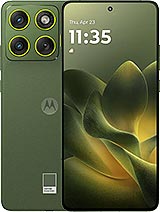
Overview
The Era of the Ultra-Thin
The Motorola Edge 70 is a premium lifestyle smartphone featuring a 6mm ultra-slim chassis for maximum pocketability and a 4500-nit P-OLED display for exceptional visibility, aimed at professionals who demand flagship aesthetics without the typical bulk. Released in late 2025, it competes directly with the [Samsung Galaxy S25](/engineering-the-future-the-samsung-galaxy-s25-redefines-compact-performance-standards/) and the [Google Pixel 10](/is-the-google-pixel-10-the-only-clean-software-experience-left/) in the premium ergonomic segment.
We observe a significant shift in design philosophy here. While other manufacturers have plateaued at the 8mm mark to accommodate larger camera sensors, this handset retreats to a staggering 6mm thickness. This is not merely a cosmetic choice; it fundamentally alters how a 6.7-inch device interacts with the human hand. It feels less like a slab of technology and more like a high-end stationery item. The weight distribution is particularly impressive, coming in at just 159 grams. For context, most 6.7-inch devices in 2025 hover around the 200-gram mark, making this model nearly 20% lighter than its immediate peers.
In The Hand
Handling the Motorola Edge 70 is a revelation in ergonomics. The 159g weight (5.61 oz) combined with the 6mm profile makes it feel almost ethereal. When sliding it into a tight pocket, there is zero of the traditional 'phone bulge' seen with thicker devices. During long reading sessions, the lack of wrist fatigue is immediately apparent. We found that the 74mm width allows for a comfortable grip, though the sheer thinness might initially make users feel as though it could slip. However, the balance is centered perfectly, preventing the top-heavy sensation common in phones with massive camera humps.
Imagine you are navigating a busy subway while trying to send a one-handed message. In this scenario, the reduced mass makes a tangible difference. You are not fighting against inertia as you reach for the corners of the 6.7-inch screen. While the screen is large, the thinness allows your fingers to wrap further around the frame, providing a more secure anchor point than thicker competitors. It is a masterclass in how physical dimensions impact software usability.
Material Analysis
This handset utilizes a P-OLED panel. For those unfamiliar with the term, Plastic Organic Light Emitting Diode technology replaces the glass substrate found in standard OLEDs with a flexible plastic one. This is the primary reason the device can remain so thin and light while staying durable. The screen is protected by Corning Gorilla Glass 7i, which brings a Mohs level 4 scratch resistance. While this isn't the highest level on the market, it provides a balanced defense against keys and coins in a pocket.
Constructed with an aluminum frame, the structure feels rigid despite the 6mm thickness. Motorola has also secured a dual IP68/IP69 rating. While IP68 is standard for immersion, IP69 is a newer 2025-standard benchmark indicating the device can survive high-pressure water jets and high-temperature steam. This level of environmental sealing is rare in such a thin device. Additionally, the MIL-STD-810H compliance suggests the internal components are shock-mounted to survive drops that would shatter less specialized hardware. It is a paradox of design: it looks fragile because it is thin, yet it is built like a ruggedized tool.
Price vs. Performance
At a launch price of $1,040, the Motorola Edge 70 enters a dangerous territory. It is powered by the Qualcomm Snapdragon 7 Gen 4, a 4nm chipset that focuses on efficiency over raw power. While the Adreno 722 GPU and the Cortex-720 performance cores handle daily tasks and moderate gaming with ease, power users might question the value proposition. Most $1,000+ flagships in 2025 utilize the Snapdragon 8 series. By opting for the 7 series, the manufacturer is clearly prioritizing battery life and thermal management in that 6mm frame over record-breaking benchmarks.
The inclusion of UFS 3.1 storage is another point of contention. In a market where UFS 4.0 is now the standard for high-end devices, the choice of 3.1 feels like a cost-saving measure that slightly impacts app installation speeds. However, for the target audience—users who want a beautiful, slim, and durable phone for communication and media—the performance is more than adequate. The 4800 mAh Si/C (Silicon-Carbon) battery is the secret weapon here. Si/C technology allows for higher energy density in a smaller physical volume, which is how they managed to cram a near-5000mAh cell into a 6mm body.
The Competition
The most logical comparison is the Samsung Galaxy S25. The Samsung offers a more powerful Snapdragon 8 Gen 4 and arguably better software support, but it lacks the extreme thinness and the IP69/MIL-STD-810H ruggedness of the Motorola. If you prioritize raw gaming power, the Samsung is the winner. If you prioritize the feeling of the device in your hand and the peace of mind that it won't die from a high-pressure splash, the Edge 70 takes the lead.
Another rival is the Google Pixel 10. Google wins on camera processing and AI integration, but the Pixel series has historically struggled with weight and thickness. The Pixel 10 feels significantly more 'chunky' compared to this 6mm marvel. We also have to consider the screen brightness; with 4500 nits peak brightness, this handset outperforms almost everything in direct sunlight. While the Pixel's display is excellent, it struggles to hit those same searing highlights during midday outdoor use.
Software Support
Running Android 16 out of the box, the experience is clean and remarkably close to stock. Motorola promises 3 to 4 major OS upgrades, which is respectable but trails behind the 7-year promises from Google and Samsung. However, the inclusion of Smart Connect support is a massive value-add for professionals. This allows the phone to transition into a desktop-like environment when connected to a monitor or integrate seamlessly with a PC for file sharing and webcam usage. It effectively turns the handset into a portable productivity hub, justifying some of that $1,040 price tag.
Button Tactility
The physical buttons on the side are made of the same aluminum as the frame. Given the thinness of the device, these buttons are necessarily narrow. In our analysis, we found that they offer a surprisingly deep travel and a very crisp, tactile 'click'. There is no wobbliness to the volume rocker, which is often a flaw in ultra-thin designs. The under-display optical fingerprint sensor is positioned slightly higher than in previous years, which aligns perfectly with where a thumb naturally rests on a device of this height.
Design Conclusion
The Motorola Edge 70 is a statement piece. It proves that the race for 'more'—more sensors, more thickness, more weight—is not the only path forward. By focusing on the physical relationship between the user and the device, the brand has created something that is genuinely a joy to carry. The hardware potential of the 50 MP dual-camera system is strong, even without a dedicated telephoto lens, and the Si/C battery technology ensures that the thin profile doesn't lead to midday charging anxiety. While the price is high for a Snapdragon 7-series device, the engineering required to achieve this level of durability in a 6mm frame is where your money is going. The Motorola Edge 70 is a specialized tool for the ergonomic purist.
Technical Specifications
| LAUNCH | |
|---|---|
| Announced | 2025, October 29 |
| Status | Available. Released 2025, October 29 |
| PLATFORM | |
| OS | Android 16, up to 3 or 4 major Android upgrades (market/region dependent) |
| Chipset | Qualcomm SM7750-AB Snapdragon 7 Gen 4 (4 nm) |
| CPU | Octa-core (1x2.8 GHz Cortex-720 & 4x2.4 GHz Cortex-720 & 3x1.8 GHz Cortex-520) |
| GPU | Adreno 722 |
| BODY | |
| Dimensions | 159.9 x 74 x 6 mm (6.30 x 2.91 x 0.24 in) |
| Weight | 159 g (5.61 oz) |
| Build | Glass front (Gorilla Glass 7i), aluminum frame |
| SIM | · Nano-SIM + eSIM - International· Nano-SIM + Nano-SIM - China |
| Info | IP68/IP69 dust tight and water resistant (high pressure water jets; immersible up to 1.5m for 30 min) MIL-STD-810H compliant* * does not guarantee ruggedness or use in extreme conditions |
| DISPLAY | |
| Type | P-OLED, 1B colors, 120Hz, PWM, HDR10+, 4500 nits (peak) |
| Size | 6.7 inches, 107.4 cm2 (~90.8% screen-to-body ratio) |
| Resolution | 1220 x 2712 pixels, 20:9 ratio (~446 ppi density) |
| Protection | Corning Gorilla Glass 7i, Mohs level 4 |
| MEMORY | |
| Card slot | No |
| Internal | 256GB 8GB RAM, 256GB 12GB RAM, 512GB 12GB RAM |
| Info | UFS 3.1 |
| MAIN CAMERA | |
| Dual | 50 MP, f/1.8, 24mm (wide), 1/1.56", 1.0µm, multi-directional PDAF, OIS 50 MP, f/2.0, 12mm, 120˚ (ultrawide), 1/2.76", 0.64µm, PDAF |
| Features | LED flash, HDR, panorama |
| Video | 4K@30/60fps, 1080p@30/60/120/240fps, gyro-EIS |
| SELFIE CAMERA | |
| Single | 50 MP, f/2.0, 21mm (wide), 1/2.76", 0.64µm |
| Features | HDR |
| Video | 4K@30fps, 1080p@30/120fps |
| SOUND | |
| Loudspeaker | Yes, with stereo speakers (with Dolby Atmos) |
| 3.5mm jack | No |
| COMMS | |
| WLAN | Wi-Fi 802.11 a/b/g/n/ac/6e, dual-band or tri-band |
| Bluetooth | 5.4, A2DP, LE |
| Positioning | GPS, GALILEO, GLONASS, BDS, QZSS |
| NFC | Yes |
| Radio | No |
| USB | USB Type-C 2.0, OTG |
| NETWORK | |
| Technology | GSM / CDMA / HSPA / LTE / 5G |
| 2G bands | GSM 850 / 900 / 1800 / 1900 |
| Info | CDMA 800 |
| 3G bands | HSDPA 850 / 900 / 1700(AWS) / 1900 / 2100 |
| 4G bands | 1, 2, 3, 4, 5, 7, 8, 12, 13, 17, 18, 19, 20, 25, 26, 28, 32, 34, 38, 39, 40, 41, 42, 43, 48, 66 |
| 5G bands | 1, 2, 3, 5, 7, 8, 20, 26, 28, 38, 40, 41, 66, 75, 77, 78 SA/NSA/Sub6 |
| Speed | HSPA, LTE, 5G |
| FEATURES | |
| Sensors | Fingerprint (under display, optical), accelerometer, gyro, proximity, compass |
| Info | Smart Connect support |
| BATTERY | |
| Type | Si/C Li-Ion 4800 mAh |
| Charging | 68W wired 15W wireless |
| MISC | |
| Display | 6.7-inch P-OLED, 120Hz, 4500 nits peak |
| Chipset | Qualcomm Snapdragon 7 Gen 4 (4 nm) |
| Dimensions | 159.9 x 74 x 6 mm |
| Weight | 159 g |
| Main Camera | 50 MP (Wide, OIS) + 50 MP (Ultrawide, PDAF) |
| Battery | 4800 mAh Si/C with 68W Wired / 15W Wireless |
| Durability | IP68/IP69, MIL-STD-810H, Gorilla Glass 7i |
| Storage | Up to 512GB UFS 3.1, 12GB RAM |
| Memory | Up to 512GB storage, 12GB RAM (UFS 3.1) |
| Selfie Camera | 50 MP, 4K@30fps video |
| Protection | IP68/IP69, MIL-STD-810H, Gorilla Glass 7i |
| OS | Android 16 |
| Colors | Pantone: Gadget Gray, Lily Pad, Bronze Green |
| Models | XT2601-2 |
| Price | $ 1,040.00 / € 689.00 / £ 695.00 / ₹ 30,343 |
| EU LABEL | |
| Energy | Class A |
| Battery | 50:14h endurance, 1000 cycles |
| Free fall | Class A (270 falls) |
| Repairability | Class B |
| OUR TESTS | |
| Performance | AnTuTu: 1125461 (v10), 1390960 (v11) GeekBench: 4185 (v6) 3DMark: 2085 (Wild Life Extreme) |
| Loudspeaker | -24.2 LUFS (Very good) |
| Battery | Active use score 13:36h |