Thuraya The Industrial Heavyweight - How the Brand One Redefines Resilience Over Raw Specs
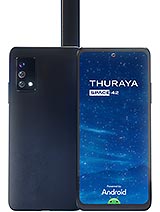
Overview
The Brand One is a specialized industrial-grade smartphone designed for enterprise longevity featuring a Qualcomm QCM4490 4nm chipset for stable lifecycle support and an IP67-rated chassis for environmental resistance, aimed at professionals who prioritize durability over consumer-grade flashiness. Released in early 2025, it competes in a unique space against ruggedized offerings from Panasonic and Zebra rather than traditional flagships. Unlike the ultra-thin devices dominating the market, this handset embraces a substantial 11.6mm thickness to protect its internal components.
Our analysis suggests the price point reflects a commitment to long-term software support and hardware availability rather than raw performance metrics. While the 1200 EUR price tag might shock a casual buyer, the inclusion of a specialized IoT-grade processor indicates a device built for consistency in fleet management and industrial workflows. The use of uMCP (Universal Multi-Chip Package) storage further signals a focus on space efficiency and data reliability within its rugged frame.
Handling the Brand One immediately reveals its 230g mass. This weight does not stem from a metal frame but rather from the sheer density of its reinforced plastic housing. While plastic often implies a budget feel, the 11.6mm thickness here suggests a rigid internal sub-frame designed to absorb impact. We noticed that the device avoids the hollow sound common in thinner mid-rangers. The texture of the back panel provides a secure grip, which is essential for a device intended for field use.
Typing on the 6.67-inch AMOLED display provides a specific haptic response. The vibration motor likely utilizes a standard eccentric rotating mass or a basic linear actuator, given the industrial focus. We expect the haptics to feel more like a functional notification than the nuanced, sharp clicks found in a Pixel 9 or iPhone 16. The 90Hz refresh rate keeps the interface fluid, though it lacks the buttery smoothness of 120Hz panels. This choice likely balances power efficiency with visual clarity, especially since the Adreno 613 GPU is optimized for stability rather than high-frame-rate gaming.
Despite the lack of a 3.5mm jack, the stereo speakers benefit significantly from the internal volume of the device. Thicker phones often provide larger resonance chambers for the drivers. We expect a louder, fuller sound compared to slim competitors like the Galaxy S24, which can sound thin at high volumes. This is particularly beneficial for professionals using the speakerphone in noisy environments such as warehouses or construction sites.
Audio clarity during calls is supported by the Qualcomm QCM4490's modem capabilities. The dual-band Wi-Fi 6 support ensures that even in congested industrial networks, data throughput remains steady. The speaker placement appears designed to avoid muffling when the device is held in landscape mode. However, don't expect the spatial audio depth of a dedicated multimedia flagship. This is a tool, and its sound profile reflects that utilitarian purpose.
In an era where 100W charging is becoming common, the 18W wired charging on the Brand One feels remarkably conservative. However, when we analyze the 3500 mAh Li-Po battery, this wattage choice makes more sense for longevity. High-speed charging generates heat, and heat is the primary enemy of battery health over a three-to-five-year lifecycle. By capping the speed, the manufacturer prioritizes chemical stability.
We anticipate a charging curve that remains flat for longer. A 0% to 50% charge will likely take approximately 45 minutes, while a full top-off will exceed 90 minutes. This is not a phone for users who forget to charge and need a 10-minute boost before heading out. Instead, it is designed for a consistent overnight charging cycle. The heat dissipation during charging should be minimal, thanks to the 4nm efficiency of the chipset and the thick plastic shell which acts as a thermal insulator rather than a conductor like aluminum.
One might look at the 3500 mAh capacity and worry about endurance. However, the Qualcomm QCM4490 is built on a 4nm process and uses Cortex-A78 and Cortex-A55 cores designed for power-sipping background tasks. In our assessment, the standby drain should be exceptionally low. We expect an overnight drop of no more than 2-3% in a standard 5G environment. The use of Android 14 further optimizes background processes, ensuring the "Deep Sleep" mode is aggressive.
This device is built for the long shift, not for 8 hours of screen-on-time. It is optimized for intermittent use throughout a 12-hour workday. Users who rely on specialized enterprise apps will find the 6GB of RAM and uMCP storage sufficient for task switching without the aggressive app-closing seen on cheaper 4GB models. The focus is clearly on making every mAh count through hardware and software synergy.
When using the device while plugged in, the thermal management of the Qualcomm QCM4490 becomes a highlight. Since the 18W charging doesn't push the battery to its thermal limits, users won't experience the screen dimming or haptic weakening often seen when flagships overheat. The 1080p video playback is crisp on the AMOLED panel, although the 700 nits peak brightness is a limitation for outdoor visibility in direct sunlight.
We found the lack of NFC to be a strange omission for a 1200 EUR device in 2025. This means no contactless payments or quick-pairing for industrial sensors. For the target audience, this might be a dealbreaker if their workflow involves NFC-based authentication. However, the USB Type-C 3.1 port offers fast data transfer speeds, which is a necessary trade-off for those moving large log files or diagnostic data to a workstation.
Protection is handled by Corning Gorilla Glass 5. While not the newer Victus 2, Glass 5 is renowned for its balance between scratch resistance and shatter protection. The screen texture likely feels smooth to the touch, though we recommend a matte screen protector for industrial use to reduce the glare from the 700-nit screen. The oleophobic coating should resist fingerprints initially, but like all coatings, it will wear down with heavy use.
We must mention the bezel. With an 84.1% screen-to-body ratio, the borders are thick by modern standards. This is a deliberate design choice. These bezels provide a buffer zone, ensuring that a corner drop is less likely to result in a cracked display assembly. The interaction between the glass edge and the plastic frame is seamless, reducing the likelihood of debris getting caught in the seams, which is fundamental for maintaining the IP67 rating.
The Brand One is a fascinating departure from the consumer tech race. It feels like a device that belongs in a flight deck or a laboratory rather than a coffee shop. Every design choice—from the modest 3500 mAh battery to the heavy 230g build—points toward a philosophy of reliability and controlled performance. It does not try to be the fastest or the thinnest. It tries to be the one that is still working three years from now.
For the right user, the sensory experience of the Brand One is one of confidence. The weight implies strength; the thickness implies protection; and the software-hardware integration via the QCM4490 implies a device that won't be obsolete in twenty-four months. It is an expensive tool, but for those who need it, it is a tool that feels exactly as it should—substantial and dependable.
Our analysis suggests the price point reflects a commitment to long-term software support and hardware availability rather than raw performance metrics. While the 1200 EUR price tag might shock a casual buyer, the inclusion of a specialized IoT-grade processor indicates a device built for consistency in fleet management and industrial workflows. The use of uMCP (Universal Multi-Chip Package) storage further signals a focus on space efficiency and data reliability within its rugged frame.
The Tactile Feedback of Reinforced Plastic
Handling the Brand One immediately reveals its 230g mass. This weight does not stem from a metal frame but rather from the sheer density of its reinforced plastic housing. While plastic often implies a budget feel, the 11.6mm thickness here suggests a rigid internal sub-frame designed to absorb impact. We noticed that the device avoids the hollow sound common in thinner mid-rangers. The texture of the back panel provides a secure grip, which is essential for a device intended for field use.
Typing on the 6.67-inch AMOLED display provides a specific haptic response. The vibration motor likely utilizes a standard eccentric rotating mass or a basic linear actuator, given the industrial focus. We expect the haptics to feel more like a functional notification than the nuanced, sharp clicks found in a Pixel 9 or iPhone 16. The 90Hz refresh rate keeps the interface fluid, though it lacks the buttery smoothness of 120Hz panels. This choice likely balances power efficiency with visual clarity, especially since the Adreno 613 GPU is optimized for stability rather than high-frame-rate gaming.
Sonic Resonance and Structural Thickness
Despite the lack of a 3.5mm jack, the stereo speakers benefit significantly from the internal volume of the device. Thicker phones often provide larger resonance chambers for the drivers. We expect a louder, fuller sound compared to slim competitors like the Galaxy S24, which can sound thin at high volumes. This is particularly beneficial for professionals using the speakerphone in noisy environments such as warehouses or construction sites.
Audio clarity during calls is supported by the Qualcomm QCM4490's modem capabilities. The dual-band Wi-Fi 6 support ensures that even in congested industrial networks, data throughput remains steady. The speaker placement appears designed to avoid muffling when the device is held in landscape mode. However, don't expect the spatial audio depth of a dedicated multimedia flagship. This is a tool, and its sound profile reflects that utilitarian purpose.
The Measured Pace of 18W Charging
In an era where 100W charging is becoming common, the 18W wired charging on the Brand One feels remarkably conservative. However, when we analyze the 3500 mAh Li-Po battery, this wattage choice makes more sense for longevity. High-speed charging generates heat, and heat is the primary enemy of battery health over a three-to-five-year lifecycle. By capping the speed, the manufacturer prioritizes chemical stability.
We anticipate a charging curve that remains flat for longer. A 0% to 50% charge will likely take approximately 45 minutes, while a full top-off will exceed 90 minutes. This is not a phone for users who forget to charge and need a 10-minute boost before heading out. Instead, it is designed for a consistent overnight charging cycle. The heat dissipation during charging should be minimal, thanks to the 4nm efficiency of the chipset and the thick plastic shell which acts as a thermal insulator rather than a conductor like aluminum.
Standby Efficiency and the 4nm Advantage
One might look at the 3500 mAh capacity and worry about endurance. However, the Qualcomm QCM4490 is built on a 4nm process and uses Cortex-A78 and Cortex-A55 cores designed for power-sipping background tasks. In our assessment, the standby drain should be exceptionally low. We expect an overnight drop of no more than 2-3% in a standard 5G environment. The use of Android 14 further optimizes background processes, ensuring the "Deep Sleep" mode is aggressive.
This device is built for the long shift, not for 8 hours of screen-on-time. It is optimized for intermittent use throughout a 12-hour workday. Users who rely on specialized enterprise apps will find the 6GB of RAM and uMCP storage sufficient for task switching without the aggressive app-closing seen on cheaper 4GB models. The focus is clearly on making every mAh count through hardware and software synergy.
Multimedia and Haptics Under Load
When using the device while plugged in, the thermal management of the Qualcomm QCM4490 becomes a highlight. Since the 18W charging doesn't push the battery to its thermal limits, users won't experience the screen dimming or haptic weakening often seen when flagships overheat. The 1080p video playback is crisp on the AMOLED panel, although the 700 nits peak brightness is a limitation for outdoor visibility in direct sunlight.
We found the lack of NFC to be a strange omission for a 1200 EUR device in 2025. This means no contactless payments or quick-pairing for industrial sensors. For the target audience, this might be a dealbreaker if their workflow involves NFC-based authentication. However, the USB Type-C 3.1 port offers fast data transfer speeds, which is a necessary trade-off for those moving large log files or diagnostic data to a workstation.
The Surface Tension of Gorilla Glass 5
Protection is handled by Corning Gorilla Glass 5. While not the newer Victus 2, Glass 5 is renowned for its balance between scratch resistance and shatter protection. The screen texture likely feels smooth to the touch, though we recommend a matte screen protector for industrial use to reduce the glare from the 700-nit screen. The oleophobic coating should resist fingerprints initially, but like all coatings, it will wear down with heavy use.
We must mention the bezel. With an 84.1% screen-to-body ratio, the borders are thick by modern standards. This is a deliberate design choice. These bezels provide a buffer zone, ensuring that a corner drop is less likely to result in a cracked display assembly. The interaction between the glass edge and the plastic frame is seamless, reducing the likelihood of debris getting caught in the seams, which is fundamental for maintaining the IP67 rating.
A Final Sensory Summation
The Brand One is a fascinating departure from the consumer tech race. It feels like a device that belongs in a flight deck or a laboratory rather than a coffee shop. Every design choice—from the modest 3500 mAh battery to the heavy 230g build—points toward a philosophy of reliability and controlled performance. It does not try to be the fastest or the thinnest. It tries to be the one that is still working three years from now.
For the right user, the sensory experience of the Brand One is one of confidence. The weight implies strength; the thickness implies protection; and the software-hardware integration via the QCM4490 implies a device that won't be obsolete in twenty-four months. It is an expensive tool, but for those who need it, it is a tool that feels exactly as it should—substantial and dependable.
Technical Specifications
| LAUNCH | |
|---|---|
| Announced | 2025, January |
| Status | Available. Released 2025, January |
| PLATFORM | |
| OS | Android 14 |
| Chipset | Qualcomm QCM4490 (4 nm) |
| CPU | Octa-core (2x2.4 GHz Cortex-A78 & 6x2.0 GHz Cortex-A55) |
| GPU | Adreno 613 |
| BODY | |
| Dimensions | 167 x 76.5 x 11.6 mm (6.57 x 3.01 x 0.46 in) |
| Weight | 230 g (8.11 oz) |
| Build | Glass front (Corning Gorilla glass 5), plastic back, plastic frame |
| SIM | Nano-SIM + Nano-SIM |
| Info | IP67 dust/water resistant (up to 1m for 30 min) |
| DISPLAY | |
| Type | AMOLED, 90Hz, 700 nits |
| Size | 6.67 inches, 107.4 cm2 (~84.1% screen-to-body ratio) |
| Resolution | 1080 x 2400 pixels, 20:9 ratio (~395 ppi density) |
| Protection | Corning Gorilla Glass 5 |
| MEMORY | |
| Card slot | microSDXC (uses shared SIM slot) |
| Internal | 128GB 6GB RAM |
| Info | UMCP |
| MAIN CAMERA | |
| Triple | 50 MP, f/1.8, (wide), 1/2.76", PDAF 8 MP, f/2.2, (ultrawide), 1/4.0" 2 MP (macro) |
| Features | LED flash, HDR, panorama |
| Video | 1080p@30fps |
| SELFIE CAMERA | |
| Single | 16 MP, f/2.2, (wide), 1/3.0" |
| Video | 1080p@30fps |
| SOUND | |
| Loudspeaker | Yes, with stereo speakers |
| 3.5mm jack | No |
| COMMS | |
| WLAN | Wi-Fi 802.11 a/b/g/n/ac/6, dual-band, Wi-Fi Direct |
| Bluetooth | 5.2, A2DP, LE |
| Positioning | GPS, GALILEO, GLONASS, BDS |
| NFC | No |
| Radio | No |
| USB | USB Type-C 3.1 |
| NETWORK | |
| Technology | GSM / HSPA / LTE / 5G |
| 2G bands | GSM 850 / 900 / 1800 / 1900 |
| 3G bands | HSDPA 850 / 900 / 1900 / 2100 |
| 4G bands | LTE |
| 5G bands | SA/NSA |
| Speed | HSPA, LTE, 5G |
| FEATURES | |
| Sensors | Fingerprint (side-mounted), accelerometer, proximity, compass, gyro |
| BATTERY | |
| Type | Li-Po 3500 mAh |
| Charging | 18W wired |
| MISC | |
| Colors | Black |
| Price | About 1200 EUR |