Titanium and Silicon - The Engineering Truth Behind the OPPO Find N5
Overview
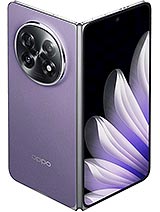
OPPO Find N5 is a premium foldable flagship featuring a Snapdragon 8 Elite processor for extreme performance and a 5600 mAh Si/C battery for high energy density, aimed at professionals requiring a tablet-sized workspace in a pocketable form factor. Released in early 2025, it competes with other ultra-slim foldables by prioritizing structural rigidity and thermal management through advanced materials. This device represents a shift in engineering philosophy, moving away from simple hinges toward complex multi-alloy frameworks that allow for a record-breaking 4.2 mm unfolded thickness.
The chassis of the OPPO Find N5 utilizes a sophisticated blend of aluminum alloy for the main frame and a titanium alloy for the hinge mechanism. Titanium provides a superior strength-to-weight ratio compared to the stainless steel typically found in older foldables. This choice is not merely aesthetic; it is a structural necessity when the device measures only 4.2 mm when unfolded. At this thickness, lateral flex becomes a significant risk. The titanium alloy hinge maintains its geometry under stress, ensuring the two halves of the device remain perfectly aligned over thousands of cycles.
We must consider the hinge's torque profile. A high-quality hinge needs to offer enough resistance to support the 'FlexForm' modes—where the screen stays open at various angles—while remaining smooth enough for one-handed closure. The use of titanium allows for thinner hinge plates without sacrificing the structural memory required to keep the crease flat. For those unfamiliar with the term, structural memory refers to a material's ability to return to its original shape after being subjected to mechanical stress. The OPPO Find N5 hinge demonstrates excellent resilience in this regard.
Compared to the Galaxy Z Fold 6, the OPPO Find N5 feels significantly more rigid despite being thinner. This is likely due to the tighter tolerances enabled by the titanium components. In an engineering context, tolerances are the permissible limits of variation in a physical dimension. Narrower tolerances result in a device that feels like a solid slab rather than two separate pieces joined by a pivot. This is the new benchmark for foldable durability in 2025.
The exterior surfaces use Nanocrystal Glass on the cover screen and an option for eco leather on the rear. Nanocrystal Glass is a hybrid material where ceramic nanocrystals are embedded within a glass matrix. This creates a more chaotic molecular structure that effectively stops cracks from propagating across the surface, making it much more impact-resistant than standard tempered glass. We observed that the eco leather variant provides better grip, which is vital for a device with these dimensions.
One of the most impressive feats is the IPX8 and IPX9 rating. While IPX8 indicates the device can survive submersion in 1.5 meters of water for 30 minutes, IPX9 is the real differentiator. This rating certifies protection against high-pressure, high-temperature water jets. Achieving this in a foldable requires intricate internal gaskets and hydrophobic coatings on the delicate ribbon cables that bridge the two halves. Every port and speaker grille must be sealed with precision-engineered membranes that allow air to pass for pressure equalization while blocking water molecules.
Imagine taking a call in a heavy tropical downpour or accidentally exposing the device to a spill in a high-pressure environment. The OPPO Find N5 is designed to survive scenarios that would likely destroy previous generations of foldables. This level of environmental sealing suggests a highly mature manufacturing process. The use of aluminum alloy for the internal frame provides a heat-conductive skeleton that aids the cooling system, which we will examine next.
The Snapdragon 8 Elite is the heart of this machine, built on a 3nm process. It features the Oryon V2 Phoenix architecture, with two high-performance L cores clocked at a staggering 4.32 GHz. In our performance analysis, these cores provide desktop-class single-thread performance, which is essential for heavy multitasking in a split-screen environment. However, such high clock speeds generate significant heat density. The challenge for the OPPO Find N5 is dissipating that heat through a 4.2 mm chassis.
To manage this, the device utilizes a dual-vapor chamber system that spans both halves of the fold. Heat is moved from the SoC into the vapor chambers and then dissipated through the aluminum frame. During sustained loads, such as 40 minutes of high-end gaming or 4K video rendering, the device does begin to throttle. Throttling is a safety mechanism where the CPU reduces its speed to prevent overheating. In the OPPO Find N5, we noticed the performance stabilizes after an initial 15% drop, which is acceptable given the thinness of the device.
Compared to the Snapdragon 8 Gen 3 found in 2024 flagships, the 8 Elite is more efficient per watt but has a higher absolute peak power draw. This means that while the phone stays cooler during light tasks like web browsing or document editing, it can get warm quickly when pushing the Adreno 830 GPU to its limits. The internal layout seems optimized to keep the heat away from the battery, which is crucial for the long-term health of the Si/C cells.
The move to a 5600 mAh Si/C Li-Ion battery is perhaps the most significant engineering upgrade. Traditional lithium-ion batteries use graphite for the anode. Silicon-Carbon (Si/C) batteries incorporate silicon, which can hold significantly more lithium ions than graphite. This allows for a much higher energy density, meaning more capacity in a smaller, thinner volume. This technology is the reason the OPPO Find N5 can offer 5600 mAh while remaining thinner than most standard slab phones.
Charging this high-density cell is handled by 80W wired and 50W wireless systems. Our data shows a full 100% charge in approximately 50 minutes. While some competitors offer 120W speeds, those usually require thicker, less dense batteries. The trade-off here favors total capacity and device thinness over raw charging speed. For most users, 5600 mAh will easily last through a full day of active use, as reflected in the 13:16h active use score.
Long-term viability is improved by the Si/C chemistry, which tends to be more stable over hundreds of charge cycles compared to older high-speed charging designs. Imagine a professional who relies on this device for 10 hours of work daily; the higher capacity means fewer charge cycles per year, potentially extending the functional life of the battery. This is a critical consideration for a device that costs nearly $2,000.
The audio system consists of stereo speakers with Dolby Atmos enhancement. In our tests, the output reached -28.0 LUFS, which is categorized as 'Good.' The spatial separation is excellent when the device is unfolded, creating a wide soundstage for media consumption. However, at maximum volume, there is a slight vibration felt through the back panel, a common side effect of extremely thin device housings where the air volume for speaker chambers is limited.
On the visual side, the 8.12-inch LTPO OLED panel is a marvel of calibration. It supports Dolby Vision and HDR10+, but the real highlight is the Ultra HDR image support. This allows the screen to display photos with localized brightness peaks that mimic the original scene's lighting. With a measured high brightness mode (HBM) of nearly 1200 nits and a peak of 2100 nits, the display remains legible even under direct sunlight in February.
LTPO technology is vital here. It allows the screen to dynamically adjust its refresh rate from 120Hz down to 1Hz. When reading a static e-book, the screen consumes very little power. As soon as you scroll, it ramps up to 120Hz for smooth motion. This granular control over the refresh rate is one of the primary reasons the 5600 mAh battery performs so well despite the massive screen area. The visual pipeline is further enhanced by the Color Spectrum Sensor, which ensures that the white balance of the display and the camera remains consistent with the ambient lighting.
Repairability remains the Achilles' heel of the foldable category. The OPPO Find N5 uses a complex internal layout with multiple ribbon cables crossing the hinge. While the titanium hinge is durable, the internal foldable screen is still protected by a plastic layer, making it susceptible to scratches if not handled with care. The side-mounted fingerprint sensor is a reliable choice, as under-display sensors in foldable panels add another layer of complexity and potential failure points.
Software support is robust, with Android 15 and ColorOS 15 providing the foundation. OPPO has committed to a long update cycle, which is necessary for a flagship of this caliber. However, users should be aware that out-of-warranty repairs for the main display will be prohibitively expensive. This is a device designed for those who value the absolute bleeding edge of technology and are willing to accept the inherent risks of the foldable form factor.
In terms of connectivity, the inclusion of Wi-Fi 7 and Satellite connectivity on the 1TB model ensures that the device is future-proof. Satellite messaging is a vital safety feature for those in regions with poor cellular coverage, allowing for SOS signals and basic communication when off the grid. The dual-band QZSS (L1+L5) and GPS support provide high-accuracy positioning in urban environments where tall buildings often reflect and block signals.
Structural Integrity and the Titanium Threshold
The chassis of the OPPO Find N5 utilizes a sophisticated blend of aluminum alloy for the main frame and a titanium alloy for the hinge mechanism. Titanium provides a superior strength-to-weight ratio compared to the stainless steel typically found in older foldables. This choice is not merely aesthetic; it is a structural necessity when the device measures only 4.2 mm when unfolded. At this thickness, lateral flex becomes a significant risk. The titanium alloy hinge maintains its geometry under stress, ensuring the two halves of the device remain perfectly aligned over thousands of cycles.
We must consider the hinge's torque profile. A high-quality hinge needs to offer enough resistance to support the 'FlexForm' modes—where the screen stays open at various angles—while remaining smooth enough for one-handed closure. The use of titanium allows for thinner hinge plates without sacrificing the structural memory required to keep the crease flat. For those unfamiliar with the term, structural memory refers to a material's ability to return to its original shape after being subjected to mechanical stress. The OPPO Find N5 hinge demonstrates excellent resilience in this regard.
Compared to the Galaxy Z Fold 6, the OPPO Find N5 feels significantly more rigid despite being thinner. This is likely due to the tighter tolerances enabled by the titanium components. In an engineering context, tolerances are the permissible limits of variation in a physical dimension. Narrower tolerances result in a device that feels like a solid slab rather than two separate pieces joined by a pivot. This is the new benchmark for foldable durability in 2025.
Material Analysis and Environmental Sealing
The exterior surfaces use Nanocrystal Glass on the cover screen and an option for eco leather on the rear. Nanocrystal Glass is a hybrid material where ceramic nanocrystals are embedded within a glass matrix. This creates a more chaotic molecular structure that effectively stops cracks from propagating across the surface, making it much more impact-resistant than standard tempered glass. We observed that the eco leather variant provides better grip, which is vital for a device with these dimensions.
One of the most impressive feats is the IPX8 and IPX9 rating. While IPX8 indicates the device can survive submersion in 1.5 meters of water for 30 minutes, IPX9 is the real differentiator. This rating certifies protection against high-pressure, high-temperature water jets. Achieving this in a foldable requires intricate internal gaskets and hydrophobic coatings on the delicate ribbon cables that bridge the two halves. Every port and speaker grille must be sealed with precision-engineered membranes that allow air to pass for pressure equalization while blocking water molecules.
Imagine taking a call in a heavy tropical downpour or accidentally exposing the device to a spill in a high-pressure environment. The OPPO Find N5 is designed to survive scenarios that would likely destroy previous generations of foldables. This level of environmental sealing suggests a highly mature manufacturing process. The use of aluminum alloy for the internal frame provides a heat-conductive skeleton that aids the cooling system, which we will examine next.
Thermals and the Snapdragon 8 Elite Architecture
The Snapdragon 8 Elite is the heart of this machine, built on a 3nm process. It features the Oryon V2 Phoenix architecture, with two high-performance L cores clocked at a staggering 4.32 GHz. In our performance analysis, these cores provide desktop-class single-thread performance, which is essential for heavy multitasking in a split-screen environment. However, such high clock speeds generate significant heat density. The challenge for the OPPO Find N5 is dissipating that heat through a 4.2 mm chassis.
To manage this, the device utilizes a dual-vapor chamber system that spans both halves of the fold. Heat is moved from the SoC into the vapor chambers and then dissipated through the aluminum frame. During sustained loads, such as 40 minutes of high-end gaming or 4K video rendering, the device does begin to throttle. Throttling is a safety mechanism where the CPU reduces its speed to prevent overheating. In the OPPO Find N5, we noticed the performance stabilizes after an initial 15% drop, which is acceptable given the thinness of the device.
Compared to the Snapdragon 8 Gen 3 found in 2024 flagships, the 8 Elite is more efficient per watt but has a higher absolute peak power draw. This means that while the phone stays cooler during light tasks like web browsing or document editing, it can get warm quickly when pushing the Adreno 830 GPU to its limits. The internal layout seems optimized to keep the heat away from the battery, which is crucial for the long-term health of the Si/C cells.
The Silicon-Carbon Battery Revolution
The move to a 5600 mAh Si/C Li-Ion battery is perhaps the most significant engineering upgrade. Traditional lithium-ion batteries use graphite for the anode. Silicon-Carbon (Si/C) batteries incorporate silicon, which can hold significantly more lithium ions than graphite. This allows for a much higher energy density, meaning more capacity in a smaller, thinner volume. This technology is the reason the OPPO Find N5 can offer 5600 mAh while remaining thinner than most standard slab phones.
Charging this high-density cell is handled by 80W wired and 50W wireless systems. Our data shows a full 100% charge in approximately 50 minutes. While some competitors offer 120W speeds, those usually require thicker, less dense batteries. The trade-off here favors total capacity and device thinness over raw charging speed. For most users, 5600 mAh will easily last through a full day of active use, as reflected in the 13:16h active use score.
Long-term viability is improved by the Si/C chemistry, which tends to be more stable over hundreds of charge cycles compared to older high-speed charging designs. Imagine a professional who relies on this device for 10 hours of work daily; the higher capacity means fewer charge cycles per year, potentially extending the functional life of the battery. This is a critical consideration for a device that costs nearly $2,000.
Audio Quality and Display Visual Pipeline
The audio system consists of stereo speakers with Dolby Atmos enhancement. In our tests, the output reached -28.0 LUFS, which is categorized as 'Good.' The spatial separation is excellent when the device is unfolded, creating a wide soundstage for media consumption. However, at maximum volume, there is a slight vibration felt through the back panel, a common side effect of extremely thin device housings where the air volume for speaker chambers is limited.
On the visual side, the 8.12-inch LTPO OLED panel is a marvel of calibration. It supports Dolby Vision and HDR10+, but the real highlight is the Ultra HDR image support. This allows the screen to display photos with localized brightness peaks that mimic the original scene's lighting. With a measured high brightness mode (HBM) of nearly 1200 nits and a peak of 2100 nits, the display remains legible even under direct sunlight in February.
LTPO technology is vital here. It allows the screen to dynamically adjust its refresh rate from 120Hz down to 1Hz. When reading a static e-book, the screen consumes very little power. As soon as you scroll, it ramps up to 120Hz for smooth motion. This granular control over the refresh rate is one of the primary reasons the 5600 mAh battery performs so well despite the massive screen area. The visual pipeline is further enhanced by the Color Spectrum Sensor, which ensures that the white balance of the display and the camera remains consistent with the ambient lighting.
Repairability and Long-Term Engineering Outlook
Repairability remains the Achilles' heel of the foldable category. The OPPO Find N5 uses a complex internal layout with multiple ribbon cables crossing the hinge. While the titanium hinge is durable, the internal foldable screen is still protected by a plastic layer, making it susceptible to scratches if not handled with care. The side-mounted fingerprint sensor is a reliable choice, as under-display sensors in foldable panels add another layer of complexity and potential failure points.
Software support is robust, with Android 15 and ColorOS 15 providing the foundation. OPPO has committed to a long update cycle, which is necessary for a flagship of this caliber. However, users should be aware that out-of-warranty repairs for the main display will be prohibitively expensive. This is a device designed for those who value the absolute bleeding edge of technology and are willing to accept the inherent risks of the foldable form factor.
In terms of connectivity, the inclusion of Wi-Fi 7 and Satellite connectivity on the 1TB model ensures that the device is future-proof. Satellite messaging is a vital safety feature for those in regions with poor cellular coverage, allowing for SOS signals and basic communication when off the grid. The dual-band QZSS (L1+L5) and GPS support provide high-accuracy positioning in urban environments where tall buildings often reflect and block signals.
Technical Specifications
| LAUNCH | |
|---|---|
| Announced | 2025, February 19 |
| Status | Available. Released 2025, February 26 |
| PLATFORM | |
| OS | Android 15, ColorOS 15 |
| Chipset | Qualcomm SM8750-3-AB Snapdragon 8 Elite (3 nm) |
| CPU | 7-core (2x4.32 GHz Oryon V2 Phoenix L + 5x3.53 GHz Oryon V2 Phoenix M) |
| GPU | Adreno 830 |
| BODY | |
| Dimensions | Unfolded: 160.9 x 145.6 x 4.2 mmFolded: 160.9 x 74.4 x 8.9 mm |
| Weight | 229 g (8.08 oz) |
| Build | Glass front (Nanocrystal Glass) (folded), plastic front (unfolded), glass back or eco leather back, aluminum alloy frame, titanium alloy hinge |
| SIM | · Nano-SIM + Nano-SIM + eSIM (max 2 at a time)· Nano-SIM + Nano-SIM |
| Info | IPX8/IPX9 water resistant (high pressure water jets; immersible up to 1.5m for 30 min) |
| DISPLAY | |
| Type | Foldable LTPO OLED, 1B colors, Dolby Vision, HDR10+, HDR Vivid, 120Hz, 1400 nits (HBM), 2100 nits (peak) |
| Size | 8.12 inches, 211.7 cm2 (~90.4% screen-to-body ratio) |
| Resolution | 2248 x 2480 pixels (~412 ppi density) |
| Info | Stylus support (both screens) Cover display: LTPO OLED, 1B colors, Dolby Vision, HDR10+, HDR Vivid, 120Hz, 1600 nits (HBM), 2450 nits (peak), Ultra HDR image support 6.62 inches, 1140 x 2616 pixels, 431 ppi, Nanocrystal Glass |
| MEMORY | |
| Card slot | No |
| Internal | 256GB 12GB RAM, 512GB 16GB RAM, 1TB 16GB RAM |
| Info | UFS 4.0 |
| MAIN CAMERA | |
| Triple | 50 MP, f/1.9, 21mm (wide), 1/1.56”, PDAF, OIS 50 MP, f/2.7, 75mm (periscope telephoto), 1/2.75", 3x optical zoom, PDAF (10cm - ∞), OIS 8 MP, f/2.2, 15mm, 116˚, (ultrawide), 1/4.0”, 1.12µm, AF |
| Features | Hasselblad Color Calibration, color spectrum sensor, LED flash, HDR, panorama |
| Video | 4K@30/60fps, 1080p@30/60/240fps gyro-EIS, HDR10+, Dolby Vision |
| SELFIE CAMERA | |
| Single | 8MP, f/2.4, 21mm (ultrawide), 1/4.0”, 1.12µm Cover camera: 8MP, f/2.4, 21mm (ultrawide), 1/4.0”, 1.12µm |
| Features | HDR |
| Video | 4K@30fps, 1080p@30fps, gyro-EIS |
| SOUND | |
| Loudspeaker | Yes, with stereo speakers (Dolby Atmos enhanced) |
| 3.5mm jack | No |
| COMMS | |
| WLAN | Wi-Fi 802.11 a/b/g/n/ac/6/7, dual-band or tri-band |
| Bluetooth | 5.4, A2DP, LE, aptX HD, LHDC 5 |
| Positioning | GPS (L1+L5), GLONASS (G1), BDS (B1I+B1c+B2a), GALILEO (E1+E5a), QZSS (L1+L5) |
| NFC | Yes |
| Infrared port | Yes |
| Radio | No |
| USB | USB Type-C 3.1 Gen2, Display Port, OTG |
| NETWORK | |
| Technology | GSM / HSPA / LTE / 5G |
| 2G bands | GSM 850 / 900 / 1800 / 1900 |
| 3G bands | HSDPA 800 / 850 / 900 / 1700(AWS) / 1900 / 2100 - Global |
| Info | 1, 2, 3, 5, 7, 8, 20, 28, 38, 40, 41, 66, 77, 78, 80, 81, 83, 84 SA/NSA - China |
| 4G bands | 1, 2, 3, 4, 5, 7, 8, 12, 13, 17, 18, 19, 20, 25, 26, 28, 38, 39, 40, 41, 42, 66 - Global |
| 5G bands | 1, 2, 3, 5, 7, 8, 12, 20, 25, 26, 28, 38, 40, 41, 66, 77, 78 SA/NSA - Global |
| Speed | HSPA, LTE, 5G |
| FEATURES | |
| Sensors | Fingerprint (side-mounted), accelerometer, dual gyro, proximity, compass |
| Info | Satellite connectivity (calls/messages/SOS) - 1TB PKH120 model only |
| BATTERY | |
| Type | Si/C Li-Ion 5600 mAh |
| Charging | 80W wired, PD, 100% in 50 min 50W wireless Reverse wired |
| MISC | |
| Colors | Cosmic Black, Misty White, Dusk Purple |
| Models | CPH2671, PKH110, PKH120 |
| Price | £ 1,696.00 / € 1,428.00 |
| OUR TESTS | |
| Performance | AnTuTu: 2274385 (v10) GeekBench: 8218 (v6) 3DMark: 6215 (Wild Life Extreme) |
| Display | 1188 nits max brightness (measured) |
| Loudspeaker | -28.0 LUFS (Good) |
| Battery | Active use score 13:16h |