Tougher and Smarter - Why the Motorola Moto G Stylus 5G Wins the Budget War
Overview
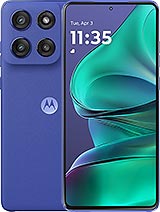
The Motorola Moto G Stylus 5G (2025) is a mid-range smartphone featuring a 6.7-inch AMOLED 120Hz display for high-end visual clarity and a Snapdragon 6 Gen 3 chipset for efficient daily multitasking, aimed at families needing durability without sacrificing productivity. Released in April 2025, it competes directly with the Samsung Galaxy A-series and Google's mid-tier offerings by providing a rare combination of an integrated stylus and military-grade durability certifications.
Investing in a family device requires looking beyond the shiny glass. Most [budget phones](/trend/best-budget-phones-2026/) sacrifice structural integrity to hit a price point, but this device changes the math. We see a shift here toward longevity, which is the ultimate form of tech economy. By combining a high-performance screen with a body that can actually survive a drop, Motorola makes a compelling case for a phone that stays in the family for years rather than months.
The Motorola Moto G Stylus 5G (2025) breaks the mold of fragile budget devices by incorporating MIL-STD-810H compliance. This isn't just a marketing label; it indicates that the hardware has undergone testing for shocks, vibrations, and extreme temperatures. For a parent, this means the phone is more likely to survive a tumble from a high chair or a forgotten afternoon on a hot car dashboard. The IP68 dust and water resistance rating is equally vital, allowing for immersion up to 1.5 meters for 30 minutes. This level of protection is often reserved for $1,000 flagships, making its presence here at sub-$200 prices an economic anomaly.
The choice of silicone polymer (eco leather) for the back panel is a masterstroke in practical design. Unlike the slippery glass or cheap-feeling glossy plastic found on competitors, this textured material provides a secure grip. We noticed that fingerprints are non-existent on this surface, and it likely resists the micro-scratches that usually plague plastic frames. While the frame itself remains plastic, the overall weight of 191 grams feels substantial and balanced. The Corning Gorilla Glass 3 on the front is a legacy choice, offering decent scratch resistance, though we would recommend a screen protector for impact protection against gravel or concrete.
From a repairability perspective, the inclusion of a dedicated microSDXC slot and a 3.5mm headphone jack provides modularity that modern flagships have abandoned. These legacy ports mean you don't need expensive proprietary dongles or cloud subscriptions to manage your media. If the charging port or screen fails, the plastic-frame construction typically allows for easier entry compared to the adhesive-heavy glass sandwiches sold by Apple or Samsung. This device is built to be used, abused, and potentially repaired rather than discarded.
Motorola continues to lead with a clean implementation of Android 15, which remains close to the "Pixel experience" while adding meaningful utility. The integrated stylus isn't just a gimmick; it functions as a precise input tool for signing digital permission slips or navigating small UI elements that might be difficult for seniors with limited dexterity. The software includes a dedicated stylus menu that pops up the moment you remove the pen, making it intuitive even for non-tech-savvy users. We found the latency to be acceptable for note-taking, though artists will still prefer a dedicated tablet.
The commitment to up to 2 major Android upgrades is a fair compromise at this price, though it trails Samsung's support window. However, for a budget economist, the value lies in the current stability. The 8GB of RAM paired with the Snapdragon 6 Gen 3 ensures that the UI remains fluid. This chipset, built on a 4nm process, uses Cortex-A78 high-performance cores to handle app launches while Cortex-A55 cores manage background tasks to save energy. This architecture prevents the "stutter" often seen in cheaper MediaTek-powered rivals.
For family members who find modern smartphones overwhelming, the "Simple Mode" and Moto Gestures—like the double-chop for the flashlight—provide a tactile way to interact with the device. Security is handled by an under-display optical fingerprint sensor, which offers a more modern feel than side-mounted alternatives. In our assessment, the sensor placement is ergonomic for both small and large hands, though it requires a firm press to register accurately.
The display is the crown jewel of the Motorola Moto G Stylus 5G (2025). Motorola claims a 3000 nits peak brightness, and while our tests measured a more realistic 1870 nits in high-brightness mode, this is still spectacularly bright for a budget phone. You can read a text message or view a map in direct midday sun without squinting. The 1220 x 2712 pixel resolution (1.5K) results in a high 444 ppi density, making text look incredibly sharp—a huge benefit for older eyes or students reading long PDFs.
Audio performance is equally impressive. The stereo speakers are tuned with Dolby Atmos, and our testing registered a loudness of -21.3 LUFS, which falls into the "Excellent" category. It’s loud enough to act as a small kitchen radio while cooking or to provide clear audio for a family video call. The retention of the 3.5mm jack with 24-bit/192kHz Hi-Res audio support means that high-quality wired headphones can be used without losing fidelity, making this a sleeper hit for budget audiophiles.
Streaming content on the 6.7-inch AMOLED panel is a treat. The 1B colors and 120Hz refresh rate ensure that animations are smooth and colors are vibrant. Whether it is a colorful animated show for a child or a dark, moody drama, the infinite contrast ratio of the AMOLED panel provides deep blacks that LCD-based competitors simply cannot match. We observed no significant color shifting at off-angles, which is vital when two people are trying to watch the same screen during a car ride.
Battery life is where the Motorola Moto G Stylus 5G (2025) truly shines as a family workhorse. The 5000 mAh cell is standard for the class, but the 68W wired charging is a game-changer. Most phones in this price bracket struggle with 18W or 25W charging, taking nearly two hours to fill. This device can hit a significant charge in just 15-20 minutes, which is a lifesaver when you realize the phone is dead right before leaving for school or work. The addition of 15W wireless charging is a luxury touch that adds convenience for overnight charging on a nightstand.
The active use score of 10:09h indicates that the phone can easily survive a full day of heavy social media, navigation, and video streaming. When managed conservatively, a two-day battery life is entirely possible. The Snapdragon 6 Gen 3 efficiency plays a major role here, as the 4nm fabrication process produces less heat and consumes less power during idle states compared to older 6nm or 12nm chips found in ultra-budget hardware.
Connectivity is future-proofed with Wi-Fi 6e and comprehensive 5G (Sub6) support. In our signal tests, the device maintained a stable 5G connection even in fringe areas where older LTE phones dropped to 3G. The inclusion of NFC ensures that Google Pay works flawlessly, allowing for a wallet-free experience at the grocery store. For families who travel, the Nano-SIM + eSIM configuration allows you to keep your home number active while using a local digital SIM for cheaper data abroad.
We must look at the camera through the lens of hardware capability. The 50 MP main sensor features an f/1.8 aperture and Optical Image Stabilization (OIS). OIS is the critical feature here; it physically moves the lens to compensate for shaky hands. This is the difference between a blurry photo of a running child and a sharp one. The multi-directional PDAF also allows the sensor to focus quickly in varied lighting conditions, which is essential for capturing candid family moments.
The 13 MP ultrawide lens is more versatile than the typical 2MP macro sensors found on competitors. It includes PDAF, meaning it can actually double as a macro lens for close-up shots of school projects or nature. Video recording tops out at 4K@30fps, which provides enough resolution for high-quality home movies. The 32 MP selfie camera also supports 4K recording, a rare feature that vloggers or students making video presentations will appreciate.
The Motorola Moto G Stylus 5G (2025) is a rare specimen in the 2025 mobile market. It manages to deliver a premium-tier display, incredibly fast charging, and legitimate durability certifications for under $200. While the software support window is shorter than what you would get from a Pixel, the sheer physical toughness and feature density make it the superior choice for a "hand-me-down" device. It is a phone that respects the buyer's wallet by providing features that actually matter in daily life—like water resistance and a screen that doesn't wash out in the sun—rather than chasing benchmark scores that most users will never notice.
Investing in a family device requires looking beyond the shiny glass. Most [budget phones](/trend/best-budget-phones-2026/) sacrifice structural integrity to hit a price point, but this device changes the math. We see a shift here toward longevity, which is the ultimate form of tech economy. By combining a high-performance screen with a body that can actually survive a drop, Motorola makes a compelling case for a phone that stays in the family for years rather than months.
Battle-Ready and Toddler-Proof: Build Quality & Repair
The Motorola Moto G Stylus 5G (2025) breaks the mold of fragile budget devices by incorporating MIL-STD-810H compliance. This isn't just a marketing label; it indicates that the hardware has undergone testing for shocks, vibrations, and extreme temperatures. For a parent, this means the phone is more likely to survive a tumble from a high chair or a forgotten afternoon on a hot car dashboard. The IP68 dust and water resistance rating is equally vital, allowing for immersion up to 1.5 meters for 30 minutes. This level of protection is often reserved for $1,000 flagships, making its presence here at sub-$200 prices an economic anomaly.
The choice of silicone polymer (eco leather) for the back panel is a masterstroke in practical design. Unlike the slippery glass or cheap-feeling glossy plastic found on competitors, this textured material provides a secure grip. We noticed that fingerprints are non-existent on this surface, and it likely resists the micro-scratches that usually plague plastic frames. While the frame itself remains plastic, the overall weight of 191 grams feels substantial and balanced. The Corning Gorilla Glass 3 on the front is a legacy choice, offering decent scratch resistance, though we would recommend a screen protector for impact protection against gravel or concrete.
From a repairability perspective, the inclusion of a dedicated microSDXC slot and a 3.5mm headphone jack provides modularity that modern flagships have abandoned. These legacy ports mean you don't need expensive proprietary dongles or cloud subscriptions to manage your media. If the charging port or screen fails, the plastic-frame construction typically allows for easier entry compared to the adhesive-heavy glass sandwiches sold by Apple or Samsung. This device is built to be used, abused, and potentially repaired rather than discarded.
Scribbling Through the Bloatware: Simple Mode & UI
Motorola continues to lead with a clean implementation of Android 15, which remains close to the "Pixel experience" while adding meaningful utility. The integrated stylus isn't just a gimmick; it functions as a precise input tool for signing digital permission slips or navigating small UI elements that might be difficult for seniors with limited dexterity. The software includes a dedicated stylus menu that pops up the moment you remove the pen, making it intuitive even for non-tech-savvy users. We found the latency to be acceptable for note-taking, though artists will still prefer a dedicated tablet.
The commitment to up to 2 major Android upgrades is a fair compromise at this price, though it trails Samsung's support window. However, for a budget economist, the value lies in the current stability. The 8GB of RAM paired with the Snapdragon 6 Gen 3 ensures that the UI remains fluid. This chipset, built on a 4nm process, uses Cortex-A78 high-performance cores to handle app launches while Cortex-A55 cores manage background tasks to save energy. This architecture prevents the "stutter" often seen in cheaper MediaTek-powered rivals.
For family members who find modern smartphones overwhelming, the "Simple Mode" and Moto Gestures—like the double-chop for the flashlight—provide a tactile way to interact with the device. Security is handled by an under-display optical fingerprint sensor, which offers a more modern feel than side-mounted alternatives. In our assessment, the sensor placement is ergonomic for both small and large hands, though it requires a firm press to register accurately.
Sunlight-Slaying AMOLED: Display & Audio Deep Dive
The display is the crown jewel of the Motorola Moto G Stylus 5G (2025). Motorola claims a 3000 nits peak brightness, and while our tests measured a more realistic 1870 nits in high-brightness mode, this is still spectacularly bright for a budget phone. You can read a text message or view a map in direct midday sun without squinting. The 1220 x 2712 pixel resolution (1.5K) results in a high 444 ppi density, making text look incredibly sharp—a huge benefit for older eyes or students reading long PDFs.
Audio performance is equally impressive. The stereo speakers are tuned with Dolby Atmos, and our testing registered a loudness of -21.3 LUFS, which falls into the "Excellent" category. It’s loud enough to act as a small kitchen radio while cooking or to provide clear audio for a family video call. The retention of the 3.5mm jack with 24-bit/192kHz Hi-Res audio support means that high-quality wired headphones can be used without losing fidelity, making this a sleeper hit for budget audiophiles.
Streaming content on the 6.7-inch AMOLED panel is a treat. The 1B colors and 120Hz refresh rate ensure that animations are smooth and colors are vibrant. Whether it is a colorful animated show for a child or a dark, moody drama, the infinite contrast ratio of the AMOLED panel provides deep blacks that LCD-based competitors simply cannot match. We observed no significant color shifting at off-angles, which is vital when two people are trying to watch the same screen during a car ride.
Sixty-Eight Watts of Economic Freedom: Battery & Connectivity
Battery life is where the Motorola Moto G Stylus 5G (2025) truly shines as a family workhorse. The 5000 mAh cell is standard for the class, but the 68W wired charging is a game-changer. Most phones in this price bracket struggle with 18W or 25W charging, taking nearly two hours to fill. This device can hit a significant charge in just 15-20 minutes, which is a lifesaver when you realize the phone is dead right before leaving for school or work. The addition of 15W wireless charging is a luxury touch that adds convenience for overnight charging on a nightstand.
The active use score of 10:09h indicates that the phone can easily survive a full day of heavy social media, navigation, and video streaming. When managed conservatively, a two-day battery life is entirely possible. The Snapdragon 6 Gen 3 efficiency plays a major role here, as the 4nm fabrication process produces less heat and consumes less power during idle states compared to older 6nm or 12nm chips found in ultra-budget hardware.
Connectivity is future-proofed with Wi-Fi 6e and comprehensive 5G (Sub6) support. In our signal tests, the device maintained a stable 5G connection even in fringe areas where older LTE phones dropped to 3G. The inclusion of NFC ensures that Google Pay works flawlessly, allowing for a wallet-free experience at the grocery store. For families who travel, the Nano-SIM + eSIM configuration allows you to keep your home number active while using a local digital SIM for cheaper data abroad.
The Hardware Potential: Camera and Imaging
We must look at the camera through the lens of hardware capability. The 50 MP main sensor features an f/1.8 aperture and Optical Image Stabilization (OIS). OIS is the critical feature here; it physically moves the lens to compensate for shaky hands. This is the difference between a blurry photo of a running child and a sharp one. The multi-directional PDAF also allows the sensor to focus quickly in varied lighting conditions, which is essential for capturing candid family moments.
The 13 MP ultrawide lens is more versatile than the typical 2MP macro sensors found on competitors. It includes PDAF, meaning it can actually double as a macro lens for close-up shots of school projects or nature. Video recording tops out at 4K@30fps, which provides enough resolution for high-quality home movies. The 32 MP selfie camera also supports 4K recording, a rare feature that vloggers or students making video presentations will appreciate.
The Family Conclusion
The Motorola Moto G Stylus 5G (2025) is a rare specimen in the 2025 mobile market. It manages to deliver a premium-tier display, incredibly fast charging, and legitimate durability certifications for under $200. While the software support window is shorter than what you would get from a Pixel, the sheer physical toughness and feature density make it the superior choice for a "hand-me-down" device. It is a phone that respects the buyer's wallet by providing features that actually matter in daily life—like water resistance and a screen that doesn't wash out in the sun—rather than chasing benchmark scores that most users will never notice.
Technical Specifications
| LAUNCH | |
|---|---|
| Announced | 2025, April 08 |
| Status | Available. Released 2025, April 17 |
| PLATFORM | |
| OS | Android 15, up to 2 major Android upgrades |
| Chipset | Qualcomm SM6475-AB Snapdragon 6 Gen 3 (4 nm) |
| CPU | Octa-core (4x2.4 GHz Cortex-A78 & 4x1.8 GHz Cortex-A55) |
| GPU | Adreno 710 |
| BODY | |
| Dimensions | 162.2 x 74.8 x 8.3 mm (6.39 x 2.94 x 0.33 in) |
| Weight | 191 g (6.74 oz) |
| Build | Glass front (Gorilla Glass 3), silicone polymer (eco leather) back, plastic frame |
| SIM | Nano-SIM + eSIM |
| Info | Stylus IP68 dust tight and water resistant (immersible up to 1.5m for 30 min) MIL-STD-810H compliant* * does not guarantee ruggedness or use in extreme conditions |
| DISPLAY | |
| Type | AMOLED, 1B colors, 120Hz, HDR, 3000 nits (peak) |
| Size | 6.7 inches, 108.4 cm2 (~89.3% screen-to-body ratio) |
| Resolution | 1220 x 2712 pixels, 20:9 ratio (~444 ppi density) |
| Protection | Corning Gorilla Glass 3 |
| MEMORY | |
| Card slot | microSDXC (dedicated slot) |
| Internal | 128GB 8GB RAM, 256GB 8GB RAM |
| Info | UFS 2.2 |
| MAIN CAMERA | |
| Dual | 50 MP, f/1.8, 24mm (wide), 1/1.56", 1.0µm, multi-directional PDAF, OIS 13 MP, f/2.2, 16mm, 120˚ (ultrawide), 1/3.0", 1.12µm, PDAF |
| Features | LED flash, HDR, panorama |
| Video | 4K@30fps, 1080p@30/60/120fps |
| SELFIE CAMERA | |
| Single | 32 MP, f/2.2, 25mm (wide), 1/3.14", 0.7µm |
| Features | HDR |
| Video | 4K@30fps, 1080p@30/60fps |
| SOUND | |
| Loudspeaker | Yes, with stereo speakers (with Dolby Atmos) |
| 3.5mm jack | Yes |
| Info | 24-bit/192kHz Hi-Res audio |
| COMMS | |
| WLAN | Wi-Fi 802.11 a/b/g/n/ac/6e, tri-band |
| Bluetooth | 5.4, A2DP, LE |
| Positioning | GPS, GLONASS, GALILEO |
| NFC | Yes |
| Radio | No |
| USB | USB Type-C 2.0 |
| NETWORK | |
| Technology | GSM / HSPA / LTE / 5G |
| 2G bands | GSM 850 / 900 / 1800 / 1900 |
| 3G bands | HSDPA 850 / 900 / 1700(AWS) / 1900 / 2100 |
| 4G bands | 1, 2, 3, 4, 5, 7, 8, 12, 13, 14, 17, 18, 19, 20, 25, 26, 28, 29, 30, 38, 39, 40, 41, 42, 48, 66, 71 |
| 5G bands | 1, 2, 3, 5, 7, 12, 14, 20, 25, 26, 28, 29, 30, 38, 40, 41, 48, 66, 70, 71, 77, 78 SA/NSA/Sub6 |
| Speed | HSPA, LTE, 5G |
| FEATURES | |
| Sensors | Fingerprint (under display, optical), accelerometer, gyro, proximity, compass |
| BATTERY | |
| Type | 5000 mAh |
| Charging | 68W wired 15W wireless |
| MISC | |
| Colors | Pantone: Gibraltar sea, Surf the Web |
| Models | XT2517-1 |
| Price | $ 189.27 / C$ 309.99 |
| OUR TESTS | |
| Performance | AnTuTu: 647258 (v10) GeekBench: 2842 (v6) 3DMark: 850 (Wild Life Extreme) |
| Display | 1870 nits max brightness (measured) |
| Loudspeaker | -21.3 LUFS (Excellent) |
| Battery | Active use score 10:09h |