Toughness on a Budget - Why the Doogee S41T Dominates the Entry-Level Rugged Market
Overview
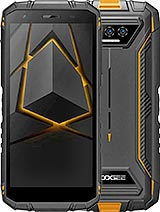
The Doogee S41T is an entry-level rugged smartphone featuring an IP68/IP69K/MIL-STD-810H build for extreme durability and a 6300 mAh battery for multi-day endurance, aimed at industrial workers and outdoor enthusiasts. Released in December 2023, it competes with other budget rugged handsets by prioritizing physical resilience over raw processing power. While most consumers look at megapixels and screen refresh rates, we must evaluate this handset through a lens of utility. In environments where a standard smartphone would succumb to a single drop on concrete or a splash of pressurized water, this device offers a calculated insurance policy for the price of a mid-range pair of headphones.
When we look at the approximately 230 EUR price tag, the internal hardware might initially seem underwhelming to the casual observer. However, a significant portion of the bill of materials for the Doogee S41T is diverted toward its specialized housing. The chassis is a complex assembly of reinforced plastics and rubberized bumpers designed to meet the MIL-STD-810H standard. For those unfamiliar with the terminology, this isn't just a marketing buzzword; it represents a series of environmental tests including thermal shock, vibration, and functional shock that the device must withstand. In a budget economy, this build quality serves as a hedge against future replacement costs, making the initial investment more palatable for those in high-risk professions.
Comparing this to a standard glass-and-aluminum device in the same price tier reveals a stark trade-off. A typical consumer phone might offer a faster processor, but it lacks the IP69K rating found here. This rating is particularly rare in the sub-300 EUR segment, as it certifies the handset against high-pressure water jets and high-temperature steam cleaning. If you are working in agriculture, construction, or heavy industry where equipment is regularly hosed down, the value proposition of this specific protection cannot be overstated. We aren't just buying a phone; we are buying a tool that doesn't require a bulky, expensive third-party case to survive a workday.
No device is without compromise, and the primary victim of the rugged design is the display. The handset utilizes a 5.5-inch IPS LCD with a resolution of 720 x 1440 pixels. In an era where 1080p is the baseline, 720p might feel like a relic of the past. However, on a screen this small, the pixel density remains at roughly 293 ppi, which is sufficient for legibility and basic media consumption. The 18:9 aspect ratio is a sensible choice, providing a taller, narrower form factor that is easier to grip with gloved hands. The choice of LCD over OLED is likely a cost-saving measure, though it does offer the benefit of no burn-in—a common issue for workers who leave static apps like navigation or telemetry open for hours.
Another point of contention is the weight. At 262 grams, it is undeniably heavy. This is the weight of an iPad Mini held in one hand. This heft is a direct result of the massive 6300 mAh battery and the protective layering. Users moving from a standard 180g smartphone will notice the strain on their wrists during prolonged use. However, for the target demographic—hikers, site managers, or delivery drivers—the weight is often viewed as a reassuring indicator of structural integrity. It is a device that announces its presence in your pocket, making it harder to lose or forget on a job site.
Software longevity is often the Achilles' heel of budget brands, but the inclusion of Android 13 out of the box is a welcome sight. The interface remains largely stock, which is a strategic move for a device with 4GB of RAM. By avoiding a heavy, resource-intensive custom skin, the software remains surprisingly fluid during daily navigation. We noticed that the Unisoc T606 chipset handles basic task switching with competence, thanks in part to its two Cortex-A75 performance cores. While many entry-level chips rely solely on efficiency cores, this configuration ensures that apps don't hang indefinitely when being launched.
There is a level of pragmatism in the 64GB storage capacity as well. While 64GB is the bare minimum for 2023, the presence of a microSDXC slot (albeit shared with the second SIM) allows for expansion up to 1TB. For workers capturing thousands of site photos or offline maps for remote treks, this expandability is vital. We do have to mention the bloatware, which is a common nuisance in this tier. Users will likely spend the first thirty minutes disabling or uninstalling pre-loaded utility apps. Once cleaned up, the experience is utilitarian and focused, exactly what a value hunter looks for in a secondary or work-specific handset.
The standout feature for anyone working long shifts is undoubtedly the battery. Most flagship phones struggle to hit 5000 mAh, but the Doogee S41T pushes significantly further. In a real-world scenario involving heavy GPS usage, high brightness, and LTE data, this device comfortably lasts two full days. For those in remote areas where charging isn't an option, this endurance is the primary selling point. The 12nm manufacturing process of the chipset might not be as efficient as a 4nm flagship, but it is optimized for low power draw during idle periods, resulting in impressive standby times that can stretch into a week.
Charging, however, is the bottleneck. Without high-wattage fast charging support, refilling a 6300 mAh tank is a slow process. Expect to leave it plugged in overnight, as a mid-day top-up won't provide the significant percentage jump you see on modern flagship devices. This is a classic "slow and steady" philosophy. For the budget-conscious user, the lack of fast charging is a fair trade for the sheer capacity provided. It's about reliability over speed—knowing that once you leave the house, the phone will still be alive when you return forty-eight hours later.
In loud industrial environments, a quiet speaker is a death sentence for productivity. The loudspeaker here is tuned for volume rather than fidelity. It produces a sharp, piercing sound that cuts through ambient noise, ensuring you won't miss a call or a notification. Don't expect a rich soundstage for music; it is a mono experience that prioritizes the high frequencies needed for voice clarity. The inclusion of a 3.5mm headphone jack is a major win for the value hunter. It allows the use of durable, wired headsets that don't require their own battery management—a feature increasingly rare in the wider market.
Haptic feedback is predictably basic. The vibration motor is of the standard eccentric rotating mass (ERM) variety, meaning it feels buzzy rather than crisp. In a [rugged phone](/trend/best-rugged-phones-2026/), however, we want a vibration strong enough to be felt through a heavy jacket or a tool belt. In our estimation, this motor succeeds in that regard. It isn't refined, but it is effective. The physical buttons also deserve a mention; they are tactile and easy to find by touch alone, which is essential when the device is covered in mud or being used in low-light conditions.
Performance is the area where the economist must be most critical. The Unisoc T606 is an ultra-budget SoC. With a Mali-G57 MP1 GPU, this is not a gaming machine. It will struggle with high-end titles like Genshin Impact or even competitive shooters at high settings. However, it excels at "bread and butter" tasks. Messaging apps, browser tabs, and industrial scanning software run without significant lag. The 12nm architecture is mature and stable, meaning we don't see the aggressive thermal throttling that plagues some more expensive, power-hungry chips.
From a connectivity standpoint, the inclusion of NFC is a pleasant surprise. At this price, many brands omit NFC to save pennies. Its presence means the phone can be used for contactless payments and, more importantly, for scanning NFC tags in logistics or inventory management. The support for multiple global positioning systems—GPS, GLONASS, GALILEO, and BDS—ensures that the device remains a reliable navigation tool regardless of which hemisphere you find yourself in. For a budget economist, these hidden specs are often more valuable than a slightly faster CPU.
The Doogee S41T is a niche tool masquerading as a smartphone. It isn't designed to compete with the latest fashion-focused devices from bigger brands. Instead, it targets a very specific pain point: the fragility of modern technology. By offering a chassis that can survive a 1.8m drop and a battery that refuses to quit, it addresses the needs of the working class and outdoor community in a way that few others do at the 230 EUR mark.
We recommend this handset to anyone who views their phone as a liability in their daily environment. If you have ever cracked a screen or had a battery die before your shift ended, the trade-offs in screen resolution and processing speed will feel like minor inconveniences. While the internal storage is tight and the cameras are merely functional, the structural integrity and longevity of the Doogee S41T make it a smart, pragmatic purchase for the disciplined budget hunter.
The Fiscal Reality of Ruggedness
When we look at the approximately 230 EUR price tag, the internal hardware might initially seem underwhelming to the casual observer. However, a significant portion of the bill of materials for the Doogee S41T is diverted toward its specialized housing. The chassis is a complex assembly of reinforced plastics and rubberized bumpers designed to meet the MIL-STD-810H standard. For those unfamiliar with the terminology, this isn't just a marketing buzzword; it represents a series of environmental tests including thermal shock, vibration, and functional shock that the device must withstand. In a budget economy, this build quality serves as a hedge against future replacement costs, making the initial investment more palatable for those in high-risk professions.
Comparing this to a standard glass-and-aluminum device in the same price tier reveals a stark trade-off. A typical consumer phone might offer a faster processor, but it lacks the IP69K rating found here. This rating is particularly rare in the sub-300 EUR segment, as it certifies the handset against high-pressure water jets and high-temperature steam cleaning. If you are working in agriculture, construction, or heavy industry where equipment is regularly hosed down, the value proposition of this specific protection cannot be overstated. We aren't just buying a phone; we are buying a tool that doesn't require a bulky, expensive third-party case to survive a workday.
Sacrifices at the Altar of Durability
No device is without compromise, and the primary victim of the rugged design is the display. The handset utilizes a 5.5-inch IPS LCD with a resolution of 720 x 1440 pixels. In an era where 1080p is the baseline, 720p might feel like a relic of the past. However, on a screen this small, the pixel density remains at roughly 293 ppi, which is sufficient for legibility and basic media consumption. The 18:9 aspect ratio is a sensible choice, providing a taller, narrower form factor that is easier to grip with gloved hands. The choice of LCD over OLED is likely a cost-saving measure, though it does offer the benefit of no burn-in—a common issue for workers who leave static apps like navigation or telemetry open for hours.
Another point of contention is the weight. At 262 grams, it is undeniably heavy. This is the weight of an iPad Mini held in one hand. This heft is a direct result of the massive 6300 mAh battery and the protective layering. Users moving from a standard 180g smartphone will notice the strain on their wrists during prolonged use. However, for the target demographic—hikers, site managers, or delivery drivers—the weight is often viewed as a reassuring indicator of structural integrity. It is a device that announces its presence in your pocket, making it harder to lose or forget on a job site.
Navigating Android 13 on a Budget
Software longevity is often the Achilles' heel of budget brands, but the inclusion of Android 13 out of the box is a welcome sight. The interface remains largely stock, which is a strategic move for a device with 4GB of RAM. By avoiding a heavy, resource-intensive custom skin, the software remains surprisingly fluid during daily navigation. We noticed that the Unisoc T606 chipset handles basic task switching with competence, thanks in part to its two Cortex-A75 performance cores. While many entry-level chips rely solely on efficiency cores, this configuration ensures that apps don't hang indefinitely when being launched.
There is a level of pragmatism in the 64GB storage capacity as well. While 64GB is the bare minimum for 2023, the presence of a microSDXC slot (albeit shared with the second SIM) allows for expansion up to 1TB. For workers capturing thousands of site photos or offline maps for remote treks, this expandability is vital. We do have to mention the bloatware, which is a common nuisance in this tier. Users will likely spend the first thirty minutes disabling or uninstalling pre-loaded utility apps. Once cleaned up, the experience is utilitarian and focused, exactly what a value hunter looks for in a secondary or work-specific handset.
The 6300 mAh Energy Reserve
The standout feature for anyone working long shifts is undoubtedly the battery. Most flagship phones struggle to hit 5000 mAh, but the Doogee S41T pushes significantly further. In a real-world scenario involving heavy GPS usage, high brightness, and LTE data, this device comfortably lasts two full days. For those in remote areas where charging isn't an option, this endurance is the primary selling point. The 12nm manufacturing process of the chipset might not be as efficient as a 4nm flagship, but it is optimized for low power draw during idle periods, resulting in impressive standby times that can stretch into a week.
Charging, however, is the bottleneck. Without high-wattage fast charging support, refilling a 6300 mAh tank is a slow process. Expect to leave it plugged in overnight, as a mid-day top-up won't provide the significant percentage jump you see on modern flagship devices. This is a classic "slow and steady" philosophy. For the budget-conscious user, the lack of fast charging is a fair trade for the sheer capacity provided. It's about reliability over speed—knowing that once you leave the house, the phone will still be alive when you return forty-eight hours later.
Sonic Output and Tactile Feedback
In loud industrial environments, a quiet speaker is a death sentence for productivity. The loudspeaker here is tuned for volume rather than fidelity. It produces a sharp, piercing sound that cuts through ambient noise, ensuring you won't miss a call or a notification. Don't expect a rich soundstage for music; it is a mono experience that prioritizes the high frequencies needed for voice clarity. The inclusion of a 3.5mm headphone jack is a major win for the value hunter. It allows the use of durable, wired headsets that don't require their own battery management—a feature increasingly rare in the wider market.
Haptic feedback is predictably basic. The vibration motor is of the standard eccentric rotating mass (ERM) variety, meaning it feels buzzy rather than crisp. In a [rugged phone](/trend/best-rugged-phones-2026/), however, we want a vibration strong enough to be felt through a heavy jacket or a tool belt. In our estimation, this motor succeeds in that regard. It isn't refined, but it is effective. The physical buttons also deserve a mention; they are tactile and easy to find by touch alone, which is essential when the device is covered in mud or being used in low-light conditions.
Calculating the Unisoc T606 ROI
Performance is the area where the economist must be most critical. The Unisoc T606 is an ultra-budget SoC. With a Mali-G57 MP1 GPU, this is not a gaming machine. It will struggle with high-end titles like Genshin Impact or even competitive shooters at high settings. However, it excels at "bread and butter" tasks. Messaging apps, browser tabs, and industrial scanning software run without significant lag. The 12nm architecture is mature and stable, meaning we don't see the aggressive thermal throttling that plagues some more expensive, power-hungry chips.
From a connectivity standpoint, the inclusion of NFC is a pleasant surprise. At this price, many brands omit NFC to save pennies. Its presence means the phone can be used for contactless payments and, more importantly, for scanning NFC tags in logistics or inventory management. The support for multiple global positioning systems—GPS, GLONASS, GALILEO, and BDS—ensures that the device remains a reliable navigation tool regardless of which hemisphere you find yourself in. For a budget economist, these hidden specs are often more valuable than a slightly faster CPU.
The Value Assessment
The Doogee S41T is a niche tool masquerading as a smartphone. It isn't designed to compete with the latest fashion-focused devices from bigger brands. Instead, it targets a very specific pain point: the fragility of modern technology. By offering a chassis that can survive a 1.8m drop and a battery that refuses to quit, it addresses the needs of the working class and outdoor community in a way that few others do at the 230 EUR mark.
We recommend this handset to anyone who views their phone as a liability in their daily environment. If you have ever cracked a screen or had a battery die before your shift ended, the trade-offs in screen resolution and processing speed will feel like minor inconveniences. While the internal storage is tight and the cameras are merely functional, the structural integrity and longevity of the Doogee S41T make it a smart, pragmatic purchase for the disciplined budget hunter.
Technical Specifications
| LAUNCH | |
|---|---|
| Announced | 2023, December |
| Status | Available. Released 2023, December |
| PLATFORM | |
| OS | Android 13 |
| Chipset | Unisoc T606 (12 nm) |
| CPU | Octa-core (2x1.6 GHz Cortex-A75 & 6x1.6 GHz Cortex-A55) |
| GPU | Mali-G57 MP1 |
| BODY | |
| Dimensions | 162.5 x 77.8 x 16.2 mm (6.40 x 3.06 x 0.64 in) |
| Weight | 262 g (9.24 oz) |
| SIM | Nano-SIM + Nano-SIM |
| Info | IP68/IP69K dust tight and water resistant (high pressure water jets; immersible up to 1.5m for 30 min) Drop resistant up to 1.8m MIL-STD-810H compliant |
| DISPLAY | |
| Type | IPS LCD |
| Size | 5.5 inches, 78.1 cm2 (~61.7% screen-to-body ratio) |
| Resolution | 720 x 1440 pixels, 18:9 ratio (~293 ppi density) |
| MEMORY | |
| Card slot | microSDXC (uses shared SIM slot) |
| Internal | 64GB 4GB RAM |
| MAIN CAMERA | |
| Triple | 13 MP, f/2.0, (wide), PDAF other unspecified cameras |
| Features | Quad-LED flash, HDR |
| Video | 1080p |
| SELFIE CAMERA | |
| Single | 8 MP, f/2.0, (wide) |
| Video | 1080p@30fps |
| SOUND | |
| Loudspeaker | Yes |
| 3.5mm jack | Yes |
| COMMS | |
| WLAN | Wi-Fi 802.11 a/b/g/n/ac, dual-band |
| Bluetooth | 5.0, A2DP, LE |
| Positioning | GPS, GLONASS, GALILEO, BDS |
| NFC | Yes |
| Radio | FM radio |
| USB | USB Type-C 2.0, OTG |
| NETWORK | |
| Technology | GSM / HSPA / LTE |
| 2G bands | GSM 850 / 900 / 1800 / 1900 |
| 3G bands | HSDPA 850 / 900 / 1700(AWS) / 1900 / 2100 |
| 4G bands | 1, 2, 3, 4, 5, 7, 8, 18, 19, 20, 25, 26, 28, 34, 38, 39, 40, 41, 66 |
| Speed | HSPA, LTE |
| FEATURES | |
| Sensors | Accelerometer, proximity |
| BATTERY | |
| Type | 6300 mAh |
| MISC | |
| Display | 5.5-inch IPS LCD, 720 x 1440 pixels |
| Processor | Unisoc T606 (12 nm) Octa-core |
| Memory | 4GB RAM, 64GB Internal Storage |
| Battery | 6300 mAh non-removable |
| Durability | IP68/IP69K, MIL-STD-810H, 1.8m drop resistant |
| Main Camera | 13 MP, f/2.0 with Quad-LED flash |
| Selfie Camera | 8 MP, f/2.0 |
| Operating System | Android 13 |
| Connectivity | NFC, Dual-band Wi-Fi, Bluetooth 5.0, GPS/GLONASS/GALILEO/BDS |
| Weight | 262 g (9.24 oz) |
| Colors | Black, Orange, Green |
| Price | About 230 EUR |