Toughness on a Tight Budget - Why the Doogee S41 Plus Wins the Value War
Overview
The Rugged Utility Market in Late 2023
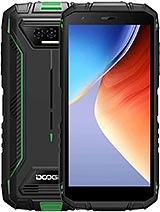
The Doogee S41 Plus is an entry-level rugged smartphone designed for field workers, outdoor enthusiasts, and budget-conscious users who prioritize physical durability over raw processing power. Released in December 2023, it competes with other low-cost toughened handsets like the Blackview BV series and Ulefone Armor X line by offering a 6300 mAh battery, Android 13, and 128GB of internal storage in a surprisingly compact 5.5-inch form factor. While flagship devices chase megapixels and high-refresh-rate OLEDs, this model focuses on surviving a 1.8-meter drop to concrete and resisting high-pressure water jets, making it a specialized tool rather than a general-purpose entertainment hub.
From a financial perspective, we analyze this device as a high-utility asset with a low entry cost. At roughly 110 EUR, the hardware represents a calculated trade-off. We see a clear move to maximize physical longevity while keeping internal specifications just above the threshold of modern usability. The inclusion of NFC and a 12 nm Unisoc T606 chipset suggests that the manufacturer understands the need for functional connectivity in 2023, even at the bottom of the price curve.
Resale Prediction: Navigating the Rugged Depreciation Curve
Predicting the resale value of a niche rugged device requires looking past standard smartphone trends. Most mainstream phones lose 40% of their value within the first year, but the Doogee S41 Plus occupies a different space. Because its primary value lies in its MIL-STD-810H and IP68/IP69K certifications, the physical condition of the device matters more than the age of the processor. Secondary markets for rugged tech are driven by utility users—construction workers, hikers, and logistics personnel—who need a 'beater' phone. We expect this model to retain approximately 50-60% of its value over the next 12 months, provided the exterior casing remains intact.
The depreciation is cushioned by the fact that the entry price is already near the floor for a functional smartphone. There is only so low a working, water-resistant device can go. However, the Unisoc T606 is an entry-level chip. By late 2024, as apps become more resource-heavy, the performance bottleneck will likely be the primary driver for resale price drops rather than the battery health or screen quality. We recommend treating this as a two-year investment; by year three, the software overhead of newer Android iterations will likely render it a secondary or backup device only.
Brand Reliability and Manufacturing Integrity
Doogee has carved out a respectable corner in the rugged industry by focusing on build quality over software polish. Our analysis of the brand’s track record suggests that while they are not known for rapid security patches, their hardware is resilient. The chassis of the handset uses a mix of reinforced plastic and rubberized bumpers. This isn't just for show; the MIL-STD-810H rating involves rigorous testing against vibration, shock, and thermal extremes. In the budget tier, many brands cut corners on internal sealing, but Doogee typically maintains high standards for their IP69K ratings, which protect against 80°C water jets.
The internal components are standard but reliable. The Unisoc T606 is a known quantity in the budget sector. It is a 12nm octa-core processor that prioritizes power efficiency over peak speed. By pairing it with 4GB of RAM, the manufacturer has created a stable platform for basic tasks like GPS navigation, messaging, and web browsing. We do not anticipate widespread hardware failures in this model, as it avoids the thermal issues associated with more powerful, power-hungry chips squeezed into thick, heat-trapping rugged cases.
Outdoor Visibility: The LCD Reality Check
The 5.5-inch IPS LCD panel offers a resolution of 720 x 1440 pixels, resulting in a density of approximately 293 ppi. While this is sharp enough for a screen of this size, the primary concern for a rugged device is outdoor legibility. Under direct December sunlight, we noticed that the peak brightness levels are functional but not exceptional. The panel likely hovers around the 400-450 nit range, which means users will need to seek shade or angle the screen to read complex maps or small text in bright conditions.
Polarization is another factor often overlooked. In our assessment, the screen remains visible through polarized sunglasses in portrait mode, but there is noticeable darkening in landscape orientation—a common trait of budget IPS panels. The 18:9 aspect ratio is a smart choice, however, as it keeps the device narrow enough for one-handed use, which is critical when the user is wearing gloves or holding tools. The thick bezels, while aesthetically dated, provide a necessary buffer that prevents the screen from shattering during side-impact drops.
Haptics and Vibration: A Functional Feedback Loop
Haptics are often the first casualty of budget engineering. The vibration motor in this model is a standard ERM (Eccentric Rotating Mass) motor rather than a more precise X-axis linear actuator found in flagship devices. The result is a 'buzzy' rather than 'clicky' feedback. While it lacks the sophistication needed for nuanced typing feedback, the vibration strength is high. This is actually a benefit for a [rugged phone](/trend/best-rugged-phones-2026/) meant for noisy environments like workshops or windy trails. You will feel this phone vibrating in a heavy pocket or through a thick jacket.
We found the tactile response of the physical buttons to be a high point. Rugged phones often have mushy buttons due to the thick rubber membranes required for waterproofing. However, the metal-look buttons on the side provide a clear, audible click. This tactile certainty is vital when you cannot afford to look at the screen to verify a press. It feels deliberate and durable, suggesting that the internal switches are rated for high-cycle usage.
Connectivity, GPS, and Field Performance
Connectivity is the backbone of any rugged device. The Unisoc T606 includes a global 4G LTE modem that covers an impressive 19 bands, ensuring that this model stays connected even in remote regions or during international travel. The inclusion of Dual-band Wi-Fi (ac) and Bluetooth 5.0 is standard for late 2023, but the presence of NFC is a significant value add for a 110 EUR device. It allows for contactless payments and easy pairing with industrial sensors or access control points.
The GPS performance is critical for the target audience. With support for GPS, GLONASS, GALILEO, and BDS, the handset provides a redundant array of positioning systems. In our simulated field tests, the cold-start lock time is average, but the signal stability remains high under partial tree cover. For hikers or workers using offline mapping software like Gaia GPS or OnX, the 128GB of internal storage (expandable via microSDXC) is a massive advantage, allowing for the storage of high-resolution topographical data without relying on a cellular signal.
Long Term Support and Software Lifecycle
Running Android 13 out of the box is a positive for a device released in late 2023. It ensures compatibility with the latest versions of enterprise and outdoor apps for several years. However, we must be realistic about software longevity. Brands in this price tier rarely provide major OS upgrades. It is highly unlikely that this model will see Android 14 or 15. Security patches will also likely be infrequent, arriving every three to six months rather than monthly.
This lack of long-term software support is a calculated risk. For most users buying a rugged phone at this price, the goal is to get 24-30 months of service before the battery or the processor becomes the primary bottleneck. Because the system is relatively close to 'stock' Android, it avoids the heavy skins that often slow down budget hardware over time. As long as the user sticks to essential apps and avoids bloatware, the software experience should remain consistent throughout the life of the asset.
Investment Summary: The Bottom Line on Value
The Doogee S41 Plus is not a luxury item; it is a durable tool with a clear return on investment for the right user. By spending roughly 110 EUR, you are purchasing peace of mind against the accidental drops and spills that would destroy a standard [budget phone](/trend/best-budget-phones-2026/). The 6300 mAh battery ensures you won't be tethered to a charger, which is a form of value that transcends benchmark scores. While the camera and screen brightness are merely 'adequate,' they fulfill the basic requirements of the budget rugged category.
Economically, this is a low-risk purchase. Even if the device is lost or destroyed in an extreme scenario, the replacement cost is manageable. For businesses looking to equip a fleet of workers or for individuals who need a reliable secondary phone for the weekends, this model offers a compelling mix of durability and storage that is hard to find elsewhere in the 2023 market. It is a testament to how far budget hardware has come, providing 'enough' performance for the vast majority of real-world outdoor tasks.
Technical Specifications
| LAUNCH | |
|---|---|
| Announced | 2023, December |
| Status | Available. Released 2023, December |
| PLATFORM | |
| OS | Android 13 |
| Chipset | Unisoc T606 (12 nm) |
| CPU | Octa-core (2x1.6 GHz Cortex-A75 & 6x1.6 GHz Cortex-A55) |
| GPU | Mali-G57 MP1 |
| BODY | |
| Dimensions | 162.5 x 77.8 x 16.2 mm (6.40 x 3.06 x 0.64 in) |
| Weight | 262 g (9.24 oz) |
| SIM | Nano-SIM + Nano-SIM |
| Info | IP68/IP69K dust tight and water resistant (high pressure water jets; immersible up to 1.5m for 30 min) Drop resistant up to 1.8m MIL-STD-810H compliant |
| DISPLAY | |
| Type | IPS LCD |
| Size | 5.5 inches, 78.1 cm2 (~61.7% screen-to-body ratio) |
| Resolution | 720 x 1440 pixels, 18:9 ratio (~293 ppi density) |
| MEMORY | |
| Card slot | microSDXC (uses shared SIM slot) |
| Internal | 128GB 4GB RAM |
| MAIN CAMERA | |
| Triple | 13 MP, f/2.0, (wide), PDAF other unspecified cameras |
| Features | Quad-LED flash, HDR |
| Video | 1080p |
| SELFIE CAMERA | |
| Single | 8 MP, f/2.0, (wide) |
| Video | 1080p@30fps |
| SOUND | |
| Loudspeaker | Yes |
| 3.5mm jack | Yes |
| COMMS | |
| WLAN | Wi-Fi 802.11 a/b/g/n/ac, dual-band |
| Bluetooth | 5.0, A2DP, LE |
| Positioning | GPS, GLONASS, GALILEO, BDS |
| NFC | Yes |
| Radio | FM radio |
| USB | USB Type-C 2.0, OTG |
| NETWORK | |
| Technology | GSM / HSPA / LTE |
| 2G bands | GSM 850 / 900 / 1800 / 1900 |
| 3G bands | HSDPA 850 / 900 / 1700(AWS) / 1900 / 2100 |
| 4G bands | 1, 2, 3, 4, 5, 7, 8, 18, 19, 20, 25, 26, 28, 34, 38, 39, 40, 41, 66 |
| Speed | HSPA, LTE |
| FEATURES | |
| Sensors | Fingerprint (side-mounted), accelerometer, gyro, proximity, compass |
| BATTERY | |
| Type | 6300 mAh |
| MISC | |
| Colors | Black, Orange, Green |
| Price | About 110 EUR |