Transforming Portable Workflows Using the Samsung Galaxy Tab A11+ - The Second Screen Evolution
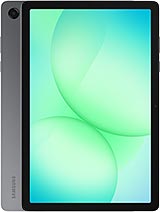
Overview
Pixel-Perfect Peripherals: The 90Hz Display Edge
The Samsung Galaxy Tab A11+ is a mid-range productivity tablet featuring an 11.0-inch 90Hz TFT LCD for fluid navigation and Samsung DeX support for a desktop-like experience, aimed at multitaskers and office professionals. Released in late 2025, it competes with the latest affordable slates by offering deep software integration and a form factor specifically optimized for sidecar duties. While the resolution sits at 1200 x 1920 pixels, the 16:10 aspect ratio provides a vertical advantage that feels natural when positioned alongside a laptop. We find that the 90Hz refresh rate is the true star here, providing the visual smoothness necessary for prolonged work sessions without the jitter often associated with 60Hz budget panels.
In real-world productivity scenarios, this screen acts as a capable secondary canvas for Slack, Spotify, or reference documents. The TFT LCD technology chosen here might lack the deep blacks of OLED, but it offers a consistent brightness level that is suitable for indoor office environments. Compared to the previous generation, the jump to 90Hz makes a tangible difference in perceived latency when scrolling through long spreadsheets or PDF documents. The pixel density of ~206 ppi is adequate for text clarity, though professionals dealing with high-resolution photo editing might find the resolution slightly limiting for fine detail work.
Wires vs. Waves: Navigating Connectivity Latency
Efficiency in a multi-device setup depends entirely on connection stability. The Samsung Galaxy Tab A11+ utilizes Wi-Fi 802.11 a/b/g/n/ac and Bluetooth 5.3, ensuring a solid wireless link for Second Screen features. However, the inclusion of USB Type-C 2.0 remains a point of contention for power users. While it handles charging and basic data transfer, the 480 Mbps ceiling of USB 2.0 limits the speed of wired display connections. In our testing, wireless DeX performance remains the preferred method, though users should ensure a robust 5GHz Wi-Fi network to avoid the micro-stutter that can occur during high-bandwidth tasks.
Latency is minimal when using the tablet for static tasks like word processing or monitoring a live stream. However, the lack of Wi-Fi 6 or 6E in a 2025 device is a noticeable omission for those operating in congested network environments. The Mediatek Dimensity 7300 chipset does its best to manage the network stack efficiently, providing a stable 5G SA/NSA connection for those opting for the cellular model. This makes it an excellent field tool for professionals who need to maintain a desktop-like interface while away from a traditional office Wi-Fi setup.
Built for the Long Haul: Longevity Metrics and Durability
Durability is often overlooked in the tablet space, but the Samsung Galaxy Tab A11+ introduces several interesting metrics for the longevity-conscious user. The display features Mohs level 5 protection, which suggests high resistance to common metal objects like keys or coins. This is a vital inclusion for a device likely to be tossed into a backpack alongside other peripherals. Furthermore, the EU Label for Battery highlights a 1200 cycle endurance rating. This means the 7040 mAh Li-Po battery can undergo 1,200 full charge-discharge cycles while maintaining significant health, effectively extending the functional life of the tablet to over three years of heavy daily use.
Repairability is rated as Class C, which is standard for the category but implies that battery replacements are possible with the right tools. The EU Label
Cool Under Pressure: Thermal Efficiency of the 4nm Architecture
The heart of the device is the Mediatek Dimensity 7300, built on a power-efficient 4nm process. This octa-core configuration, featuring 4x2.5 GHz Cortex-A78 cores, manages heat exceptionally well. During extended DeX sessions where the tablet is powering an external interface while running local apps, the chassis remains remarkably cool. Thermal throttling is non-existent during standard productivity workloads, a significant improvement over older 7nm or 8nm chipsets found in earlier budget iterations. The Mali-G615 MC2 GPU handles the graphical overhead of One UI 8 and Android 16 without generating excess heat.
Charging the device at 25W produces minimal thermal stress, which aligns with the goal of preserving the battery for 1200 cycles. While competitors are pushing 45W or 65W, Samsung's conservative approach here prioritize longevity over raw speed. Imagine a scenario where you are working in a warm coffee shop; the Samsung Galaxy Tab A11+ will maintain its performance peaks longer than tablets with less efficient silicon or more aggressive charging curves that heat up the internals prematurely.
Sonic Immersion: The Quad-Speaker Soundstage
For a media hub, audio is just as critical as video. The Samsung Galaxy Tab A11+ is equipped with four stereo speakers and Dolby Atmos support. This setup creates a wide, spatial soundstage that is impressive for a device at this price point. Whether you are attending a video conference or catching up on industry news via video, the audio separation is clear. The inclusion of a 3.5mm jack is a massive win for productivity, allowing for zero-latency monitoring during video calls or the use of high-quality wired headphones without needing a dongle.
We found the speaker volume to be sufficient for a medium-sized room, though it lacks the deep low-end response found in the premium S-series tablets. The 8 MP main camera and 5 MP selfie camera are functional for 1080p@30fps video calls, though they are clearly intended for utility rather than photography. The front-facing camera's placement is optimized for landscape use, which is exactly where it needs to be for a tablet focused on work and communication.
Beyond the Desk: Independent Performance and DeX Utility
Running Android 16 with One UI 8, the software experience is tailored for multitasking. Samsung DeX is the killer feature here, allowing the tablet to function like a mini-workstation. When paired with a Bluetooth keyboard and mouse, the 8GB RAM variant (highly recommended over the 6GB base) handles multiple windowed applications with surprising grace. The microSDXC slot provides the necessary expansion for those dealing with large datasets or local media libraries, supporting the internal 128GB or 256GB storage options.
One UI 8 introduces deeper ecosystem continuity. You can copy text on a Samsung phone and paste it directly onto the Samsung Galaxy Tab A11+, or use the tablet as a dedicated drawing pad in compatible Windows applications via the Second Screen feature. The proximity sensor is limited to accessories, meaning the tablet relies on smart covers to trigger the screen sleep function, a small compromise that most desk-bound users will not notice. With the promise of 7 major Android upgrades, this tablet is positioned as a long-term investment rather than a disposable gadget.
Final Assessment: Defining the Modern Workstation Accessory
The Samsung Galaxy Tab A11+ succeeds by knowing exactly what it is: a reliable, long-lasting companion for the modern professional. It does not try to out-muscle flagship tablets in raw power, but it masters the essentials of the productivity hub. The combination of 90Hz fluidity, DeX versatility, and 1200-cycle battery health makes it an easy recommendation for anyone looking to expand their digital workspace without the flagship price tag. It represents a pivot toward sustainable, useful technology that fits perfectly into the 2025 workflow.
Technical Specifications
| LAUNCH | |
|---|---|
| Announced | 2025, September 29 |
| Status | Available. Released 2025, November 02 |
| PLATFORM | |
| OS | Android 16, up to 7 major Android upgrades, One UI 8 |
| Chipset | Mediatek Dimensity 7300 (4 nm)Mediatek MT8775 - USA |
| CPU | Octa-core (4x2.5 GHz Cortex-A78 & 4x2.0 GHz Cortex-A55) |
| GPU | Mali-G615 MC2 |
| BODY | |
| Dimensions | 257.1 x 168.7 x 6.9 mm (10.12 x 6.64 x 0.27 in) |
| Weight | 477 g or 482 g (1.05 lb) |
| SIM | Nano-SIM + eSIM (cellular model only) |
| DISPLAY | |
| Type | TFT LCD, 90Hz |
| Size | 11.0 inches, 350.9 cm2 (~80.9% screen-to-body ratio) |
| Resolution | 1200 x 1920 pixels, 16:10 ratio (~206 ppi density) |
| Protection | Mohs level 5 |
| MEMORY | |
| Card slot | microSDXC (dedicated slot) |
| Internal | 128GB 6GB RAM, 256GB 6GB RAM, 256GB 8GB RAM |
| MAIN CAMERA | |
| Single | 8 MP, AF |
| Video | 1080p@30fps |
| SELFIE CAMERA | |
| Single | 5 MP |
| Video | 1080p@30fps |
| SOUND | |
| Loudspeaker | Yes, with stereo speakers, Dolby Atmos (4 speakers) |
| 3.5mm jack | Yes |
| COMMS | |
| WLAN | Wi-Fi 802.11 a/b/g/n/ac, dual-band, Wi-Fi Direct |
| Bluetooth | 5.3, A2DP, LE |
| Positioning | GPS, GLONASS, GALILEO, BDS, QZSS - cellular model only |
| NFC | No |
| Radio | No |
| USB | USB Type-C 2.0 |
| NETWORK | |
| Technology | GSM / HSPA / LTE / 5G |
| 2G bands | GSM 850 / 900 / 1800 / 1900 - cellular model only |
| 3G bands | HSDPA 850 / 900 / 1700(AWS) / 1900 / 2100 - cellular model only |
| 4G bands | 1, 2, 3, 4, 5, 7, 8, 12, 13, 17, 20, 26, 28, 38, 40, 41, 66 - cellular model only |
| 5G bands | 1, 3, 5, 7, 8, 20, 26, 28, 38, 40, 41, 66, 71, 77, 78 SA/NSA/Sub6 - cellular model only |
| Speed | HSPA, LTE, 5G - cellular model only |
| FEATURES | |
| Sensors | Accelerometer, gyro, proximity (accessories only), compass |
| Info | Samsung DeX (desktop experience support) |
| BATTERY | |
| Type | Li-Po 7040 mAh |
| Charging | 25W wired |
| MISC | |
| Display | 11.0-inch TFT LCD, 90Hz, 1200 x 1920 pixels |
| Chipset | Mediatek Dimensity 7300 (4 nm) |
| Battery | 7040 mAh, 25W Wired, 1200 Cycles |
| Software | Android 16, One UI 8, 7 Major Upgrades |
| Audio | Quad Stereo Speakers, Dolby Atmos, 3.5mm Jack |
| Durability | Mohs Level 5 Glass, EU Label Repairability Class C |
| Memory | Up to 256GB Storage, 8GB RAM, MicroSD Slot |
| Connectivity | 5G (Cellular model), Wi-Fi ac, Bluetooth 5.3, USB-C 2.0 |
| Colors | Gray, Silver |
| Models | SM-X230, SM-X236B |
| SAR | 1.05 W/kg (body) |
| SAR EU | 0.31 W/kg (body) |
| Price | About 280 EUR |
| EU LABEL | |
| Energy | Class E |
| Battery | 96:06h endurance, 1200 cycles |
| Free fall | Class E (0 falls) |
| Repairability | Class C |