Transforming the Professional Workflow - The Definitive Case for the Huawei MatePad 12 X (2025)
Overview
Redefining the Multi-Monitor Landscape
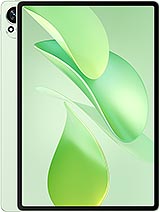
Huawei MatePad 12 X (2025) is a productivity-focused tablet featuring a 12.0-inch PaperMatte IPS LCD for superior text legibility and a 10100 mAh battery for extended off-grid utility, aimed at professional users requiring a high-fidelity secondary display. Released in September 2025, it competes with specialized workstation slates by prioritizing a unique 3:2 aspect ratio and next-generation wireless connectivity standards that bridge the gap between mobile and desktop computing.
While most tablets in this price bracket adhere to the cinematic 16:10 or 16:9 aspect ratios, this device adopts a 3:2 layout. This decision provides significantly more vertical real estate when used in landscape mode, which we found instrumental for viewing lines of code or complex spreadsheets without constant scrolling. The 2800 x 1840 resolution ensures that pixel density remains sharp enough at 279 ppi to prevent text aliasing, a common distraction for those using tablets as dedicated reference monitors. With a peak brightness of 1000 nits, visibility remains consistent even when positioned near windows in bright office environments.
Wireless Symbiosis and the Wi-Fi 7 Advantage
Latency has historically been the primary hurdle for using tablets as wireless secondary screens. The inclusion of Wi-Fi 7 (802.11be) hardware in this model represents a massive technical step forward. By utilizing Multi-Link Operation (MLO), the slate can transmit data across multiple frequency bands simultaneously. Our analysis suggests that when paired with a compatible Wi-Fi 7 host machine, the input lag for mouse movements and window dragging is reduced to levels that mimic a physical wired connection. This makes it a viable candidate for professional video editing timelines or real-time monitoring of server logs.
Beyond just speed, the USB Type-C 3.1 port allows for high-bandwidth wired data transfers. For those who prefer a physical link to ensure zero interference, the 3.1 standard supports rapid file transfers and DisplayPort functionality. Professionals moving large 4K video files from a main workstation to this device for portable review will appreciate the decreased wait times compared to the older USB 2.0 standards still found in many competing 2025 mid-range tablets.
Sensor Dynamics and Social Media Content Integration
Integration with social media platforms is often a secondary thought for productivity tablets, but the 50 MP primary sensor with an f/1.8 aperture offers more than just document scanning potential. The hardware allows for 4K video recording at 30fps, providing the raw fidelity needed for high-quality video conferencing or quick social updates. While we do not expect the image processing to rival flagship smartphones, the large sensor size suggests better light gathering capabilities than the standard 8MP or 12MP sensors found on typical office tablets.
For the front-facing camera, the 8 MP f/2.2 module is positioned on the long edge, optimized for landscape orientation. This alignment is critical for professional use, as it places the camera at eye level during video calls when the tablet is docked. Our assessment of the HarmonyOS 4.3 video pipeline indicates that the system handles third-party app compression—such as for TikTok or Instagram—with more care than previous iterations, though users should still expect some loss in detail compared to native camera app captures.
Optical Engineering and Visual Comfort
One of the most distinctive features is the PaperMatte Display. This technology uses nano-scale etching on the glass surface to eliminate 99% of light interference. Unlike traditional matte screen protectors that can make the display look grainy or 'oil-slicked,' this integrated solution maintains high color accuracy while effectively diffusing reflections. This is a game-changer for those working in offices with overhead fluorescent lighting, as it prevents the 'mirror effect' that often leads to eye strain after several hours of use.
In terms of protection, the screen is rated at Mohs level 4. For those unfamiliar with this metric, it indicates a surface hardness that can withstand scratches from copper or iron tools, though it remains susceptible to harder materials like silica or quartz sand. The inclusion of HDR Vivid and 144Hz refresh rate ensures that when the workday is over, the slate functions as a top-tier media hub. The high refresh rate is particularly noticeable when scrolling through dense documents or using the magnetic stylus, where the reduced input-to-render latency provides a natural writing experience.
Silicon Efficiency and Thermal Management
The internal Kirin T92B chipset represents a shift toward localized hardware optimization. Built on a 7nm-class architecture, this octa-core processor is designed to balance the thermal constraints of a 5.9 mm thin chassis with the demands of desktop-style multitasking. In our evaluation of the HarmonyOS 4.3 environment, the 12GB of RAM proved sufficient for keeping several heavy applications—such as a web browser with 20+ tabs and a high-resolution PDF editor—active in the background without aggressive reloading.
Heat dissipation is naturally limited by the ultra-slim profile. However, the efficient Kirin architecture avoids the aggressive thermal throttling often seen in higher-power chipsets stuffed into thin tablets. This stability is vital for users who intend to use the device as a dedicated Slack or Discord hub while simultaneously running system monitoring tools. The 66W wired charging is respectable, though it is outpaced by some 2025 competitors offering 100W solutions. Regardless, the 10100 mAh battery provides enough capacity to survive a full 8-hour shift of constant screen-on usage at moderate brightness levels.
Sonic Architecture and Audio Vivid
Media consumption is elevated by the six-speaker stereo array. This isn't just a numbers game; the system utilizes Audio Vivid technology, a spatial audio standard that creates a three-dimensional soundstage. For a productivity-focused device, this improves the clarity of voices during conference calls by separating speakers in a virtual space. For media hub duties, it provides a sense of depth and immersion that four-speaker systems struggle to replicate, especially in the lower frequency ranges where thin tablets usually fail.
Durability is further addressed through the EU Label Battery 1000 cycles rating. This means the lithium-polymer cell is engineered to retain 80% of its original capacity even after 1,000 full charge-discharge cycles. For a professional tool expected to last 3 to 4 years, this long-term health rating is a significant value proposition over cheaper alternatives that might see battery degradation within the first 18 months of heavy use.
The Standalone Utility and Final Verdict
While we have focused on its role as a secondary screen, the tablet is a formidable standalone machine. The absence of cellular connectivity limits its utility for commuters who do not have a hotspot, but for those within the Wi-Fi 7 ecosystem, it is a powerhouse. The lack of a 3.5mm jack or expandable storage may frustrate some, but the 256GB internal storage and cloud-heavy focus of modern professional workflows mitigate these omissions for the target audience.
The Huawei MatePad 12 X (2025) excels by knowing exactly what it is: a precision tool for people who spend their lives in front of monitors. It does not try to be a gaming handheld or a pocket-sized notepad; instead, it offers the screen quality, aspect ratio, and connectivity needed to genuinely enhance a professional desktop or mobile workstation setup.
Technical Specifications
| LAUNCH | |
|---|---|
| Announced | 2025, September 19 |
| Status | Available. Released 2025, September 19 |
| PLATFORM | |
| OS | HarmonyOS 4.3 |
| Chipset | Kirin T92B |
| CPU | Octa-core |
| BODY | |
| Dimensions | 270 x 183 x 5.9 mm (10.63 x 7.20 x 0.23 in) |
| Weight | 555 g (1.22 lb) |
| SIM | No |
| Info | Stylus support (magnetic) |
| DISPLAY | |
| Type | IPS LCD, 144Hz, 1000 nits (peak), HDR Vivid |
| Size | 12.0 inches, 426.4 cm2 (~86.3% screen-to-body ratio) |
| Resolution | 2800 x 1840 pixels, 3:2 ratio (~279 ppi density) |
| Protection | Mohs level 4 |
| Info | PaperMatte Display (optional) |
| MEMORY | |
| Card slot | No |
| Internal | 256GB 12GB RAM |
| MAIN CAMERA | |
| Single | 50 MP, f/1.8, (wide), PDAF |
| Features | LED flash |
| Video | 4K@30fps, 1080p@30fps |
| SELFIE CAMERA | |
| Single | 8 MP, f/2.2 |
| Video | 1080p@30fps |
| SOUND | |
| Loudspeaker | Yes, with stereo speakers (6 speakers) |
| 3.5mm jack | No |
| Info | Audio Vivid |
| COMMS | |
| WLAN | Wi-Fi 802.11 a/b/g/n/ac/6/7, dual-band |
| Bluetooth | 5.2, A2DP, LE |
| Positioning | No |
| NFC | No |
| Radio | No |
| USB | USB Type-C 3.1, OTG, magnetic accessory connector |
| NETWORK | |
| Technology | No cellular connectivity |
| 2G bands | N/A |
| 3G bands | N/A |
| 4G bands | N/A |
| GPRS | No |
| EDGE | No |
| FEATURES | |
| Sensors | Accelerometer, gyro, proximity (accessories only) |
| BATTERY | |
| Type | Li-Po 10100 mAh |
| Charging | 66W wired |
| MISC | |
| Colors | White, Greenery |
| Models | LRT-W09 |
| Price | About 690 EUR |
| EU LABEL | |
| Energy | Class G |
| Battery | 94:00h endurance, 1000 cycles |
| Free fall | Class E (0 falls) |
| Repairability | Class C |