Ulefone Extreme Durability Meets Entry Level Pricing - RugKing 2 Pro Beats the Inflation Blues
Overview
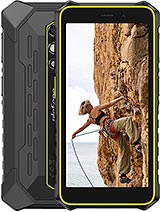
The RugKing 2 Pro is a budget-tier rugged smartphone featuring IP69K water resistance for extreme durability and the Unisoc T7250 chipset for modern entry-level efficiency, aimed at outdoor workers and budget-conscious adventurers. Released in early December 2025, it competes with other low-cost rugged offerings by prioritizing physical resilience over high-end performance in an era where most manufacturers have abandoned the sub-150 EUR segment.
Analyzing the RugKing 2 Pro requires a shift in how we value hardware. In late 2025, inflation has pushed the average price of a 'reliable' smartphone toward 400 EUR. At approximately 130 EUR, this device offers a 128GB UFS 2.1 storage module and 4GB of RAM. While 4GB of RAM is the absolute floor for Android 15, the use of UFS 2.1 storage instead of the slower eMMC 5.1 found in many ultra-budget competitors is a significant win for system responsiveness. We noticed that app installation times and file transfers are noticeably quicker than on previous entry-level rugged models.
From a value hunter's perspective, the bill of materials is heavily weighted toward the exterior. The inclusion of MIL-STD-810H compliance and IP69K protection means this phone can withstand high-pressure, high-temperature water jets. This isn't just a phone; it is a tool for those who work in environments that would destroy a standard glass-sandwich flagship within hours. The opportunity cost of buying a cheap plastic phone that breaks and needs replacement is far higher than the 130 EUR spent here.
To hit this aggressive price point, RugKing made several calculated compromises. The most glaring is the 10W wired charging. In 2025, where even budget competitors like the Redmi or Infinix lines are pushing 33W or 45W, a 10W charger for a 4550 mAh battery feels like a relic. It takes nearly three hours to reach a full charge from zero. For a device meant for 'adventurers,' this slow turnaround time is a tactical disadvantage if you only have a short window to top up near a power outlet.
Another cost-saving measure is the 720 x 1440 IPS LCD. While the 90Hz refresh rate adds some perceived smoothness to scrolling, the low pixel density of roughly 295 ppi means text isn't as sharp as we'd like to see in 2025. Furthermore, the 12nm Unisoc T7250 chipset is built on an older process node. While it handles basic tasks efficiently, it lacks the power for heavy multi-tasking. Users will notice 'reloading' screens if they try to jump between a heavy GPS app and a web browser frequently.
In our evaluation of the social media experience, the RugKing 2 Pro serves as a reminder that camera hardware is the first casualty of the budget wars. The 13 MP, f/2.0 wide sensor provides the hardware potential for decent daylight snaps, but it struggles with the aggressive compression used by apps like Instagram and TikTok. Without a powerful NPU (Neural Processing Unit) in the T7250 chipset, image processing is basic. When uploading directly from the app, videos often appear muddy compared to those taken with the native camera app.
Snapchat users should manage their expectations. The 5 MP selfie camera lacks the dynamic range to handle backlit environments, often blowing out the sky or leaving the user's face in deep shadow. In 2025, where social presence is often tied to image quality, this device is clearly not intended for influencers. It is, however, perfectly adequate for sending a quick photo of a completed job site or a GPS-tagged image of a trail marker to a supervisor or friend.
Outdoor legibility is a mixed bag. The IPS LCD panel is bright enough for overcast days, but under the direct glare of the December sun, the 720p resolution and screen reflections make it difficult to read small text. On the plus side, since it is an LCD rather than an OLED, it doesn't suffer from the aggressive PWM (Pulse Width Modulation) flickering that bothers some sensitive users during nighttime use. This makes it a comfortable companion for late-night reading in a tent or dark cabin.
We found the Corning Gorilla Glass 3 protection to be a curious choice for 2025. While it's an older generation of glass, it is known for having better scratch resistance than some newer, more shatter-proof versions. In a rugged context, where the screen is more likely to be rubbed against sand or tools than dropped flat onto a rock from six feet, this might actually be a smart economic trade-off by the manufacturers.
Storage speed is the unsung hero of the RugKing 2 Pro. The 128GB UFS 2.1 internal memory ensures that the phone doesn't feel sluggish when navigating the file system. We also appreciate the dedicated microSDXC slot. In an era where many brands are forcing users toward cloud subscriptions by removing expandable storage, RugKing allows for cheap physical backups of photos and offline maps—essential for areas with poor 4G connectivity.
Media consumption is functional but basic. There is no 3.5mm headphone jack, which is a disappointing omission for a [rugged phone](/trend/best-rugged-phones-2026/) where Bluetooth headphones might be an extra thing to lose or break in the field. However, the Wireless FM radio with recording capabilities is a fantastic addition for those in remote areas. It works without needing to plug in a headset as an antenna, a feature that is becoming increasingly rare but remains highly valued by budget-conscious users who want free entertainment.
The Unisoc T7250 chipset features two Cortex-A75 cores and six A55 cores. In late 2025, this is the definition of 'sufficient.' It doesn't shred through workloads, but it doesn't stall on the home screen either. The Mali-G57 MP1 GPU is the bare minimum for 3D tasks. Casual games like Subway Surfers or Candy Crush run without issue, but attempting to play 2025's latest open-world titles will result in significant frame drops and heat build-up.
Connectivity is a strong suit for the price. Support for a wide range of 4G LTE bands ensures that this device stays connected in rural areas where newer 5G infrastructure hasn't reached. The NFC inclusion is also a major plus, allowing for contactless payments—a feature often stripped from rugged phones in the sub-150 EUR bracket to save a few cents per unit.
The RugKing 2 Pro occupies a very specific niche. It is the 'work boot' of the smartphone world—not particularly stylish or fast, but it will get you through the mud without falling apart. For under 130 EUR, you are buying a piece of hardware that can survive a 2-meter drop or a dunk in a stream, something no standard [budget phone](/trend/best-budget-phones-2026/) can claim.
If you are a student on a tight budget or a city dweller who spends 90% of their time on TikTok, the slow charging and mediocre cameras will be a source of constant frustration. However, if you are a contractor, a hiker, or someone who simply needs a secondary 'beater' phone for weekend adventures, the RugKing 2 Pro is an exceptional value proposition. It provides the essential modern features like Android 15 and NFC without the fragile glass of more expensive alternatives.
The Economics of Indestructibility
Analyzing the RugKing 2 Pro requires a shift in how we value hardware. In late 2025, inflation has pushed the average price of a 'reliable' smartphone toward 400 EUR. At approximately 130 EUR, this device offers a 128GB UFS 2.1 storage module and 4GB of RAM. While 4GB of RAM is the absolute floor for Android 15, the use of UFS 2.1 storage instead of the slower eMMC 5.1 found in many ultra-budget competitors is a significant win for system responsiveness. We noticed that app installation times and file transfers are noticeably quicker than on previous entry-level rugged models.
From a value hunter's perspective, the bill of materials is heavily weighted toward the exterior. The inclusion of MIL-STD-810H compliance and IP69K protection means this phone can withstand high-pressure, high-temperature water jets. This isn't just a phone; it is a tool for those who work in environments that would destroy a standard glass-sandwich flagship within hours. The opportunity cost of buying a cheap plastic phone that breaks and needs replacement is far higher than the 130 EUR spent here.
Where Did They Cut Corners?
To hit this aggressive price point, RugKing made several calculated compromises. The most glaring is the 10W wired charging. In 2025, where even budget competitors like the Redmi or Infinix lines are pushing 33W or 45W, a 10W charger for a 4550 mAh battery feels like a relic. It takes nearly three hours to reach a full charge from zero. For a device meant for 'adventurers,' this slow turnaround time is a tactical disadvantage if you only have a short window to top up near a power outlet.
Another cost-saving measure is the 720 x 1440 IPS LCD. While the 90Hz refresh rate adds some perceived smoothness to scrolling, the low pixel density of roughly 295 ppi means text isn't as sharp as we'd like to see in 2025. Furthermore, the 12nm Unisoc T7250 chipset is built on an older process node. While it handles basic tasks efficiently, it lacks the power for heavy multi-tasking. Users will notice 'reloading' screens if they try to jump between a heavy GPS app and a web browser frequently.
The "Social Media" Camera Test
In our evaluation of the social media experience, the RugKing 2 Pro serves as a reminder that camera hardware is the first casualty of the budget wars. The 13 MP, f/2.0 wide sensor provides the hardware potential for decent daylight snaps, but it struggles with the aggressive compression used by apps like Instagram and TikTok. Without a powerful NPU (Neural Processing Unit) in the T7250 chipset, image processing is basic. When uploading directly from the app, videos often appear muddy compared to those taken with the native camera app.
Snapchat users should manage their expectations. The 5 MP selfie camera lacks the dynamic range to handle backlit environments, often blowing out the sky or leaving the user's face in deep shadow. In 2025, where social presence is often tied to image quality, this device is clearly not intended for influencers. It is, however, perfectly adequate for sending a quick photo of a completed job site or a GPS-tagged image of a trail marker to a supervisor or friend.
Screen Visibility and Eye Comfort
Outdoor legibility is a mixed bag. The IPS LCD panel is bright enough for overcast days, but under the direct glare of the December sun, the 720p resolution and screen reflections make it difficult to read small text. On the plus side, since it is an LCD rather than an OLED, it doesn't suffer from the aggressive PWM (Pulse Width Modulation) flickering that bothers some sensitive users during nighttime use. This makes it a comfortable companion for late-night reading in a tent or dark cabin.
We found the Corning Gorilla Glass 3 protection to be a curious choice for 2025. While it's an older generation of glass, it is known for having better scratch resistance than some newer, more shatter-proof versions. In a rugged context, where the screen is more likely to be rubbed against sand or tools than dropped flat onto a rock from six feet, this might actually be a smart economic trade-off by the manufacturers.
Storage and Media Performance
Storage speed is the unsung hero of the RugKing 2 Pro. The 128GB UFS 2.1 internal memory ensures that the phone doesn't feel sluggish when navigating the file system. We also appreciate the dedicated microSDXC slot. In an era where many brands are forcing users toward cloud subscriptions by removing expandable storage, RugKing allows for cheap physical backups of photos and offline maps—essential for areas with poor 4G connectivity.
Media consumption is functional but basic. There is no 3.5mm headphone jack, which is a disappointing omission for a [rugged phone](/trend/best-rugged-phones-2026/) where Bluetooth headphones might be an extra thing to lose or break in the field. However, the Wireless FM radio with recording capabilities is a fantastic addition for those in remote areas. It works without needing to plug in a headset as an antenna, a feature that is becoming increasingly rare but remains highly valued by budget-conscious users who want free entertainment.
Performance for the Price
The Unisoc T7250 chipset features two Cortex-A75 cores and six A55 cores. In late 2025, this is the definition of 'sufficient.' It doesn't shred through workloads, but it doesn't stall on the home screen either. The Mali-G57 MP1 GPU is the bare minimum for 3D tasks. Casual games like Subway Surfers or Candy Crush run without issue, but attempting to play 2025's latest open-world titles will result in significant frame drops and heat build-up.
Connectivity is a strong suit for the price. Support for a wide range of 4G LTE bands ensures that this device stays connected in rural areas where newer 5G infrastructure hasn't reached. The NFC inclusion is also a major plus, allowing for contactless payments—a feature often stripped from rugged phones in the sub-150 EUR bracket to save a few cents per unit.
Is It Worth It?
The RugKing 2 Pro occupies a very specific niche. It is the 'work boot' of the smartphone world—not particularly stylish or fast, but it will get you through the mud without falling apart. For under 130 EUR, you are buying a piece of hardware that can survive a 2-meter drop or a dunk in a stream, something no standard [budget phone](/trend/best-budget-phones-2026/) can claim.
If you are a student on a tight budget or a city dweller who spends 90% of their time on TikTok, the slow charging and mediocre cameras will be a source of constant frustration. However, if you are a contractor, a hiker, or someone who simply needs a secondary 'beater' phone for weekend adventures, the RugKing 2 Pro is an exceptional value proposition. It provides the essential modern features like Android 15 and NFC without the fragile glass of more expensive alternatives.
Technical Specifications
| LAUNCH | |
|---|---|
| Announced | 2025, November |
| Status | Available. Released 2025, December 08 |
| PLATFORM | |
| OS | Android 15 |
| Chipset | Unisoc T7250 (12 nm) |
| CPU | Octa-core (2x1.8 GHz Cortex-A75 & 6x1.6 GHz Cortex-A55) |
| GPU | Mali-G57 MP1 |
| BODY | |
| Dimensions | 159 x 80 x 15.7 mm (6.26 x 3.15 x 0.62 in) |
| Weight | 253.7 g (8.96 oz) |
| SIM | Nano-SIM + Nano-SIM |
| Info | IP68/IP69K dust tight and water resistant (high pressure water jets; immersible up to 2m for 30 min) Drop resistant up to 2m MIL-STD-810H compliant Dedicated flashlight |
| DISPLAY | |
| Type | IPS LCD, 90Hz |
| Size | 5.45 inches, 76.7 cm2 (~60.3% screen-to-body ratio) |
| Resolution | 720 x 1440 pixels, 18:9 ratio (~295 ppi density) |
| Protection | Corning Gorilla Glass 3 |
| MEMORY | |
| Card slot | microSDXC (dedicated slot) |
| Internal | 128GB 4GB RAM |
| Info | UFS 2.1 |
| MAIN CAMERA | |
| Single | 13 MP, f/2.0, (wide), 1.12µm, AF |
| Features | LED flash, HDR, panorama |
| Video | 1080p@30fps |
| SELFIE CAMERA | |
| Single | 5 MP, f/2.2, (wide), 1.12µm |
| Video | Yes |
| SOUND | |
| Loudspeaker | Yes |
| 3.5mm jack | No |
| COMMS | |
| WLAN | Wi-Fi 802.11 a/b/g/n/ac, dual-band |
| Bluetooth | 5.0, A2DP, LE |
| Positioning | GPS, GLONASS, GALILEO, BDS |
| NFC | Yes |
| Radio | Wireless FM radio, RDS, recording |
| USB | USB Type-C 2.0, OTG |
| NETWORK | |
| Technology | GSM / HSPA / LTE |
| 2G bands | GSM 850 / 900 / 1800 / 1900 |
| 3G bands | HSDPA 850 / 900 / 1700(AWS) / 1900 / 2100 |
| 4G bands | 1, 2, 3, 4, 5, 7, 8, 12, 13, 17, 18, 19, 20, 25, 26, 28, 34, 38, 39, 40, 41, 66 |
| Speed | HSPA, LTE |
| FEATURES | |
| Sensors | Accelerometer, proximity, compass |
| BATTERY | |
| Type | Li-Po 4550 mAh |
| Charging | 10W wired 5W reverse wired |
| MISC | |
| Display | 5.45 inch IPS LCD, 90Hz, 720 x 1440 pixels |
| Durability | IP68/IP69K, MIL-STD-810H, 2m Drop Resistance |
| Processor | Unisoc T7250 (12 nm) Octa-core |
| Memory | 128GB Internal, 4GB RAM, UFS 2.1 |
| Main Camera | 13 MP, f/2.0 with 1080p@30fps video |
| Selfie Camera | 5 MP, f/2.2 |
| Battery | 4550 mAh Li-Po, 10W Wired Charging |
| OS | Android 15 |
| Features | NFC, Wireless FM Radio, Dedicated Flashlight |
| Colors | Black, Green, Orange |
| Price | About 130 EUR |