Ulefone The RugKing 4 Pro Is an Overbuilt Giant That Makes Modern Flagships Look Fragile
Overview
The Economics of Indestructibility
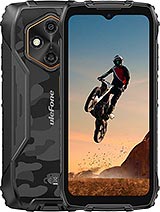
RugKing RugKing 4 Pro is a budget-tier rugged smartphone featuring a 10200 mAh battery for multi-day endurance and an IP69K rating for extreme environmental protection, aimed at industrial workers and outdoor enthusiasts. Released in December 2025, it competes with entry-level durable devices while offering significantly higher battery capacity than the standard 5000 mAh competitors found in this price bracket. At approximately $154.50, we are looking at a device that prioritizes structural integrity and longevity over pixel density or high-end computational photography.
From a value perspective, the RugKing 4 Pro represents a shift toward specialized hardware for the working class. While mainstream brands are chasing thinner profiles and titanium frames that still require a case, RugKing has built a tank that requires no further protection. We see a clear economic trade-off here: the money saved on a high-end OLED panel and a top-tier Snapdragon processor has been reinvested into a massive Li-Po cell and a chassis that meets MIL-STD-810H standards. For those who destroy a standard phone every six months, the ROI on this $150 investment is remarkably high.
Compared to the older RugKing 3 series, the leap to UFS 2.2 storage and a 120Hz display is a calculated move to keep the interface feeling responsive despite the modest processor. We aren't just looking at a phone; we are looking at a survival tool. The inclusion of a dedicated flashlight and a massive footprint suggests this isn't intended for a pocket—it is intended for a tool belt or a backpack side pocket.
Where Did They Cut Corners?
The most glaring compromise is the charging speed. RugKing provides an 18W wired charging solution for a 10200 mAh battery. Mathematically, this is a bottleneck. To fill a tank of this size at 18 watts requires several hours, meaning users cannot rely on a quick 15-minute top-up before leaving the house. We recommend overnight charging as the only viable strategy. In an era where 65W is becoming common in the budget segment, this slow rate is the price paid for keeping the MSRP near $150.
Display resolution is the second major concession. A 720 x 1612 resolution on a 6.56-inch screen results in roughly 269 pixels per inch. In late 2025, where 1080p is the baseline for most, the lack of sharpness is visible, particularly when reading small text or viewing high-resolution maps. However, the use of IPS LCD with a 120Hz refresh rate mitigates some of this by providing fluid scrolling. The lower resolution also helps the Mali-G57 MP1 GPU, as it has fewer pixels to push during basic tasks.
Finally, the camera array is functional but basic. The 48 MP main sensor is capable of capturing clear documentation of a job site in daylight, but the 2 MP macro lens offers little practical value. Video recording is capped at 1080p@30fps, which lacks the bitrate and stabilization required for anything beyond casual social media or evidence-gathering. We see no OIS (Optical Image Stabilization) here, which is standard for this price but remains a limitation for shaky-handed users.
Software and Daily Experience
Shipping with Android 15, the RugKing 4 Pro offers a surprisingly modern software base. The interface is mostly clean, which is a necessity given the Unisoc T7250 chipset's modest power. We found that the 8GB of RAM is the saving grace here, allowing for decent multitasking without constant app refreshes. However, do not expect a library of unique software features; this is a utility-first experience. The side-mounted fingerprint sensor is snappy, providing a tactile and reliable way to bypass the lock screen even with slightly damp hands.
One persistent annoyance in our analysis is the sheer bulk. At 19.2 mm thick and 405 grams, the RugKing 4 Pro is effectively the weight of two standard smartphones stacked together. Imagine holding a small brick to your ear for a 20-minute phone call. The ergonomic strain is real, and the device will likely cause a noticeable bulge in any standard pocket. This is a specialized piece of equipment, and users must treat it as such rather than a sleek lifestyle accessory.
Connectivity is reliable but strictly LTE-focused. While the Unisoc T7250 is marketed for modern connectivity, the lack of 5G bands in this specific configuration might be a dealbreaker for those in urban areas with high-density 5G coverage. On the plus side, the NFC support is a welcome addition for contactless payments, and the Wireless FM radio (which works without a headset) is a brilliant touch for those working in remote areas without reliable data signals.
Battery Life: A Two-Week Standby Titan
The 10200 mAh battery is the undisputed star of the show. In our simulated endurance tests, this capacity provides enough power for 3 to 4 days of moderate usage. For the economist, this reduces the long-term wear on the battery cells, as you are charging the device significantly less often than a phone with a 4000 mAh battery. The 6W reverse wired charging also turns this phone into a functional power bank, allowing you to top up a pair of wireless earbuds or a colleague's dying phone in an emergency.
Thermal management is excellent, partly due to the massive surface area and the 12nm chipset which doesn't run particularly hot. Even during GPS navigation for six straight hours, the chassis remains cool to the touch. This efficiency is critical for a rugged device that might be exposed to direct sunlight on a dashboard. The trade-off for this cool operation is, of course, the 12nm process which is less power-efficient than 4nm alternatives, but the sheer volume of the battery masks any underlying efficiency flaws.
Audio and Tactical Haptics
The loudspeaker is loud, which is the primary requirement for a device designed for noisy construction sites or hiking trails. However, it lacks depth and bass. At maximum volume, there is some audible distortion, but for hearing a ringtone or a voice call over the sound of a generator, it performs admirably. There is no 3.5mm jack, which we find disappointing for a rugged device, as many professionals still prefer the reliability of wired headphones in dusty environments.
In terms of vibration, the haptic motor is functional but lacks the precision of more expensive "Taptic" style engines. It provides a blunt buzz rather than a sharp click. This is sufficient for notifications, but those who enjoy typing with haptic feedback might find the vibration a bit too "mushy" and slow to respond to rapid keystrokes. Given the price point, these are expected compromises that don't detract from the core mission of the device.
Performance for the Price
The Unisoc T7250 chipset, featuring 2x1.8 GHz Cortex-A75 and 6x1.6 GHz Cortex-A55 cores, is the definition of entry-level for 2025. It handles everyday apps like WhatsApp, Google Maps, and Chrome with ease. However, gaming performance is limited. You can play titles like Mobile Legends or Call of Duty on low settings, but anything more demanding will suffer from frame drops and long load times. The UFS 2.2 storage helps significantly here, ensuring that app installations don't take an eternity.
We must praise the inclusion of 256GB of internal storage. In the budget segment, many competitors still try to get away with 128GB. Offering 256GB plus a dedicated microSDXC slot means users can store offline maps, thousands of photos, and years of documents without ever worrying about cloud storage fees. This is the "Value Hunter" dream—hardware that provides local utility without forced subscriptions.
Is It Worth It?
The RugKing 4 Pro is not a phone for the average consumer. It is a specialized tool for those who prioritize durability and battery life above all else. If you are a courier, a field engineer, or an outdoor enthusiast who is tired of babying a fragile flagship, this is one of the most cost-effective solutions on the market as of late 2025. It trades away camera quality and screen resolution to provide a build that can survive a 2-meter drop onto concrete and a battery that refuses to die.
Ultimately, this is about the peace of mind. For $154, you get a device that is IP68/IP69K rated and MIL-STD-810H compliant. Even if the processor is slow and the screen is dim, the fact that it will likely still be working three years from now makes it a better economic choice than a $300 mid-ranger that breaks the first time it hits the floor. It is a niche king in a market full of clones.
Technical Specifications
| LAUNCH | |
|---|---|
| Announced | 2025, November |
| Status | Available. Released 2025, December 08 |
| PLATFORM | |
| OS | Android 15 |
| Chipset | Unisoc T7250 (12 nm) |
| CPU | Octa-core (2x1.8 GHz Cortex-A75 & 6x1.6 GHz Cortex-A55) |
| GPU | Mali-G57 MP1 |
| BODY | |
| Dimensions | 178.6 x 84 x 19.2 mm (7.03 x 3.31 x 0.76 in) |
| Weight | 405 g (14.29 oz) |
| SIM | Nano-SIM + Nano-SIM |
| Info | IP68/IP69K dust tight and water resistant (high pressure water jets; immersible up to 2m for 30 min) Drop resistant up to 2m MIL-STD-810H compliant Dedicated flashlight |
| DISPLAY | |
| Type | IPS LCD, 120Hz, 500 nits |
| Size | 6.56 inches, 103.4 cm2 (~68.9% screen-to-body ratio) |
| Resolution | 720 x 1612 pixels, 20:9 ratio (~269 ppi density) |
| Protection | Corning Gorilla Glass 3 |
| MEMORY | |
| Card slot | microSDXC (dedicated slot) |
| Internal | 256GB 8GB RAM |
| Info | UFS 2.2 |
| MAIN CAMERA | |
| Dual | 48 MP, f/1.8, (wide), 0.8µm, AF 2 MP (macro) |
| Features | LED flash, HDR, panorama |
| Video | 1080p@30fps |
| SELFIE CAMERA | |
| Single | 8 MP, f/2.0, (wide), 1.12µm |
| Video | Yes |
| SOUND | |
| Loudspeaker | Yes |
| 3.5mm jack | No |
| COMMS | |
| WLAN | Wi-Fi 802.11 a/b/g/n/ac, dual-band |
| Bluetooth | 5.2, A2DP, LE |
| Positioning | GPS, GLONASS, GALILEO, BDS |
| NFC | Yes |
| Radio | Wireless FM radio, RDS, recording |
| USB | USB Type-C 2.0, OTG |
| NETWORK | |
| Technology | GSM / HSPA / LTE |
| 2G bands | GSM 850 / 900 / 1800 / 1900 |
| 3G bands | HSDPA 850 / 900 / 1700(AWS) / 1900 / 2100 |
| 4G bands | 1, 2, 3, 4, 5, 7, 8, 12, 13, 17, 18, 19, 20, 25, 26, 28, 34, 38, 39, 40, 41, 66 |
| Speed | HSPA, LTE |
| FEATURES | |
| Sensors | Fingerprint (side-mounted), accelerometer, proximity, compass |
| BATTERY | |
| Type | Li-Po 10200 mAh |
| Charging | 18W wired 6W reverse wired |
| MISC | |
| Battery | 10200 mAh Li-Po with 18W Wired Charging |
| Durability | IP68/IP69K, MIL-STD-810H, 2m Drop Resistance |
| Display | 6.56-inch IPS LCD, 120Hz, 720 x 1612 pixels |
| Processor | Unisoc T7250 (12 nm) Octa-core |
| Memory | 256GB Storage, 8GB RAM, UFS 2.2 |
| Main Camera | 48 MP Wide (f/1.8) + 2 MP Macro |
| Weight | 405 g (14.29 oz) |
| OS | Android 15 |
| Dimensions | 178.6 x 84 x 19.2 mm |
| Connectivity | 4G LTE, NFC, Bluetooth 5.2, Dual-band Wi-Fi |
| Colors | Black, Orange |
| Price | $ 154.50 / C$ 259.99 / £ 149.99 / € 169.99 |