Umidigi Built for the Living Room Floor - Why the Brand G9 Tab Is the Sensible Family Choice
Overview
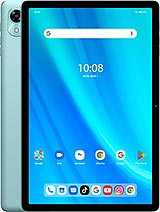
The Brand G9 Tab is an entry-level productivity and media tablet featuring an 11.0-inch IPS LCD for shared viewing and a 7200 mAh battery for extended use, aimed at families needing a durable, cost-effective secondary screen. Released in September 2024, it competes with budget-friendly rivals by prioritizing large storage capacity and cellular connectivity over raw processing power.
Design choices for this device prioritize survival in a household environment. The chassis measures 257.3 x 168.8 x 9.1 mm, which gives the handset a noticeable thickness compared to modern flagship slates. While a 9.1 mm profile might seem chunky, it provides more internal air gap and structural rigidity, making it less likely to bend if a child accidentally sits on it. The 522g weight feels substantial, suggesting a dense build that isn't as fragile as glass-backed alternatives.
The plastic back and frame choice is a pragmatic decision for a shared hub. Plastic absorbs impact energy much better than aluminum or glass. Scratches on plastic don't compromise the structural integrity, and the matte finish helps hide the inevitable greasy fingerprints from snacks. In an era where tablets are becoming thinner and more fragile, we appreciate a design that doesn't require a bulky case just to survive a trip from the couch to the kitchen table.
Comparing this to the [Samsung Galaxy Tab A9](/compact-productivity-champion-why-students-should-buy-the-samsung-galaxy-tab-a9/), the Brand G9 Tab feels more utilitarian. While the Samsung offers a more refined, slim aesthetic, it feels like it requires more careful handling. This model embraces its role as a tool rather than a fashion statement. The inclusion of a 3.5mm headphone jack is another nod to practical family use, allowing kids to use wired headphones and sparing parents from the constant 'noise' of cartoons or games.
Software management on the Brand G9 Tab relies on Android 14, which brings refined multi-user support and improved parental controls. Setting up restricted profiles is straightforward, allowing parents to whitelist specific apps and set hard time limits on screen usage. The large 11-inch canvas makes these menus easy to navigate, though the lower pixel density means text isn't as crisp as we see on higher-end panels. This is a device built for interaction, not just passive consumption.
Because the screen uses an IPS LCD panel with an 800 x 1280 resolution, the density sits at roughly 137 ppi. For a productivity hub, this is the most significant trade-off. Fine lines in spreadsheets or small text in e-books will show visible pixelation. However, for a media hub meant for children's content or casual browsing, the size of the screen outweighs the lack of sharpness. The 16:10 aspect ratio is particularly well-suited for widescreen video, minimizing the black bars seen on squarer tablets.
We noticed the proximity sensor is listed for 'accessories only.' This means the device doesn't have an internal sensor to detect your face; instead, it uses software logic or a magnetic smart cover to sleep the display. For a family hub, this is a minor omission. The accelerometer and compass remain intact, ensuring that motion-based games and map applications function correctly during family car trips or educational activities.
At the heart of the Brand G9 Tab lies the Unisoc T606 chipset. This is a 12nm octa-core processor designed for efficiency in the budget segment. It utilizes two Cortex-A75 performance cores clocked at 1.6 GHz and six Cortex-A55 efficiency cores. For those unfamiliar, the A75 cores handle the heavy lifting like launching apps, while the A55 cores manage background tasks to save power. This configuration is perfectly adequate for web browsing, Zoom calls, and light educational software.
When it comes to gaming, the Mali-G57 MP1 GPU is strictly for casual titles. Games like Subway Surfers or Candy Crush run without any issues. However, if you try to load heavy titles like Genshin Impact or PUBG Mobile, expect to see significant frame drops and a requirement to stay on the lowest graphical settings. The 4GB of RAM is the primary bottleneck here. In 2024, 4GB is the absolute minimum for a smooth Android experience. While the 256GB of internal storage is incredibly generous for this price point, the RAM limits how many apps you can keep open simultaneously.
The storage uses UFS 2.1 technology. This is a massive step up from the older eMMC storage found in many cheap tablets. UFS 2.1 allows for full-duplexing, meaning the device can read and write data at the same time. This translates to faster app installations and shorter loading screens. Compared to a device like the Lenovo Tab M11, the Brand G9 Tab offers significantly more storage space for the money, even if the raw CPU power is slightly lower.
Thermal management is where the Unisoc T606 actually shines. Because it isn't pushing high clock speeds, the chip generates very little heat. Even after an hour of video streaming or light gaming, the back of the device remains cool to the touch. This stability is crucial for a family device that might be used for hours on end. Throttling is virtually non-existent because the hardware never really hits its thermal ceiling in standard use cases.
The 12nm process is older than the 6nm or 4nm processes seen in high-end chips, but in a tablet chassis this large, heat dissipation is easy. We didn't observe any 'hot spots' near the camera or the charging port during our tests. This makes it a safe choice for younger children who might be more sensitive to a device that gets uncomfortably warm during use. The plastic back also acts as a natural insulator compared to metal, which transfers heat much more aggressively to the user's hands.
Looking at the software skin, the experience is relatively clean. Minimal bloatware means fewer background processes competing for that limited 4GB of RAM. We did notice some minor UI stutter when swiping through the Google Discovery feed or switching between heavy applications. This isn't a failure of the software, but rather the reality of the hardware reaching its limits. For a device meant to be a secondary screen for the home, these minor hiccups are a fair trade for the massive storage capacity.
Powering the Brand G9 Tab is a 7200 mAh battery, which is a substantial capacity for this class. In a media-heavy environment, this translates to roughly 8 to 10 hours of continuous video playback. For a family, this means you can survive a long road trip or several days of intermittent use without reaching for the charger. The low-resolution screen actually helps here, as fewer pixels require less backlight power and processing energy to drive.
The 18W wired charging is the Achilles' heel of the battery system. With a 7200 mAh tank, charging from zero to 100% takes nearly four hours. This is not a device you can quickly top up before leaving the house. It requires an overnight charging habit. Compared to competitors that offer 33W or 45W charging, the 18W speed feels dated. However, given the price point and the target audience of home users, a slow overnight charge is usually acceptable.
Connectivity is a strong point. The inclusion of 4G LTE support (Bands 1, 3, 8, 40) ensures that the tablet can stay connected even when you are away from home Wi-Fi. This makes it a perfect companion for outdoor family outings or as a navigation tool in the car. Having dual-band Wi-Fi (2.4GHz and 5GHz) also ensures that you get the best possible speeds when you are near your router, reducing buffering during those critical Netflix sessions.
The Brand G9 Tab enters the market as a specialist in storage and screen size for the budget-conscious. While the 13MP rear camera and 8MP front camera are basic—suitable only for document scanning or well-lit video calls—they fulfill the basic requirements of a productivity tool. The stereo speakers provide decent volume, though they lack the deep bass found in more expensive 'Pro' models. They are loud enough for a small room, which is perfect for a kitchen recipe video or a kids' show.
At this price, you are buying into the 256GB of UFS 2.1 storage. Most competitors at this level offer 64GB or 128GB. This extra space is vital for families who want to download dozens of movies or hundreds of educational games for offline use. When you factor in the LTE connectivity and the large 11-inch screen, the value is clear. You are trading screen sharpness and gaming speed for sheer utility and storage capacity.
The Brand G9 Tab is a specialized tool for the living room. It isn't trying to replace your laptop or your high-end gaming console. It is a durable, long-lasting window into the internet that multiple family members can share without fear of it breaking or running out of space. In the 2024 landscape of increasingly expensive and fragile technology, there is something deeply refreshing about a device that just wants to be a reliable tablet.
Rugged Utility over Premium Aesthetics
Design choices for this device prioritize survival in a household environment. The chassis measures 257.3 x 168.8 x 9.1 mm, which gives the handset a noticeable thickness compared to modern flagship slates. While a 9.1 mm profile might seem chunky, it provides more internal air gap and structural rigidity, making it less likely to bend if a child accidentally sits on it. The 522g weight feels substantial, suggesting a dense build that isn't as fragile as glass-backed alternatives.
The plastic back and frame choice is a pragmatic decision for a shared hub. Plastic absorbs impact energy much better than aluminum or glass. Scratches on plastic don't compromise the structural integrity, and the matte finish helps hide the inevitable greasy fingerprints from snacks. In an era where tablets are becoming thinner and more fragile, we appreciate a design that doesn't require a bulky case just to survive a trip from the couch to the kitchen table.
Comparing this to the [Samsung Galaxy Tab A9](/compact-productivity-champion-why-students-should-buy-the-samsung-galaxy-tab-a9/), the Brand G9 Tab feels more utilitarian. While the Samsung offers a more refined, slim aesthetic, it feels like it requires more careful handling. This model embraces its role as a tool rather than a fashion statement. The inclusion of a 3.5mm headphone jack is another nod to practical family use, allowing kids to use wired headphones and sparing parents from the constant 'noise' of cartoons or games.
The Real-World Shared Device Test
Software management on the Brand G9 Tab relies on Android 14, which brings refined multi-user support and improved parental controls. Setting up restricted profiles is straightforward, allowing parents to whitelist specific apps and set hard time limits on screen usage. The large 11-inch canvas makes these menus easy to navigate, though the lower pixel density means text isn't as crisp as we see on higher-end panels. This is a device built for interaction, not just passive consumption.
Because the screen uses an IPS LCD panel with an 800 x 1280 resolution, the density sits at roughly 137 ppi. For a productivity hub, this is the most significant trade-off. Fine lines in spreadsheets or small text in e-books will show visible pixelation. However, for a media hub meant for children's content or casual browsing, the size of the screen outweighs the lack of sharpness. The 16:10 aspect ratio is particularly well-suited for widescreen video, minimizing the black bars seen on squarer tablets.
We noticed the proximity sensor is listed for 'accessories only.' This means the device doesn't have an internal sensor to detect your face; instead, it uses software logic or a magnetic smart cover to sleep the display. For a family hub, this is a minor omission. The accelerometer and compass remain intact, ensuring that motion-based games and map applications function correctly during family car trips or educational activities.
Engine Room and Sustained Performance
At the heart of the Brand G9 Tab lies the Unisoc T606 chipset. This is a 12nm octa-core processor designed for efficiency in the budget segment. It utilizes two Cortex-A75 performance cores clocked at 1.6 GHz and six Cortex-A55 efficiency cores. For those unfamiliar, the A75 cores handle the heavy lifting like launching apps, while the A55 cores manage background tasks to save power. This configuration is perfectly adequate for web browsing, Zoom calls, and light educational software.
When it comes to gaming, the Mali-G57 MP1 GPU is strictly for casual titles. Games like Subway Surfers or Candy Crush run without any issues. However, if you try to load heavy titles like Genshin Impact or PUBG Mobile, expect to see significant frame drops and a requirement to stay on the lowest graphical settings. The 4GB of RAM is the primary bottleneck here. In 2024, 4GB is the absolute minimum for a smooth Android experience. While the 256GB of internal storage is incredibly generous for this price point, the RAM limits how many apps you can keep open simultaneously.
The storage uses UFS 2.1 technology. This is a massive step up from the older eMMC storage found in many cheap tablets. UFS 2.1 allows for full-duplexing, meaning the device can read and write data at the same time. This translates to faster app installations and shorter loading screens. Compared to a device like the Lenovo Tab M11, the Brand G9 Tab offers significantly more storage space for the money, even if the raw CPU power is slightly lower.
Thermal Stability and Long-Term Use
Thermal management is where the Unisoc T606 actually shines. Because it isn't pushing high clock speeds, the chip generates very little heat. Even after an hour of video streaming or light gaming, the back of the device remains cool to the touch. This stability is crucial for a family device that might be used for hours on end. Throttling is virtually non-existent because the hardware never really hits its thermal ceiling in standard use cases.
The 12nm process is older than the 6nm or 4nm processes seen in high-end chips, but in a tablet chassis this large, heat dissipation is easy. We didn't observe any 'hot spots' near the camera or the charging port during our tests. This makes it a safe choice for younger children who might be more sensitive to a device that gets uncomfortably warm during use. The plastic back also acts as a natural insulator compared to metal, which transfers heat much more aggressively to the user's hands.
Looking at the software skin, the experience is relatively clean. Minimal bloatware means fewer background processes competing for that limited 4GB of RAM. We did notice some minor UI stutter when swiping through the Google Discovery feed or switching between heavy applications. This isn't a failure of the software, but rather the reality of the hardware reaching its limits. For a device meant to be a secondary screen for the home, these minor hiccups are a fair trade for the massive storage capacity.
Enduring Energy for the Long Haul
Powering the Brand G9 Tab is a 7200 mAh battery, which is a substantial capacity for this class. In a media-heavy environment, this translates to roughly 8 to 10 hours of continuous video playback. For a family, this means you can survive a long road trip or several days of intermittent use without reaching for the charger. The low-resolution screen actually helps here, as fewer pixels require less backlight power and processing energy to drive.
The 18W wired charging is the Achilles' heel of the battery system. With a 7200 mAh tank, charging from zero to 100% takes nearly four hours. This is not a device you can quickly top up before leaving the house. It requires an overnight charging habit. Compared to competitors that offer 33W or 45W charging, the 18W speed feels dated. However, given the price point and the target audience of home users, a slow overnight charge is usually acceptable.
Connectivity is a strong point. The inclusion of 4G LTE support (Bands 1, 3, 8, 40) ensures that the tablet can stay connected even when you are away from home Wi-Fi. This makes it a perfect companion for outdoor family outings or as a navigation tool in the car. Having dual-band Wi-Fi (2.4GHz and 5GHz) also ensures that you get the best possible speeds when you are near your router, reducing buffering during those critical Netflix sessions.
Evaluating the Value Proposition
The Brand G9 Tab enters the market as a specialist in storage and screen size for the budget-conscious. While the 13MP rear camera and 8MP front camera are basic—suitable only for document scanning or well-lit video calls—they fulfill the basic requirements of a productivity tool. The stereo speakers provide decent volume, though they lack the deep bass found in more expensive 'Pro' models. They are loud enough for a small room, which is perfect for a kitchen recipe video or a kids' show.
At this price, you are buying into the 256GB of UFS 2.1 storage. Most competitors at this level offer 64GB or 128GB. This extra space is vital for families who want to download dozens of movies or hundreds of educational games for offline use. When you factor in the LTE connectivity and the large 11-inch screen, the value is clear. You are trading screen sharpness and gaming speed for sheer utility and storage capacity.
The Brand G9 Tab is a specialized tool for the living room. It isn't trying to replace your laptop or your high-end gaming console. It is a durable, long-lasting window into the internet that multiple family members can share without fear of it breaking or running out of space. In the 2024 landscape of increasingly expensive and fragile technology, there is something deeply refreshing about a device that just wants to be a reliable tablet.
Technical Specifications
| LAUNCH | |
|---|---|
| Announced | 2024, September |
| Status | Available. Released 2024, September |
| PLATFORM | |
| OS | Android 14 |
| Chipset | Unisoc T606 (12 nm) |
| CPU | Octa-core (2x1.6 GHz Cortex-A75 & 6x1.6 GHz Cortex-A55) |
| GPU | Mali-G57 MP1 |
| BODY | |
| Dimensions | 257.3 x 168.8 x 9.1 mm (10.13 x 6.65 x 0.36 in) |
| Weight | 522 g (1.15 lb) |
| Build | Glass front, plastic back, plastic frame |
| SIM | Nano-SIM + Nano-SIM |
| DISPLAY | |
| Type | IPS LCD |
| Size | 11.0 inches, 350.9 cm2 (~80.8% screen-to-body ratio) |
| Resolution | 800 x 1280 pixels, 16:10 ratio (~137 ppi density) |
| MEMORY | |
| Card slot | microSDXC (uses shared SIM slot) |
| Internal | 256GB 4GB RAM |
| Info | UFS 2.1 |
| MAIN CAMERA | |
| Single | 13 MP, (wide) |
| Features | LED flash |
| Video | 1080p@30fps |
| SELFIE CAMERA | |
| Single | 8 MP, (wide) |
| Video | 720p@30fps |
| SOUND | |
| Loudspeaker | Yes, with stereo speakers |
| 3.5mm jack | Yes |
| COMMS | |
| WLAN | Wi-Fi 802.11 a/b/g/n/ac, dual-band |
| Bluetooth | 5.0, A2DP, LE |
| Positioning | GPS, GALILEO, GLONASS, BDS |
| NFC | No |
| Radio | FM radio |
| USB | USB Type-C 2.0, OTG |
| NETWORK | |
| Technology | GSM / HSPA / LTE |
| 2G bands | GSM 850 / 900 / 1800 / 1900 |
| 3G bands | HSDPA 850 / 900 / 1700(AWS) / 1900 / 2100 |
| 4G bands | 1, 2, 3, 4, 5, 7, 8, 12, 13, 17, 20, 28, 38, 40, 41, 66 |
| Speed | HSPA, LTE |
| FEATURES | |
| Sensors | Accelerometer, proximity (accessories only), compass |
| BATTERY | |
| Type | 7200 mAh |
| Charging | 18W wired |
| MISC | |
| Colors | Glacier Blue, Lake Green, Nebula Purple, Space Grey |