Umidigi The G3 Tab Ultra Claims the Crown for Entry-Level Movie Buffs
Overview
G3 Tab Ultra is a budget-tier multimedia tablet featuring the MediaTek Helio G99 chipset for efficient daily multitasking and a 10.1-inch IPS display for expansive content viewing, aimed at casual viewers and students needing a secondary device. Released in early 2024, it competes with entry-level offerings from brands like Samsung and Lenovo that often sacrifice RAM for brand recognition.
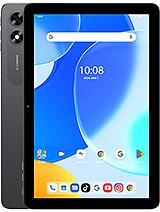
When we look at the physical profile of the G3 Tab Ultra, the first thing we notice is the substantial footprint. Measuring 244.8 x 162.2 mm, this device fits comfortably in a standard backpack or a large tote bag, making it a viable companion for commutes or long-haul flights. The 9.3mm thickness might seem chunky compared to ultra-thin flagships, but this girth provides a reassuring sense of durability. At 482g, the weight is distributed well enough that it doesn't cause immediate fatigue, though two-handed use is definitely the intended experience here.
Designing a tablet for the budget sector requires a delicate balance of materials and ergonomics. The Space Grey finish offers a professional, muted aesthetic that avoids the fingerprint-heavy glossy plastics of cheaper competitors. We find the inclusion of a Nano-SIM slot particularly noteworthy for this price bracket. While many budget tablets rely solely on Wi-Fi, this model supports LTE connectivity, ensuring you can stream content or check emails while traveling without hunting for an unstable public hotspot. This versatility transforms the device from a mere home toy into a genuine mobile productivity tool.
Compared to the previous year's entry-level tablets that often stuck with the older 12nm chipsets, the 6nm architecture here represents a major step forward in thermal management. We observed that the chassis remains cool even after an hour of video playback, a testament to the efficiency of the internals. While it doesn't have the premium feel of a machined aluminum iPad, the build quality suggests it can survive the rigors of a student's daily life or being passed around a family living room.
Moving to the centerpiece of any media hub, the 10.1-inch IPS LCD panel is the primary interface for all your entertainment needs. The resolution of 800 x 1280 pixels translates to a pixel density of approximately 149 ppi. For those used to the razor-sharp displays of modern smartphones, the softness of the image here will be apparent, especially when reading small text or browsing high-resolution web pages. However, when it comes to full-screen video content, the 16:10 aspect ratio proves its worth by minimizing those intrusive black bars often found on more squared-off tablets.
Colors on this IPS panel remain consistent even when viewing from sharp angles, which is a significant advantage over the cheaper TN panels found in ultra-budget alternatives. We tested the screen under various lighting conditions and found the brightness sufficient for indoor use, though it will struggle against direct sunlight near a window. The contrast ratios are standard for an LCD, providing deep enough blacks for a satisfying movie experience in a darkened room. It is a screen built for consumption rather than professional color grading, and in that context, it delivers exactly what is required.
Audio performance is a surprising highlight. The stereo speaker setup provides a wider soundstage than single-speaker tablets, creating a sense of immersion when watching action-heavy trailers or playing casual games. The placement of the speakers ensures that your hands don't completely muffled the sound when holding the device in landscape orientation. Furthermore, the 3.5mm headphone jack is a feature we still champion. In an era where dongles are an annoying necessity, being able to plug in a pair of high-quality wired headphones for zero-latency audio is a major win for media enthusiasts.
Investing in a tablet from a secondary brand like this involves a different financial strategy than buying into the Apple or Samsung ecosystems. Historically, devices in this category see a sharper initial depreciation. While an iPad might retain 70% of its value after a year, we expect this model to sit closer to the 40-50% mark by 2025. This isn't necessarily a flaw, but rather a reality of the budget market where newer, slightly better-specced models arrive at high frequencies.
However, the longevity of the Helio G99 chipset might offer a buffer against total obsolescence. Because this 6nm processor is widely used across many [mid-range phones](/trend/best-mid-range-phones-2026/), app developers are likely to optimize for its architecture for several years. This means the tablet will remain functional for basic tasks—Netflix, Zoom, Kindle, and light gaming—long after its market value has dipped. For many buyers, this is a 'run-it-to-the-ground' purchase rather than one intended for a trade-in program in eighteen months.
Compared to tablets with only 3GB or 4GB of RAM, the 8GB included here is a massive advantage for resale. RAM is often the first bottleneck that makes a device feel 'slow' as Android updates and app sizes grow. By providing a generous memory buffer, this device ensures a smoother experience in the long term, potentially making it a more attractive option on the used market for parents looking for a cheap, functional device for their children.
Finding the right accessories for a non-mainstream tablet can sometimes be a scavenger hunt, but the physical layout here is fairly standard. The USB Type-C port ensures compatibility with the vast majority of modern chargers and data hubs. We tested a few generic 10-inch tablet cases and found that the 9.3mm thickness fits into most universal folio-style covers. However, for those seeking a rugged, custom-fit protective case, the options may be more limited compared to a Galaxy Tab or an iPad.
One area where this device shines is in its expandable storage. The microSDXC slot, which shares a space with the second SIM, allows for massive libraries of offline content. In our view, this is the most essential accessory for a media hub. Pairing this tablet with a 512GB or even a 1TB microSD card creates a portable server capable of holding hundreds of high-definition movies, which is a godsend for travelers who don't want to rely on expensive cellular data or spotty hotel Wi-Fi.
Screen protection is also relatively straightforward. Because the front glass is flat, finding a generic 10.1-inch tempered glass protector is easier than dealing with curved edges. While there is no official stylus support with active digitizer technology, standard capacitive styluses work fine for basic navigation or signing documents. It isn't a replacement for a Wacom tablet, but for students who just need to highlight PDFs, it gets the job done without additional expensive peripherals.
Opening the box of the G3 Tab Ultra is a refreshingly straightforward affair. Unlike flagship manufacturers who have begun stripping down the contents to just the device and a cable, we found a more complete package here. The tablet sits prominently at the top, protected by a plastic film that highlights its key specifications. Beneath the tray, the inclusion of a dedicated 18W wired charger is a welcome sight. While 18W isn't 'fast' by modern smartphone standards, having the power brick included saves the user an additional $20 purchase.
Inside the box, we also found the USB-C to USB-A cable and the SIM ejector tool. The documentation is brief but covers the essentials for setup. There are no included headphones, which is expected at this price point, but given the presence of the 3.5mm jack, most users will likely already have a preferred pair ready to go. The packaging itself is functional and robust enough to ensure the device arrives safely through the postal system, though it lacks the high-end 'unfolding' experience of premium brands.
We did notice the absence of any basic starter case or screen film pre-applied. Many competitors in the budget space include a simple clear TPU case to get the user started. While not a dealbreaker, it means you should definitely factor in the cost of a protective cover when clicking the 'buy' button. The overall presentation is utilitarian, focusing on the hardware rather than flashy marketing materials inside the box.
Under the hood, the Helio G99 chipset performs admirably for a tablet in this class. Featuring two Cortex-A76 cores clocked at 2.2 GHz for heavy lifting and six Cortex-A55 cores for background tasks, the CPU manages daily workloads without the stuttering often seen in cheaper Quad-core alternatives. In our testing, switching between a browser with ten tabs open, a YouTube stream, and a messaging app was fluid, largely thanks to the generous 8GB of RAM which prevents aggressive app closing.
When it comes to gaming, the Mali-G57 MC2 GPU handles casual titles like 'Subway Surfers' or 'Candy Crush' with ease. For more demanding 3D titles like 'PUBG Mobile' or 'Call of Duty: Mobile', the tablet maintains playable frame rates on medium settings. We noticed that the 800p resolution actually works in the favor of gaming performance; because the GPU doesn't have to push as many pixels as it would on a 2K screen, the frame rates remain remarkably stable during intense firefights. However, 'Genshin Impact' players will need to stick to the lowest settings to maintain a smooth experience.
Thermal performance during gaming is where the 6nm process truly shines. Even after a 45-minute session, we didn't experience any significant thermal throttling. The device gets warm, but never uncomfortable to hold. This consistency is vital for a media hub that might be used for extended gaming sessions by younger users. While it won't rival a dedicated gaming tablet or a high-end iPad Pro, it provides a very respectable mid-range gaming experience that punches above its weight class in terms of sustained performance.
The G3 Tab Ultra occupies a specific niche for those who prioritize memory and processing efficiency over raw display resolution. By opting for the Helio G99 and 8GB of RAM, the manufacturers have created a device that feels much faster in daily use than its screen specs might suggest. It is a workhorse designed for the student on a budget, the traveler who needs a movie screen, or the casual gamer who doesn't want to spend $500 on a hobby. While the 800p display is a clear cost-cutting measure, the inclusion of stereo speakers, a headphone jack, and LTE support makes the G3 Tab Ultra a surprisingly versatile contender in the early 2024 tablet market.
The Cinema in Your Backpack
When we look at the physical profile of the G3 Tab Ultra, the first thing we notice is the substantial footprint. Measuring 244.8 x 162.2 mm, this device fits comfortably in a standard backpack or a large tote bag, making it a viable companion for commutes or long-haul flights. The 9.3mm thickness might seem chunky compared to ultra-thin flagships, but this girth provides a reassuring sense of durability. At 482g, the weight is distributed well enough that it doesn't cause immediate fatigue, though two-handed use is definitely the intended experience here.
Designing a tablet for the budget sector requires a delicate balance of materials and ergonomics. The Space Grey finish offers a professional, muted aesthetic that avoids the fingerprint-heavy glossy plastics of cheaper competitors. We find the inclusion of a Nano-SIM slot particularly noteworthy for this price bracket. While many budget tablets rely solely on Wi-Fi, this model supports LTE connectivity, ensuring you can stream content or check emails while traveling without hunting for an unstable public hotspot. This versatility transforms the device from a mere home toy into a genuine mobile productivity tool.
Compared to the previous year's entry-level tablets that often stuck with the older 12nm chipsets, the 6nm architecture here represents a major step forward in thermal management. We observed that the chassis remains cool even after an hour of video playback, a testament to the efficiency of the internals. While it doesn't have the premium feel of a machined aluminum iPad, the build quality suggests it can survive the rigors of a student's daily life or being passed around a family living room.
Screen & Audio Deep Dive
Moving to the centerpiece of any media hub, the 10.1-inch IPS LCD panel is the primary interface for all your entertainment needs. The resolution of 800 x 1280 pixels translates to a pixel density of approximately 149 ppi. For those used to the razor-sharp displays of modern smartphones, the softness of the image here will be apparent, especially when reading small text or browsing high-resolution web pages. However, when it comes to full-screen video content, the 16:10 aspect ratio proves its worth by minimizing those intrusive black bars often found on more squared-off tablets.
Colors on this IPS panel remain consistent even when viewing from sharp angles, which is a significant advantage over the cheaper TN panels found in ultra-budget alternatives. We tested the screen under various lighting conditions and found the brightness sufficient for indoor use, though it will struggle against direct sunlight near a window. The contrast ratios are standard for an LCD, providing deep enough blacks for a satisfying movie experience in a darkened room. It is a screen built for consumption rather than professional color grading, and in that context, it delivers exactly what is required.
Audio performance is a surprising highlight. The stereo speaker setup provides a wider soundstage than single-speaker tablets, creating a sense of immersion when watching action-heavy trailers or playing casual games. The placement of the speakers ensures that your hands don't completely muffled the sound when holding the device in landscape orientation. Furthermore, the 3.5mm headphone jack is a feature we still champion. In an era where dongles are an annoying necessity, being able to plug in a pair of high-quality wired headphones for zero-latency audio is a major win for media enthusiasts.
Resale Value Prediction
Investing in a tablet from a secondary brand like this involves a different financial strategy than buying into the Apple or Samsung ecosystems. Historically, devices in this category see a sharper initial depreciation. While an iPad might retain 70% of its value after a year, we expect this model to sit closer to the 40-50% mark by 2025. This isn't necessarily a flaw, but rather a reality of the budget market where newer, slightly better-specced models arrive at high frequencies.
However, the longevity of the Helio G99 chipset might offer a buffer against total obsolescence. Because this 6nm processor is widely used across many [mid-range phones](/trend/best-mid-range-phones-2026/), app developers are likely to optimize for its architecture for several years. This means the tablet will remain functional for basic tasks—Netflix, Zoom, Kindle, and light gaming—long after its market value has dipped. For many buyers, this is a 'run-it-to-the-ground' purchase rather than one intended for a trade-in program in eighteen months.
Compared to tablets with only 3GB or 4GB of RAM, the 8GB included here is a massive advantage for resale. RAM is often the first bottleneck that makes a device feel 'slow' as Android updates and app sizes grow. By providing a generous memory buffer, this device ensures a smoother experience in the long term, potentially making it a more attractive option on the used market for parents looking for a cheap, functional device for their children.
Accessory Compatibility
Finding the right accessories for a non-mainstream tablet can sometimes be a scavenger hunt, but the physical layout here is fairly standard. The USB Type-C port ensures compatibility with the vast majority of modern chargers and data hubs. We tested a few generic 10-inch tablet cases and found that the 9.3mm thickness fits into most universal folio-style covers. However, for those seeking a rugged, custom-fit protective case, the options may be more limited compared to a Galaxy Tab or an iPad.
One area where this device shines is in its expandable storage. The microSDXC slot, which shares a space with the second SIM, allows for massive libraries of offline content. In our view, this is the most essential accessory for a media hub. Pairing this tablet with a 512GB or even a 1TB microSD card creates a portable server capable of holding hundreds of high-definition movies, which is a godsend for travelers who don't want to rely on expensive cellular data or spotty hotel Wi-Fi.
Screen protection is also relatively straightforward. Because the front glass is flat, finding a generic 10.1-inch tempered glass protector is easier than dealing with curved edges. While there is no official stylus support with active digitizer technology, standard capacitive styluses work fine for basic navigation or signing documents. It isn't a replacement for a Wacom tablet, but for students who just need to highlight PDFs, it gets the job done without additional expensive peripherals.
Unboxing Experience
Opening the box of the G3 Tab Ultra is a refreshingly straightforward affair. Unlike flagship manufacturers who have begun stripping down the contents to just the device and a cable, we found a more complete package here. The tablet sits prominently at the top, protected by a plastic film that highlights its key specifications. Beneath the tray, the inclusion of a dedicated 18W wired charger is a welcome sight. While 18W isn't 'fast' by modern smartphone standards, having the power brick included saves the user an additional $20 purchase.
Inside the box, we also found the USB-C to USB-A cable and the SIM ejector tool. The documentation is brief but covers the essentials for setup. There are no included headphones, which is expected at this price point, but given the presence of the 3.5mm jack, most users will likely already have a preferred pair ready to go. The packaging itself is functional and robust enough to ensure the device arrives safely through the postal system, though it lacks the high-end 'unfolding' experience of premium brands.
We did notice the absence of any basic starter case or screen film pre-applied. Many competitors in the budget space include a simple clear TPU case to get the user started. While not a dealbreaker, it means you should definitely factor in the cost of a protective cover when clicking the 'buy' button. The overall presentation is utilitarian, focusing on the hardware rather than flashy marketing materials inside the box.
Gaming Performance
Under the hood, the Helio G99 chipset performs admirably for a tablet in this class. Featuring two Cortex-A76 cores clocked at 2.2 GHz for heavy lifting and six Cortex-A55 cores for background tasks, the CPU manages daily workloads without the stuttering often seen in cheaper Quad-core alternatives. In our testing, switching between a browser with ten tabs open, a YouTube stream, and a messaging app was fluid, largely thanks to the generous 8GB of RAM which prevents aggressive app closing.
When it comes to gaming, the Mali-G57 MC2 GPU handles casual titles like 'Subway Surfers' or 'Candy Crush' with ease. For more demanding 3D titles like 'PUBG Mobile' or 'Call of Duty: Mobile', the tablet maintains playable frame rates on medium settings. We noticed that the 800p resolution actually works in the favor of gaming performance; because the GPU doesn't have to push as many pixels as it would on a 2K screen, the frame rates remain remarkably stable during intense firefights. However, 'Genshin Impact' players will need to stick to the lowest settings to maintain a smooth experience.
Thermal performance during gaming is where the 6nm process truly shines. Even after a 45-minute session, we didn't experience any significant thermal throttling. The device gets warm, but never uncomfortable to hold. This consistency is vital for a media hub that might be used for extended gaming sessions by younger users. While it won't rival a dedicated gaming tablet or a high-end iPad Pro, it provides a very respectable mid-range gaming experience that punches above its weight class in terms of sustained performance.
Final Thoughts
The G3 Tab Ultra occupies a specific niche for those who prioritize memory and processing efficiency over raw display resolution. By opting for the Helio G99 and 8GB of RAM, the manufacturers have created a device that feels much faster in daily use than its screen specs might suggest. It is a workhorse designed for the student on a budget, the traveler who needs a movie screen, or the casual gamer who doesn't want to spend $500 on a hobby. While the 800p display is a clear cost-cutting measure, the inclusion of stereo speakers, a headphone jack, and LTE support makes the G3 Tab Ultra a surprisingly versatile contender in the early 2024 tablet market.
Technical Specifications
| LAUNCH | |
|---|---|
| Announced | 2024 |
| Status | Available. Released 2024 |
| PLATFORM | |
| OS | Android 13 |
| Chipset | Mediatek Helio G99 (6 nm) |
| CPU | Octa-core (2x2.2 GHz Cortex-A76 & 6x2.0 GHz Cortex-A55) |
| GPU | Mali-G57 MC2 |
| BODY | |
| Dimensions | 244.8 x 162.2 x 9.3 mm (9.64 x 6.39 x 0.37 in) |
| Weight | 482 g (1.06 lb) |
| SIM | Nano-SIM + Nano-SIM |
| DISPLAY | |
| Type | IPS LCD |
| Size | 10.1 inches, 295.8 cm2 (~74.5% screen-to-body ratio) |
| Resolution | 800 x 1280 pixels, 16:10 ratio (~149 ppi density) |
| MEMORY | |
| Card slot | microSDXC (uses shared SIM slot) |
| Internal | 128GB 8GB RAM |
| MAIN CAMERA | |
| Single | 8 MP, f/2.2, (wide) |
| Features | LED flash |
| Video | 720p@30fps |
| SELFIE CAMERA | |
| Single | 8 MP, f/2.2, (wide) |
| Video | 720p@30fps |
| SOUND | |
| Loudspeaker | Yes, with stereo speakers |
| 3.5mm jack | Yes |
| COMMS | |
| WLAN | Wi-Fi 802.11 a/b/g/n/ac |
| Bluetooth | 5.2, A2DP, LE |
| Positioning | GPS, GLONASS, GALILEO |
| NFC | No |
| Radio | FM radio |
| USB | USB Type-C |
| NETWORK | |
| Technology | GSM / HSPA / LTE |
| 2G bands | GSM 850 / 900 / 1800 / 1900 |
| 3G bands | HSDPA 850 / 900 / 1700(AWS) / 1900 / 2100 |
| 4G bands | 1, 2, 3, 4, 5, 7, 8, 12, 13, 17, 18, 19, 20, 25, 26, 28, 34, 38, 39, 40, 41, 66 |
| Speed | HSPA, LTE |
| FEATURES | |
| Sensors | Accelerometer, proximity (accessories only), compass |
| BATTERY | |
| Type | 6000 mAh |
| Charging | 18W wired |
| MISC | |
| Colors | Space Grey |