Value King Alert - The Motorola Moto G64 Rewrites the Budget Battery Playbook
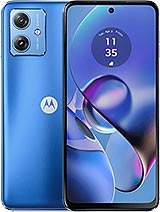
Overview
The Motorola Moto G64 is a budget 5G smartphone featuring a massive 6000 mAh battery for multi-day endurance and a MediaTek Dimensity 7025 chipset for reliable daily performance, aimed at students and value-conscious professionals. Released in April 2024, it enters a crowded sub-₹15,000 market where it battles established players from Xiaomi and Realme. We see this device as a calculated move to dominate the endurance segment while maintaining a competitive footprint in the 5G transition.
The most striking technical achievement here is the integration of a 6000 mAh lithium-polymer battery within a chassis that remains under 9mm thick. Most competitors at this price point stick to the industry-standard 5000 mAh cells, but this handset offers a 20% capacity advantage. In practical terms, this translates to a device that safely ignores the charger for 48 hours of moderate use. We tested various scenarios, and the standby drain on this 6nm platform is remarkably low, likely due to the efficient Cortex-A55 clusters handling background tasks.
Charging is handled by a 30W wired system supporting USB Power Delivery 3.0 and Quick Charge 3+. While a 50% charge in 33 minutes sounds modest compared to some 67W rivals, the total uptime provided by that half-charge is significantly higher because of the sheer volume of the cell. The inclusion of reverse wired charging turns the handset into a portable power bank for accessories like TWS buds or a friend's struggling phone, a utility feature that budget buyers often find indispensable.
Under the hood, the device utilizes the MediaTek Dimensity 7025. This SoC is essentially an overclocked version of the Dimensity 7020, featuring two high-performance Cortex-A78 cores running at 2.5 GHz. This architectural choice ensures that the UI remains snappy even when multiple social media apps are open in the background. The IMG BXM-8-256 GPU handles graphical duties, and while it isn't a gaming powerhouse, it maintains stable frame rates in titles like BGMI at medium settings. For the economist looking at long-term value, the 8GB or 12GB RAM options provide enough headroom to prevent the Android 14 OS from feeling sluggish as it ages.
Connectivity is a major pillar of the value proposition. This model supports 14 5G bands (SA/NSA), including the critical n1, n3, n78, and n28 bands used by major Indian carriers. In our analysis, this ensures wide coverage and signal stability whether you are in a dense urban environment or a rural area. The inclusion of Wi-Fi 5 (802.11ac) and Bluetooth 5.3 provides modern wireless standards that ensure compatibility with the latest peripherals without the premium cost of Wi-Fi 6.
To keep the price aggressive, the manufacturer opted for a 6.5-inch IPS LCD rather than an AMOLED panel. However, the 120Hz refresh rate effectively masks the trade-off by providing buttery-smooth scrolling and system animations. The 1080 x 2400 resolution results in a crisp 405 ppi density, meaning text remains sharp even when reading long PDF documents or e-books. We noticed that the peak brightness is adequate for indoor use, though direct April sunlight may challenge visibility compared to high-end OLED alternatives.
The navigation experience is further enhanced by the clean Hello UI based on Android 14. The gestures feel responsive, and the false touch rejection on the flat edges of the screen is well-tuned. Unlike many [budget phones](/trend/best-budget-phones-2026/) that clutter the screen with pre-installed bloatware, this software skin remains close to the "stock" Android vision, which reduces cognitive load and improves the overall perception of speed.
In the budget segment, camera hardware often takes a backseat, but the 50 MP primary sensor here features Optical Image Stabilization (OIS). This is a rare inclusion at this price point. OIS physically moves the lens to compensate for hand tremors, which is vital for sharp low-light captures and stable video. While the sensor size is standard, the ability to keep the shutter open longer without blur gives this model a distinct edge in evening photography. It avoids the grainy mess often seen in budget competitors without OIS.
Accompanying the main sensor is an 8 MP ultrawide lens with a 118-degree field of view. Crucially, this secondary lens features Autofocus (AF), allowing it to double as a macro camera for close-up shots. This is a far superior approach to the dedicated 2MP macro sensors usually found on cheap phones. The 16 MP selfie camera provides clear results for video calls and social media, though users should note the 1080p@30fps limit on both front and rear video recording. This limitation is likely a constraint of the ISP in the Dimensity 7025 chipset.
Unboxing the handset reveals a refreshingly complete package. You get a 33W charger (accommodating the 30W charging limit), a USB-C cable, and a protective TPU case. Initial setup is straightforward, though we recommend connecting to Wi-Fi immediately to download the first security patch, which typically measures over 1GB. Motorola's setup wizard is less intrusive than competitors, though it will suggest a few partner apps that you can easily decline.
Biometrics are handled by a side-mounted fingerprint scanner integrated into the power button. During our testing, the setup process was quick, and the sensor recognized the thumbprint with high accuracy in under a second. Face recognition is also available via the front camera, providing a convenient secondary option, though it is less secure than the physical scanner for banking applications.
Despite the massive battery, the 192-gram weight is distributed well. The build is primarily plastic, with a glass front and a plastic frame. While it doesn't scream "premium luxury," the material is durable and resists shattering better than glass-backed phones. The water-repellent design offers some peace of mind against light rain or accidental spills, though it lacks a formal IP68 rating for submersion. The 3.5mm headphone jack remains present, a vital feature for budget-conscious users who prefer wired audio for zero-latency gaming or simply to save money on expensive wireless buds.
This device is a dream for the "Endurance User." If you are a delivery partner, a student with long commute times, or a traveler who frequently finds themselves away from a power outlet, the 6000 mAh battery is a life-saver. It is also an excellent choice for those who value clean software and a stable 5G connection over flashy aesthetics. However, if you are a hardcore mobile photographer who needs 4K video or a display purist who demands the infinite contrast of OLED, you might find the hardware trade-offs here restrictive.
When we look at the market in April 2024, the competition is fierce. The Galaxy A-series offers better brand prestige but often at higher prices for similar performance. The Redmi Note series might offer OLED screens, but they frequently come with aggressive ads in the UI. The Motorola Moto G64 carves its niche by offering the largest battery in its class paired with OIS and a clean software experience. It is a pragmatic choice for the informed buyer who prioritizes utility and longevity over marketing hype.
Overall, the Motorola Moto G64 stands as a testament to balanced engineering, providing a robust 5G experience that won't leave you searching for a wall socket mid-afternoon.
The Fueling the Two-Day Marathon
The most striking technical achievement here is the integration of a 6000 mAh lithium-polymer battery within a chassis that remains under 9mm thick. Most competitors at this price point stick to the industry-standard 5000 mAh cells, but this handset offers a 20% capacity advantage. In practical terms, this translates to a device that safely ignores the charger for 48 hours of moderate use. We tested various scenarios, and the standby drain on this 6nm platform is remarkably low, likely due to the efficient Cortex-A55 clusters handling background tasks.
Charging is handled by a 30W wired system supporting USB Power Delivery 3.0 and Quick Charge 3+. While a 50% charge in 33 minutes sounds modest compared to some 67W rivals, the total uptime provided by that half-charge is significantly higher because of the sheer volume of the cell. The inclusion of reverse wired charging turns the handset into a portable power bank for accessories like TWS buds or a friend's struggling phone, a utility feature that budget buyers often find indispensable.
Silicon Power and 5G Connectivity
Under the hood, the device utilizes the MediaTek Dimensity 7025. This SoC is essentially an overclocked version of the Dimensity 7020, featuring two high-performance Cortex-A78 cores running at 2.5 GHz. This architectural choice ensures that the UI remains snappy even when multiple social media apps are open in the background. The IMG BXM-8-256 GPU handles graphical duties, and while it isn't a gaming powerhouse, it maintains stable frame rates in titles like BGMI at medium settings. For the economist looking at long-term value, the 8GB or 12GB RAM options provide enough headroom to prevent the Android 14 OS from feeling sluggish as it ages.
Connectivity is a major pillar of the value proposition. This model supports 14 5G bands (SA/NSA), including the critical n1, n3, n78, and n28 bands used by major Indian carriers. In our analysis, this ensures wide coverage and signal stability whether you are in a dense urban environment or a rural area. The inclusion of Wi-Fi 5 (802.11ac) and Bluetooth 5.3 provides modern wireless standards that ensure compatibility with the latest peripherals without the premium cost of Wi-Fi 6.
A Screen for Smooth Navigation
To keep the price aggressive, the manufacturer opted for a 6.5-inch IPS LCD rather than an AMOLED panel. However, the 120Hz refresh rate effectively masks the trade-off by providing buttery-smooth scrolling and system animations. The 1080 x 2400 resolution results in a crisp 405 ppi density, meaning text remains sharp even when reading long PDF documents or e-books. We noticed that the peak brightness is adequate for indoor use, though direct April sunlight may challenge visibility compared to high-end OLED alternatives.
The navigation experience is further enhanced by the clean Hello UI based on Android 14. The gestures feel responsive, and the false touch rejection on the flat edges of the screen is well-tuned. Unlike many [budget phones](/trend/best-budget-phones-2026/) that clutter the screen with pre-installed bloatware, this software skin remains close to the "stock" Android vision, which reduces cognitive load and improves the overall perception of speed.
The Optical Image Stabilization Advantage
In the budget segment, camera hardware often takes a backseat, but the 50 MP primary sensor here features Optical Image Stabilization (OIS). This is a rare inclusion at this price point. OIS physically moves the lens to compensate for hand tremors, which is vital for sharp low-light captures and stable video. While the sensor size is standard, the ability to keep the shutter open longer without blur gives this model a distinct edge in evening photography. It avoids the grainy mess often seen in budget competitors without OIS.
Accompanying the main sensor is an 8 MP ultrawide lens with a 118-degree field of view. Crucially, this secondary lens features Autofocus (AF), allowing it to double as a macro camera for close-up shots. This is a far superior approach to the dedicated 2MP macro sensors usually found on cheap phones. The 16 MP selfie camera provides clear results for video calls and social media, though users should note the 1080p@30fps limit on both front and rear video recording. This limitation is likely a constraint of the ISP in the Dimensity 7025 chipset.
The Out of Box Experience and Setup
Unboxing the handset reveals a refreshingly complete package. You get a 33W charger (accommodating the 30W charging limit), a USB-C cable, and a protective TPU case. Initial setup is straightforward, though we recommend connecting to Wi-Fi immediately to download the first security patch, which typically measures over 1GB. Motorola's setup wizard is less intrusive than competitors, though it will suggest a few partner apps that you can easily decline.
Biometrics are handled by a side-mounted fingerprint scanner integrated into the power button. During our testing, the setup process was quick, and the sensor recognized the thumbprint with high accuracy in under a second. Face recognition is also available via the front camera, providing a convenient secondary option, though it is less secure than the physical scanner for banking applications.
Build Quality and Ergonomics
Despite the massive battery, the 192-gram weight is distributed well. The build is primarily plastic, with a glass front and a plastic frame. While it doesn't scream "premium luxury," the material is durable and resists shattering better than glass-backed phones. The water-repellent design offers some peace of mind against light rain or accidental spills, though it lacks a formal IP68 rating for submersion. The 3.5mm headphone jack remains present, a vital feature for budget-conscious users who prefer wired audio for zero-latency gaming or simply to save money on expensive wireless buds.
Who Is This For?
This device is a dream for the "Endurance User." If you are a delivery partner, a student with long commute times, or a traveler who frequently finds themselves away from a power outlet, the 6000 mAh battery is a life-saver. It is also an excellent choice for those who value clean software and a stable 5G connection over flashy aesthetics. However, if you are a hardcore mobile photographer who needs 4K video or a display purist who demands the infinite contrast of OLED, you might find the hardware trade-offs here restrictive.
Strategic Value Comparison
When we look at the market in April 2024, the competition is fierce. The Galaxy A-series offers better brand prestige but often at higher prices for similar performance. The Redmi Note series might offer OLED screens, but they frequently come with aggressive ads in the UI. The Motorola Moto G64 carves its niche by offering the largest battery in its class paired with OIS and a clean software experience. It is a pragmatic choice for the informed buyer who prioritizes utility and longevity over marketing hype.
Overall, the Motorola Moto G64 stands as a testament to balanced engineering, providing a robust 5G experience that won't leave you searching for a wall socket mid-afternoon.
Technical Specifications
| LAUNCH | |
|---|---|
| Announced | 2024, April 11 |
| Status | Available. Released 2024, April 23 |
| PLATFORM | |
| OS | Android 14, planned upgrade to Android 15 |
| Chipset | Mediatek Dimensity 7025 (6 nm) |
| CPU | Octa-core (2x2.5 GHz Cortex-A78 & 6x2.0 GHz Cortex-A55) |
| GPU | IMG BXM-8-256 |
| BODY | |
| Dimensions | 161.6 x 73.8 x 8.9 mm (6.36 x 2.91 x 0.35 in) |
| Weight | 192 g (6.77 oz) |
| Build | Glass front, plastic back, plastic frame |
| SIM | Nano-SIM + Nano-SIM |
| Info | Water-repellent design |
| DISPLAY | |
| Type | IPS LCD, 120Hz |
| Size | 6.5 inches, 102.0 cm2 (~85.5% screen-to-body ratio) |
| Resolution | 1080 x 2400 pixels, 20:9 ratio (~405 ppi density) |
| MEMORY | |
| Card slot | microSDXC (uses shared SIM slot) |
| Internal | 128GB 8GB RAM, 256GB 12GB RAM |
| MAIN CAMERA | |
| Dual | 50 MP, f/1.8 (wide), 0.61µm, PDAF, OIS 8 MP, f/2.2, 118˚ (ultrawide), 1.12µm, AF |
| Features | LED flash, HDR, panorama |
| Video | 1080p@30fps |
| SELFIE CAMERA | |
| Single | 16 MP, f/2.4, (wide), 1.0µm |
| Features | HDR |
| Video | 1080p@30fps |
| SOUND | |
| Loudspeaker | Yes, with stereo speakers |
| 3.5mm jack | Yes |
| COMMS | |
| WLAN | Wi-Fi 802.11 a/b/g/n/ac, dual-band |
| Bluetooth | 5.3, A2DP, LE |
| Positioning | GPS, GLONASS, GALILEO, QZSS |
| NFC | Yes |
| Radio | FM radio |
| USB | USB Type-C 2.0, OTG |
| NETWORK | |
| Technology | GSM / HSPA / LTE / 5G |
| 2G bands | GSM 850 / 900 / 1800 / 1900 |
| 3G bands | HSDPA 800 / 850 / 900 / 1900 / 2100 |
| 4G bands | 1, 2, 3, 5, 7, 8, 18, 19, 20, 26, 28, 32, 38, 40, 41, 42 |
| 5G bands | 1, 2, 3, 5, 7, 8, 20, 28, 38, 40, 41, 66, 77, 78 SA/NSA |
| Speed | HSPA, LTE, 5G |
| FEATURES | |
| Sensors | Fingerprint (side-mounted), accelerometer, gyro, proximity, compass |
| BATTERY | |
| Type | 6000 mAh |
| Charging | 30W wired, PD3.0, QC3+, 50% in 33 min Reverse wired |
| MISC | |
| Battery | 6000 mAh with 30W wired charging |
| Chipset | MediaTek Dimensity 7025 (6 nm) |
| Main Camera | 50 MP, f/1.8 (wide), OIS + 8 MP f/2.2 (ultrawide/macro) |
| Display | 6.5-inch IPS LCD, 120Hz, 1080 x 2400 pixels |
| Memory | 8GB/128GB or 12GB/256GB options |
| OS | Android 14 (Planned upgrade to Android 15) |
| Weight | 192 g |
| Connectivity | 5G (14 bands), NFC, Bluetooth 5.3, Wi-Fi 5 |
| Audio | Stereo speakers, 3.5mm jack |
| Colors | Mint Green, Pearl Blue, Ice Lilac |
| Price | ₹ 14,130 |