Vivo Speed Without the Premium - The iQOO Y100t Shatters the Mid-Range Ceiling
Overview
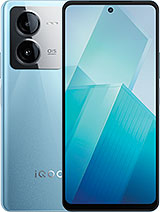
The iQOO Y100t is a performance-oriented mid-range smartphone featuring the Mediatek Dimensity 8200 (4 nm) chipset for flagship-level processing and 120W wired charging for industry-leading recovery speeds, aimed at power users and mobile gamers on a budget. Released in February 2024, it competes directly with the high-refresh-rate offerings from Redmi and Realme by prioritizing raw compute power over display technology or premium materials.
The decision to equip this handset with the Mediatek Dimensity 8200 chipset changes the conversation entirely for the sub-200 EUR market. This is an octa-core powerhouse featuring a 3.1 GHz Cortex-A78 prime core, three 3.0 GHz Cortex-A78 performance cores, and four 2.0 GHz Cortex-A55 efficiency cores. In our technical assessment, this configuration allows the device to handle intensive multitasking and sustained gaming sessions that would usually throttle a typical mid-range Snapdragon 6 or 7 series processor. By leveraging the 4nm fabrication process, the silicon manages heat more effectively than older 6nm alternatives.
Supporting this processing grunt is UFS 3.1 storage. This is a critical detail that many consumers overlook. While competitors often use slower eMMC or UFS 2.2 storage to cut costs, the inclusion of UFS 3.1 means application installations, large file transfers, and game loading times are significantly reduced. It effectively eliminates the bottleneck that usually makes [budget phones](/trend/best-budget-phones-2026/) feel 'sluggish' after a few months of use. With options ranging up to 12GB of RAM, the platform provides enough overhead to keep several heavy applications resident in memory without aggressive background closing.
While the industry is sprinting toward AMOLED panels, this model utilizes a 6.64-inch IPS LCD. On paper, this might look like a downgrade, but there is nuance to this choice. The panel supports a 120Hz refresh rate, ensuring fluid scrolling and high-frame-rate gaming. For users sensitive to Pulse Width Modulation (PWM) flickering—a common issue with cheaper OLED panels—this high-quality LCD provides a more comfortable viewing experience during extended night-time use. The 1080 x 2388 pixel resolution maintains a crisp 395 ppi density, making text look sharp and detailed.
However, we must acknowledge the inherent limitations of the technology. Users will not see the 'infinite' blacks found on an OLED screen. In dark room environments, black levels will appear slightly gray, and the peak brightness, while sufficient for most indoor scenarios, might struggle under direct, harsh February sunlight compared to premium high-nit displays. The bezels are relatively thin for an LCD, though the bottom 'chin' is slightly more pronounced than what you would find on a flagship. This is a clear trade-off: you are trading display pop for sheer processing speed.
One of the most disruptive features of the device is the 120W wired charging capability paired with a 5000 mAh battery. In an era where even some flagships from major US and Korean brands are stuck at 25W or 45W, iQOO is providing a transformative power experience. Imagine a scenario where you wake up with 5% battery, and by the time you finish a quick breakfast, the phone is fully charged. It changes how a user interacts with their device; the anxiety of 'overnight charging' simply disappears when a full top-up takes less than 25 minutes.
Furthermore, the inclusion of reverse wired charging adds a layer of utility. While it won't charge a laptop, it acts as an emergency power bank for wireless earbuds or a friend's dying phone. The large battery capacity, combined with the efficiency of the Dimensity 8200, suggests that most users will comfortably get through a full day of heavy usage. Even with high-refresh-rate gaming, the 4nm efficiency of the chipset prevents the rapid drain often seen in older, less efficient hardware architectures.
The optics department is headlined by a 64 MP main sensor with an f/1.8 aperture. The standout hardware feature here is the Optical Image Stabilization (OIS). In the mid-range segment, OIS is frequently sacrificed, leading to blurry photos in low light or shaky handheld video. By including OIS, iQOO gives the hardware the potential to capture sharper images by compensating for micro-shakes during longer exposures. The sensor's 0.7µm pixel size isn't the largest in the world, but the OIS effectively bridges the gap, especially during evening city shots.
Video recording capabilities are surprisingly robust, supporting 4K@30fps. The stabilization from the OIS works in tandem with software processing to produce usable footage for social media or personal memories. However, the secondary 'Auxiliary lens' is largely there for marketing numbers and depth sensing rather than providing a useful ultra-wide or telephoto perspective. The 16 MP front camera is standard for the class, providing decent clarity for video calls and casual selfies, though it lacks the advanced autofocus found in high-end units.
Investing in a performance-focused mid-range device involves a different calculus than buying a flagship. Historically, iQOO devices hold their value reasonably well within the gaming and enthusiast communities but lack the massive secondary market demand of brands like Apple or Samsung. Expect a steeper depreciation curve after the first 18 months. However, the plastic frame and glass front construction are practical. Plastic is less likely to shatter upon impact than glass backs, making this a durable choice for students or younger users who might be rougher on their gear.
Regarding ecosystem compatibility, the device retains the 3.5mm headphone jack, a rarity in 2024. This allows users to use high-quality wired IEMs for zero-latency gaming without needing dongles. The NFC inclusion is vital for contactless payments, while the side-mounted fingerprint sensor is often preferred for its speed and reliability compared to budget under-display optical sensors. It is a pragmatic build designed for functionality over flashiness.
The unboxing experience is refreshingly complete. Unlike the trend of removing essentials, this package includes the high-wattage 120W power brick, a USB-C cable, and a basic protective case. This represents significant added value, as purchasing a 120W GaN charger separately can often cost an additional 40 to 60 EUR. The pre-applied screen protector ensures out-of-the-box durability. For those looking for third-party cases, the generic dimensions and popularity of the Y-series in Asian markets mean that AliExpress and other retailers will have plenty of affordable options, though local brick-and-mortar stores in Europe might be harder to find.
The iQOO Y100t represents a specialized approach to the mid-range market. It isn't trying to be a 'jack-of-all-trades.' Instead, it focuses heavily on three pillars: processing power, charging speed, and practical stability. By sacrificing an OLED screen and a secondary ultra-wide camera, the manufacturer has managed to cram in a chipset that usually belongs in phones twice its price. It is the ultimate choice for the pragmatic user who values performance and battery management above all else.
Flagship DNA in a Mid-Range Shell
The decision to equip this handset with the Mediatek Dimensity 8200 chipset changes the conversation entirely for the sub-200 EUR market. This is an octa-core powerhouse featuring a 3.1 GHz Cortex-A78 prime core, three 3.0 GHz Cortex-A78 performance cores, and four 2.0 GHz Cortex-A55 efficiency cores. In our technical assessment, this configuration allows the device to handle intensive multitasking and sustained gaming sessions that would usually throttle a typical mid-range Snapdragon 6 or 7 series processor. By leveraging the 4nm fabrication process, the silicon manages heat more effectively than older 6nm alternatives.
Supporting this processing grunt is UFS 3.1 storage. This is a critical detail that many consumers overlook. While competitors often use slower eMMC or UFS 2.2 storage to cut costs, the inclusion of UFS 3.1 means application installations, large file transfers, and game loading times are significantly reduced. It effectively eliminates the bottleneck that usually makes [budget phones](/trend/best-budget-phones-2026/) feel 'sluggish' after a few months of use. With options ranging up to 12GB of RAM, the platform provides enough overhead to keep several heavy applications resident in memory without aggressive background closing.
The LCD Compromise: Eye Comfort vs. Contrast
While the industry is sprinting toward AMOLED panels, this model utilizes a 6.64-inch IPS LCD. On paper, this might look like a downgrade, but there is nuance to this choice. The panel supports a 120Hz refresh rate, ensuring fluid scrolling and high-frame-rate gaming. For users sensitive to Pulse Width Modulation (PWM) flickering—a common issue with cheaper OLED panels—this high-quality LCD provides a more comfortable viewing experience during extended night-time use. The 1080 x 2388 pixel resolution maintains a crisp 395 ppi density, making text look sharp and detailed.
However, we must acknowledge the inherent limitations of the technology. Users will not see the 'infinite' blacks found on an OLED screen. In dark room environments, black levels will appear slightly gray, and the peak brightness, while sufficient for most indoor scenarios, might struggle under direct, harsh February sunlight compared to premium high-nit displays. The bezels are relatively thin for an LCD, though the bottom 'chin' is slightly more pronounced than what you would find on a flagship. This is a clear trade-off: you are trading display pop for sheer processing speed.
The 120W Charging Advantage
One of the most disruptive features of the device is the 120W wired charging capability paired with a 5000 mAh battery. In an era where even some flagships from major US and Korean brands are stuck at 25W or 45W, iQOO is providing a transformative power experience. Imagine a scenario where you wake up with 5% battery, and by the time you finish a quick breakfast, the phone is fully charged. It changes how a user interacts with their device; the anxiety of 'overnight charging' simply disappears when a full top-up takes less than 25 minutes.
Furthermore, the inclusion of reverse wired charging adds a layer of utility. While it won't charge a laptop, it acts as an emergency power bank for wireless earbuds or a friend's dying phone. The large battery capacity, combined with the efficiency of the Dimensity 8200, suggests that most users will comfortably get through a full day of heavy usage. Even with high-refresh-rate gaming, the 4nm efficiency of the chipset prevents the rapid drain often seen in older, less efficient hardware architectures.
Camera: Stability Meets Reality
The optics department is headlined by a 64 MP main sensor with an f/1.8 aperture. The standout hardware feature here is the Optical Image Stabilization (OIS). In the mid-range segment, OIS is frequently sacrificed, leading to blurry photos in low light or shaky handheld video. By including OIS, iQOO gives the hardware the potential to capture sharper images by compensating for micro-shakes during longer exposures. The sensor's 0.7µm pixel size isn't the largest in the world, but the OIS effectively bridges the gap, especially during evening city shots.
Video recording capabilities are surprisingly robust, supporting 4K@30fps. The stabilization from the OIS works in tandem with software processing to produce usable footage for social media or personal memories. However, the secondary 'Auxiliary lens' is largely there for marketing numbers and depth sensing rather than providing a useful ultra-wide or telephoto perspective. The 16 MP front camera is standard for the class, providing decent clarity for video calls and casual selfies, though it lacks the advanced autofocus found in high-end units.
Resale Value Prediction and Build Integrity
Investing in a performance-focused mid-range device involves a different calculus than buying a flagship. Historically, iQOO devices hold their value reasonably well within the gaming and enthusiast communities but lack the massive secondary market demand of brands like Apple or Samsung. Expect a steeper depreciation curve after the first 18 months. However, the plastic frame and glass front construction are practical. Plastic is less likely to shatter upon impact than glass backs, making this a durable choice for students or younger users who might be rougher on their gear.
Regarding ecosystem compatibility, the device retains the 3.5mm headphone jack, a rarity in 2024. This allows users to use high-quality wired IEMs for zero-latency gaming without needing dongles. The NFC inclusion is vital for contactless payments, while the side-mounted fingerprint sensor is often preferred for its speed and reliability compared to budget under-display optical sensors. It is a pragmatic build designed for functionality over flashiness.
Unboxing and Accessory Ecosystem
The unboxing experience is refreshingly complete. Unlike the trend of removing essentials, this package includes the high-wattage 120W power brick, a USB-C cable, and a basic protective case. This represents significant added value, as purchasing a 120W GaN charger separately can often cost an additional 40 to 60 EUR. The pre-applied screen protector ensures out-of-the-box durability. For those looking for third-party cases, the generic dimensions and popularity of the Y-series in Asian markets mean that AliExpress and other retailers will have plenty of affordable options, though local brick-and-mortar stores in Europe might be harder to find.
Final Verdict on the iQOO Y100t
The iQOO Y100t represents a specialized approach to the mid-range market. It isn't trying to be a 'jack-of-all-trades.' Instead, it focuses heavily on three pillars: processing power, charging speed, and practical stability. By sacrificing an OLED screen and a secondary ultra-wide camera, the manufacturer has managed to cram in a chipset that usually belongs in phones twice its price. It is the ultimate choice for the pragmatic user who values performance and battery management above all else.
Technical Specifications
| LAUNCH | |
|---|---|
| Announced | 2024, February 23 |
| Status | Available. Released 2024, February 28 |
| PLATFORM | |
| OS | Android 13, OriginOS 3 |
| Chipset | Mediatek Dimensity 8200 (4 nm) |
| CPU | Octa-core (1x3.1 GHz Cortex-A78 & 3x3.0 GHz Cortex-A78 & 4x2.0 GHz Cortex-A55) |
| GPU | Mali-G610 MC6 |
| BODY | |
| Dimensions | 164.6 x 75.8 x 8.8 mm (6.48 x 2.98 x 0.35 in) |
| Weight | 200 g (7.05 oz) |
| Build | Glass front, plastic frame |
| SIM | Nano-SIM + Nano-SIM |
| DISPLAY | |
| Type | IPS LCD, 120Hz |
| Size | 6.64 inches, 106.8 cm2 (~85.6% screen-to-body ratio) |
| Resolution | 1080 x 2388 pixels (~395 ppi density) |
| MEMORY | |
| Card slot | No |
| Internal | 256GB 8GB RAM, 256GB 12GB RAM, 512GB 12GB RAM |
| Info | UFS 3.1 |
| MAIN CAMERA | |
| Dual | 64 MP, f/1.8, (wide), 1/2.0", 0.7µm, PDAF, OIS Auxiliary lens |
| Features | Dual-LED dual-tone flash, HDR, panorama |
| Video | 4K@30fps, 1080p@30fps |
| SELFIE CAMERA | |
| Single | 16 MP, f/2.5, (wide) |
| Video | 1080p@30fps |
| SOUND | |
| Loudspeaker | Yes |
| 3.5mm jack | Yes |
| COMMS | |
| WLAN | Wi-Fi 802.11 a/b/g/n/ac/6, dual-band, Wi-Fi Direct |
| Bluetooth | 5.3, A2DP, LE, aptX HD |
| Positioning | GPS (L1), GLONASS (G1), BDS (B1I+B1c), GALILEO (E1), QZSS (L1) |
| NFC | Yes |
| Radio | No |
| USB | USB Type-C 2.0, OTG |
| NETWORK | |
| Technology | GSM / CDMA / HSPA / CDMA2000 / LTE / 5G |
| 2G bands | GSM 850 / 900 / 1800 / 1900 |
| Info | CDMA2000 1x |
| 3G bands | HSDPA 850 / 900 / 2100 |
| 4G bands | 1, 3, 5, 8, 28, 34, 38, 39, 40, 41 |
| 5G bands | 1, 5, 8, 28, 41, 77, 78 SA/NSA |
| Speed | HSPA, LTE, 5G |
| FEATURES | |
| Sensors | Fingerprint (side-mounted), accelerometer, gyro, proximity, compass |
| BATTERY | |
| Type | 5000 mAh |
| Charging | 120W wired Reverse wired |
| MISC | |
| Chipset | Mediatek Dimensity 8200 (4 nm) |
| Memory | Up to 512GB UFS 3.1 storage, 12GB RAM |
| Display | 6.64-inch IPS LCD, 120Hz, 1080 x 2388 pixels |
| Main Camera | 64 MP, f/1.8, OIS + Auxiliary lens |
| Selfie Camera | 16 MP, f/2.5 |
| Battery | 5000 mAh with 120W Wired Charging |
| Operating System | Android 13, OriginOS 3 |
| Ports | USB Type-C 2.0, 3.5mm Headphone Jack |
| Connectivity | 5G, Wi-Fi 6, Bluetooth 5.3, NFC |
| Weight | 200 g |
| Colors | Black, Blue, Silver |
| Models | V2314A |
| Price | About 200 EUR |