Wait for the Discount Before Buying the Heaviest Tool - Doogee V Max S
Overview
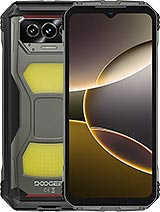
The Doogee V Max S is a specialized rugged device built for extreme endurance and professional utility, featuring a 22000 mAh battery for multi-week operation and a 1200 lumens flood flashlight for search-and-rescue grade illumination. Released in May 2025, it targets industrial workers and off-grid adventurers who prioritize uptime over portability, competing directly with the Oukitel and AGM power-house models of the mid-2025 era.
Entering the market at approximately 290 EUR, the Doogee V Max S occupies a precarious financial position. While the hardware specifications, particularly the massive battery and specialized lighting, justify the manufacturing costs, the history of [rugged phone](/trend/best-rugged-phones-2026/) pricing suggests a sharp decline within three months of release. For a device utilizing the Mediatek Dimensity 7050 (6 nm)—a chipset that is essentially a refreshed version of older mid-range silicon—the launch price feels optimistic for the value-conscious buyer.
We anticipate a price adjustment by late Q3 2025, likely settling around the 230 EUR mark. At its current cost, users are paying a premium for the 'newness' of a 2025 release cycle rather than for a massive leap in processing power. The 8GB RAM and 256GB storage configuration is standard for 2025, meaning the internal hardware does not provide a buffer against the rapid depreciation common in the rugged niche. We suggest waiting for the inevitable promotional cycles on major retail platforms before committing capital to this specific model.
There is no ignoring the physical presence of the Doogee V Max S. At 536 grams, this device is heavier than a standard iPad and more than double the weight of a typical flagship like the Galaxy S25. This isn't just a phone; it is a piece of equipment. The Dimensions of 178.5 x 83.1 x 26.3 mm mean it will not fit in standard pockets. Users should expect to use the side-mounted fingerprint sensor frequently, as the sheer size of the device makes reaching for a screen-based unlock or facial recognition awkward when wearing gloves or protective gear.
The 1200 lumens dedicated flood flashlight is the standout hardware feature. To provide context, 1200 lumens is equivalent to a high-end handheld tactical light or a 75W incandescent bulb. It is far beyond the 50-100 lumens typically found in mobile LED flashes. This light is integrated into the chassis, drawing directly from the massive battery, making it a viable primary light source for mechanics, night-shift site inspections, or emergency responders. The heat dissipation for this light is handled by the metal side rails, though we expect sustained use at peak brightness to cause noticeable thermal buildup across the frame.
Imagine a 48-hour shift in a remote mining facility or an off-grid hiking trip. At 7:00 AM, the Doogee V Max S starts at 100%. After a full day of GPS tracking, frequent use of the 108MP camera for site documentation, and two hours of the floodlight active during evening inspections, most phones would be dead. The Doogee V Max S likely remains above 80%. This is the power of a 22000 mAh cell. It effectively eliminates the need for power banks, which often add more weight and clutter than simply carrying this one thick device.
By the second morning, the phone functions as a charging station. Using the 5W reverse wired charging, it can top up a pair of wireless earbuds or a secondary communications device without even dropping below the 60% mark. However, the trade-off is the recharge time. With only 33W wired charging, filling this 22,000 mAh tank from empty to full is a marathon, not a sprint. We expect a full charge cycle to take upwards of four to five hours, making it a device that needs to be plugged in overnight—or every few nights—to stay ready.
The first major hurdle is the display technology. While the 120Hz refresh rate provides smooth scrolling, the choice of an IPS LCD rather than an OLED panel in 2025 is a cost-cutting measure that affects legibility. While the 1080 x 2408 resolution is sharp enough at 401 ppi, LCDs struggle with outdoor visibility under direct high-noon sun compared to the high-nit AMOLED panels found in modern competitors. If the primary use case is outdoor construction, the screen brightness might feel inadequate despite the Corning Gorilla Glass 5 protection.
Secondly, the Mediatek Dimensity 7050 chipset is sufficient for daily tasks but hits a wall during heavy multitasking or high-end rendering. It utilizes an Octa-core (2x2.6 GHz Cortex-A78 & 6x2.0 GHz Cortex-A55) setup which was mid-range in 2024 and feels increasingly dated in 2025. It will handle industrial apps and basic navigation perfectly, but don't expect it to run high-fidelity simulations or heavy video editing suites without lag. This is a tool for utility, not a mobile workstation.
The side-mounted fingerprint sensor is a logical choice for a rugged device. In our analysis of the build, the sensor is recessed into the metal frame, which helps prevent accidental triggers while protecting the sensor from impacts. Given the IP68/IP69K rating, the sensor should remain functional even when the device is wet, though oily or muddy fingers will always be a challenge for capacitive technology. The Android 14 software base ensures modern security patches, but Doogee's history with long-term OS updates is often spotty compared to mainstream brands.
Face unlock is available via the 16 MP front camera, but we wouldn't rely on it for secure environments. It lacks the IR depth-mapping hardware required for high-level security. For those working in dark environments, the 20 MP night vision camera is a much more useful security tool, allowing for clear monochrome visibility in total darkness via the two infrared lights. This is particularly effective for inspecting crawl spaces or perimeter fences where a visible light would be undesirable.
Rugged phones generally follow a steep depreciation curve once the initial launch hype fades. The Doogee V Max S is likely to lose 25-30% of its resale value within the first six months. This is driven by the specialized nature of the device—there is a limited second-hand market for half-kilogram phones. However, the 1300 cycles battery rating is a major plus for long-term ownership. This suggests the battery will retain a significant portion of its original capacity even after three to four years of daily use, which is much higher than the 500-800 cycles seen in standard smartphones.
The Doogee V Max S is a masterpiece of specialized engineering with a very narrow target audience. It is not a phone for the average consumer, but for the right professional, it replaces three separate tools: a phone, a power bank, and a high-intensity flashlight. If you need a device that can survive a 270-fall stress test and stay powered for a week, this is a top contender. However, given the current price and the aging chipset, waiting for the first major sale is the smartest financial move. At 290 EUR, you are paying for the novelty; at 220 EUR, you are getting a bargain for the raw materials alone.
The Launch Price Problem
Entering the market at approximately 290 EUR, the Doogee V Max S occupies a precarious financial position. While the hardware specifications, particularly the massive battery and specialized lighting, justify the manufacturing costs, the history of [rugged phone](/trend/best-rugged-phones-2026/) pricing suggests a sharp decline within three months of release. For a device utilizing the Mediatek Dimensity 7050 (6 nm)—a chipset that is essentially a refreshed version of older mid-range silicon—the launch price feels optimistic for the value-conscious buyer.
We anticipate a price adjustment by late Q3 2025, likely settling around the 230 EUR mark. At its current cost, users are paying a premium for the 'newness' of a 2025 release cycle rather than for a massive leap in processing power. The 8GB RAM and 256GB storage configuration is standard for 2025, meaning the internal hardware does not provide a buffer against the rapid depreciation common in the rugged niche. We suggest waiting for the inevitable promotional cycles on major retail platforms before committing capital to this specific model.
Hardware Reality
There is no ignoring the physical presence of the Doogee V Max S. At 536 grams, this device is heavier than a standard iPad and more than double the weight of a typical flagship like the Galaxy S25. This isn't just a phone; it is a piece of equipment. The Dimensions of 178.5 x 83.1 x 26.3 mm mean it will not fit in standard pockets. Users should expect to use the side-mounted fingerprint sensor frequently, as the sheer size of the device makes reaching for a screen-based unlock or facial recognition awkward when wearing gloves or protective gear.
The 1200 lumens dedicated flood flashlight is the standout hardware feature. To provide context, 1200 lumens is equivalent to a high-end handheld tactical light or a 75W incandescent bulb. It is far beyond the 50-100 lumens typically found in mobile LED flashes. This light is integrated into the chassis, drawing directly from the massive battery, making it a viable primary light source for mechanics, night-shift site inspections, or emergency responders. The heat dissipation for this light is handled by the metal side rails, though we expect sustained use at peak brightness to cause noticeable thermal buildup across the frame.
The 'Day in the Life' Test
Imagine a 48-hour shift in a remote mining facility or an off-grid hiking trip. At 7:00 AM, the Doogee V Max S starts at 100%. After a full day of GPS tracking, frequent use of the 108MP camera for site documentation, and two hours of the floodlight active during evening inspections, most phones would be dead. The Doogee V Max S likely remains above 80%. This is the power of a 22000 mAh cell. It effectively eliminates the need for power banks, which often add more weight and clutter than simply carrying this one thick device.
By the second morning, the phone functions as a charging station. Using the 5W reverse wired charging, it can top up a pair of wireless earbuds or a secondary communications device without even dropping below the 60% mark. However, the trade-off is the recharge time. With only 33W wired charging, filling this 22,000 mAh tank from empty to full is a marathon, not a sprint. We expect a full charge cycle to take upwards of four to five hours, making it a device that needs to be plugged in overnight—or every few nights—to stay ready.
The 'Deal Breakers'
The first major hurdle is the display technology. While the 120Hz refresh rate provides smooth scrolling, the choice of an IPS LCD rather than an OLED panel in 2025 is a cost-cutting measure that affects legibility. While the 1080 x 2408 resolution is sharp enough at 401 ppi, LCDs struggle with outdoor visibility under direct high-noon sun compared to the high-nit AMOLED panels found in modern competitors. If the primary use case is outdoor construction, the screen brightness might feel inadequate despite the Corning Gorilla Glass 5 protection.
Secondly, the Mediatek Dimensity 7050 chipset is sufficient for daily tasks but hits a wall during heavy multitasking or high-end rendering. It utilizes an Octa-core (2x2.6 GHz Cortex-A78 & 6x2.0 GHz Cortex-A55) setup which was mid-range in 2024 and feels increasingly dated in 2025. It will handle industrial apps and basic navigation perfectly, but don't expect it to run high-fidelity simulations or heavy video editing suites without lag. This is a tool for utility, not a mobile workstation.
Biometrics & Security
The side-mounted fingerprint sensor is a logical choice for a rugged device. In our analysis of the build, the sensor is recessed into the metal frame, which helps prevent accidental triggers while protecting the sensor from impacts. Given the IP68/IP69K rating, the sensor should remain functional even when the device is wet, though oily or muddy fingers will always be a challenge for capacitive technology. The Android 14 software base ensures modern security patches, but Doogee's history with long-term OS updates is often spotty compared to mainstream brands.
Face unlock is available via the 16 MP front camera, but we wouldn't rely on it for secure environments. It lacks the IR depth-mapping hardware required for high-level security. For those working in dark environments, the 20 MP night vision camera is a much more useful security tool, allowing for clear monochrome visibility in total darkness via the two infrared lights. This is particularly effective for inspecting crawl spaces or perimeter fences where a visible light would be undesirable.
Depreciation Prediction
Rugged phones generally follow a steep depreciation curve once the initial launch hype fades. The Doogee V Max S is likely to lose 25-30% of its resale value within the first six months. This is driven by the specialized nature of the device—there is a limited second-hand market for half-kilogram phones. However, the 1300 cycles battery rating is a major plus for long-term ownership. This suggests the battery will retain a significant portion of its original capacity even after three to four years of daily use, which is much higher than the 500-800 cycles seen in standard smartphones.
Conclusion: Wait or Buy?
The Doogee V Max S is a masterpiece of specialized engineering with a very narrow target audience. It is not a phone for the average consumer, but for the right professional, it replaces three separate tools: a phone, a power bank, and a high-intensity flashlight. If you need a device that can survive a 270-fall stress test and stay powered for a week, this is a top contender. However, given the current price and the aging chipset, waiting for the first major sale is the smartest financial move. At 290 EUR, you are paying for the novelty; at 220 EUR, you are getting a bargain for the raw materials alone.
Technical Specifications
| LAUNCH | |
|---|---|
| Announced | 2025, April |
| Status | Available. Released 2025, May |
| PLATFORM | |
| OS | Android 14 |
| Chipset | Mediatek Dimensity 7050 (6 nm) |
| CPU | Octa-core (2x2.6 GHz Cortex-A78 & 6x2.0 GHz Cortex-A55) |
| GPU | Mali-G68 MC4 |
| BODY | |
| Dimensions | 178.5 x 83.1 x 26.3 mm (7.03 x 3.27 x 1.04 in) |
| Weight | 536 g (1.18 lb) |
| SIM | Nano-SIM + Nano-SIM |
| Info | IP68/IP69K dust tight and water resistant (high pressure water jets; immersible up to 1.5m for 30 min) Drop resistant up to 1.5m MIL-STD-810H compliant 1200 lumens dedicated flood flashlight |
| DISPLAY | |
| Type | IPS LCD, 120Hz |
| Size | 6.58 inches, 104.3 cm2 (~70.3% screen-to-body ratio) |
| Resolution | 1080 x 2408 pixels, 20:9 ratio (~401 ppi density) |
| Protection | Corning Gorilla Glass 5, Mohs level 6 |
| MEMORY | |
| Card slot | microSDXC (uses shared SIM slot) |
| Internal | 256GB 8GB RAM |
| MAIN CAMERA | |
| Triple | 108 MP, f/1.9, (wide), 1/1.67", PDAF 20 MP, f/1.8, (night vision), 2 infrared night vision lights 2 MP (macro) |
| Features | Dual-LED flash, HDR, panorama |
| Video | 4K@30fps, 1080p@30fps |
| SELFIE CAMERA | |
| Single | 16 MP, f/2.5, (wide), 1/3.0" |
| Video | 1080p@30fps |
| SOUND | |
| Loudspeaker | Yes, with stereo speakers |
| 3.5mm jack | No |
| COMMS | |
| WLAN | Wi-Fi 802.11 a/b/g/n/ac/6, dual-band |
| Bluetooth | 5.2, A2DP, LE |
| Positioning | GPS, GLONASS, GALILEO, BDS |
| NFC | Yes |
| Radio | FM radio |
| USB | USB Type-C 2.0, OTG |
| NETWORK | |
| Technology | GSM / CDMA / HSPA / LTE / 5G |
| 2G bands | GSM 850 / 900 / 1800 / 1900 |
| Info | CDMA 800 / 1900 |
| 3G bands | HSDPA 800 / 850 / 900 / 1700(AWS) / 1900 / 2100 |
| 4G bands | 1, 2, 3, 4, 5, 7, 8, 12, 17, 18, 19, 20, 25, 26, 28, 34, 38, 39, 40, 41, 66 |
| 5G bands | 1, 3, 7, 28, 38, 41, 77, 78, 79 SA/NSA |
| Speed | HSPA, LTE, 5G |
| FEATURES | |
| Sensors | Fingerprint (side-mounted), accelerometer, gyro, proximity, compass |
| BATTERY | |
| Type | 22000 mAh |
| Charging | 33W wired 5W reverse wired |
| MISC | |
| Colors | Tarnish, Titanium |
| Price | About 290 EUR |
| EU LABEL | |
| Energy | Class D |
| Battery | 146:58h endurance, 1300 cycles |
| Free fall | Class A (270 falls) |
| Repairability | Class C |