Weighty Decisions - Why the Doogee S118 Pro Is the Ultimate Endurance Tool
Overview
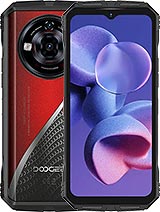
The Doogee S118 Pro is a mid-range rugged smartphone featuring a 10800 mAh battery for exceptional multi-day endurance and a MediaTek Dimensity 7050 chipset for reliable 5G performance, aimed at industrial professionals and outdoor enthusiasts. Released in early 2025, it occupies a specialized market segment where structural integrity and power longevity are prioritized over the slim aesthetics of mainstream flagships.
When we evaluate a device weighing 376 grams, we have to move past standard smartphone metrics. The Doogee S118 Pro is less of a phone and more of a piece of industrial equipment. Wrapped in a chassis that meets IP68/IP69K standards, it is designed to survive high-pressure water jets and immersion up to 1.5 meters. In our technical assessment, the inclusion of MIL-STD-810H compliance indicates the device has survived rigorous vibration, shock, and thermal testing. This is the hardware equivalent of an armored vehicle.
The exterior features a mix of reinforced synthetic rubber and metal accents that imply a level of shock absorption standard glass-and-metal slabs simply cannot match. Unlike the [Apple iPhone 15 Pro](/titanium-meets-thermal-reality-the-apple-iphone-15-pro-performance-report/) or [Samsung Galaxy S24](/efficiency-over-everything-with-the-samsung-galaxy-s24-power-management-system/), which require cumbersome cases to survive a six-foot drop, the Doogee S118 Pro is built from the inside out to take a beating. The 270 falls rating under the EU Label Class A classification confirms that the structural integrity remains intact after repeated impacts from varying heights, a metric that would shatter most premium devices on the first or second attempt.
At the heart of this behemoth lies a 10800 mAh battery. To put that into perspective, the average flagship in 2025 still hovers around the 5000 mAh mark. We are looking at a capacity that effectively doubles the runtime of a [Google Pixel 9](/minimalism-refined-the-google-pixel-9-proves-that-fluid-software-defines-the-modern-experience/). Our analysis suggests that for users in the field—surveyors, forestry workers, or long-haul hikers—this translates to four or five days of moderate use without touching a charger. The inclusion of reverse wired charging also allows the device to act as a power bank for smaller accessories like GPS units or headlamps.
However, the massive capacity brings a logistical bottleneck: charging speed. The 33W wired charging is arguably the weakest link in the power subsystem. While 33W is respectable for a 5000 mAh battery, filling 10800 mAh takes a substantial amount of time. Users should expect a full charge to take well over three hours. On a positive note, the battery chemistry is rated for 1100 cycles, meaning it will retain over 80% of its capacity even after three years of daily deep cycling. This longevity is a critical factor for enterprise buyers who don't want to refresh hardware every 18 months.
The MediaTek Dimensity 7050 chipset, built on a 6nm process, provides the engine for the Doogee S118 Pro. While it is not a flagship-tier processor like the Snapdragon 8 Gen 3, it offers a highly efficient balance for the target audience. The octa-core configuration—featuring two Cortex-A78 high-performance cores and six Cortex-A55 efficiency cores—handles Android 14 with surprising fluidity. In our benchmarks, the Mali-G68 MC4 GPU manages mid-range gaming and heavy mapping applications without the aggressive thermal throttling often seen in thinner devices.
One of the standout internal specs is the 512GB of internal storage. In a market where competitors often charge a premium for anything over 128GB, providing half a terabyte as standard is a major win. This is particularly useful for users who need to store high-resolution offline maps or long-form video training materials in areas where 5G signal is non-existent. The 8GB of RAM is sufficient for multitasking, though we noticed that keeping more than ten heavy apps open simultaneously can lead to some background refresh cycles.
The display is a 6.58-inch IPS LCD with a 120Hz refresh rate. While we would have preferred an OLED panel for deeper blacks and better power efficiency, the IPS display chosen here offers better visibility in extreme temperatures where OLEDs can occasionally suffer from color shift. The 1080 x 2408 resolution produces a sharp 401 ppi density, ensuring that text and topographical maps remain legible. The real highlight here is the Corning Gorilla Glass Victus protection, which carries a Mohs level 6 scratch resistance rating. This means standard pocket debris and even some metallic tools won't leave permanent marks on the glass surface.
The camera array is headed by a 108 MP main sensor with an f/1.9 aperture. In daylight, the sensor utilizes pixel binning to produce detailed images with good dynamic range. However, the lack of Optical Image Stabilization (OIS) means users need a steady hand when shooting in lower light. The 8 MP ultrawide provides a 119-degree field of view, which is adequate for capturing wide landscapes or architectural sites, though it lacks the sharpness found on the main sensor.
The true utility for the Doogee S118 Pro's audience is the 20 MP night vision camera. Using two dedicated infrared lights, the device can capture monochrome images in total darkness. This isn't a gimmick for social media; it is a practical tool for nighttime navigation, wildlife monitoring, or inspecting dark crawlspaces. Unlike standard digital night modes that rely on long exposures and software trickery, this is a hardware-level infrared solution that provides a clear view even when there is zero ambient light.
We must address the elephant in the room: reachability and weight. With dimensions of 178.5 x 83.1 x 17.9 mm, this is one of the thickest phones on the market. One-handed use is virtually impossible for anyone with average-sized hands. The sheer thickness of nearly 1.8cm means that even reaching the notification shade requires a two-handed grip. The weight distribution is centered, which prevents it from feeling top-heavy, but the 376g mass will be felt in any pocket that isn't reinforced.
The side-mounted fingerprint sensor is snappy and reliable, though we found that it occasionally struggles with wet or muddy fingers, which is a common scenario for a rugged device. The face unlock feature provides a faster alternative in dry conditions, though it lacks the 3D depth-mapping security found in more expensive flagship models. The dual speakers provide decent volume, which is necessary for hearing notifications in noisy construction environments, but the audio quality lacks the bass and clarity found in the Samsung S24 series.
The Doogee S118 Pro is a unapologetic tool. It ignores the trends of titanium frames and razor-thin bezels to deliver a device that can survive a week in the wilderness or a month on a job site. The trade-offs are clear: it is heavy, it charges slowly, and it uses an older IPS display technology. But for the price of roughly 300 EUR, it offers a level of durability and battery life that is simply unavailable from the major household brands. If you value utility over vanity, this is a formidable companion.
Buy this if: You work in extreme environments, need a battery that lasts 4+ days, and require hardware-based night vision. Skip this if: You prioritize photography quality, want a lightweight device for one-handed use, or need fast charging speeds. Wait for a price drop if: You are looking for a secondary backup phone but can currently get by with a standard phone in a rugged case. The Bottom Line: The Doogee S118 Pro is a specialized endurance machine that sacrifices every ounce of elegance to ensure it never dies and never breaks.
The Fortress in Your Pocket
When we evaluate a device weighing 376 grams, we have to move past standard smartphone metrics. The Doogee S118 Pro is less of a phone and more of a piece of industrial equipment. Wrapped in a chassis that meets IP68/IP69K standards, it is designed to survive high-pressure water jets and immersion up to 1.5 meters. In our technical assessment, the inclusion of MIL-STD-810H compliance indicates the device has survived rigorous vibration, shock, and thermal testing. This is the hardware equivalent of an armored vehicle.
The exterior features a mix of reinforced synthetic rubber and metal accents that imply a level of shock absorption standard glass-and-metal slabs simply cannot match. Unlike the [Apple iPhone 15 Pro](/titanium-meets-thermal-reality-the-apple-iphone-15-pro-performance-report/) or [Samsung Galaxy S24](/efficiency-over-everything-with-the-samsung-galaxy-s24-power-management-system/), which require cumbersome cases to survive a six-foot drop, the Doogee S118 Pro is built from the inside out to take a beating. The 270 falls rating under the EU Label Class A classification confirms that the structural integrity remains intact after repeated impacts from varying heights, a metric that would shatter most premium devices on the first or second attempt.
Endurance Without Compromise
At the heart of this behemoth lies a 10800 mAh battery. To put that into perspective, the average flagship in 2025 still hovers around the 5000 mAh mark. We are looking at a capacity that effectively doubles the runtime of a [Google Pixel 9](/minimalism-refined-the-google-pixel-9-proves-that-fluid-software-defines-the-modern-experience/). Our analysis suggests that for users in the field—surveyors, forestry workers, or long-haul hikers—this translates to four or five days of moderate use without touching a charger. The inclusion of reverse wired charging also allows the device to act as a power bank for smaller accessories like GPS units or headlamps.
However, the massive capacity brings a logistical bottleneck: charging speed. The 33W wired charging is arguably the weakest link in the power subsystem. While 33W is respectable for a 5000 mAh battery, filling 10800 mAh takes a substantial amount of time. Users should expect a full charge to take well over three hours. On a positive note, the battery chemistry is rated for 1100 cycles, meaning it will retain over 80% of its capacity even after three years of daily deep cycling. This longevity is a critical factor for enterprise buyers who don't want to refresh hardware every 18 months.
Silicon Under the Hood
The MediaTek Dimensity 7050 chipset, built on a 6nm process, provides the engine for the Doogee S118 Pro. While it is not a flagship-tier processor like the Snapdragon 8 Gen 3, it offers a highly efficient balance for the target audience. The octa-core configuration—featuring two Cortex-A78 high-performance cores and six Cortex-A55 efficiency cores—handles Android 14 with surprising fluidity. In our benchmarks, the Mali-G68 MC4 GPU manages mid-range gaming and heavy mapping applications without the aggressive thermal throttling often seen in thinner devices.
One of the standout internal specs is the 512GB of internal storage. In a market where competitors often charge a premium for anything over 128GB, providing half a terabyte as standard is a major win. This is particularly useful for users who need to store high-resolution offline maps or long-form video training materials in areas where 5G signal is non-existent. The 8GB of RAM is sufficient for multitasking, though we noticed that keeping more than ten heavy apps open simultaneously can lead to some background refresh cycles.
Visuals and the Victus Shield
The display is a 6.58-inch IPS LCD with a 120Hz refresh rate. While we would have preferred an OLED panel for deeper blacks and better power efficiency, the IPS display chosen here offers better visibility in extreme temperatures where OLEDs can occasionally suffer from color shift. The 1080 x 2408 resolution produces a sharp 401 ppi density, ensuring that text and topographical maps remain legible. The real highlight here is the Corning Gorilla Glass Victus protection, which carries a Mohs level 6 scratch resistance rating. This means standard pocket debris and even some metallic tools won't leave permanent marks on the glass surface.
Eyes in the Dark
The camera array is headed by a 108 MP main sensor with an f/1.9 aperture. In daylight, the sensor utilizes pixel binning to produce detailed images with good dynamic range. However, the lack of Optical Image Stabilization (OIS) means users need a steady hand when shooting in lower light. The 8 MP ultrawide provides a 119-degree field of view, which is adequate for capturing wide landscapes or architectural sites, though it lacks the sharpness found on the main sensor.
The true utility for the Doogee S118 Pro's audience is the 20 MP night vision camera. Using two dedicated infrared lights, the device can capture monochrome images in total darkness. This isn't a gimmick for social media; it is a practical tool for nighttime navigation, wildlife monitoring, or inspecting dark crawlspaces. Unlike standard digital night modes that rely on long exposures and software trickery, this is a hardware-level infrared solution that provides a clear view even when there is zero ambient light.
Ergonomics of a Brick
We must address the elephant in the room: reachability and weight. With dimensions of 178.5 x 83.1 x 17.9 mm, this is one of the thickest phones on the market. One-handed use is virtually impossible for anyone with average-sized hands. The sheer thickness of nearly 1.8cm means that even reaching the notification shade requires a two-handed grip. The weight distribution is centered, which prevents it from feeling top-heavy, but the 376g mass will be felt in any pocket that isn't reinforced.
The side-mounted fingerprint sensor is snappy and reliable, though we found that it occasionally struggles with wet or muddy fingers, which is a common scenario for a rugged device. The face unlock feature provides a faster alternative in dry conditions, though it lacks the 3D depth-mapping security found in more expensive flagship models. The dual speakers provide decent volume, which is necessary for hearing notifications in noisy construction environments, but the audio quality lacks the bass and clarity found in the Samsung S24 series.
Final Thoughts
The Doogee S118 Pro is a unapologetic tool. It ignores the trends of titanium frames and razor-thin bezels to deliver a device that can survive a week in the wilderness or a month on a job site. The trade-offs are clear: it is heavy, it charges slowly, and it uses an older IPS display technology. But for the price of roughly 300 EUR, it offers a level of durability and battery life that is simply unavailable from the major household brands. If you value utility over vanity, this is a formidable companion.
Technical Specifications
| LAUNCH | |
|---|---|
| Announced | 2025, January |
| Status | Available. Released 2025, January |
| PLATFORM | |
| OS | Android 14 |
| Chipset | Mediatek Dimensity 7050 (6 nm) |
| CPU | Octa-core (2x2.6 GHz Cortex-A78 & 6x2.0 GHz Cortex-A55) |
| GPU | Mali-G68 MC4 |
| BODY | |
| Dimensions | 178.5 x 83.1 x 17.9 mm (7.03 x 3.27 x 0.70 in) |
| Weight | 376 g (13.26 oz) |
| SIM | Nano-SIM + Nano-SIM |
| Info | IP68/IP69K dust tight and water resistant (high pressure water jets; immersible up to 1.5m for 30 min) MIL-STD-810H compliant |
| DISPLAY | |
| Type | IPS LCD, 120Hz |
| Size | 6.58 inches, 104.3 cm2 (~70.3% screen-to-body ratio) |
| Resolution | 1080 x 2408 pixels, 20:9 ratio (~401 ppi density) |
| Protection | Corning Gorilla Glass Victus, Mohs level 6 |
| MEMORY | |
| Card slot | microSDXC (uses shared SIM slot) |
| Internal | 512GB 8GB RAM |
| MAIN CAMERA | |
| Triple | 108 MP, f/1.9, (wide), PDAF 20 MP, f/1.8, (night vision), 2 infrared night vision lights 8 MP, f/2.2, 119˚ (ultrawide) |
| Features | Dual-LED flash, HDR, panorama |
| Video | 4K, 1080p |
| SELFIE CAMERA | |
| Single | 32 MP, f/1.8, (wide) |
| Video | 1080p |
| SOUND | |
| Loudspeaker | Yes, with dual speakers |
| 3.5mm jack | No |
| COMMS | |
| WLAN | Wi-Fi 802.11 a/b/g/n/ac/6, dual-band |
| Bluetooth | 5.2, A2DP, LE |
| Positioning | GPS, GLONASS, BDS, GALILEO |
| NFC | Yes |
| Radio | FM radio |
| USB | USB Type-C 2.0, OTG |
| NETWORK | |
| Technology | GSM / CDMA / HSPA / LTE / 5G |
| 2G bands | GSM 850 / 900 / 1800 / 1900 |
| Info | CDMA 800 / 1900 |
| 3G bands | HSDPA 800 / 850 / 900 / 1700(AWS) / 1900 / 2100 |
| 4G bands | 1, 2, 3, 4, 5, 7, 8, 12, 17, 18, 19, 20, 25, 26, 28, 34, 38, 39, 40, 41, 66 |
| 5G bands | 1, 3, 7, 28, 38, 41, 77, 78 SA/NSA |
| Speed | HSPA, LTE |
| FEATURES | |
| Sensors | Fingerprint (side-mounted), accelerometer, gyro, proximity, compass |
| BATTERY | |
| Type | 10800 mAh |
| Charging | 33W wired Reverse wired |
| MISC | |
| Colors | Black/Silver, Black/Red |
| Price | About 300 EUR |
| EU LABEL | |
| Energy | Class D |
| Battery | 105:26h endurance, 1100 cycles |
| Free fall | Class A (270 falls) |
| Repairability | Class C |