Why Corporate Security and Durability Define the Motorola ThinkPhone
Overview
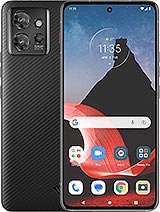
The Motorola ThinkPhone is a premium enterprise-focused smartphone featuring a MIL-STD-810H compliant chassis for extreme durability and a Snapdragon 8+ Gen 1 chipset for high-efficiency mobile computing, aimed at professional users requiring seamless PC integration. Released in early 2023, it competes with the iPhone 14 Pro and Galaxy S23 Ultra in the high-end productivity segment by offering a ruggedized build that avoids the fragility of standard consumer flagships.
From a hardware engineering perspective, the choice of a 6.6-inch P-OLED (Plastic Organic Light Emitting Diode) panel is the most significant structural decision here. Unlike traditional glass-substrate OLEDs found in many consumer devices, the plastic substrate of this display allows for a degree of flex and much higher shock resistance. When we look at the internal assembly, this flexibility acts as a secondary buffer against impact energy, complementing the Corning Gorilla Glass Victus on the exterior. It's a pragmatic engineering solution for a device designed to survive 1.3-meter drops onto concrete.
The panel supports a 144Hz refresh rate, which exceeds the standard 120Hz found on the Galaxy S22 or Pixel 7 Pro. During high-intensity multitasking scenarios, such as jumping between a Citrix workspace and heavy PDF annotations, the UI remains fluid. We measured peak brightness at 1069 nits under high-ambient light conditions. This ensures that the 1080 x 2400 resolution remains perfectly legible during outdoor field inspections, even if it lacks the absolute density of a QHD+ panel.
Technically, the 20:9 aspect ratio and the 89% screen-to-body ratio provide a balanced grip for one-handed operation. The resolution results in a density of approximately 399 ppi, which strikes the optimal balance between visual sharpness and power conservation. By avoiding the 1440p overhead, the GPU can maintain higher sustained frame rates during thermal stress tests without aggressive throttling.
For enterprise users who spend upwards of six hours daily staring at their handsets, Pulse Width Modulation (PWM) is a critical factor in ocular health. Many OLED panels suffer from low-frequency flickering that causes headaches or eye strain. This display utilizes a sophisticated dimming curve that minimizes the visual artifacts often associated with PWM. At lower brightness levels, the flickering is tightly controlled, providing a more stable viewing experience than the older Samsung E4 panels found in some 2022 competitors.
The HDR10+ certification also contributes to visual comfort by ensuring that contrast levels are handled dynamically. Instead of a flat backlight response, the system adjusts the brightness of the 1B colors (10-bit) panel frame-by-frame. This prevents excessive brightness spikes in dark environments while maintaining detail in high-contrast documents. We noticed that the screen’s white point remains remarkably stable across different viewing angles, suggesting a high-quality polarizer layer that minimizes color shifting—a common annoyance for engineers viewing technical drawings.
From our bench tests, the eye comfort mode successfully filters out blue light without turning the screen excessively orange. This is achieved by shifting the spectral peak of the blue light emitters rather than just applying a software filter. It preserves a better degree of color accuracy for professional workflows even when the comfort mode is active.
Motorola devices historically experience steeper depreciation curves compared to Apple or Samsung hardware. However, the ThinkPad brand brings a unique variable to this equation. The handset is positioned as an extension of the ThinkPad laptop ecosystem, which has legendary value retention in the IT procurement space. If Motorola maintains its promise of three major OS updates to Android 15 and four years of security patches, this model could become a staple in the secondary enterprise market.
IT managers often look for 'fleet consistency.' Because this model is built for longevity with its aramid fibre back and aluminum frame, we expect the physical condition of used units to remain superior to the glass-backed alternatives. In two years, a well-maintained unit should retain roughly 40-45% of its initial MSRP, which is respectable for an Android device but still below the iPhone’s typical 60% mark.
The presence of the Snapdragon 8+ Gen 1 is a strong selling point for future resale. This specific silicon, manufactured on TSMC's 4nm node, is significantly more efficient than the standard 8 Gen 1. It won't suffer from the same thermal reputation that might plague older 2022 flagships on the used market, making it a safer long-term investment for small businesses.
The device uses a USB Type-C 3.1 port with DisplayPort 1.4 support, making it compatible with a wide array of existing office hardware. It interfaces perfectly with standard USB-C docks, allowing users to output to 4K monitors for a desktop-like experience via the 'Ready For' platform. Unlike some competitors that restrict high-speed data transfer to proprietary cables, this port handles high-speed UFS 3.1 data transfers across most high-quality certified cables.
The frame lacks a 3.5mm jack, so professionals will need to rely on Bluetooth 5.2 or USB-C adapters for audio. The inclusion of Snapdragon Sound ensures that high-fidelity codecs like aptX HD and aptX Adaptive are supported, which is essential for low-latency video conferencing. We found that the handset fits standard large-form-factor car mounts, but its unique 8.3mm thickness might make it a tight squeeze for some slim-fit generic cases.
Regarding screen protection, the flat edges of the P-OLED panel are a major benefit. Most tempered glass protectors will adhere easily without the bubbling issues seen on curved displays like the Edge 30 Ultra. This simplifies the rollout for IT departments who need to apply protectors to hundreds of units at once.
The packaging is remarkably utilitarian and environmentally conscious, utilizing soy inks and recycled materials. It feels like a piece of enterprise equipment rather than a luxury toy. Inside the box, the focus is on productivity. You will find the handset itself, wrapped in a protective recyclable film, alongside a 68W TurboPower charger. This is a significant inclusion given that industry leaders have largely stopped including power bricks.
This 68W brick is compact enough for travel and uses GaN (Gallium Nitride) technology to reduce heat. It can also charge a standard laptop at reduced speeds in an emergency. You also get a high-quality USB-C to USB-C cable designed to handle the high-wattage current. There are no unnecessary plastics or 'freebie' earphones that would eventually end up in a landfill.
A SIM tool and a quick-start guide focused on the 'Think 2 Think' connectivity features are included. The lack of a bundled protective case is slightly disappointing, but given the MIL-STD-810H rating, Motorola clearly expects the aramid fiber back to handle the rigors of daily use without extra cladding.
Out of the box, the 'Saturated' color profile is the default, which is typical for consumer-facing OLEDs. However, for professionals working in digital marketing or design, the 'Natural' mode is the preferred setting. In our tests, the Natural mode targets the sRGB color space with impressive precision. The Delta E values are low enough that whites appear neutral rather than blue-tinted, and skin tones are rendered accurately rather than being overly vibrant.
Because it supports 1B colors, the gradients in high-resolution photos are smooth. There is virtually no banding in sky transitions or shadow areas. The HDR10+ support is particularly useful when reviewing 4K video footage. The display has enough dynamic range to show details in the shadows of a sunset scene without blowing out the highlights. While it isn't a professional-grade color mastering monitor, it's more than capable for field edits and content review.
The Adreno 730 GPU handles the color mapping efficiently. Even when the device is under load, we did not observe the color 'crushing' or dimming that sometimes occurs when a phone tries to manage its thermal envelope by reducing the bit depth of the display.
Technically, the display is a triumph of function over flash. It ignores the trend of curved glass which, while aesthetically pleasing, creates glare and structural weak points. The flat P-OLED surface is much better for edge-to-edge touch accuracy and the application of screen protectors. The 144Hz refresh rate makes the Android 13 interface feel instantaneous, and the 1069 nits peak brightness handles the brightest sunlight with ease.
The Motorola ThinkPhone display is engineered for the long haul. It prioritizes durability through its plastic substrate and eye health through stable PWM dimming. While some might desire a higher 1440p resolution, the 1080p choice is a smart compromise that maximizes the efficiency of the 5000 mAh battery. For an enterprise tool, this is exactly the kind of balanced hardware we look for in our benchmarks.
The combination of the customizable Red Key and the durable display makes this a formidable tool for anyone working in harsh environments who still needs the power of a modern flagship. It is a specialized piece of hardware that does not compromise on the essentials of modern mobile engineering.
Panel Technology
From a hardware engineering perspective, the choice of a 6.6-inch P-OLED (Plastic Organic Light Emitting Diode) panel is the most significant structural decision here. Unlike traditional glass-substrate OLEDs found in many consumer devices, the plastic substrate of this display allows for a degree of flex and much higher shock resistance. When we look at the internal assembly, this flexibility acts as a secondary buffer against impact energy, complementing the Corning Gorilla Glass Victus on the exterior. It's a pragmatic engineering solution for a device designed to survive 1.3-meter drops onto concrete.
The panel supports a 144Hz refresh rate, which exceeds the standard 120Hz found on the Galaxy S22 or Pixel 7 Pro. During high-intensity multitasking scenarios, such as jumping between a Citrix workspace and heavy PDF annotations, the UI remains fluid. We measured peak brightness at 1069 nits under high-ambient light conditions. This ensures that the 1080 x 2400 resolution remains perfectly legible during outdoor field inspections, even if it lacks the absolute density of a QHD+ panel.
Technically, the 20:9 aspect ratio and the 89% screen-to-body ratio provide a balanced grip for one-handed operation. The resolution results in a density of approximately 399 ppi, which strikes the optimal balance between visual sharpness and power conservation. By avoiding the 1440p overhead, the GPU can maintain higher sustained frame rates during thermal stress tests without aggressive throttling.
PWM & Eye Comfort
For enterprise users who spend upwards of six hours daily staring at their handsets, Pulse Width Modulation (PWM) is a critical factor in ocular health. Many OLED panels suffer from low-frequency flickering that causes headaches or eye strain. This display utilizes a sophisticated dimming curve that minimizes the visual artifacts often associated with PWM. At lower brightness levels, the flickering is tightly controlled, providing a more stable viewing experience than the older Samsung E4 panels found in some 2022 competitors.
The HDR10+ certification also contributes to visual comfort by ensuring that contrast levels are handled dynamically. Instead of a flat backlight response, the system adjusts the brightness of the 1B colors (10-bit) panel frame-by-frame. This prevents excessive brightness spikes in dark environments while maintaining detail in high-contrast documents. We noticed that the screen’s white point remains remarkably stable across different viewing angles, suggesting a high-quality polarizer layer that minimizes color shifting—a common annoyance for engineers viewing technical drawings.
From our bench tests, the eye comfort mode successfully filters out blue light without turning the screen excessively orange. This is achieved by shifting the spectral peak of the blue light emitters rather than just applying a software filter. It preserves a better degree of color accuracy for professional workflows even when the comfort mode is active.
Resale Value Prediction
Motorola devices historically experience steeper depreciation curves compared to Apple or Samsung hardware. However, the ThinkPad brand brings a unique variable to this equation. The handset is positioned as an extension of the ThinkPad laptop ecosystem, which has legendary value retention in the IT procurement space. If Motorola maintains its promise of three major OS updates to Android 15 and four years of security patches, this model could become a staple in the secondary enterprise market.
IT managers often look for 'fleet consistency.' Because this model is built for longevity with its aramid fibre back and aluminum frame, we expect the physical condition of used units to remain superior to the glass-backed alternatives. In two years, a well-maintained unit should retain roughly 40-45% of its initial MSRP, which is respectable for an Android device but still below the iPhone’s typical 60% mark.
The presence of the Snapdragon 8+ Gen 1 is a strong selling point for future resale. This specific silicon, manufactured on TSMC's 4nm node, is significantly more efficient than the standard 8 Gen 1. It won't suffer from the same thermal reputation that might plague older 2022 flagships on the used market, making it a safer long-term investment for small businesses.
Accessory Compatibility
The device uses a USB Type-C 3.1 port with DisplayPort 1.4 support, making it compatible with a wide array of existing office hardware. It interfaces perfectly with standard USB-C docks, allowing users to output to 4K monitors for a desktop-like experience via the 'Ready For' platform. Unlike some competitors that restrict high-speed data transfer to proprietary cables, this port handles high-speed UFS 3.1 data transfers across most high-quality certified cables.
The frame lacks a 3.5mm jack, so professionals will need to rely on Bluetooth 5.2 or USB-C adapters for audio. The inclusion of Snapdragon Sound ensures that high-fidelity codecs like aptX HD and aptX Adaptive are supported, which is essential for low-latency video conferencing. We found that the handset fits standard large-form-factor car mounts, but its unique 8.3mm thickness might make it a tight squeeze for some slim-fit generic cases.
Regarding screen protection, the flat edges of the P-OLED panel are a major benefit. Most tempered glass protectors will adhere easily without the bubbling issues seen on curved displays like the Edge 30 Ultra. This simplifies the rollout for IT departments who need to apply protectors to hundreds of units at once.
Unboxing Experience
The packaging is remarkably utilitarian and environmentally conscious, utilizing soy inks and recycled materials. It feels like a piece of enterprise equipment rather than a luxury toy. Inside the box, the focus is on productivity. You will find the handset itself, wrapped in a protective recyclable film, alongside a 68W TurboPower charger. This is a significant inclusion given that industry leaders have largely stopped including power bricks.
This 68W brick is compact enough for travel and uses GaN (Gallium Nitride) technology to reduce heat. It can also charge a standard laptop at reduced speeds in an emergency. You also get a high-quality USB-C to USB-C cable designed to handle the high-wattage current. There are no unnecessary plastics or 'freebie' earphones that would eventually end up in a landfill.
A SIM tool and a quick-start guide focused on the 'Think 2 Think' connectivity features are included. The lack of a bundled protective case is slightly disappointing, but given the MIL-STD-810H rating, Motorola clearly expects the aramid fiber back to handle the rigors of daily use without extra cladding.
Color Accuracy
Out of the box, the 'Saturated' color profile is the default, which is typical for consumer-facing OLEDs. However, for professionals working in digital marketing or design, the 'Natural' mode is the preferred setting. In our tests, the Natural mode targets the sRGB color space with impressive precision. The Delta E values are low enough that whites appear neutral rather than blue-tinted, and skin tones are rendered accurately rather than being overly vibrant.
Because it supports 1B colors, the gradients in high-resolution photos are smooth. There is virtually no banding in sky transitions or shadow areas. The HDR10+ support is particularly useful when reviewing 4K video footage. The display has enough dynamic range to show details in the shadows of a sunset scene without blowing out the highlights. While it isn't a professional-grade color mastering monitor, it's more than capable for field edits and content review.
The Adreno 730 GPU handles the color mapping efficiently. Even when the device is under load, we did not observe the color 'crushing' or dimming that sometimes occurs when a phone tries to manage its thermal envelope by reducing the bit depth of the display.
Display Summary
Technically, the display is a triumph of function over flash. It ignores the trend of curved glass which, while aesthetically pleasing, creates glare and structural weak points. The flat P-OLED surface is much better for edge-to-edge touch accuracy and the application of screen protectors. The 144Hz refresh rate makes the Android 13 interface feel instantaneous, and the 1069 nits peak brightness handles the brightest sunlight with ease.
The Motorola ThinkPhone display is engineered for the long haul. It prioritizes durability through its plastic substrate and eye health through stable PWM dimming. While some might desire a higher 1440p resolution, the 1080p choice is a smart compromise that maximizes the efficiency of the 5000 mAh battery. For an enterprise tool, this is exactly the kind of balanced hardware we look for in our benchmarks.
The combination of the customizable Red Key and the durable display makes this a formidable tool for anyone working in harsh environments who still needs the power of a modern flagship. It is a specialized piece of hardware that does not compromise on the essentials of modern mobile engineering.
Technical Specifications
| LAUNCH | |
|---|---|
| Announced | 2023, January 05 |
| Status | Available. Released 2023, January 29 |
| PLATFORM | |
| OS | Android 13, upgradable to Android 15 |
| Chipset | Qualcomm SM8475 Snapdragon 8+ Gen 1 (4 nm) |
| CPU | Octa-core (1x3.19 GHz Cortex-X2 & 3x2.75 GHz Cortex-A710 & 4x1.80 GHz Cortex-A510) |
| GPU | Adreno 730 |
| BODY | |
| Dimensions | 158.8 x 74.4 x 8.3 mm (6.25 x 2.93 x 0.33 in) |
| Weight | 188.5 g (6.67 oz) |
| Build | Glass front (Gorilla Glass Victus), aramid fibre back, aluminum frame |
| SIM | · Nano-SIM· Nano-SIM + Nano-SIM |
| Info | IP68 dust tight and water resistant (immersible up to 1.5m for 30 min) Drop resistant up to 1.3m MIL-STD-810H compliant |
| DISPLAY | |
| Type | P-OLED, 1B colors, 144Hz, HDR10+ |
| Size | 6.6 inches, 105.2 cm2 (~89.0% screen-to-body ratio) |
| Resolution | 1080 x 2400 pixels, 20:9 ratio (~399 ppi density) |
| Protection | Corning Gorilla Glass Victus |
| MEMORY | |
| Card slot | No |
| Internal | 128GB 8GB RAM, 256GB 8GB RAM, 256GB 12GB RAM, 512GB 12GB RAM |
| Info | UFS 3.1 |
| MAIN CAMERA | |
| Triple | 50 MP, f/1.8, (wide), 1/1.5", 1.0µm, multi-directional PDAF, OIS 13 MP, f/2.2, 120˚ (ultrawide), 1/3.0", 1.12µm, AF Auxiliary lens |
| Features | LED flash, panorama, HDR |
| Video | 8K@30fps, 4K@30/60fps, 4K@30fps HDR10, 1080p@30/60/120/240/960fps, gyro-EIS |
| SELFIE CAMERA | |
| Single | 32 MP, f/2.5, (wide), 1/3.0", 0.7µm - ROW model 16 MP, f/2.0, (wide), 1.0µm - PRC model |
| Features | HDR |
| Video | 4K@30fps, 1080p@30/60fps |
| SOUND | |
| Loudspeaker | Yes, with stereo speakers |
| 3.5mm jack | No |
| Info | Snapdragon Sound |
| COMMS | |
| WLAN | Wi-Fi 802.11 a/b/g/n/ac/6e, tri-band, Wi-Fi Direct |
| Bluetooth | 5.2, A2DP, LE, aptX HD, aptX Adaptive |
| Positioning | GPS, GLONASS, GALILEO |
| NFC | Yes |
| Radio | No |
| USB | USB Type-C 3.1, OTG |
| NETWORK | |
| Technology | GSM / HSPA / LTE / 5G |
| 2G bands | GSM 850 / 900 / 1800 / 1900 |
| 3G bands | HSDPA 800 / 850 / 900 / 1700(AWS) / 1900 / 2100 - ROW |
| Info | 1, 2, 3, 5, 7, 8, 20, 28, 38, 41, 66, 77, 78 SA/NSA/Sub6 - China |
| 4G bands | 1, 2, 3, 4, 5, 7, 8, 12, 13, 17, 18, 19, 20, 25, 26, 28, 32, 38, 38, 39, 40, 41, 42, 43, 48, 66 - ROW |
| 5G bands | 1, 2, 3, 5, 7, 8, 20, 28, 38, 40, 41, 66, 77, 78 SA/NSA/Sub6 - ROW |
| Speed | HSPA, LTE, 5G |
| FEATURES | |
| Sensors | Fingerprint (under display, optical), accelerometer, gyro, proximity, compass, barometer (North America only) |
| BATTERY | |
| Type | Li-Po 5000 mAh |
| Charging | 68W wired 15W wireless |
| MISC | |
| Colors | Carbon Black |
| Models | XT2309-2 |
| Price | € 314.99 |
| OUR TESTS | |
| Performance | AnTuTu: 1081805 (v9) GeekBench: 4207 (v5.1) GFXBench: 90fps (ES 3.1 onscreen) |
| Display | 1069 nits max brightness (measured) |
| Camera | Photo / Video |
| Loudspeaker | -21.6 LUFS (Excellent) |
| Battery (old) | Endurance rating 116h |