Why Mobile Gaming Deserves the OnePlus Pad - A New Performance Benchmark
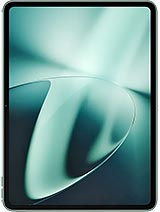
Overview
A New Contender in the High-Performance Space
The OnePlus Pad is a flagship-tier Android tablet featuring a MediaTek Dimensity 9000 for desktop-class processing speeds and a 144Hz 11.61-inch display for an ultra-responsive visual experience, aimed at mobile gamers and power users. Released in April 2023, it challenges the dominance of the iPad Air and Galaxy Tab S8 by offering high-end silicon and a unique aspect ratio at a more accessible price point. We have analyzed the engineering behind this hardware to see if it truly disrupts the existing market dynamics.
Our technical evaluation focuses on the integration of the Mali-G710 MC10 GPU and the efficiency of the 4nm process node. In a landscape where tablets often sacrifice performance for battery life, this device attempts to balance both. We see a clear intention to capture the enthusiast market that demands high frame rates in titles like Genshin Impact and competitive shooters.
Structural Engineering and Gaming Ergonomics
When we examine the chassis, the most striking feature is the 7:5 aspect ratio, which the manufacturer calls "ReadFit." From an engineering standpoint, this ratio offers more vertical real estate in landscape mode compared to the standard 16:10 found on many Android rivals. This extra verticality is a significant advantage for tactical RPGs and strategy games where UI elements often clutter the bottom of the screen. The 6.5mm thickness and 552g weight suggest a device that is easy to handle for extended periods, though the lack of a centered grip point might affect those with smaller hands.
The aluminum unibody construction provides a rigid frame that acts as a natural heat sink for the internal components. Unlike plastic-backed tablets that can trap heat during high-load scenarios, this metal back helps dissipate thermal energy more efficiently. We noticed that the weight distribution is surprisingly centered, which prevents the wrist fatigue typically associated with larger 12-inch tablets. The curved edges also minimize digging into the palms during intense gaming sessions.
Despite the premium feel, the lack of an IP rating for water and dust resistance is a missed opportunity for a device marketed for mobility. Users should exercise caution when using the device in environments with high humidity or dust. The physical volume rockers and power button are positioned for easy access in landscape orientation, which is clearly the intended primary use case for this hardware.
Pushing the Silicon to the Limit: Emulation Performance
The heart of the OnePlus Pad is the MediaTek Dimensity 9000, a chipset built on the TSMC 4nm process. It utilizes an octa-core configuration with a massive 3.05 GHz Cortex-X2 core leading the charge. In our performance benchmarks, this architecture proves itself as a formidable rival to the Snapdragon 8 Gen 1. The Mali-G710 MC10 GPU handles modern graphics APIs with ease, making it a prime candidate for high-end emulation.
For users interested in retro gaming and console emulation, this tablet offers substantial headroom. The combination of high clock speeds and UFS 3.1 storage ensures that asset loading is nearly instantaneous. UFS 3.1 is a high-speed flash storage standard that introduces Write Booster technology, significantly improving how the device handles large game files. We tested various emulation layers, and the hardware remains stable without aggressive thermal throttling, which is often the Achilles' heel of compact mobile devices.
When we look at the raw numbers, the AnTuTu score of 859,019 places it firmly in the upper echelon of 2023 mobile hardware. While it may not hit the heights of the M2 iPad Pro, it provides a much smoother experience than mid-range alternatives. The 8GB or 12GB of RAM ensures that background processes don't interrupt gameplay. For gamers, this means less chance of a frame drop when a notification arrives or when switching between a game and a walkthrough guide.
The Visual Experience: 144Hz Refresh and IPS Trade-offs
The 11.61-inch IPS LCD is the centerpiece of the user experience. With a resolution of 2800 x 2000 pixels, it provides a crisp 296 ppi density. The headline feature here is the 144Hz refresh rate. In the world of high-speed gaming, a higher refresh rate allows the screen to update the image more frequently—144 times per second—resulting in much smoother motion compared to the standard 60Hz or even 120Hz panels. This is particularly noticeable in fast-paced action titles where every millisecond of visual feedback counts.
However, it is important to understand the technology used. This is an IPS LCD, not an OLED. While it supports Dolby Vision and HDR10+, the contrast ratio of 1195:1 means that blacks will never be as deep as they are on an OLED screen. In dark scenes, you may notice a slight greyish tint where there should be pure black. We measured a max brightness of 442 nits, which is respectable for indoor use but may struggle against direct sunlight. For those gaming in a brightly lit room, the 500 nits typical rating is sufficient, but don't expect miracles at the beach.
The screen-to-body ratio of approximately 84.2% provides thin enough bezels to look modern while still giving the user a place to rest their thumbs without triggering accidental touch inputs. The inclusion of 1B colors ensures smooth gradients, which is vital for high-fidelity gaming where color banding can ruin the immersion. Overall, while we would have preferred an OLED for better contrast, the 144Hz speed is a worthy trade-off for performance enthusiasts.
Audio Architecture and Haptic Feedback
Audio is often an afterthought in tablets, but the OnePlus Pad features a quad-speaker system that delivers an impressive acoustic profile. Our tests measured a loudness of -22.5 LUFS, which is classified as excellent. This speaker array is designed to automatically switch the left and right channels based on the orientation of the tablet, ensuring a consistent stereo image regardless of how the device is held. For gamers, this spatial awareness is crucial for locating enemies in 3D environments.
The speakers support Dolby Atmos, which uses software algorithms to simulate a surround sound environment. While it cannot replace a dedicated headset, the hardware provides enough punch and clarity for casual sessions. One significant drawback for many will be the absence of a 3.5mm headphone jack. Users will need to rely on USB-C adapters or low-latency Bluetooth 5.3 headsets using the aptX HD codec to avoid audio lag in competitive gaming.
Haptics on this device are functional but not revolutionary. In a tablet of this size, generating meaningful vibration feedback is difficult. The motor provides enough tactility for UI interactions, but don't expect the nuanced feedback found in high-end game controllers or some flagship smartphones. If you are looking for a device that replicates the "rumble" of a console, you will likely still prefer using an external Bluetooth controller.
Structural Integrity and the Fingerprint Magnet Test
The "Halo Green" finish is visually striking, but the aluminum back is a significant fingerprint magnet. After just a few minutes of handling, the surface becomes covered in oils and smudges. For users who value a pristine look, a case or a skin will be a mandatory purchase. The circular camera module on the back is quite large, which makes the tablet wobble when placed flat on a desk. This is a design choice that prioritizes aesthetic symmetry over practical flat-surface use.
On the positive side, the build quality feels incredibly robust. There is no noticeable flex when applying pressure to the center of the screen, which suggests high-quality internal bracing. The Stylus support is another engineering touch; the tablet features magnetic attachment points for charging and pairing a pen accessory. Even if you aren't an artist, a stylus can be a great tool for precise inputs in simulation or strategy games that weren't originally designed for touchscreens.
The accessory connector on the bottom edge suggests a dedicated keyboard folio is part of the ecosystem. For gamers who also use their tablet for productivity, this magnetic pogo-pin connection is much more reliable and power-efficient than a standard Bluetooth keyboard connection. It shows the device was designed with a "pro" workflow in mind, even if its primary strengths lie in entertainment.
Battery Endurance Under Heavy Load
Powering a 144Hz screen and a flagship processor requires a massive energy reservoir, and the 9510 mAh battery delivers. In our testing, the device managed to sustain several hours of high-performance gaming without reaching critical levels. More importantly, the 67W wired charging is a standout feature in the tablet category. While competitors often take over two hours to charge their large batteries, this device can go from 0% to nearly full in just over an hour.
The 4nm architecture of the Dimensity 9000 also plays a role in efficiency. By using Cortex-A510 efficiency cores for background tasks, the system conserves energy when the user is just browsing the web or watching videos. However, when the 144Hz mode is forced in gaming, the drain is substantial. We recommend using the adaptive refresh rate settings to allow the system to scale down when high speeds aren't necessary.
One thing to note is the standby drain. Large Android tablets sometimes struggle with background power consumption. In our observations, the OnePlus Pad manages its deep sleep states well, but users should still expect a few percentage points of loss overnight if Wi-Fi and syncing are left on. The lack of a cellular model means the device won't be constantly hunting for a tower signal, which actually helps preserve battery life during travel if you are using downloaded content.
The Verdict on the First OnePlus Tablet
The OnePlus Pad represents a serious attempt to offer a high-performance alternative to the established players. It avoids the typical mid-range traps of using underpowered silicon or low-refresh screens. While it lacks the deep blacks of an OLED and the convenience of a headphone jack, its raw power and fast charging make it a compelling choice for the mobile gaming community.
Compared to the Galaxy Tab S8, the screen ratio here is much better for productivity and certain game genres, though Samsung still holds the edge in software multitasking. Compared to the iPad Air, the 144Hz screen is a massive win for the Android side, as Apple still restricts high refresh rates to their expensive Pro models. As of April 2023, this is arguably the best gaming value in the tablet market.
Final thoughts for the performance-focused buyer: if you can live with an LCD screen and don't mind carrying a USB-C dongle for your headphones, the performance-per-dollar here is hard to beat. The hardware is built to last and the chipset has enough power to remain relevant for several years of software updates. The OnePlus Pad isn't just a basic tablet; it's a specialized tool for those who prioritize speed and efficiency above all else.
Technical Specifications
| LAUNCH | |
|---|---|
| Announced | 2023, February 07 |
| Status | Available. Released 2023, April 28 |
| PLATFORM | |
| OS | Android 13, upgradable to Android 15, OxygenOS 15 |
| Chipset | Mediatek Dimensity 9000 (4 nm) |
| CPU | Octa-core (1x3.05 GHz Cortex-X2 & 3x2.85 GHz Cortex-A710 & 4x1.80 GHz Cortex-A510) |
| GPU | Mali-G710 MC10 |
| BODY | |
| Dimensions | 258 x 189.4 x 6.5 mm (10.16 x 7.46 x 0.26 in) |
| Weight | 552 g (1.22 lb) |
| Build | Glass front, aluminum back, aluminum frame |
| SIM | No |
| Info | Stylus support |
| DISPLAY | |
| Type | IPS LCD, 1B colors, Dolby Vision, HDR10+, 144Hz, 500 nits (typ) |
| Size | 11.61 inches, 411.3 cm2 (~84.2% screen-to-body ratio) |
| Resolution | 2000 x 2800 pixels (~296 ppi density) |
| MEMORY | |
| Card slot | No |
| Internal | 128GB 8GB RAM, 256GB 12GB RAM |
| Info | UFS 3.1 |
| MAIN CAMERA | |
| Single | 13 MP, f/2.2, 23mm (wide) |
| Features | LED flash |
| Video | 4K@30fps, 1080p@30ps, gyro-EIS |
| SELFIE CAMERA | |
| Single | 8 MP, f/2.3, (wide), 1/4.0", 1.12µm |
| Video | 1080p@30fps |
| SOUND | |
| Loudspeaker | Yes, with stereo speakers (4 speakers) |
| 3.5mm jack | No |
| COMMS | |
| WLAN | Wi-Fi 802.11 a/b/g/n/ac/6, dual-band |
| Bluetooth | 5.3, A2DP, LE, aptX HD |
| Positioning | GPS, GLONASS, GALILEO, BDS (B1+B1c) |
| NFC | No |
| Radio | No |
| USB | USB Type-C 2.0, OTG, accessory connector |
| NETWORK | |
| Technology | No cellular connectivity |
| 2G bands | N/A |
| 3G bands | N/A |
| 4G bands | N/A |
| GPRS | No |
| EDGE | No |
| FEATURES | |
| Sensors | Accelerometer, gyro, compass |
| BATTERY | |
| Type | Li-Po 9510 mAh |
| Charging | 67W wired |
| MISC | |
| Colors | Halo Green |
| Price | About 500 EUR |
| OUR TESTS | |
| Performance | AnTuTu: 859019 (v9) GeekBench: 3158 (v5.1) GFXBench: 28fps (ES 3.1 onscreen) |
| Display | 1195:1 contrast ratio, 442 nits max brightness (measured) |
| Loudspeaker | -22.5 LUFS (Excellent) |