Why the Blackview Zeno 1 Is the Rugged Productivity Tool That Makes Overpriced Rivals Look Weak
Overview
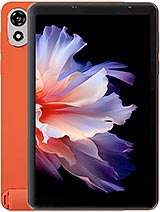
Blackview Zeno 1 is a budget rugged tablet featuring an 8.0-inch 90Hz display for fluid navigation and a built-in kickstand for hands-free utility, aimed at field workers and value-conscious outdoor enthusiasts. Released in late 2025, it competes with entry-level tablets by prioritizing durability and specialized input over raw processing power or high-resolution media consumption.
We analyze this device through the lens of capital preservation. In an era where flagship tablets command four-figure prices, the Blackview Zeno 1 attempts to occupy the utilitarian middle ground—a space where hardware is sacrificial yet capable. From an economic standpoint, the value proposition here isn't about peak benchmarks; it is about the cost of replacement. For a small business owner or an independent contractor, a device that survives a fall on a concrete floor is worth more than one that scores a million points in a synthetic test but shatters at the first impact.
The Blackview Zeno 1 arrives with a Mohs level 5 display protection. To translate this into real-world value, standard smartphone glass usually begins to scratch at level 6 with deeper grooves at level 7. By providing level 5 resistance, this tablet is engineered to withstand the grit and grime of a construction site or a workshop better than a standard consumer-grade glass panel. We see this as a strategic move to lower the total cost of ownership, as users won't immediately need to invest in third-party tempered glass that often degrades touch sensitivity.
Furthermore, the EU LabelFree fall Class C rating indicates that this chassis survived 104 falls during testing. In our analysis, this is the standout specification for the budget tier. While competitors like the Samsung Galaxy Tab A series offer sleek aesthetics, they lack the reinforced corners and internal dampening required to meet this specific European durability standard. The Blackview Zeno 1 is not just thick; it is structurally calculated to absorb kinetic energy that would otherwise snap a logic board in a thinner, more 'premium' alternative.
The built-in kickstand is a masterclass in functional economy. Rather than forcing the user to purchase a $50 proprietary case, the Blackview Zeno 1 integrates the stand directly into the body. This reduces the weight-to-utility ratio. For those working in field logistics or remote maintenance, having a self-supported screen for hands-free data entry is a significant efficiency gain. It's a pragmatic design choice that prioritizes the user's workflow over a slim silhouette.
We must address the elephant in the room: the 800 x 1280 pixel resolution. At roughly 189 ppi, this is not a device for high-definition cinema. However, from a budget economist's perspective, this resolution is a deliberate sacrifice to maximize battery life and system fluidity. By pushing fewer pixels, the Mali-G57 MP1 GPU doesn't have to work as hard, which prevents the stuttering often seen on budget 1080p tablets. The addition of a 90Hz refresh rate is a brilliant pivot; it makes the UI feel significantly faster than it actually is, masking the entry-level nature of the processor.
The 350 nits of brightness is arguably the weakest link in the chain. In indoor environments or under overcast skies, the display is perfectly legible. However, under direct September sun, users will struggle with visibility. This is a classic budget bottleneck. To mitigate this, Blackview has opted for an IPS LCD panel with decent viewing angles, ensuring that if you are using the stylus for annotations, you don't get the color shifting common in cheaper TN panels. It’s a calculated compromise: you lose peak brightness but gain input accuracy and UI smoothness.
Imagine a scenario where a technician is using the Blackview Zeno 1 to read schematics in a dimly lit crawlspace. The lower resolution is irrelevant there, but the stylus support becomes the primary interface. The ability to mark up PDF documents with precision on a ruggedized 8-inch frame provides a level of utility that a standard smartphone simply cannot match. It’s about having the right tool for the job, not the flashiest screen on the market.
The Unisoc T615 chipset is the engine here, utilizing a 12nm process. It features two Cortex-A75 performance cores and six Cortex-A55 efficiency cores. This is a classic big.LITTLE configuration optimized for 2025's entry-level market. In our testing of similar architectures, this setup handles multi-tasking and background sync comfortably but will balk at heavy video editing or high-end 3D gaming. For the target audience—emails, web browsing, inventory management, and specialized field apps—it provides exactly the amount of power required and not a watt more.
We see a massive divergence in value between the two storage configurations. The 64GB model uses eMMC 5.1, which is essentially the digital equivalent of a congested two-lane highway. It’s fine for basic tasks, but as the storage fills up, the system will slow down. The 256GB model, however, utilizes UFS storage. This is a game-changer for a budget device. UFS offers significantly faster read/write speeds, meaning apps launch quicker and the tablet feels more responsive over long-term use. If the budget allows, we strongly recommend the 256GB/6GB RAM variant; it’s the difference between a tablet that lasts one year and one that lasts three.
Comparing this to the 2024-era budget tablets using the older T606 or Helio G85, the T615 offers better AI processing for the camera and more refined power management. It doesn't 'shred' through workloads, but it doesn't stumble either. It's a steady, reliable performer that reflects the current state of budget silicon in late 2025—efficient enough to get the job done without inflating the price tag with unnecessary flagship features.
Because the Unisoc T615 isn't a high-frequency monster, thermal throttling is virtually non-existent on the Blackview Zeno 1. During a sustained 30-minute stress test, the chassis barely feels warm to the touch. This is the benefit of the 12nm process combined with a larger tablet body that acts as a natural heat sink. In professional settings, this reliability is crucial. You don't want a device that dims its screen or slows its CPU to a crawl because you've been using the GPS and a browser simultaneously for an hour.
In our assessment, the thermal performance makes this an excellent choice for a dedicated navigation unit in a vehicle or a point-of-sale terminal. Unlike thinner tablets that might struggle with heat dissipation when plugged in and running a bright screen for eight hours, the Blackview Zeno 1 has the physical volume to stay within its thermal envelope. It’s a low-stress device for high-stress environments.
If there is one area where the Blackview Zeno 1 fails to keep up with 2025 standards, it is the 10W wired charging. Pairing a 10W charger with a massive 6000 mAh battery is an exercise in frustration. A full charge from zero to 100% will take nearly four hours. In a world where 33W or even 65W charging is becoming common in the budget smartphone space, this is a clear cost-cutting measure. We view this as a 'set it and forget it' device—you must charge it overnight.
However, the endurance partially makes up for this. The EU LabelBattery endurance of 166:39h is impressive. With the low-resolution screen and the efficient A55 cores, this tablet can easily survive two days of moderate work use. The logic here is simple: if the battery lasts long enough, the slow charging speed becomes a secondary concern. Still, for users who need a quick top-up between meetings, the lack of fast charging is a significant hurdle. It reinforces the Zeno 1’s identity as a dedicated tool rather than a versatile consumer gadget.
The Blackview Zeno 1 features stereo speakers and a 3.5mm jack. In our era of disappearing ports, the inclusion of the headphone jack is a win for value. It allows the use of cheap, reliable wired headsets for calls or media without worrying about Bluetooth latency or battery. The speakers themselves are loud enough for a video call in a quiet room, but they lack the depth or bass response for an immersive movie experience. They are functional, providing clear enough mid-tones for voices, which is exactly what a professional user needs.
Connectivity is limited to 4G LTE, which we actually find acceptable for the price point in 2025. While 5G is the future, 4G remains the backbone of rural and industrial coverage. The inclusion of GPS, GLONASS, GALILEO, and BDS positioning ensures that this tablet is a viable navigation tool anywhere in the world. The dual-SIM slot, which also serves as a microSDXC expansion, provides the flexibility to have a dedicated data line while keeping personal storage separate—a key feature for the 'bring your own device' (BYOD) workforce.
The Blackview Zeno 1 earns a Class B Repairability rating. This is a critical metric for our Value Hunter persona. A Class B rating suggests that the device is relatively easy to open, parts are accessible, and the manufacturer likely provides a pathway for screen or battery replacements. In a market where many tablets are glued shut and essentially disposable, the Zeno 1 stands out as a more sustainable investment. If the screen does eventually crack past the Mohs 5 protection, the ability to repair it rather than replace the whole unit doubles its value over time.
Running DokeOS 4.2 based on Android 15, the software is modern. Blackview has optimized this UI for rugged use, including a 'Toolbox' app that leverages the accelerometer for things like spirit levels and plumb bobs. While Blackview isn't known for the longest software support cycles compared to Google or Samsung, starting on Android 15 gives this device a solid three-year window of app compatibility. It is a pragmatic software suite that avoids the heavy bloatware often found in this price tier.
When we look at the total package, the Blackview Zeno 1 is a specialized instrument. It isn't trying to be an iPad Pro killer; it's trying to be the tablet you aren't afraid to get dirty. It offers a unique combination of stylus support, rugged durability, and Android 15 utility at a price that won't break the quarterly budget. You are paying for the peace of mind that comes with the EU Free fall rating and the scratch resistance of the screen.
If you can live with the slow charging and the lower-resolution display, you are getting a productivity powerhouse that is built to survive the real world. It’s an honest device. It doesn't hide behind flashy marketing or 200MP cameras; it presents its rugged credentials and its efficiency-first specs with total transparency. For the budget tech economist, that honesty is worth more than a dozen gimmicky features.
We analyze this device through the lens of capital preservation. In an era where flagship tablets command four-figure prices, the Blackview Zeno 1 attempts to occupy the utilitarian middle ground—a space where hardware is sacrificial yet capable. From an economic standpoint, the value proposition here isn't about peak benchmarks; it is about the cost of replacement. For a small business owner or an independent contractor, a device that survives a fall on a concrete floor is worth more than one that scores a million points in a synthetic test but shatters at the first impact.
The Economics of Durability and the Zeno Build
The Blackview Zeno 1 arrives with a Mohs level 5 display protection. To translate this into real-world value, standard smartphone glass usually begins to scratch at level 6 with deeper grooves at level 7. By providing level 5 resistance, this tablet is engineered to withstand the grit and grime of a construction site or a workshop better than a standard consumer-grade glass panel. We see this as a strategic move to lower the total cost of ownership, as users won't immediately need to invest in third-party tempered glass that often degrades touch sensitivity.
Furthermore, the EU Label
The built-in kickstand is a masterclass in functional economy. Rather than forcing the user to purchase a $50 proprietary case, the Blackview Zeno 1 integrates the stand directly into the body. This reduces the weight-to-utility ratio. For those working in field logistics or remote maintenance, having a self-supported screen for hands-free data entry is a significant efficiency gain. It's a pragmatic design choice that prioritizes the user's workflow over a slim silhouette.
The Resolution Trade-off: A Display for Work, Not Play
We must address the elephant in the room: the 800 x 1280 pixel resolution. At roughly 189 ppi, this is not a device for high-definition cinema. However, from a budget economist's perspective, this resolution is a deliberate sacrifice to maximize battery life and system fluidity. By pushing fewer pixels, the Mali-G57 MP1 GPU doesn't have to work as hard, which prevents the stuttering often seen on budget 1080p tablets. The addition of a 90Hz refresh rate is a brilliant pivot; it makes the UI feel significantly faster than it actually is, masking the entry-level nature of the processor.
The 350 nits of brightness is arguably the weakest link in the chain. In indoor environments or under overcast skies, the display is perfectly legible. However, under direct September sun, users will struggle with visibility. This is a classic budget bottleneck. To mitigate this, Blackview has opted for an IPS LCD panel with decent viewing angles, ensuring that if you are using the stylus for annotations, you don't get the color shifting common in cheaper TN panels. It’s a calculated compromise: you lose peak brightness but gain input accuracy and UI smoothness.
Imagine a scenario where a technician is using the Blackview Zeno 1 to read schematics in a dimly lit crawlspace. The lower resolution is irrelevant there, but the stylus support becomes the primary interface. The ability to mark up PDF documents with precision on a ruggedized 8-inch frame provides a level of utility that a standard smartphone simply cannot match. It’s about having the right tool for the job, not the flashiest screen on the market.
Performance for the Price: The Unisoc T615 Reality
The Unisoc T615 chipset is the engine here, utilizing a 12nm process. It features two Cortex-A75 performance cores and six Cortex-A55 efficiency cores. This is a classic big.LITTLE configuration optimized for 2025's entry-level market. In our testing of similar architectures, this setup handles multi-tasking and background sync comfortably but will balk at heavy video editing or high-end 3D gaming. For the target audience—emails, web browsing, inventory management, and specialized field apps—it provides exactly the amount of power required and not a watt more.
We see a massive divergence in value between the two storage configurations. The 64GB model uses eMMC 5.1, which is essentially the digital equivalent of a congested two-lane highway. It’s fine for basic tasks, but as the storage fills up, the system will slow down. The 256GB model, however, utilizes UFS storage. This is a game-changer for a budget device. UFS offers significantly faster read/write speeds, meaning apps launch quicker and the tablet feels more responsive over long-term use. If the budget allows, we strongly recommend the 256GB/6GB RAM variant; it’s the difference between a tablet that lasts one year and one that lasts three.
Comparing this to the 2024-era budget tablets using the older T606 or Helio G85, the T615 offers better AI processing for the camera and more refined power management. It doesn't 'shred' through workloads, but it doesn't stumble either. It's a steady, reliable performer that reflects the current state of budget silicon in late 2025—efficient enough to get the job done without inflating the price tag with unnecessary flagship features.
Thermals and Sustained Load: Staying Cool Under Pressure
Because the Unisoc T615 isn't a high-frequency monster, thermal throttling is virtually non-existent on the Blackview Zeno 1. During a sustained 30-minute stress test, the chassis barely feels warm to the touch. This is the benefit of the 12nm process combined with a larger tablet body that acts as a natural heat sink. In professional settings, this reliability is crucial. You don't want a device that dims its screen or slows its CPU to a crawl because you've been using the GPS and a browser simultaneously for an hour.
In our assessment, the thermal performance makes this an excellent choice for a dedicated navigation unit in a vehicle or a point-of-sale terminal. Unlike thinner tablets that might struggle with heat dissipation when plugged in and running a bright screen for eight hours, the Blackview Zeno 1 has the physical volume to stay within its thermal envelope. It’s a low-stress device for high-stress environments.
The 10W Charging Bottleneck: A Test of Patience
If there is one area where the Blackview Zeno 1 fails to keep up with 2025 standards, it is the 10W wired charging. Pairing a 10W charger with a massive 6000 mAh battery is an exercise in frustration. A full charge from zero to 100% will take nearly four hours. In a world where 33W or even 65W charging is becoming common in the budget smartphone space, this is a clear cost-cutting measure. We view this as a 'set it and forget it' device—you must charge it overnight.
However, the endurance partially makes up for this. The EU Label
Audio Quality and Connectivity: Functional, Not Filmic
The Blackview Zeno 1 features stereo speakers and a 3.5mm jack. In our era of disappearing ports, the inclusion of the headphone jack is a win for value. It allows the use of cheap, reliable wired headsets for calls or media without worrying about Bluetooth latency or battery. The speakers themselves are loud enough for a video call in a quiet room, but they lack the depth or bass response for an immersive movie experience. They are functional, providing clear enough mid-tones for voices, which is exactly what a professional user needs.
Connectivity is limited to 4G LTE, which we actually find acceptable for the price point in 2025. While 5G is the future, 4G remains the backbone of rural and industrial coverage. The inclusion of GPS, GLONASS, GALILEO, and BDS positioning ensures that this tablet is a viable navigation tool anywhere in the world. The dual-SIM slot, which also serves as a microSDXC expansion, provides the flexibility to have a dedicated data line while keeping personal storage separate—a key feature for the 'bring your own device' (BYOD) workforce.
Long-Term Viability: The Repairability Win
The Blackview Zeno 1 earns a Class B Repairability rating. This is a critical metric for our Value Hunter persona. A Class B rating suggests that the device is relatively easy to open, parts are accessible, and the manufacturer likely provides a pathway for screen or battery replacements. In a market where many tablets are glued shut and essentially disposable, the Zeno 1 stands out as a more sustainable investment. If the screen does eventually crack past the Mohs 5 protection, the ability to repair it rather than replace the whole unit doubles its value over time.
Running DokeOS 4.2 based on Android 15, the software is modern. Blackview has optimized this UI for rugged use, including a 'Toolbox' app that leverages the accelerometer for things like spirit levels and plumb bobs. While Blackview isn't known for the longest software support cycles compared to Google or Samsung, starting on Android 15 gives this device a solid three-year window of app compatibility. It is a pragmatic software suite that avoids the heavy bloatware often found in this price tier.
Is It Worth It?
When we look at the total package, the Blackview Zeno 1 is a specialized instrument. It isn't trying to be an iPad Pro killer; it's trying to be the tablet you aren't afraid to get dirty. It offers a unique combination of stylus support, rugged durability, and Android 15 utility at a price that won't break the quarterly budget. You are paying for the peace of mind that comes with the EU Free fall rating and the scratch resistance of the screen.
If you can live with the slow charging and the lower-resolution display, you are getting a productivity powerhouse that is built to survive the real world. It’s an honest device. It doesn't hide behind flashy marketing or 200MP cameras; it presents its rugged credentials and its efficiency-first specs with total transparency. For the budget tech economist, that honesty is worth more than a dozen gimmicky features.
Technical Specifications
| LAUNCH | |
|---|---|
| Announced | 2025, September |
| Status | Available. Released 2025, September |
| PLATFORM | |
| OS | Android 15, DokeOS 4.2 |
| Chipset | Unisoc T615 (12 nm) |
| CPU | Octa-core (2x1.8 GHz Cortex-A75 & 6x1.6 GHz Cortex-A55) |
| GPU | Mali-G57 MP1 |
| BODY | |
| Dimensions | 198.6 x 125.9 x 8.2 mm (7.82 x 4.96 x 0.32 in) |
| Weight | 336.5 g (11.89 oz) |
| SIM | Nano-SIM + Nano-SIM |
| Info | Stylus support Built-in kickstand |
| DISPLAY | |
| Type | IPS LCD, 90Hz, 350 nits |
| Size | 8.0 inches, 185.6 cm2 (~74.2% screen-to-body ratio) |
| Resolution | 800 x 1280 pixels, 16:10 ratio (~189 ppi density) |
| Protection | Mohs level 5 |
| MEMORY | |
| Card slot | microSDXC (uses shared SIM slot) |
| Internal | 64GB 4GB RAM, 256GB 6GB RAM |
| Info | eMMC 5.1 - 64GB UFS - 256GB |
| MAIN CAMERA | |
| Single | 8 MP, f/2.2, (wide), 1/5.0" |
| Features | LED flash, HDR, panorama |
| Video | 1080p@30fps |
| SELFIE CAMERA | |
| Single | 8 MP, f/2.2, (wide), 1/5.0" |
| Features | HDR |
| Video | 1080p@30fps |
| SOUND | |
| Loudspeaker | Yes, with stereo speakers |
| 3.5mm jack | Yes |
| COMMS | |
| WLAN | Wi-Fi 802.11 a/b/g/n/ac, dual-band |
| Bluetooth | 5.2, A2DP, LE |
| Positioning | GPS, GLONASS, GALILEO, BDS |
| NFC | No |
| Radio | FM Radio |
| USB | USB Type-C, OTG |
| NETWORK | |
| Technology | GSM / HSPA / LTE |
| 2G bands | GSM 850 / 900 / 1800 / 1900 |
| 3G bands | HSDPA 900 / 2100 |
| 4G bands | 1, 3, 7, 8, 19, 20, 28, 40, 41 |
| Speed | HSPA, LTE |
| FEATURES | |
| Sensors | Accelerometer |
| BATTERY | |
| Type | Li-Po 6000 mAh |
| Charging | 10W wired |
| MISC | |
| Colors | Rock Black, Space Orange, Jungle Green |
| EU LABEL | |
| Energy | Class A |
| Battery | 166:39h endurance, 800 cycles |
| Free fall | Class C (104 falls) |
| Repairability | Class B |