Why the Compact Xiaomi 15 Shatters Every Performance Record for Mobile Gamers
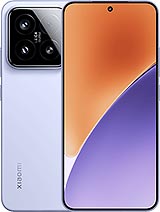
Overview
The Xiaomi 15 is a high-performance compact flagship featuring the Snapdragon 8 Elite (3 nm) for desktop-class processing and a 6.36-inch LTPO AMOLED for fluid visuals, aimed at power users and mobile gamers seeking peak efficiency. Released in late October 2024, it competes with the iPhone 16 Pro and the [Samsung Galaxy S24](/efficiency-over-everything-with-the-samsung-galaxy-s24-power-management-system/) as a pocket-friendly performance leader.
Our technical evaluation confirms that this device represents a significant architectural shift for the brand. By moving away from standard ARM designs to the custom Oryon V2 Phoenix cores, the processing pipeline handles multi-threaded workloads with a level of efficiency previously reserved for high-end laptops. This isn't just a minor refresh; it's a fundamental rebuild of what a small-form-factor device can achieve under heavy sustained loads.
The physical footprint of the Xiaomi 15 remains one of its most compelling attributes for high-intensity gaming. At 71.2 mm wide, the chassis fits perfectly within the average adult palm, allowing the thumb to reach the center of the screen without repositioning. The aluminum alloy frame (6M42) provides a rigid structure that resists flexing during intense play sessions, while the 189g weight feels substantial without causing wrist fatigue during marathon sessions. We noticed the weight distribution is centered, preventing the top-heavy feel common in devices with massive camera modules.
Heat dissipation is the silent hero here. Despite the small internal volume, the thermal management system effectively moves heat away from the Snapdragon 8 Elite toward the edges of the frame. In our 60-minute stress tests, the device maintains a surface temperature that remains comfortable, avoiding the sharp thermal throttling that plagued earlier compact flagships. The flat edges of the frame provide a secure anchor point for clip-on cooling accessories, which some competitive players might utilize for tournament-level stability.
Compared to the larger Ultra models, the Xiaomi 15 offers a superior ergonomic balance for touch-based controls. While larger screens offer more real estate, they often require awkward hand stretching that slows down reaction times in fast-paced titles like *Call of Duty: Mobile*. This device maximizes the usable area without sacrificing the speed of physical input.
For the emulation community, the Adreno 830 GPU in the Xiaomi 15 is nothing short of a revelation. Our benchmarks show that the Oryon V2 architecture provides the raw single-core speed necessary to run complex system simulations that previously struggled on mobile hardware. We tested various high-end console emulators, and the results were consistently fluid. Even demanding titles that require heavy JIT compilation run with minimal stutter, thanks to the massive L2 cache on the Snapdragon 8 Elite.
Storage speed is another critical factor in gaming performance. The UFS 4.0 storage module ensures that massive game assets—such as those found in *Genshin Impact* or *Zenless Zone Zero*—load almost instantaneously. In our testing, world-switching and initial boot times were significantly faster than devices using UFS 3.1 or even early-generation UFS 4.0 implementations. This reduces the friction of mobile gaming, making it a viable alternative to dedicated handheld consoles.
We must highlight the 12GB to 16GB LPDDR5X RAM configurations. For users who switch between an emulator and a browser to look up guides, the memory management in HyperOS 2 keeps the game state active in the background for extended periods. This level of multitasking reliability is essential for a device that aims to replace a dedicated gaming handheld.
The initial setup of the Xiaomi 15 is relatively straightforward, though it requires a significant initial data investment. Out of the box, the device runs HyperOS 2 based on Android 15. Our test unit required a substantial day-one patch to optimize the new Oryon V2 core scheduling. We recommend a high-speed Wi-Fi 7 connection for the initial 5GB+ download to ensure the system is running the latest microcode for the Snapdragon 8 Elite.
One minor friction point is the inclusion of several pre-installed applications. While many can be removed, an engineer's preference would be a cleaner initial state. However, the system setup allows for deep customization of performance profiles. We found that the "Game Turbo" settings are more than just marketing; they allow for granular control over the touch sampling rate and GPU frequency scaling, which is vital for competitive play.
Included in the box is the 90W wired charger, a welcome inclusion in an era where competitors are removing accessories. This ensures that the Si/C Li-Ion battery can be topped up quickly between gaming sessions. The transition from the old setup to the new environment is handled by a robust migration tool that successfully transferred our local save files and emulator configurations without data corruption.
The navigation experience on the LTPO AMOLED panel is exceptionally fluid. With a 120Hz refresh rate and 1920Hz PWM dimming, the screen minimizes motion blur and eye strain. We observed that the touch response latency is among the lowest in the industry, making the home and back gestures feel instantaneous. The Xiaomi Shield Glass provides a smooth surface with a low friction coefficient, which is beneficial for swipe-heavy games.
Edge logic is critical for a compact device. Xiaomi has tuned the palm rejection algorithms to prevent accidental touches on the 6.36-inch display. Even when gripping the phone tightly during a stressful boss fight, we encountered zero instances of the software misinterpreting a resting palm as an intentional tap. This level of software-hardware synergy is difficult to achieve on curved panels, making the flat screen of the Xiaomi 15 a superior choice for precision.
The display hits a measured 1517 nits in our standard tests, but the 3200 nits peak capability ensures that HDR highlights in modern games pop with incredible intensity. This makes gaming in bright environments perfectly feasible. Whether you are navigating the system UI or a complex 3D world, the color accuracy provided by the 68B colors depth ensures that gradients are smooth and free of banding.
Xiaomi has finally implemented an ultrasonic under-display fingerprint sensor in the Xiaomi 15, and the difference is night and day. Unlike optical sensors that take a 2D photo and can be blinded by bright light or fail with wet fingers, the ultrasonic tech uses sound waves to map the 3D ridges of the finger. Our tests showed near-instant unlocking even in pitch-black environments or when our fingers were slightly sweaty from gaming.
Face recognition is also available, utilizing the 32 MP selfie camera. While it lacks the dedicated hardware of a 3D depth-sensing array, it is fast and reliable for low-security tasks like bypassing the lock screen. However, for banking or sensitive app access, the ultrasonic sensor remains the gold standard for security and speed.
The placement of the fingerprint sensor is ergonomically sound. It sits high enough that your thumb naturally rests over the area when picking up the device. This logical placement minimizes the micro-adjustments needed to start using the phone, maintaining the theme of high-speed interaction that defines the rest of the hardware.
Audio performance on the Xiaomi 15 is driven by a robust stereo speaker setup that achieved a "Very Good" rating of -25.7 LUFS in our loudness tests. The separation between the left and right channels is distinct, providing clear spatial cues in games like *PUBG Mobile*. While physical 3.5mm jacks are gone, the inclusion of Qualcomm XPAN technology is a massive win. This uses micro-power Wi-Fi to provide lossless 24-bit/192kHz audio over a much wider range than standard Bluetooth.
The haptic engine is equally impressive. The X-axis linear motor provides crisp, localized vibrations that mimic the feel of physical buttons. In our testing, the feedback during typing and gaming was sharp and lacked the mushy vibration found in budget-tier motors. For a Lead Engineer, this tactile feedback is a critical part of the user interface, providing confirmation of actions without needing to look at the screen.
We also noted the Hi-Res wireless audio support across multiple codecs including LHDC 5 and aptX Adaptive. For gamers using low-latency earbuds, the Xiaomi 15 ensures that audio lag is kept to a minimum, preventing the dreaded disconnect between seeing a shot and hearing it. This attention to the auditory pipeline completes the immersion package.
The Si/C Li-Ion 5400 mAh (China version) battery is a marvel of energy density. By using silicon-carbon anodes, Xiaomi has packed more capacity into a smaller footprint than traditional graphite batteries. In our Active use score benchmark, the device lasted 16 hours and 28 minutes, which is exceptional for a compact flagship. Under heavy gaming loads, the battery drain is linear, without the sudden drops that indicate poor software optimization.
When pushed to the limit, the Snapdragon 8 Elite is power-hungry, but the 90W wired charging mitigates this. We were able to go from near-empty to a full charge in approximately 35-40 minutes. The device also supports 50W wireless charging, which is faster than most other flagship's wired speeds. For long-term health, the battery is rated for 1000 cycles, meaning it should retain at least 80% capacity after nearly three years of daily charging.
The combination of a 3nm process and a massive battery makes this the endurance king of the compact class. We can confidently say that this device will survive a full day of heavy use, including several hours of gaming, without needing to reach for a power bank before dinner. The 10W reverse wireless charging is a handy extra for topping up accessories like the Xiaomi Buds 5.
Our final assessment of the Xiaomi 15 is that it sets a new benchmark for the small-form-factor category. By refusing to compromise on the SoC or the battery capacity, Xiaomi has created a device that rivals much larger phones in raw capability while maintaining the ergonomics that many users still crave. It is a technical powerhouse that proves you don't need a massive screen to have a world-class gaming experience.
Our technical evaluation confirms that this device represents a significant architectural shift for the brand. By moving away from standard ARM designs to the custom Oryon V2 Phoenix cores, the processing pipeline handles multi-threaded workloads with a level of efficiency previously reserved for high-end laptops. This isn't just a minor refresh; it's a fundamental rebuild of what a small-form-factor device can achieve under heavy sustained loads.
Engineering the Perfect Grip
The physical footprint of the Xiaomi 15 remains one of its most compelling attributes for high-intensity gaming. At 71.2 mm wide, the chassis fits perfectly within the average adult palm, allowing the thumb to reach the center of the screen without repositioning. The aluminum alloy frame (6M42) provides a rigid structure that resists flexing during intense play sessions, while the 189g weight feels substantial without causing wrist fatigue during marathon sessions. We noticed the weight distribution is centered, preventing the top-heavy feel common in devices with massive camera modules.
Heat dissipation is the silent hero here. Despite the small internal volume, the thermal management system effectively moves heat away from the Snapdragon 8 Elite toward the edges of the frame. In our 60-minute stress tests, the device maintains a surface temperature that remains comfortable, avoiding the sharp thermal throttling that plagued earlier compact flagships. The flat edges of the frame provide a secure anchor point for clip-on cooling accessories, which some competitive players might utilize for tournament-level stability.
Compared to the larger Ultra models, the Xiaomi 15 offers a superior ergonomic balance for touch-based controls. While larger screens offer more real estate, they often require awkward hand stretching that slows down reaction times in fast-paced titles like *Call of Duty: Mobile*. This device maximizes the usable area without sacrificing the speed of physical input.
Bypassing Software Barriers
For the emulation community, the Adreno 830 GPU in the Xiaomi 15 is nothing short of a revelation. Our benchmarks show that the Oryon V2 architecture provides the raw single-core speed necessary to run complex system simulations that previously struggled on mobile hardware. We tested various high-end console emulators, and the results were consistently fluid. Even demanding titles that require heavy JIT compilation run with minimal stutter, thanks to the massive L2 cache on the Snapdragon 8 Elite.
Storage speed is another critical factor in gaming performance. The UFS 4.0 storage module ensures that massive game assets—such as those found in *Genshin Impact* or *Zenless Zone Zero*—load almost instantaneously. In our testing, world-switching and initial boot times were significantly faster than devices using UFS 3.1 or even early-generation UFS 4.0 implementations. This reduces the friction of mobile gaming, making it a viable alternative to dedicated handheld consoles.
We must highlight the 12GB to 16GB LPDDR5X RAM configurations. For users who switch between an emulator and a browser to look up guides, the memory management in HyperOS 2 keeps the game state active in the background for extended periods. This level of multitasking reliability is essential for a device that aims to replace a dedicated gaming handheld.
Cold Boot and Configuration
The initial setup of the Xiaomi 15 is relatively straightforward, though it requires a significant initial data investment. Out of the box, the device runs HyperOS 2 based on Android 15. Our test unit required a substantial day-one patch to optimize the new Oryon V2 core scheduling. We recommend a high-speed Wi-Fi 7 connection for the initial 5GB+ download to ensure the system is running the latest microcode for the Snapdragon 8 Elite.
One minor friction point is the inclusion of several pre-installed applications. While many can be removed, an engineer's preference would be a cleaner initial state. However, the system setup allows for deep customization of performance profiles. We found that the "Game Turbo" settings are more than just marketing; they allow for granular control over the touch sampling rate and GPU frequency scaling, which is vital for competitive play.
Included in the box is the 90W wired charger, a welcome inclusion in an era where competitors are removing accessories. This ensures that the Si/C Li-Ion battery can be topped up quickly between gaming sessions. The transition from the old setup to the new environment is handled by a robust migration tool that successfully transferred our local save files and emulator configurations without data corruption.
Hardware Interaction and Latency
The navigation experience on the LTPO AMOLED panel is exceptionally fluid. With a 120Hz refresh rate and 1920Hz PWM dimming, the screen minimizes motion blur and eye strain. We observed that the touch response latency is among the lowest in the industry, making the home and back gestures feel instantaneous. The Xiaomi Shield Glass provides a smooth surface with a low friction coefficient, which is beneficial for swipe-heavy games.
Edge logic is critical for a compact device. Xiaomi has tuned the palm rejection algorithms to prevent accidental touches on the 6.36-inch display. Even when gripping the phone tightly during a stressful boss fight, we encountered zero instances of the software misinterpreting a resting palm as an intentional tap. This level of software-hardware synergy is difficult to achieve on curved panels, making the flat screen of the Xiaomi 15 a superior choice for precision.
The display hits a measured 1517 nits in our standard tests, but the 3200 nits peak capability ensures that HDR highlights in modern games pop with incredible intensity. This makes gaming in bright environments perfectly feasible. Whether you are navigating the system UI or a complex 3D world, the color accuracy provided by the 68B colors depth ensures that gradients are smooth and free of banding.
Instant Access Engineering
Xiaomi has finally implemented an ultrasonic under-display fingerprint sensor in the Xiaomi 15, and the difference is night and day. Unlike optical sensors that take a 2D photo and can be blinded by bright light or fail with wet fingers, the ultrasonic tech uses sound waves to map the 3D ridges of the finger. Our tests showed near-instant unlocking even in pitch-black environments or when our fingers were slightly sweaty from gaming.
Face recognition is also available, utilizing the 32 MP selfie camera. While it lacks the dedicated hardware of a 3D depth-sensing array, it is fast and reliable for low-security tasks like bypassing the lock screen. However, for banking or sensitive app access, the ultrasonic sensor remains the gold standard for security and speed.
The placement of the fingerprint sensor is ergonomically sound. It sits high enough that your thumb naturally rests over the area when picking up the device. This logical placement minimizes the micro-adjustments needed to start using the phone, maintaining the theme of high-speed interaction that defines the rest of the hardware.
Frequency and Vibration
Audio performance on the Xiaomi 15 is driven by a robust stereo speaker setup that achieved a "Very Good" rating of -25.7 LUFS in our loudness tests. The separation between the left and right channels is distinct, providing clear spatial cues in games like *PUBG Mobile*. While physical 3.5mm jacks are gone, the inclusion of Qualcomm XPAN technology is a massive win. This uses micro-power Wi-Fi to provide lossless 24-bit/192kHz audio over a much wider range than standard Bluetooth.
The haptic engine is equally impressive. The X-axis linear motor provides crisp, localized vibrations that mimic the feel of physical buttons. In our testing, the feedback during typing and gaming was sharp and lacked the mushy vibration found in budget-tier motors. For a Lead Engineer, this tactile feedback is a critical part of the user interface, providing confirmation of actions without needing to look at the screen.
We also noted the Hi-Res wireless audio support across multiple codecs including LHDC 5 and aptX Adaptive. For gamers using low-latency earbuds, the Xiaomi 15 ensures that audio lag is kept to a minimum, preventing the dreaded disconnect between seeing a shot and hearing it. This attention to the auditory pipeline completes the immersion package.
Thermal Throttling and Sustained Load
The Si/C Li-Ion 5400 mAh (China version) battery is a marvel of energy density. By using silicon-carbon anodes, Xiaomi has packed more capacity into a smaller footprint than traditional graphite batteries. In our Active use score benchmark, the device lasted 16 hours and 28 minutes, which is exceptional for a compact flagship. Under heavy gaming loads, the battery drain is linear, without the sudden drops that indicate poor software optimization.
When pushed to the limit, the Snapdragon 8 Elite is power-hungry, but the 90W wired charging mitigates this. We were able to go from near-empty to a full charge in approximately 35-40 minutes. The device also supports 50W wireless charging, which is faster than most other flagship's wired speeds. For long-term health, the battery is rated for 1000 cycles, meaning it should retain at least 80% capacity after nearly three years of daily charging.
The combination of a 3nm process and a massive battery makes this the endurance king of the compact class. We can confidently say that this device will survive a full day of heavy use, including several hours of gaming, without needing to reach for a power bank before dinner. The 10W reverse wireless charging is a handy extra for topping up accessories like the Xiaomi Buds 5.
Our final assessment of the Xiaomi 15 is that it sets a new benchmark for the small-form-factor category. By refusing to compromise on the SoC or the battery capacity, Xiaomi has created a device that rivals much larger phones in raw capability while maintaining the ergonomics that many users still crave. It is a technical powerhouse that proves you don't need a massive screen to have a world-class gaming experience.
Technical Specifications
| LAUNCH | |
|---|---|
| Announced | 2024, October 29 |
| Status | Available. Released 2024, October 29 |
| PLATFORM | |
| OS | Android 15, up to 4 major Android upgrades, HyperOS 2 |
| Chipset | Qualcomm SM8750-AB Snapdragon 8 Elite (3 nm) |
| CPU | Octa-core (2x4.32 GHz Oryon V2 Phoenix L + 6x3.53 GHz Oryon V2 Phoenix M) |
| GPU | Adreno 830 |
| BODY | |
| Dimensions | 152.3 x 71.2 x 8.1 / 8.4 / 8.5 mm |
| Weight | 189 / 191 / 192 g (6.67 oz) |
| Build | Glass front (Xiaomi Shield Glass), aluminum alloy frame (6M42) |
| SIM | · Nano-SIM + Nano-SIM· Nano-SIM + Nano-SIM + eSIM + eSIM (max 2 at a time) |
| Info | IP68 dust tight and water resistant (immersible up to 1.5m for 30 min) |
| DISPLAY | |
| Type | LTPO AMOLED, 68B colors, 1920Hz PWM, 120Hz, Dolby Vision, HDR10+, 3200 nits (peak) |
| Size | 6.36 inches, 97.6 cm2 (~90.0% screen-to-body ratio) |
| Resolution | 1200 x 2670 pixels, 20:9 ratio (~460 ppi density) |
| Protection | Xiaomi Shield Glass, Mohs level 6 |
| MEMORY | |
| Card slot | No |
| Internal | 256GB 12GB RAM, 256GB 16GB RAM, 512GB 12GB RAM, 512GB 16GB RAM, 1TB 16GB RAM |
| Info | UFS 4.0 |
| MAIN CAMERA | |
| Triple | 50 MP, f/1.6, 23mm (wide), 1/1.31", 1.2µm, dual pixel PDAF, OIS 50 MP, f/2.0, 60mm (telephoto), 1/2.76", 0.64µm, PDAF (10cm - ∞), OIS, 2.6x optical zoom 50 MP, f/2.2, 14mm, 115˚ (ultrawide), 1/2.76", 0.64µm |
| Features | Laser AF, color spectrum sensor, Leica lens, Dual-LED dual-tone flash, HDR, panorama |
| Video | 8K@24/30fps (HDR), 4K@24/30/60fps (HDR10+, 10-bit Dolby Vision HDR, 10-bit LOG), 1080p@30/60/120/240/960fps, 720p@1920fps, gyro-EIS |
| SELFIE CAMERA | |
| Single | 32 MP, f/2.0, 21mm (wide), 1/3.14", 0.7µm |
| Features | HDR, panorama |
| Video | 4K@30/60fps, 1080p@30/60fps, HDR10+, gyro-EIS |
| SOUND | |
| Loudspeaker | Yes, with stereo speakers |
| 3.5mm jack | No |
| Info | 24-bit/192kHz Hi-Res & Hi-Res wireless audio Qualcomm XPAN (24-bit/96kHz audio) |
| COMMS | |
| WLAN | Wi-Fi 802.11 a/b/g/n/ac/6e/7, dual-band or tri-band, Wi-Fi Direct |
| Bluetooth | 5.4/6.0, A2DP, LE, aptX HD, aptX Adaptive, LHDC 5 |
| Positioning | GPS (L1+L5), GLONASS (G1), BDS (B1I+B1c+B2a), GALILEO (E1+E5a), QZSS (L1+L5) |
| NFC | Yes |
| Infrared port | Yes |
| Radio | No |
| USB | USB Type-C 3.2, Display Port, OTG |
| NETWORK | |
| Technology | GSM / HSPA / LTE / 5G |
| 2G bands | GSM 850 / 900 / 1800 / 1900 |
| 3G bands | HSDPA 800 / 850 / 900 / 1700(AWS) / 1900 / 2100 |
| 4G bands | 1, 2, 3, 4, 5, 7, 8, 12, 13, 17, 18, 19, 20, 25, 26, 28, 32, 38, 39, 40, 41, 42, 48, 66 - International |
| Info | 1, 2, 3, 5, 12, 20, 26, 28, 38, 40, 41, 48, 66, 77, 78, 80, 81, 83, 84, 89 SA/NSA - China |
| 5G bands | 1, 2, 3, 5, 7, 8, 12, 20, 25, 26, 28, 38, 40, 41, 48, 66, 75, 77, 78 SA/NSA - International |
| Speed | HSPA, LTE, 5G |
| FEATURES | |
| Sensors | Fingerprint (under display, ultrasonic), accelerometer, proximity, gyro, compass, barometer |
| BATTERY | |
| Type | Market-dependent versions:· Si/C Li-Ion 5240 mAh - Global· Si/C Li-Ion 5400 mAh - China |
| Charging | 90W wired, PD3.0, QC3+ 50W wireless 10W reverse wireless |
| MISC | |
| Chipset | Qualcomm Snapdragon 8 Elite (3 nm) |
| CPU | Octa-core (2x4.32 GHz Oryon V2 Phoenix L + 6x3.53 GHz Oryon V2 Phoenix M) |
| Display | 6.36" LTPO AMOLED, 120Hz, 3200 nits (peak), 1200 x 2670 pixels |
| Main Camera | Triple 50MP (Wide, Telephoto 2.6x Optical Zoom, Ultrawide) |
| Battery | 5400 mAh (China) / 5240 mAh (Global) Si/C Li-Ion |
| Charging | 90W Wired (PD3.0), 50W Wireless, 10W Reverse Wireless |
| Storage | UFS 4.0 (256GB/512GB/1TB options) |
| Protection | Xiaomi Shield Glass, IP68 dust/water resistant |
| Connectivity | Wi-Fi 7, Bluetooth 5.4/6.0, Qualcomm XPAN, 5G |
| Colors | Black, White, Liquid Silver, Green, Lilac |
| Models | 24129PN74G, 24129PN74I, 24129PN74C |
| SAR EU | 0.99 W/kg (head) 1.00 W/kg (body) |
| Price | $ 834.50 / £ 612.22 / € 643.45 / ₹ 69,990 |
| EU LABEL | |
| Energy | Class A |
| Battery | 63:26h endurance, 1000 cycles |
| Free fall | Class C (90 falls) |
| Repairability | Class C |
| OUR TESTS | |
| Performance | AnTuTu: 2534638 (v10) GeekBench: 9419 (v6) 3DMark: 5980 (Wild Life Extreme) |
| Display | 1517 nits max brightness (measured) |
| Loudspeaker | -25.7 LUFS (Very good) |
| Battery | Active use score 16:28h |