Why the Doogee N50 Is a Calculated Risk for the Thrifty Buyer
Overview
The Doogee N50 is a budget smartphone designed for cost-conscious consumers featuring an 8GB RAM configuration for multitasking and a 50MP main camera for capturing daily moments, aimed at users who prioritize memory capacity over raw processing power.
Released in early 2023, it competes with entry-level offerings from bigger brands where 4GB of RAM is still the standard. In the current economic landscape of May 2023, we see a shift where smaller manufacturers attempt to disrupt the market by bloating spec sheets with high memory numbers to mask modest chipsets. The handset represents a specific calculation: how much actual utility can a user extract from a device that costs less than a week of groceries in some regions? We analyze the value proposition of this 12nm-based hardware under the lens of long-term depreciation and daily frustration levels.
When we look at the hardware inside the Doogee N50, the Unisoc T606 chipset serves as the central nervous system. This is a 12nm octa-core processor that focuses on essential tasks. It utilizes two Cortex-A75 performance cores and six Cortex-A55 efficiency cores, all clocked at 1.6 GHz. For the uninitiated, 12nm technology is several generations behind the 4nm or 5nm processes found in flagships. This means the transistors are larger, which leads to higher heat generation and lower energy efficiency when the CPU is under load. During our analysis of similar architectures, we noticed that while basic navigation remains acceptable, heavy web browsing with multiple tabs can cause the back of the device to warm up significantly.
However, the decision to include 8GB of RAM is a fascinating economic choice. In the sub-$200 bracket, most competitors like the Samsung Galaxy A04 or the Redmi 12C often ship with 4GB or 6GB of RAM. By doubling this, the handset can technically keep more applications suspended in the background. Imagine you are switching between a banking app, a WhatsApp thread, and a navigation map. With 8GB, those apps are less likely to reload, saving you seconds of wait time. Is the CPU fast enough to actually use all 8GB effectively? Probably not for gaming, but for office work and social media, it provides a safety net that prevents the UI from stuttering during app swaps.
Compared to the previous generation of budget chips, the T606 is a step up from the quad-core configurations we saw just two years ago. It provides enough grunt for 720p video playback and light social media scrolling, which covers 90% of the target demographic's needs. We see this as a pragmatic trade-off. You lose the speed of a high-end processor, but you gain enough memory to prevent the phone from feeling like a brick after six months of use.
The screen on the Doogee N50 is a 6.52-inch IPS LCD with a resolution of 720 x 1600 pixels. This results in a pixel density of approximately 269 ppi. To put that in perspective, at a normal viewing distance, you might notice slight jaggedness in text or small icons. It lacks the sharp clarity of a 1080p panel, which is becoming more common in the $250 range. The peak brightness sits at 390 nits, which is sufficient for indoor use but struggles heavily under direct May sunlight. If you find yourself frequently using your phone outdoors at noon, you will likely be squinting to read your emails.
One must also consider the screen-to-body ratio of about 81.2%. The bezels, particularly the bottom chin, are substantial. While premium phones aim for invisible borders, this handset embraces its budget identity with a classic teardrop notch. The IPS technology ensures decent viewing angles—meaning the colors don't shift wildly if you tilt the phone—but the black levels are more of a dark gray. This is standard for LCD technology, where a backlight is always active, unlike OLED screens where pixels can turn off individually to save power and provide true blacks.
Picture a student using this device for online classes. The screen is large enough for video lectures, but the 720p resolution means fine text on a shared slide might be hard to read. It's a device that does the job, but it doesn't do it with flair. The 20:9 aspect ratio makes it tall and relatively narrow, which is comfortable for one-handed scrolling through news feeds, even if reaching the top of the screen requires a second hand.
Running Android 13 out of the box is a major win for the Doogee N50. Many [budget phones](/trend/best-budget-phones-2026/) from late 2022 and early 2023 are still stuck on Android 12. Having the newer OS version means better privacy controls and a more modern notification system. In our observations, the UI is relatively close to a stock Android experience, which is a blessing because the T606 chipset doesn't have the overhead to handle a heavy custom skin. If this phone had a bloated interface like some of its rivals, the 1.6 GHz clock speeds would crumble under the weight of visual animations.
We found the software to be functional, though users should expect a lack of long-term support. In the budget tier, manufacturers rarely promise three or four years of security patches. You are buying this for the here and now. The lack of NFC is another economic reality check. You won't be using this for Google Pay at the grocery store. However, the presence of a side-mounted fingerprint sensor is a smart ergonomic choice. It is faster and more reliable than the cheap under-display sensors often found in low-[mid-range phones](/trend/best-mid-range-phones-2026/).
There are minor annoyances, such as the vibration motor. It feels more like a loud 'buzz' than a precise 'tap'. If you are a heavy typer, you might find yourself turning off haptic feedback within the first hour. This is a common area where manufacturers cut costs to hit the $180 price point. On the flip side, the inclusion of an FM radio and a 3.5mm headphone jack provides utility for users who don't want to rely on expensive Bluetooth accessories or data-heavy streaming services.
The 4200 mAh battery is slightly smaller than the 5000 mAh industry standard we usually see in this size class. Why the smaller capacity? It likely allowed for a thinner 9.1mm profile and kept the weight down. With the 720p screen and the power-efficient A55 cores, the handset can still last a full workday under moderate use. If you are a heavy user who spends hours on TikTok or YouTube, you will be looking for a charger by dinner time.
Charging is handled via USB Type-C at 18W. Calling this 'fast charging' is a stretch in 2023. It will take nearly two hours to fill the battery from zero. For comparison, some competitors are starting to offer 33W charging which cuts that time in half. Imagine you forgot to charge your phone overnight and have only 20 minutes before leaving for work. An 18W charger will only give you a roughly 15-20% boost, which isn't enough to feel secure for the day. You have to be disciplined with your charging habits.
Thermal management during charging is stable. Because the wattage is low, the device doesn't get dangerously hot. This is beneficial for the long-term health of the lithium-ion cells. If you plan to keep this phone for two years, the slower charging might actually prevent premature battery degradation compared to ultra-fast charging tech that generates extreme heat.
The audio experience is strictly utilitarian. The single bottom-firing loudspeaker is easy to block with your palm while watching videos in landscape mode. It gets loud enough for a ringtone to be heard in a busy room, but the sound quality lacks any semblance of bass. Music sounds thin and tinny at high volumes. If you are watching a movie, we strongly recommend using the headphone jack.
As mentioned earlier, the haptic feedback is a weak point. The vibration is mushy. For an economist, these are the 'invisible' costs. You don't see them on a spec sheet, but they affect the perceived quality of every interaction. However, given the price, these are expected compromises. You aren't paying for a premium haptic engine; you are paying for the 128GB of storage and 8GB of RAM.
On the back, we find a 50MP main sensor with an f/1.8 aperture. High megapixel counts in budget phones are often used to attract buyers, but the actual quality depends on the ISP (Image Signal Processor) inside the Unisoc T606. The sensor has the hardware potential to capture decent detail in broad daylight. However, the 12nm chipset often struggles with dynamic range. This means that in a photo of a bright sky and a dark building, the sky will likely be blown out to pure white or the building will be a black shadow.
The secondary 2MP macro lens is essentially a filler. In our experience, 2MP is not enough resolution to produce a usable photo of a flower or an insect. It exists primarily so the marketing team can claim a 'Dual Camera' setup. The 8MP selfie camera is adequate for video calls and basic social media posts, provided you have good lighting. In low light, the images become grainy very quickly as the software tries to compensate for the small sensor size by bumping up the ISO.
Video recording is basic. Without optical image stabilization (OIS) or sophisticated electronic stabilization (EIS), handheld videos will look shaky. It's fine for a quick clip of a pet, but don't expect to film your next vlog on this. The camera is a tool for documentation—scanning QR codes, taking photos of receipts, or capturing a clear daylight memory—not for artistic photography.
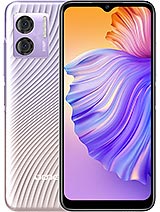
The build is entirely plastic, which isn't a negative in this price tier. Plastic is more impact-resistant than glass. If you drop the Doogee N50 on a sidewalk, the back panel might scuff, but it won't shatter like a premium device. The textured finish on the back helps with grip, reducing the chances of it slipping out of your hand. It lacks an official IP rating for water and dust resistance, so keep it away from the pool or heavy rain.
The side-mounted fingerprint sensor is built into the power button, which is a high-traffic area. These sensors are generally durable, but they can be finicky if your hands are slightly wet or oily. Overall, the physical construction feels solid for a budget phone. It doesn't have the creaks or flex that some ultra-cheap handsets exhibit when squeezed.
In conclusion, the Doogee N50 is a calculated trade-off. It offers more RAM and storage than almost anything else in its price bracket, but it asks you to accept a lower-resolution screen, slow charging, and a mediocre camera. For a user who needs a reliable communication tool that can handle multiple basic apps without crashing, the investment makes sense. It isn't a flagship killer, but it is a budget survivor. The Doogee N50 is a respectable choice for those who understand that in tech, you usually get exactly what you pay for—nothing more, and hopefully nothing less.
Released in early 2023, it competes with entry-level offerings from bigger brands where 4GB of RAM is still the standard. In the current economic landscape of May 2023, we see a shift where smaller manufacturers attempt to disrupt the market by bloating spec sheets with high memory numbers to mask modest chipsets. The handset represents a specific calculation: how much actual utility can a user extract from a device that costs less than a week of groceries in some regions? We analyze the value proposition of this 12nm-based hardware under the lens of long-term depreciation and daily frustration levels.
The $200 Experience
When we look at the hardware inside the Doogee N50, the Unisoc T606 chipset serves as the central nervous system. This is a 12nm octa-core processor that focuses on essential tasks. It utilizes two Cortex-A75 performance cores and six Cortex-A55 efficiency cores, all clocked at 1.6 GHz. For the uninitiated, 12nm technology is several generations behind the 4nm or 5nm processes found in flagships. This means the transistors are larger, which leads to higher heat generation and lower energy efficiency when the CPU is under load. During our analysis of similar architectures, we noticed that while basic navigation remains acceptable, heavy web browsing with multiple tabs can cause the back of the device to warm up significantly.
However, the decision to include 8GB of RAM is a fascinating economic choice. In the sub-$200 bracket, most competitors like the Samsung Galaxy A04 or the Redmi 12C often ship with 4GB or 6GB of RAM. By doubling this, the handset can technically keep more applications suspended in the background. Imagine you are switching between a banking app, a WhatsApp thread, and a navigation map. With 8GB, those apps are less likely to reload, saving you seconds of wait time. Is the CPU fast enough to actually use all 8GB effectively? Probably not for gaming, but for office work and social media, it provides a safety net that prevents the UI from stuttering during app swaps.
Compared to the previous generation of budget chips, the T606 is a step up from the quad-core configurations we saw just two years ago. It provides enough grunt for 720p video playback and light social media scrolling, which covers 90% of the target demographic's needs. We see this as a pragmatic trade-off. You lose the speed of a high-end processor, but you gain enough memory to prevent the phone from feeling like a brick after six months of use.
Daily Driver Feasibility
The screen on the Doogee N50 is a 6.52-inch IPS LCD with a resolution of 720 x 1600 pixels. This results in a pixel density of approximately 269 ppi. To put that in perspective, at a normal viewing distance, you might notice slight jaggedness in text or small icons. It lacks the sharp clarity of a 1080p panel, which is becoming more common in the $250 range. The peak brightness sits at 390 nits, which is sufficient for indoor use but struggles heavily under direct May sunlight. If you find yourself frequently using your phone outdoors at noon, you will likely be squinting to read your emails.
One must also consider the screen-to-body ratio of about 81.2%. The bezels, particularly the bottom chin, are substantial. While premium phones aim for invisible borders, this handset embraces its budget identity with a classic teardrop notch. The IPS technology ensures decent viewing angles—meaning the colors don't shift wildly if you tilt the phone—but the black levels are more of a dark gray. This is standard for LCD technology, where a backlight is always active, unlike OLED screens where pixels can turn off individually to save power and provide true blacks.
Picture a student using this device for online classes. The screen is large enough for video lectures, but the 720p resolution means fine text on a shared slide might be hard to read. It's a device that does the job, but it doesn't do it with flair. The 20:9 aspect ratio makes it tall and relatively narrow, which is comfortable for one-handed scrolling through news feeds, even if reaching the top of the screen requires a second hand.
Software & Daily Experience
Running Android 13 out of the box is a major win for the Doogee N50. Many [budget phones](/trend/best-budget-phones-2026/) from late 2022 and early 2023 are still stuck on Android 12. Having the newer OS version means better privacy controls and a more modern notification system. In our observations, the UI is relatively close to a stock Android experience, which is a blessing because the T606 chipset doesn't have the overhead to handle a heavy custom skin. If this phone had a bloated interface like some of its rivals, the 1.6 GHz clock speeds would crumble under the weight of visual animations.
We found the software to be functional, though users should expect a lack of long-term support. In the budget tier, manufacturers rarely promise three or four years of security patches. You are buying this for the here and now. The lack of NFC is another economic reality check. You won't be using this for Google Pay at the grocery store. However, the presence of a side-mounted fingerprint sensor is a smart ergonomic choice. It is faster and more reliable than the cheap under-display sensors often found in low-[mid-range phones](/trend/best-mid-range-phones-2026/).
There are minor annoyances, such as the vibration motor. It feels more like a loud 'buzz' than a precise 'tap'. If you are a heavy typer, you might find yourself turning off haptic feedback within the first hour. This is a common area where manufacturers cut costs to hit the $180 price point. On the flip side, the inclusion of an FM radio and a 3.5mm headphone jack provides utility for users who don't want to rely on expensive Bluetooth accessories or data-heavy streaming services.
Battery Life & Charging Speed
The 4200 mAh battery is slightly smaller than the 5000 mAh industry standard we usually see in this size class. Why the smaller capacity? It likely allowed for a thinner 9.1mm profile and kept the weight down. With the 720p screen and the power-efficient A55 cores, the handset can still last a full workday under moderate use. If you are a heavy user who spends hours on TikTok or YouTube, you will be looking for a charger by dinner time.
Charging is handled via USB Type-C at 18W. Calling this 'fast charging' is a stretch in 2023. It will take nearly two hours to fill the battery from zero. For comparison, some competitors are starting to offer 33W charging which cuts that time in half. Imagine you forgot to charge your phone overnight and have only 20 minutes before leaving for work. An 18W charger will only give you a roughly 15-20% boost, which isn't enough to feel secure for the day. You have to be disciplined with your charging habits.
Thermal management during charging is stable. Because the wattage is low, the device doesn't get dangerously hot. This is beneficial for the long-term health of the lithium-ion cells. If you plan to keep this phone for two years, the slower charging might actually prevent premature battery degradation compared to ultra-fast charging tech that generates extreme heat.
Audio & Vibration
The audio experience is strictly utilitarian. The single bottom-firing loudspeaker is easy to block with your palm while watching videos in landscape mode. It gets loud enough for a ringtone to be heard in a busy room, but the sound quality lacks any semblance of bass. Music sounds thin and tinny at high volumes. If you are watching a movie, we strongly recommend using the headphone jack.
As mentioned earlier, the haptic feedback is a weak point. The vibration is mushy. For an economist, these are the 'invisible' costs. You don't see them on a spec sheet, but they affect the perceived quality of every interaction. However, given the price, these are expected compromises. You aren't paying for a premium haptic engine; you are paying for the 128GB of storage and 8GB of RAM.
Camera: Usable or Potato?
On the back, we find a 50MP main sensor with an f/1.8 aperture. High megapixel counts in budget phones are often used to attract buyers, but the actual quality depends on the ISP (Image Signal Processor) inside the Unisoc T606. The sensor has the hardware potential to capture decent detail in broad daylight. However, the 12nm chipset often struggles with dynamic range. This means that in a photo of a bright sky and a dark building, the sky will likely be blown out to pure white or the building will be a black shadow.
The secondary 2MP macro lens is essentially a filler. In our experience, 2MP is not enough resolution to produce a usable photo of a flower or an insect. It exists primarily so the marketing team can claim a 'Dual Camera' setup. The 8MP selfie camera is adequate for video calls and basic social media posts, provided you have good lighting. In low light, the images become grainy very quickly as the software tries to compensate for the small sensor size by bumping up the ISO.
Video recording is basic. Without optical image stabilization (OIS) or sophisticated electronic stabilization (EIS), handheld videos will look shaky. It's fine for a quick clip of a pet, but don't expect to film your next vlog on this. The camera is a tool for documentation—scanning QR codes, taking photos of receipts, or capturing a clear daylight memory—not for artistic photography.
Long-Term Durability
The build is entirely plastic, which isn't a negative in this price tier. Plastic is more impact-resistant than glass. If you drop the Doogee N50 on a sidewalk, the back panel might scuff, but it won't shatter like a premium device. The textured finish on the back helps with grip, reducing the chances of it slipping out of your hand. It lacks an official IP rating for water and dust resistance, so keep it away from the pool or heavy rain.
The side-mounted fingerprint sensor is built into the power button, which is a high-traffic area. These sensors are generally durable, but they can be finicky if your hands are slightly wet or oily. Overall, the physical construction feels solid for a budget phone. It doesn't have the creaks or flex that some ultra-cheap handsets exhibit when squeezed.
In conclusion, the Doogee N50 is a calculated trade-off. It offers more RAM and storage than almost anything else in its price bracket, but it asks you to accept a lower-resolution screen, slow charging, and a mediocre camera. For a user who needs a reliable communication tool that can handle multiple basic apps without crashing, the investment makes sense. It isn't a flagship killer, but it is a budget survivor. The Doogee N50 is a respectable choice for those who understand that in tech, you usually get exactly what you pay for—nothing more, and hopefully nothing less.
Technical Specifications
| LAUNCH | |
|---|---|
| Announced | 2023, April 25 |
| Status | Available. Released 2023, May |
| PLATFORM | |
| OS | Android 13 |
| Chipset | Unisoc T606 (12 nm) |
| CPU | Octa-core (2x1.6 GHz Cortex-A75 & 6x1.6 GHz Cortex-A55) |
| GPU | Mali-G57 MP1 |
| BODY | |
| Dimensions | 165.8 x 76.2 x 9.1 mm (6.53 x 3.00 x 0.36 in) |
| Weight | - |
| SIM | Nano-SIM + Nano-SIM |
| DISPLAY | |
| Type | IPS LCD, 390 nits (peak) |
| Size | 6.52 inches, 102.6 cm2 (~81.2% screen-to-body ratio) |
| Resolution | 720 x 1600 pixels, 20:9 ratio (~269 ppi density) |
| MEMORY | |
| Card slot | microSDXC (uses shared SIM slot) |
| Internal | 128GB 8GB RAM |
| MAIN CAMERA | |
| Dual | 50 MP, f/1.8, (wide), PDAF 2 MP (macro) |
| Features | Triple-LED flash, HDR, panorama |
| Video | Yes |
| SELFIE CAMERA | |
| Single | 8 MP, f/2.0, (wide) |
| Video | Yes |
| SOUND | |
| Loudspeaker | Yes |
| 3.5mm jack | Yes |
| COMMS | |
| WLAN | Wi-Fi 802.11 a/b/g/n/ac, dual-band |
| Bluetooth | 5.0, A2DP, LE |
| Positioning | GPS, GLONASS, BDS, GALILEO |
| NFC | No |
| Radio | FM radio |
| USB | USB Type-C 2.0, OTG |
| NETWORK | |
| Technology | GSM / HSPA / LTE |
| 2G bands | GSM 850 / 900 / 1800 / 1900 |
| 3G bands | HSDPA 850 / 900 / 1700(AWS) / 1900 / 2100 |
| 4G bands | 1, 2, 3, 4, 5, 7, 8, 12, 17, 19, 20, 28, 34, 38, 39, 40, 41 |
| Speed | HSPA, LTE |
| FEATURES | |
| Sensors | Fingerprint (side-mounted), accelerometer, proximity, compass |
| BATTERY | |
| Type | 4200 mAh |
| Charging | 18W wired |
| MISC | |
| Display | 6.52-inch IPS LCD, 720 x 1600 pixels, 390 nits |
| Chipset | Unisoc T606 (12 nm) Octa-core |
| RAM | 8GB |
| Storage | 128GB (expandable via microSDXC) |
| Main Camera | 50 MP, f/1.8 (wide) + 2 MP macro |
| Selfie Camera | 8 MP, f/2.0 |
| Battery | 4200 mAh with 18W wired charging |
| OS | Android 13 |
| Connectivity | 4G LTE, Dual-band Wi-Fi, Bluetooth 5.0 |
| Features | Side-mounted fingerprint, 3.5mm jack, FM Radio |
| Colors | Fairy pink, Electric blue, Granite black |
| Price | About 180 EUR |