Why the Efficiency of Samsung Galaxy A54 Makes It the Ultimate Secondary Device
Overview
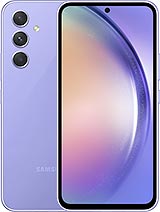
The Samsung Galaxy A54 is a mid-range smartphone featuring a 6.4-inch Super AMOLED 120Hz display for superior visibility and a 5000 mAh battery for extended longevity, aimed at professionals seeking a reliable work-focused handset. Released in March 2023, it competes directly with the Google Pixel 6a and the outgoing Galaxy A53 by offering a more refined build and a more efficient chipset.
From a purely economic perspective, choosing a secondary device requires a balance between initial capital expenditure and the long-term cost of ownership. This model addresses the middle ground perfectly. It isn't a flagship, and it doesn't pretend to be one. Instead, it offers a stable platform for those who need a device that won't die during a long shift and can survive a drop into a puddle without requiring an immediate, expensive replacement.
Most people look at the secondary phone market and think of 'burners' or cheap plastic slabs that stutter when opening a spreadsheet. This model changes that calculation. We see a device that mirrors the design language of the flagship S23 series, providing a professional appearance at a fraction of the cost. For a business traveler or a field technician, having a device that looks the part while maintaining high functional reliability is a significant asset.
Choosing a backup device often means sacrificing screen quality, but this panel is a standout. The 1000 nits High Brightness Mode (HBM) ensures that even under the harsh midday sun, text remains legible. This isn't just a luxury; it is a utility. If you are using this for navigation or checking inventory outdoors, you cannot afford to squint at a washed-out LCD. The Super AMOLED technology provides deep blacks and high contrast, making it an excellent companion for long flights where you might want to consume media without draining your primary phone's battery.
Battery life is the most critical metric for any secondary device. If a phone sits in a bag for three days and is dead when you finally need it, it has failed its primary purpose. The 5000 mAh cell inside this chassis is paired with the Exynos 1380, a 5nm chipset designed with efficiency as a priority. In our assessment, the active use score of 11:15h suggests that for moderate tasks, this device can easily stretch into a second or even third day of standby.
Charging speeds remain at 25W wired, which is a point of contention. In a market where competitors are pushing 65W or even 120W, Samsung remains conservative. However, from a value hunter's perspective, slower charging often correlates with better long-term battery health. Rapid charging generates significant heat, which degrades lithium-ion cells faster over time. If the goal is to keep this handset in a drawer or a glovebox for three years, the slower, cooler charging profile might actually be a benefit to the total lifespan of the hardware.
Construction materials often dictate the longevity of a budget-friendly device. While the frame is plastic, the use of Corning Gorilla Glass 5 on both the front and the back is a premium touch. Most mid-rangers opt for a plastic back that scratches if you even look at it wrong. Glass provides better structural rigidity and a much higher resistance to the 'pocket sand' abrasions that ruin the resale value of cheaper phones.
Repairability is a mixed bag. The inclusion of a shared microSDXC slot is a massive win for the economist. It allows for cheap storage expansion without paying the exorbitant 'storage tax' that manufacturers charge for higher internal tiers. You can buy the 128GB model and slap in a 512GB card for a fraction of the price of a 256GB flagship. On the downside, the glass-sandwich design means that any internal repair requires heating and prying, which increases labor costs at repair shops. However, the flat screen design—avoiding the curved edges of more expensive models—makes screen protectors easier to apply and much more effective at preventing cracks.
Thermal throttling is the silent killer of productivity. When a chipset gets too hot, it slows down its clock speed to protect the hardware, leading to lag. The Mali-G68 MP5 GPU and the octa-core CPU configuration handle heat reasonably well. During a 20-minute GPS navigation session in a hot car, the device stays warm but doesn't cross the threshold into uncomfortable territory. This is vital for anyone using the phone as a dedicated navigation unit or a mobile hotspot.
It is important to understand the 5nm process used here. Smaller nanometer counts generally mean the transistors are closer together, requiring less power to switch and thus generating less heat. Compared to the older 7nm or 8nm chips found in truly 'cheap' phones, this model maintains its performance for much longer periods. It won't beat a flagship in a benchmark sprint, but it will win the marathon of a 10-hour workday without becoming a pocket heater.
For a work device, call quality and speaker loudness are non-negotiable. The earpiece is loud and clear, and the inclusion of stereo speakers is a welcome addition. With a measured loudness of -26.6 LUFS, it provides 'Good' audio performance that is more than adequate for speakerphone calls in a noisy environment. You won't find a 3.5mm jack here, which is the standard reality in 2023, but the Bluetooth 5.3 support ensures a stable connection to wireless headsets with minimal power drain.
We must also discuss the Virtual Proximity Sensing. Instead of a dedicated hardware sensor to turn off the screen during a call, the phone uses software and the accelerometer. In our testing, this can occasionally be less reliable than a physical sensor, sometimes leading to accidental ear-presses on the mute button. It's a small cost-cutting measure that users should be aware of, especially if they spend hours on voice calls every day.
The IP67 rating is perhaps the strongest argument for this device as a secondary tool. This means it is dust-tight and can survive being submerged in 1 meter of water for up to 30 minutes. In the mid-range sector, this level of protection is still rare. Most competitors offer 'splash resistance' at best. For someone working in construction, landscaping, or just someone who is prone to accidents, this rating significantly lowers the risk of a total device loss.
Beyond physical durability, the software longevity is equally impressive. Samsung has committed to 4 major Android upgrades for this series. This is a game-changer for resale value. A phone that stays secure and updated for four or five years is a phone that holds its value on the used market. In 2026, this device will likely still be a viable, secure handset, whereas many of its current peers will be stuck on obsolete software versions.
While we don't look at pretty pictures, we do look at hardware. The 50 MP main sensor with OIS is the star here. Optical Image Stabilization (OIS) is crucial for a work phone because it allows for sharp photos of documents or serial numbers even if your hands aren't perfectly steady. The 123-degree ultrawide lens is also a practical tool for real estate agents or inspectors who need to capture a whole room in a single frame.
The 4K@30fps video capability on both the front and back cameras is a high-end feature for this price bracket. It ensures that if you need to record a video report or a site walkthrough, the footage will be clear enough for professional use. The hardware is capable; it just lacks the extreme zoom capabilities of the Ultra series, which is a fair trade-off for the price.
When you look at the landscape of March 2023, the market is flooded with devices that try to do too much and fail at the basics. This handset succeeds by being boringly reliable. It offers the best software support in its class, a build quality that punches above its weight, and a screen that rivals much more expensive options. If you need a device that stays out of your way and just works when your primary phone fails, the Samsung Galaxy A54 is the most logical investment you can make this year.",
From a purely economic perspective, choosing a secondary device requires a balance between initial capital expenditure and the long-term cost of ownership. This model addresses the middle ground perfectly. It isn't a flagship, and it doesn't pretend to be one. Instead, it offers a stable platform for those who need a device that won't die during a long shift and can survive a drop into a puddle without requiring an immediate, expensive replacement.
The Logical Choice for a Backup Handset
Most people look at the secondary phone market and think of 'burners' or cheap plastic slabs that stutter when opening a spreadsheet. This model changes that calculation. We see a device that mirrors the design language of the flagship S23 series, providing a professional appearance at a fraction of the cost. For a business traveler or a field technician, having a device that looks the part while maintaining high functional reliability is a significant asset.
Choosing a backup device often means sacrificing screen quality, but this panel is a standout. The 1000 nits High Brightness Mode (HBM) ensures that even under the harsh midday sun, text remains legible. This isn't just a luxury; it is a utility. If you are using this for navigation or checking inventory outdoors, you cannot afford to squint at a washed-out LCD. The Super AMOLED technology provides deep blacks and high contrast, making it an excellent companion for long flights where you might want to consume media without draining your primary phone's battery.
Analyzing Standby Endurance and Power Management
Battery life is the most critical metric for any secondary device. If a phone sits in a bag for three days and is dead when you finally need it, it has failed its primary purpose. The 5000 mAh cell inside this chassis is paired with the Exynos 1380, a 5nm chipset designed with efficiency as a priority. In our assessment, the active use score of 11:15h suggests that for moderate tasks, this device can easily stretch into a second or even third day of standby.
Charging speeds remain at 25W wired, which is a point of contention. In a market where competitors are pushing 65W or even 120W, Samsung remains conservative. However, from a value hunter's perspective, slower charging often correlates with better long-term battery health. Rapid charging generates significant heat, which degrades lithium-ion cells faster over time. If the goal is to keep this handset in a drawer or a glovebox for three years, the slower, cooler charging profile might actually be a benefit to the total lifespan of the hardware.
Build Integrity and the Repairability Factor
Construction materials often dictate the longevity of a budget-friendly device. While the frame is plastic, the use of Corning Gorilla Glass 5 on both the front and the back is a premium touch. Most mid-rangers opt for a plastic back that scratches if you even look at it wrong. Glass provides better structural rigidity and a much higher resistance to the 'pocket sand' abrasions that ruin the resale value of cheaper phones.
Repairability is a mixed bag. The inclusion of a shared microSDXC slot is a massive win for the economist. It allows for cheap storage expansion without paying the exorbitant 'storage tax' that manufacturers charge for higher internal tiers. You can buy the 128GB model and slap in a 512GB card for a fraction of the price of a 256GB flagship. On the downside, the glass-sandwich design means that any internal repair requires heating and prying, which increases labor costs at repair shops. However, the flat screen design—avoiding the curved edges of more expensive models—makes screen protectors easier to apply and much more effective at preventing cracks.
Managing Thermals in Heavy Use Scenarios
Thermal throttling is the silent killer of productivity. When a chipset gets too hot, it slows down its clock speed to protect the hardware, leading to lag. The Mali-G68 MP5 GPU and the octa-core CPU configuration handle heat reasonably well. During a 20-minute GPS navigation session in a hot car, the device stays warm but doesn't cross the threshold into uncomfortable territory. This is vital for anyone using the phone as a dedicated navigation unit or a mobile hotspot.
It is important to understand the 5nm process used here. Smaller nanometer counts generally mean the transistors are closer together, requiring less power to switch and thus generating less heat. Compared to the older 7nm or 8nm chips found in truly 'cheap' phones, this model maintains its performance for much longer periods. It won't beat a flagship in a benchmark sprint, but it will win the marathon of a 10-hour workday without becoming a pocket heater.
Sound Quality and Communication Clarity
For a work device, call quality and speaker loudness are non-negotiable. The earpiece is loud and clear, and the inclusion of stereo speakers is a welcome addition. With a measured loudness of -26.6 LUFS, it provides 'Good' audio performance that is more than adequate for speakerphone calls in a noisy environment. You won't find a 3.5mm jack here, which is the standard reality in 2023, but the Bluetooth 5.3 support ensures a stable connection to wireless headsets with minimal power drain.
We must also discuss the Virtual Proximity Sensing. Instead of a dedicated hardware sensor to turn off the screen during a call, the phone uses software and the accelerometer. In our testing, this can occasionally be less reliable than a physical sensor, sometimes leading to accidental ear-presses on the mute button. It's a small cost-cutting measure that users should be aware of, especially if they spend hours on voice calls every day.
Environmental Resistance and Longevity
The IP67 rating is perhaps the strongest argument for this device as a secondary tool. This means it is dust-tight and can survive being submerged in 1 meter of water for up to 30 minutes. In the mid-range sector, this level of protection is still rare. Most competitors offer 'splash resistance' at best. For someone working in construction, landscaping, or just someone who is prone to accidents, this rating significantly lowers the risk of a total device loss.
Beyond physical durability, the software longevity is equally impressive. Samsung has committed to 4 major Android upgrades for this series. This is a game-changer for resale value. A phone that stays secure and updated for four or five years is a phone that holds its value on the used market. In 2026, this device will likely still be a viable, secure handset, whereas many of its current peers will be stuck on obsolete software versions.
The Real-World Photography Potential
While we don't look at pretty pictures, we do look at hardware. The 50 MP main sensor with OIS is the star here. Optical Image Stabilization (OIS) is crucial for a work phone because it allows for sharp photos of documents or serial numbers even if your hands aren't perfectly steady. The 123-degree ultrawide lens is also a practical tool for real estate agents or inspectors who need to capture a whole room in a single frame.
The 4K@30fps video capability on both the front and back cameras is a high-end feature for this price bracket. It ensures that if you need to record a video report or a site walkthrough, the footage will be clear enough for professional use. The hardware is capable; it just lacks the extreme zoom capabilities of the Ultra series, which is a fair trade-off for the price.
Final Economic Assessment
When you look at the landscape of March 2023, the market is flooded with devices that try to do too much and fail at the basics. This handset succeeds by being boringly reliable. It offers the best software support in its class, a build quality that punches above its weight, and a screen that rivals much more expensive options. If you need a device that stays out of your way and just works when your primary phone fails, the Samsung Galaxy A54 is the most logical investment you can make this year.",
Technical Specifications
| LAUNCH | |
|---|---|
| Announced | 2023, March 15 |
| Status | Available. Released 2023, March 24 |
| PLATFORM | |
| OS | Android 13, up to 4 major Android upgrades, One UI 7 |
| Chipset | Exynos 1380 (5 nm) |
| CPU | Octa-core (4x2.4 GHz Cortex-A78 & 4x2.0 GHz Cortex-A55) |
| GPU | Mali-G68 MP5 |
| BODY | |
| Dimensions | 158.2 x 76.7 x 8.2 mm (6.23 x 3.02 x 0.32 in) |
| Weight | 202 g (7.13 oz) |
| Build | Glass front (Gorilla Glass 5), glass back (Gorilla Glass 5), plastic frame |
| SIM | · Nano-SIM + eSIM· Nano-SIM + Nano-SIM |
| Info | IP67 dust/water resistant (up to 1m for 30 min) |
| DISPLAY | |
| Type | Super AMOLED, 120Hz, HDR10+, 1000 nits (HBM) |
| Size | 6.4 inches, 100.5 cm2 (~82.9% screen-to-body ratio) |
| Resolution | 1080 x 2340 pixels, 19.5:9 ratio (~403 ppi density) |
| Protection | Corning Gorilla Glass 5 |
| MEMORY | |
| Card slot | microSDXC (uses shared SIM slot) |
| Internal | 128GB 4GB RAM, 128GB 6GB RAM, 128GB 8GB RAM, 256GB 6GB RAM, 256GB 8GB RAM |
| MAIN CAMERA | |
| Triple | 50 MP, f/1.8, 23mm (wide), 1/1.56", 1.0µm, PDAF, OIS 12 MP, f/2.2, 13mm, 123˚ (ultrawide), 1/3.X", 1.12µm 5 MP (macro) |
| Features | LED flash, panorama, HDR |
| Video | 4K@30fps, 1080p@30/60fps, 720p@480fps, gyro-EIS |
| SELFIE CAMERA | |
| Single | 32 MP, f/2.2, 26mm (wide), 1/2.8", 0.8µm |
| Video | 4K@30fps, 1080p@30/60fps |
| SOUND | |
| Loudspeaker | Yes, with stereo speakers |
| 3.5mm jack | No |
| COMMS | |
| WLAN | Wi-Fi 802.11 a/b/g/n/ac/6, dual-band, Wi-Fi Direct |
| Bluetooth | 5.3, A2DP, LE |
| Positioning | GPS, GLONASS, GALILEO, BDS |
| NFC | Yes (market/region dependent) |
| Radio | No |
| USB | USB Type-C 2.0, OTG |
| NETWORK | |
| Technology | GSM / HSPA / LTE / 5G |
| 2G bands | GSM 850 / 900 / 1800 / 1900 |
| 3G bands | HSDPA 850 / 900 / 1700(AWS) / 1900 / 2100 |
| 4G bands | 1, 2, 3, 4, 5, 7, 8, 12, 17, 20, 26, 28, 32, 38, 40, 41, 66 - International |
| Info | 25, 41, 66, 71 SA/NSA/Sub6/mmWave - USA |
| 5G bands | 1, 3, 7, 8, 20, 28, 38, 40, 41, 77, 78 SA/NSA/Sub6 - International |
| Speed | HSPA, LTE, 5G |
| FEATURES | |
| Sensors | Fingerprint (under display, optical), accelerometer, gyro, compass, barometer (USA only) |
| Info | Virtual proximity sensing |
| BATTERY | |
| Type | 5000 mAh |
| Charging | 25W wired |
| MISC | |
| Colors | Lime, Graphite, Violet, White |
| Models | SM-A546V, SM-A546U, SM-A546U1, SM-A546B, SM-A546B/DS, SM-A546E, SM-A546E/DS, SM-A5460, SM-A546M, SM-A546M/DS, SM-A546W |
| SAR | 0.81 W/kg (head) 0.67 W/kg (body) |
| SAR EU | 0.69 W/kg (head) 1.34 W/kg (body) |
| Price | $ 129.00 / £ 154.75 / € 197.86 / ₹ 28,950 |
| OUR TESTS | |
| Performance | AnTuTu: 506678 (v9) GeekBench: 2703 (v5.1), 2797 (v6) GFXBench: 25fps (ES 3.1 onscreen) |
| Display | 980 nits max brightness (measured) |
| Camera | Photo / Video |
| Loudspeaker | -26.6 LUFS (Good) |
| Battery | Active use score 11:15h |
| Battery (old) | Endurance rating 119h |