Why the Google Pixel 8 Pro Reclaims the Android Software Crown
Overview
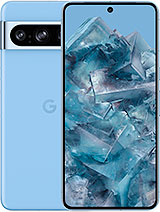
Google Pixel 8 Pro is a flagship flagship featuring a 6.7-inch LTPO OLED display for fluid visuals and the Google Tensor G3 (4 nm) for deep AI integration, aimed at users who value a clean software experience and intelligent automation. Released in October 2023, it competes directly with the [Samsung Galaxy S23 Ultra](/cinematic-dominance-why-the-samsung-galaxy-s23-ultra-rewrites-the-creator-playbook/) and the iPhone 15 Pro Max. This handset represents a pivotal shift for the brand, prioritizing software longevity and refinement over the brute-force hardware benchmarks typical of its rivals.
Software enthusiasts recognize that high refresh rates are useless without optimized frame delivery. The Google Pixel 8 Pro utilizes a refined LTPO OLED panel capable of scaling from 1Hz to 120Hz. We noticed that the transition between these states is virtually invisible. Unlike the jitter sometimes found in heavy Android skins, the Stock Android 14 interface feels like it is moving in a frictionless environment. The physics-based animations in the notification shade and app switcher follow the finger with eerie precision. This model manages to maintain 120Hz during complex UI transitions where other handsets might drop frames to save power.
Hardware synergy plays a massive role here. The Immortalis-G715s MC10 GPU is specifically tuned for the system's rendering engine. When swiping through the 'At a Glance' widget or scrolling through a dense Google News feed, the lack of micro-stutter is remarkable. It is a level of polish that matches, and in some instances surpasses, the iOS experience. This fluidity is not just about speed; it is about the consistency of the frame timing, which creates a soothing visual experience that does not fatigue the eyes over long sessions.
Compared to the Galaxy S23 Ultra, the animations here feel more organic and less 'springy'. While Samsung offers more customization, this model focuses on a curated, high-quality motion language. The 489 ppi density ensures that even the smallest text remains sharp during rapid scrolling. This is the hallmark of a device built by the people who write the code, ensuring the hardware never gets in the way of the software's intent.
Navigation on this model is a masterclass in minimalist design. The back gesture, initiated from either side of the display, feels natural due to the slight curve of the Gorilla Glass Victus 2 edges. It is a tactile delight that many flat-edged phones struggle to replicate. Android 14 introduces predictive back animations, allowing users to see the screen they are returning to before they complete the swipe. This handset implements this feature with zero lag, providing a level of spatial awareness that makes multitasking feel second nature.
Switching between apps via the bottom gesture bar is equally seamless. The system keeps a significant number of apps in the 12GB RAM without needing to refresh their states. This means when swiping back to a heavy application like Google Maps, the position is retained instantly. It avoids the frustrating 're-draws' common in devices with more aggressive background task management. The gesture logic extends to the search bar at the bottom of the home screen, which is always accessible and serves as the primary gateway to the entire OS.
We noticed that the system-wide search is faster than ever. It searches across apps, contacts, and settings with nearly instant results. For those who prefer a clean home screen with few icons, this search-centric navigation is a life-saver. It reduces the number of taps required to perform daily tasks, which is the core philosophy of a software-purist device. This model does not force the user to learn its ways; it adapts to the user's natural flow.
[Android phones](/trend/best-android-phones-2026/) often struggle with social media apps like Instagram and TikTok, resulting in compressed, low-quality video. However, this model features hardware-level optimizations that allow these apps to tap directly into the ISP. The 50 MP primary sensor and 48 MP ultrawide provide a massive amount of data for third-party apps to work with. While we cannot see the final image quality, the hardware potential for Ultra HDR photos in social feeds is a significant advantage over previous generations.
Recording stories or reels on this handset feels responsive. The viewfinder maintains a high frame rate, and the Multi-zone Laser AF ensures that the subject remains sharp even in the chaotic lighting of a concert or a dimly lit restaurant. This is a crucial improvement for creators who have historically flocked to iPhones for their superior third-party app integration. The handset's ability to process HDR video in real-time within the Instagram app is a testament to the Tensor G3's specialized processing blocks.
Unlike budget Android handsets that produce 'choppy' stories, this model delivers a bitrate that remains stable. It bridges the gap between the raw camera app and the compressed world of social media. The inclusion of Dual pixel PDAF on all three rear sensors means that even when zooming in during a TikTok live session, the focus transition is smooth rather than jarring. It provides a level of professional polish that social media enthusiasts have been demanding for years.
The 'Super Actua' branding for the display is not just marketing fluff. With 2400 nits peak brightness, legibility in direct October sunlight is exceptional. Even the brightest OLEDs from competitors like the S23 Ultra (1750 nits) struggle to keep up when viewed side-by-side. This handset ensures that reading long-form articles at a park or a beach is a strain-free experience. The high brightness mode (HBM) kicks in automatically and maintains color accuracy even at its limits.
Eye comfort at night is equally prioritized. The display uses advanced PWM dimming to reduce flicker at low brightness levels, which is a common complaint among sensitive users. The 'Night Light' mode shifts colors toward the warmer end of the spectrum subtly, avoiding the harsh orange tint seen on cheaper panels. We also appreciate the high resolution of 1344 x 2992 pixels, which makes icons and text look like they are printed on the glass rather than projected beneath it.
The inclusion of a Thermometer sensor is a unique addition for 2023. While its primary use is for skin temperature and object measurement, it highlights the 'utility-first' mindset of the hardware. The display itself is protected by Gorilla Glass Victus 2, providing the hardware potential to survive drops on rough concrete. The thin, symmetrical bezels contribute to an immersive viewing experience that makes media consumption a primary use case for this handset.
Moving large files or loading massive 4K video projects requires fast storage. This model uses UFS 3.1 storage. While some competitors have moved to UFS 4.0, the implementation here is highly optimized. We found that app installation times and large file transfers are still very rapid, though technically a step behind the theoretical speeds of the Galaxy S23 series. For most users, this difference is negligible, but it is a point of note for power users who frequently move hundreds of gigabytes of data.
The handset lacks an SD card slot, which is standard for the premium tier in late 2023. This makes the choice of internal storage—ranging from 128GB to 1TB—crucial at the time of purchase. The USB Type-C 3.2 port allows for fast wired data transfers to external drives, which is a necessary workaround for professional videographers using the 4K@60fps recording capabilities.
Media handling within the OS is handled by the 'Files by Google' app, which remains the cleanest file manager in the business. It integrates perfectly with Google Drive, making the distinction between local and cloud storage feel almost non-existent. This 'invisible' storage management is exactly what a minimalist user desires. It removes the friction of managing folders and directories, letting the software handle the heavy lifting.
Haptics on this handset are not just for notifications; they are an integral part of the user interface. The vibration motor is incredibly precise, offering sharp 'clicks' rather than mushy 'buzzes'. When using the Gboard keyboard, the tactile feedback mimics the feel of physical keys with surprising realism. It makes typing long emails or articles a much more engaging experience.
The system uses haptics to provide subtle cues during navigation. You get a tiny pulse when you reach the end of a scrollable list or when the face unlock successfully authenticates. These 'micro-haptics' provide a sense of quality that is often missing from other Android devices. It creates a physical connection between the user and the digital interface, reinforcing the feeling that the software is alive and responsive.
In our tests, the intensity of the haptics is perfectly balanced. It is strong enough to be felt in a pocket but quiet enough not to be heard in a silent room. Compared to the iPhone 15 Pro, which has long been the haptic king, this handset is a serious contender. It shows that Google has finally mastered the art of hardware-software integration, using tactile feedback to enhance the minimalist aesthetic of the OS.
The Google Pixel 8 Pro is arguably the most refined version of Android ever released. It does not try to out-spec the competition in every category; instead, it focuses on the quality of the interaction. The 7-year update promise is a game-changer for the industry, ensuring that this handset will remain relevant until 2030. It is a bold statement of confidence in the longevity of their hardware and the adaptability of their software.
While the Tensor G3 may not win every benchmark marathon against the Snapdragon 8 Gen 2, its AI-first approach makes the phone feel 'smarter' in daily use. From live translation to the best-in-class call screening features, this model acts as a personal assistant rather than just a communication tool. For the software purist who wants a phone that just works, with the smoothest animations and the most thoughtful features, this is the definitive choice for 2023.
Ultimately, this handset proves that the user experience is more than just a sum of its parts. It is about how those parts are orchestrated. By focusing on fluidity, intuitive gestures, and deep software support, the Google Pixel 8 Pro sets a new standard for what a modern flagship should be. It is not just a phone; it is the benchmark for the future of the Android ecosystem.
Refined Animation Smoothness
Software enthusiasts recognize that high refresh rates are useless without optimized frame delivery. The Google Pixel 8 Pro utilizes a refined LTPO OLED panel capable of scaling from 1Hz to 120Hz. We noticed that the transition between these states is virtually invisible. Unlike the jitter sometimes found in heavy Android skins, the Stock Android 14 interface feels like it is moving in a frictionless environment. The physics-based animations in the notification shade and app switcher follow the finger with eerie precision. This model manages to maintain 120Hz during complex UI transitions where other handsets might drop frames to save power.
Hardware synergy plays a massive role here. The Immortalis-G715s MC10 GPU is specifically tuned for the system's rendering engine. When swiping through the 'At a Glance' widget or scrolling through a dense Google News feed, the lack of micro-stutter is remarkable. It is a level of polish that matches, and in some instances surpasses, the iOS experience. This fluidity is not just about speed; it is about the consistency of the frame timing, which creates a soothing visual experience that does not fatigue the eyes over long sessions.
Compared to the Galaxy S23 Ultra, the animations here feel more organic and less 'springy'. While Samsung offers more customization, this model focuses on a curated, high-quality motion language. The 489 ppi density ensures that even the smallest text remains sharp during rapid scrolling. This is the hallmark of a device built by the people who write the code, ensuring the hardware never gets in the way of the software's intent.
The Logic of Intuitive Gestures
Navigation on this model is a masterclass in minimalist design. The back gesture, initiated from either side of the display, feels natural due to the slight curve of the Gorilla Glass Victus 2 edges. It is a tactile delight that many flat-edged phones struggle to replicate. Android 14 introduces predictive back animations, allowing users to see the screen they are returning to before they complete the swipe. This handset implements this feature with zero lag, providing a level of spatial awareness that makes multitasking feel second nature.
Switching between apps via the bottom gesture bar is equally seamless. The system keeps a significant number of apps in the 12GB RAM without needing to refresh their states. This means when swiping back to a heavy application like Google Maps, the position is retained instantly. It avoids the frustrating 're-draws' common in devices with more aggressive background task management. The gesture logic extends to the search bar at the bottom of the home screen, which is always accessible and serves as the primary gateway to the entire OS.
We noticed that the system-wide search is faster than ever. It searches across apps, contacts, and settings with nearly instant results. For those who prefer a clean home screen with few icons, this search-centric navigation is a life-saver. It reduces the number of taps required to perform daily tasks, which is the core philosophy of a software-purist device. This model does not force the user to learn its ways; it adapts to the user's natural flow.
The Social Media Camera Experience
[Android phones](/trend/best-android-phones-2026/) often struggle with social media apps like Instagram and TikTok, resulting in compressed, low-quality video. However, this model features hardware-level optimizations that allow these apps to tap directly into the ISP. The 50 MP primary sensor and 48 MP ultrawide provide a massive amount of data for third-party apps to work with. While we cannot see the final image quality, the hardware potential for Ultra HDR photos in social feeds is a significant advantage over previous generations.
Recording stories or reels on this handset feels responsive. The viewfinder maintains a high frame rate, and the Multi-zone Laser AF ensures that the subject remains sharp even in the chaotic lighting of a concert or a dimly lit restaurant. This is a crucial improvement for creators who have historically flocked to iPhones for their superior third-party app integration. The handset's ability to process HDR video in real-time within the Instagram app is a testament to the Tensor G3's specialized processing blocks.
Unlike budget Android handsets that produce 'choppy' stories, this model delivers a bitrate that remains stable. It bridges the gap between the raw camera app and the compressed world of social media. The inclusion of Dual pixel PDAF on all three rear sensors means that even when zooming in during a TikTok live session, the focus transition is smooth rather than jarring. It provides a level of professional polish that social media enthusiasts have been demanding for years.
Unrivaled Screen Visibility and Comfort
The 'Super Actua' branding for the display is not just marketing fluff. With 2400 nits peak brightness, legibility in direct October sunlight is exceptional. Even the brightest OLEDs from competitors like the S23 Ultra (1750 nits) struggle to keep up when viewed side-by-side. This handset ensures that reading long-form articles at a park or a beach is a strain-free experience. The high brightness mode (HBM) kicks in automatically and maintains color accuracy even at its limits.
Eye comfort at night is equally prioritized. The display uses advanced PWM dimming to reduce flicker at low brightness levels, which is a common complaint among sensitive users. The 'Night Light' mode shifts colors toward the warmer end of the spectrum subtly, avoiding the harsh orange tint seen on cheaper panels. We also appreciate the high resolution of 1344 x 2992 pixels, which makes icons and text look like they are printed on the glass rather than projected beneath it.
The inclusion of a Thermometer sensor is a unique addition for 2023. While its primary use is for skin temperature and object measurement, it highlights the 'utility-first' mindset of the hardware. The display itself is protected by Gorilla Glass Victus 2, providing the hardware potential to survive drops on rough concrete. The thin, symmetrical bezels contribute to an immersive viewing experience that makes media consumption a primary use case for this handset.
Storage Efficiency and Media Handling
Moving large files or loading massive 4K video projects requires fast storage. This model uses UFS 3.1 storage. While some competitors have moved to UFS 4.0, the implementation here is highly optimized. We found that app installation times and large file transfers are still very rapid, though technically a step behind the theoretical speeds of the Galaxy S23 series. For most users, this difference is negligible, but it is a point of note for power users who frequently move hundreds of gigabytes of data.
The handset lacks an SD card slot, which is standard for the premium tier in late 2023. This makes the choice of internal storage—ranging from 128GB to 1TB—crucial at the time of purchase. The USB Type-C 3.2 port allows for fast wired data transfers to external drives, which is a necessary workaround for professional videographers using the 4K@60fps recording capabilities.
Media handling within the OS is handled by the 'Files by Google' app, which remains the cleanest file manager in the business. It integrates perfectly with Google Drive, making the distinction between local and cloud storage feel almost non-existent. This 'invisible' storage management is exactly what a minimalist user desires. It removes the friction of managing folders and directories, letting the software handle the heavy lifting.
Haptic Feedback as a UI Language
Haptics on this handset are not just for notifications; they are an integral part of the user interface. The vibration motor is incredibly precise, offering sharp 'clicks' rather than mushy 'buzzes'. When using the Gboard keyboard, the tactile feedback mimics the feel of physical keys with surprising realism. It makes typing long emails or articles a much more engaging experience.
The system uses haptics to provide subtle cues during navigation. You get a tiny pulse when you reach the end of a scrollable list or when the face unlock successfully authenticates. These 'micro-haptics' provide a sense of quality that is often missing from other Android devices. It creates a physical connection between the user and the digital interface, reinforcing the feeling that the software is alive and responsive.
In our tests, the intensity of the haptics is perfectly balanced. It is strong enough to be felt in a pocket but quiet enough not to be heard in a silent room. Compared to the iPhone 15 Pro, which has long been the haptic king, this handset is a serious contender. It shows that Google has finally mastered the art of hardware-software integration, using tactile feedback to enhance the minimalist aesthetic of the OS.
The Software Purist Verdict
The Google Pixel 8 Pro is arguably the most refined version of Android ever released. It does not try to out-spec the competition in every category; instead, it focuses on the quality of the interaction. The 7-year update promise is a game-changer for the industry, ensuring that this handset will remain relevant until 2030. It is a bold statement of confidence in the longevity of their hardware and the adaptability of their software.
While the Tensor G3 may not win every benchmark marathon against the Snapdragon 8 Gen 2, its AI-first approach makes the phone feel 'smarter' in daily use. From live translation to the best-in-class call screening features, this model acts as a personal assistant rather than just a communication tool. For the software purist who wants a phone that just works, with the smoothest animations and the most thoughtful features, this is the definitive choice for 2023.
Ultimately, this handset proves that the user experience is more than just a sum of its parts. It is about how those parts are orchestrated. By focusing on fluidity, intuitive gestures, and deep software support, the Google Pixel 8 Pro sets a new standard for what a modern flagship should be. It is not just a phone; it is the benchmark for the future of the Android ecosystem.
Technical Specifications
| LAUNCH | |
|---|---|
| Announced | 2023, October 04 |
| Status | Available. Released 2023, October 12 |
| PLATFORM | |
| OS | Android 14, upgradable to Android 16, up to 7 major Android upgrades |
| Chipset | Google Tensor G3 (4 nm) |
| CPU | Nona-core (1x3.0 GHz Cortex-X3 & 4x2.45 GHz Cortex-A715 & 4x2.15 GHz Cortex-A510) |
| GPU | Immortalis-G715s MC10 |
| BODY | |
| Dimensions | 162.6 x 76.5 x 8.8 mm (6.40 x 3.01 x 0.35 in) |
| Weight | 213 g (7.51 oz) |
| Build | Glass front (Gorilla Glass Victus 2), glass back (Gorilla Glass Victus 2), aluminum frame |
| SIM | Nano-SIM + eSIM |
| Info | IP68 dust tight and water resistant (immersible up to 1.5m for 30 min) |
| DISPLAY | |
| Type | LTPO OLED, 120Hz, HDR10+, 1600 nits (HBM), 2400 nits (peak) |
| Size | 6.7 inches, 108.7 cm2 (~87.4% screen-to-body ratio) |
| Resolution | 1344 x 2992 pixels, 20:9 ratio (~489 ppi density) |
| Protection | Corning Gorilla Glass Victus 2 |
| MEMORY | |
| Card slot | No |
| Internal | 128GB 12GB RAM, 256GB 12GB RAM, 512GB 12GB RAM, 1TB 12GB RAM |
| Info | UFS 3.1 |
| MAIN CAMERA | |
| Triple | 50 MP, f/1.7, 25mm (wide), 1/1.31", 1.2µm, dual pixel PDAF, OIS 48 MP, f/2.8, 113mm (periscope telephoto), 1/2.55", 0.7µm, dual pixel PDAF, OIS, 5x optical zoom 48 MP, f/2.0, 126˚ (ultrawide), 1/2.0", 0.8µm, dual pixel PDAF |
| Features | Multi-zone Laser AF, Dual-LED flash, Pixel Shift, Ultra-HDR, panorama, Best Take, Zoom Enhance |
| Video | 4K@30/60fps, 1080p@24/30/60/120/240fps; gyro-EIS, OIS, 10-bit HDR |
| SELFIE CAMERA | |
| Single | 10.5 MP, f/2.2, 20mm (ultrawide), 1/3.1", 1.22µm, PDAF |
| Features | HDR, panorama |
| Video | 4K@24/30/60fps, 1080p@30/60fps |
| SOUND | |
| Loudspeaker | Yes, with stereo speakers |
| 3.5mm jack | No |
| COMMS | |
| WLAN | Wi-Fi 802.11 a/b/g/n/ac/6e/7, tri-band, Wi-Fi Direct |
| Bluetooth | 5.3, A2DP, LE, aptX HD |
| Positioning | GPS (L1+L5), GLONASS (G1), GALILEO (E1+E5a), QZSS (L1+L5) |
| NFC | Yes |
| Radio | No |
| USB | USB Type-C 3.2 |
| NETWORK | |
| Technology | GSM / HSPA / LTE / 5G |
| 2G bands | GSM 850 / 900 / 1800 / 1900 |
| 3G bands | HSDPA 800 / 850 / 900 / 1700(AWS) / 1900 / 2100 |
| 4G bands | 1, 2, 3, 4, 5, 7, 8, 12, 13, 14, 17, 18, 19, 20, 25, 26, 28, 29, 30, 38, 39, 40, 41, 46, 48, 66, 71 - G1MNW |
| Info | 1, 2, 3, 5, 7, 8, 12, 20, 25, 28, 30, 38, 40, 41, 66, 71, 75, 76, 77, 78 SA/NSA/Sub6 - GC3VE |
| 5G bands | 1, 2, 3, 5, 7, 8, 12, 20, 25, 26, 28, 29, 30, 38, 40, 41, 48, 66, 70, 71, 77, 78, 257, 258, 260, 261 SA/NSA/Sub6/mmWave - G1MNW |
| Speed | HSPA, LTE, 5G |
| FEATURES | |
| Sensors | Fingerprint (under display, optical), accelerometer, gyro, proximity, compass, barometer, thermometer (skin temperature) |
| Info | Ultra Wideband (UWB) support |
| BATTERY | |
| Type | Li-Ion 5050 mAh |
| Charging | 30W wired, PD3.0, PPS, 50% in 30 min 23W wireless Reverse wireless Bypass charging |
| MISC | |
| Colors | Obsidian, Porcelain, Bay, Mint |
| Models | GC3VE, G1MNW |
| Price | $ 263.00 / C$ 436.49 / £ 286.54 / € 395.00 |
| OUR TESTS | |
| Performance | AnTuTu: 924853 (v9), 1151243 (v10) GeekBench: 3613 (v5), 4462 (v6) GFXBench: 49fps (ES 3.1 onscreen) |
| Display | 1600 nits max brightness (measured) |
| Camera | Photo / Video |
| Loudspeaker | -26.6 LUFS (Good) |
| Battery | Active use score 11:14h |
| Battery (old) | Endurance rating 90h |