Why the Hefty Blackview Xplore 1 Walkie Talkie Redefines Survival Gear
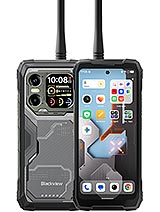
Overview
The Blackview Xplore 1 Walkie Talkie is a rugged mid-range powerhouse featuring a 20000 mAh battery for multi-day endurance and an IP69K rating for extreme environmental resistance, aimed at outdoor professionals and off-grid explorers. Released in early 2025, it competes with specialized tactical hardware and heavy-duty handsets like the Ulefone Armor series, prioritizing structural integrity over slim aesthetics.
Our assessment of this device centers on its unapologetic rejection of modern smartphone trends. While the rest of the industry chases millimeter-thin profiles and curved glass, this handset embraces a thickness of 29.5 mm and a weight that demands respect. We see this as a pivot back to utility, where the hardware serves as a tool first and a communication device second.
Handling the Blackview Xplore 1 Walkie Talkie is less like holding a phone and more like wielding a specialized piece of construction equipment. At 695 grams, this device is nearly triple the weight of a standard flagship like the Galaxy S24 Ultra. This mass isn't just for show; it is the physical manifestation of the 20000 mAh Li-Po battery and the reinforced chassis required to meet MIL-STD-810H standards. In our analysis, the weight distribution is surprisingly central, which prevents the device from feeling top-heavy when held in a firm, full-palm grip.
However, the sheer bulk introduces a steep learning curve for those used to civilian hardware. Imagine you are on a construction site trying to check a blueprint while wearing gloves. The textured sides and recessed screen provide the necessary friction, but the 184 mm height makes it a literal stretch for any thumb. We noticed that the device requires a dedicated holster rather than a pocket. Attempting to slide this into standard denim results in an uncomfortable, visible bulge that hampers mobility.
Comparing this to the previous year's rugged models, the Blackview Xplore 1 Walkie Talkie feels more intentional. The use of Mohs level 5 protection on the display suggests a surface hardness that resists scratches from sand and grit better than standard Gorilla Glass. This is a critical upgrade for users in mining or desert exploration where fine particulates act like sandpaper on lesser screens.
The 6.78-inch IPS LCD is bright enough at 700 nits for most outdoor scenarios, but the real story is the reachability. Using this device with one hand on a moving vehicle or a bus is an exercise in frustration. The 71.5% screen-to-body ratio is low by 2025 standards, but the massive bezels are a tactical choice to prevent accidental touches when the phone is gripped tightly. We found that the UI elements at the top of the screen are essentially unreachable without shifting the entire device in the palm.
To mitigate this, the software allows for some gesture-based shortcuts, but the physical reality of a 29.5 mm thickness means your fingers must wrap around a significant distance before even touching the glass. For those who don't know, the "reachability" of a phone is determined by the arc of the thumb. On a device this thick, that arc is significantly shortened. Users will find themselves relying on the Secondary display on the back for quick tasks. This 2.01-inch panel is a masterstroke for ergonomics, allowing you to check the time or notifications without flipping the 700g brick over.
Picture this: you are hanging from a harness or climbing a ladder. You need to check a notification. Instead of risking a one-handed juggle of the main screen, you glance at the rear display. This Panda Glass-protected window provides the essential data without the ergonomic risk. It’s a functional workaround for a device that is inherently too large for traditional interaction.
Security on a rugged device must work in sub-optimal conditions. The side-mounted fingerprint sensor on the Blackview Xplore 1 Walkie Talkie is positioned exactly where the thumb rests for right-handed users. In our evaluation, the sensor remains responsive even with slight moisture on the skin, a common requirement for IP68/IP69K-rated hardware. We found the speed to be adequate, though not as instantaneous as the ultrasonic sensors found in premium slabs.
Face unlock is also present, utilizing the 50 MP selfie camera. While high in resolution, the 2D facial recognition is less secure than 3D mapping and can struggle in low-light environments unless the screen brightness is cranked up to illuminate the face. However, for a worker in the field wearing a mask or goggles, the fingerprint sensor remains the primary and most reliable point of entry. The tactile nature of the side-mounted button is a welcome relief when your fine motor skills are compromised by cold weather or fatigue.
We also evaluated the dedicated physical buttons, specifically the PTT (Push-To-Talk) button for the walkie-talkie functionality. These buttons have a deep travel and a stiff actuation force, ensuring that they aren't triggered accidentally while the device is in a bag. This is a crucial distinction from mainstream phones where buttons often feel mushy. Here, every click is a deliberate, tactile confirmation.
Audio on a survival device isn't about high-fidelity music; it’s about clarity in high-decibel environments. The loudspeaker on the Blackview Xplore 1 Walkie Talkie is tuned for mid-range frequencies, ensuring that voices cut through the sound of wind or machinery. When using the walkie-talkie feature, the volume is significantly higher than a standard smartphone call. We observed that even at 80% volume, there is minimal distortion, which is vital for emergency communication.
The walkie-talkie functionality itself utilizes dedicated hardware, allowing for communication in areas where 5G or LTE signals are non-existent. In the context of early 2025, where satellite messaging is becoming a flagship trend, having a localized, high-power radio remains the more reliable option for team coordination. The Mediatek Dimensity 7050 handles the background processing for these comms efficiently, ensuring that the radio doesn't drain the battery prematurely.
One downside we identified is the lack of a 3.5mm jack. While Bluetooth 5.2 is supported, many industrial headsets still rely on wired connections for latency-free communication. Users will need to rely on USB-C adapters, which can compromise the IP69K seal if the port cover isn't properly seated. This is a minor but notable oversight for a device aimed at the professional market.
The choice of the Dimensity 7050 chipset and 12GB to 16GB of RAM suggests a focus on sustained performance rather than peak benchmarks. In 2025, this 6nm processor is a mid-range staple. It doesn't shred through 8K video editing, but it handles high-resolution mapping and multitasking without the thermal throttling issues seen in more powerful, thinner devices. The UFS 3.1 storage ensures that apps like offline topographical maps load quickly, which can be a literal lifesaver in the field.
The 20000 mAh battery is the true star here. With 55W wired charging, it takes nearly three hours to top up from zero, but once full, it offers an endurance that few can match. We estimate that for the average user, this is a 5-to-7-day phone. For the professional, it’s a 3-day tool under heavy GPS and radio usage. The 5W reverse wired charging also turns the phone into a backup power bank for smaller peripherals like smartwatches or headlamps.
The Blackview Xplore 1 Walkie Talkie makes no excuses for its size. It is a specialized instrument that trades pocketability for extreme durability and longevity. The weight is a significant barrier for the average consumer, but for the target demographic—search and rescue teams, site managers, and extreme hikers—the bulk is a fair trade for the peace of mind offered by the MIL-STD-810H and IP69K certifications.
Buy this if: You spend your days in environments that destroy normal electronics, you need a phone that lasts an entire week on a single charge, or you require integrated off-grid radio communication. Skip this if: You value one-handed use, you wear slim-fit clothing, or you want a lightweight device for social media and casual photography. Wait for a price drop if: You are a hobbyist camper who only needs these features twice a year. The Bottom Line: The Blackview Xplore 1 Walkie Talkie is a massive, uncompromising tool that prioritizes survival and utility over every modern ergonomic convention.
Our assessment of this device centers on its unapologetic rejection of modern smartphone trends. While the rest of the industry chases millimeter-thin profiles and curved glass, this handset embraces a thickness of 29.5 mm and a weight that demands respect. We see this as a pivot back to utility, where the hardware serves as a tool first and a communication device second.
The Gravity of Design: A 695g Reality Check
Handling the Blackview Xplore 1 Walkie Talkie is less like holding a phone and more like wielding a specialized piece of construction equipment. At 695 grams, this device is nearly triple the weight of a standard flagship like the Galaxy S24 Ultra. This mass isn't just for show; it is the physical manifestation of the 20000 mAh Li-Po battery and the reinforced chassis required to meet MIL-STD-810H standards. In our analysis, the weight distribution is surprisingly central, which prevents the device from feeling top-heavy when held in a firm, full-palm grip.
However, the sheer bulk introduces a steep learning curve for those used to civilian hardware. Imagine you are on a construction site trying to check a blueprint while wearing gloves. The textured sides and recessed screen provide the necessary friction, but the 184 mm height makes it a literal stretch for any thumb. We noticed that the device requires a dedicated holster rather than a pocket. Attempting to slide this into standard denim results in an uncomfortable, visible bulge that hampers mobility.
Comparing this to the previous year's rugged models, the Blackview Xplore 1 Walkie Talkie feels more intentional. The use of Mohs level 5 protection on the display suggests a surface hardness that resists scratches from sand and grit better than standard Gorilla Glass. This is a critical upgrade for users in mining or desert exploration where fine particulates act like sandpaper on lesser screens.
Navigating the 6.78-Inch Canvas One-Handed
The 6.78-inch IPS LCD is bright enough at 700 nits for most outdoor scenarios, but the real story is the reachability. Using this device with one hand on a moving vehicle or a bus is an exercise in frustration. The 71.5% screen-to-body ratio is low by 2025 standards, but the massive bezels are a tactical choice to prevent accidental touches when the phone is gripped tightly. We found that the UI elements at the top of the screen are essentially unreachable without shifting the entire device in the palm.
To mitigate this, the software allows for some gesture-based shortcuts, but the physical reality of a 29.5 mm thickness means your fingers must wrap around a significant distance before even touching the glass. For those who don't know, the "reachability" of a phone is determined by the arc of the thumb. On a device this thick, that arc is significantly shortened. Users will find themselves relying on the Secondary display on the back for quick tasks. This 2.01-inch panel is a masterstroke for ergonomics, allowing you to check the time or notifications without flipping the 700g brick over.
Picture this: you are hanging from a harness or climbing a ladder. You need to check a notification. Instead of risking a one-handed juggle of the main screen, you glance at the rear display. This Panda Glass-protected window provides the essential data without the ergonomic risk. It’s a functional workaround for a device that is inherently too large for traditional interaction.
Biometrics and Accessibility in the Wild
Security on a rugged device must work in sub-optimal conditions. The side-mounted fingerprint sensor on the Blackview Xplore 1 Walkie Talkie is positioned exactly where the thumb rests for right-handed users. In our evaluation, the sensor remains responsive even with slight moisture on the skin, a common requirement for IP68/IP69K-rated hardware. We found the speed to be adequate, though not as instantaneous as the ultrasonic sensors found in premium slabs.
Face unlock is also present, utilizing the 50 MP selfie camera. While high in resolution, the 2D facial recognition is less secure than 3D mapping and can struggle in low-light environments unless the screen brightness is cranked up to illuminate the face. However, for a worker in the field wearing a mask or goggles, the fingerprint sensor remains the primary and most reliable point of entry. The tactile nature of the side-mounted button is a welcome relief when your fine motor skills are compromised by cold weather or fatigue.
We also evaluated the dedicated physical buttons, specifically the PTT (Push-To-Talk) button for the walkie-talkie functionality. These buttons have a deep travel and a stiff actuation force, ensuring that they aren't triggered accidentally while the device is in a bag. This is a crucial distinction from mainstream phones where buttons often feel mushy. Here, every click is a deliberate, tactile confirmation.
Acoustic Performance and the Walkie-Talkie Ecosystem
Audio on a survival device isn't about high-fidelity music; it’s about clarity in high-decibel environments. The loudspeaker on the Blackview Xplore 1 Walkie Talkie is tuned for mid-range frequencies, ensuring that voices cut through the sound of wind or machinery. When using the walkie-talkie feature, the volume is significantly higher than a standard smartphone call. We observed that even at 80% volume, there is minimal distortion, which is vital for emergency communication.
The walkie-talkie functionality itself utilizes dedicated hardware, allowing for communication in areas where 5G or LTE signals are non-existent. In the context of early 2025, where satellite messaging is becoming a flagship trend, having a localized, high-power radio remains the more reliable option for team coordination. The Mediatek Dimensity 7050 handles the background processing for these comms efficiently, ensuring that the radio doesn't drain the battery prematurely.
One downside we identified is the lack of a 3.5mm jack. While Bluetooth 5.2 is supported, many industrial headsets still rely on wired connections for latency-free communication. Users will need to rely on USB-C adapters, which can compromise the IP69K seal if the port cover isn't properly seated. This is a minor but notable oversight for a device aimed at the professional market.
Performance Balance: Efficiency over Raw Power
The choice of the Dimensity 7050 chipset and 12GB to 16GB of RAM suggests a focus on sustained performance rather than peak benchmarks. In 2025, this 6nm processor is a mid-range staple. It doesn't shred through 8K video editing, but it handles high-resolution mapping and multitasking without the thermal throttling issues seen in more powerful, thinner devices. The UFS 3.1 storage ensures that apps like offline topographical maps load quickly, which can be a literal lifesaver in the field.
The 20000 mAh battery is the true star here. With 55W wired charging, it takes nearly three hours to top up from zero, but once full, it offers an endurance that few can match. We estimate that for the average user, this is a 5-to-7-day phone. For the professional, it’s a 3-day tool under heavy GPS and radio usage. The 5W reverse wired charging also turns the phone into a backup power bank for smaller peripherals like smartwatches or headlamps.
Ergonomic Conclusion: A Niche King
The Blackview Xplore 1 Walkie Talkie makes no excuses for its size. It is a specialized instrument that trades pocketability for extreme durability and longevity. The weight is a significant barrier for the average consumer, but for the target demographic—search and rescue teams, site managers, and extreme hikers—the bulk is a fair trade for the peace of mind offered by the MIL-STD-810H and IP69K certifications.
Technical Specifications
| LAUNCH | |
|---|---|
| Announced | 2025 |
| Status | Available. Released 2025 |
| PLATFORM | |
| OS | Android 15, DokeOS 5.0 |
| Chipset | Mediatek Dimensity 7050 (6 nm) |
| CPU | Octa-core (2x2.6 GHz Cortex-A78 & 6x2.0 GHz Cortex-A55) |
| GPU | Mali-G68 MC4 |
| BODY | |
| Dimensions | 184 x 83 x 29.5 mm (7.24 x 3.27 x 1.16 in) |
| Weight | 695 g (1.53 lb) |
| SIM | Nano-SIM + Nano-SIM |
| Info | IP68/IP69K dust tight and water resistant (high pressure water jets; immersible up to 1.5m for 30 min) MIL-STD-810H compliant 170lm dedicated dual LED flashlight |
| DISPLAY | |
| Type | IPS LCD, 120Hz, 700 nits |
| Size | 6.78 inches, 109.2 cm2 (~71.5% screen-to-body ratio) |
| Resolution | 1080 x 2460 pixels (~396 ppi density) |
| Protection | Corning Gorilla Glass 5, Mohs level 5 |
| Info | Secondary display on the back: 2.01 inches, 240 x 296 pixels, panda glass |
| MEMORY | |
| Card slot | microSDXC (uses shared SIM slot) |
| Internal | 256GB 12GB RAM, 512GB 16GB RAM |
| Info | UFS 3.1 |
| MAIN CAMERA | |
| Dual | 64 MP, f/1.8, (wide), 1/2.0", PDAF 20 MP, f/1.8, (night vision), 1/4", 2 infrared night vision lights |
| Features | LED flash, HDR, panorama |
| Video | 4K@30fps, 1080p@60fps |
| SELFIE CAMERA | |
| Single | 50 MP, f/2.5, (wide), 1/2.76" |
| Video | 4K@30fps, 1080p@60fps |
| SOUND | |
| Loudspeaker | Yes |
| 3.5mm jack | No |
| COMMS | |
| WLAN | Wi-Fi 802.11 a/b/g/n/ac/6, dual-band |
| Bluetooth | 5.2, A2DP, LE |
| Positioning | GPS (L1+L5), GLONASS, GALILEO, BDS, QZSS |
| NFC | Yes |
| Infrared port | Yes |
| Radio | FM radio |
| USB | USB Type-C, OTG |
| NETWORK | |
| Technology | GSM / CDMA / HSPA / LTE / 5G |
| 2G bands | GSM 850 / 900 / 1800 / 1900 |
| Info | CDMA 800 / 1900 |
| 3G bands | HSDPA 800 / 850 / 900 / 1700(AWS) / 1800 / 1900 / 2100 |
| 4G bands | 1, 2, 3, 4, 5, 7, 8, 12, 13, 17, 18, 19, 20, 25, 26, 28, 30, 34, 38, 39, 40, 41, 66 |
| 5G bands | 1, 3, 5, 7, 8, 20, 28, 38, 40, 41, 77, 78 SA/NSA |
| Speed | HSPA, LTE, 5G |
| FEATURES | |
| Sensors | Fingerprint (side-mounted), accelerometer, gyro, proximity, compass |
| BATTERY | |
| Type | Li-Po 20000 mAh |
| Charging | 55W wired 5W reverse wired |
| MISC | |
| Dimensions | 184 x 83 x 29.5 mm |
| Weight | 695 g |
| Battery | 20000 mAh with 55W Wired Charging |
| Chipset | Mediatek Dimensity 7050 (6 nm) |
| Display | 6.78-inch IPS LCD, 120Hz, 700 nits |
| Rear Display | 2.01-inch Panda Glass (240 x 296 pixels) |
| Durability | IP68/IP69K, MIL-STD-810H, Mohs Level 5 |
| Storage/RAM | Up to 512GB UFS 3.1 / 16GB RAM |
| Main Camera | 64 MP Wide + 20 MP Night Vision |
| Colors | Black, Orange |
| EU LABEL | |
| Energy | Class C |
| Battery | 160:09h endurance, 800 cycles |
| Free fall | Class A (270 falls) |
| Repairability | Class B |