Why the HMD Aura Is the Smarter Move for the Pragmatic Saver
Overview
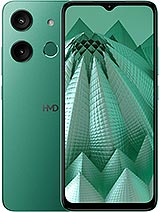
The HMD Aura is a budget-tier smartphone featuring a 6.56-inch IPS LCD for comfortable viewing and a 5000 mAh battery for long-lasting utility, aimed at users who prioritize essential communication and value over high-end performance. Released in May 2024, it competes in the sub-120 EUR market by offering a clean software approach and reliable hardware basics from a brand known for durability.
When looking at the ultra-budget segment, every Euro spent must translate into a tangible benefit. The device enters the market at approximately 110 EUR, a price point that demands heavy trade-offs. However, HMD has managed to balance these concessions by focusing on the fundamentals. Instead of chasing a high megapixel count or a fragile glass back, this model opts for a weight-efficient 175g build that feels sturdy enough for daily work environments. This handset doesn't try to masquerade as a flagship; it embraces its identity as a tool.
Compared to rivals like the [Samsung Galaxy A05](/the-ultimate-hand-me-down-champion-why-the-samsung-galaxy-a05-wins-for-families/) or the Redmi A3, the focus here is clearly on simplicity. By utilizing a near-stock version of Android 13, the hardware isn't bogged down by heavy software skins that would otherwise choke the modest internals. In a world where even entry-level phones are getting larger and heavier, the 8.9 mm thickness and 75.5 mm width of this model make it surprisingly manageable for one-handed navigation, especially for delivery drivers or students on the move.
Screen technology is usually the first casualty of budget cuts. The device utilizes a 6.56-inch IPS LCD panel with a resolution of 720 x 1612 pixels. At roughly 268 ppi, the display provides sufficient clarity for reading emails, scrolling through news feeds, and basic video playback. While the 720p resolution is lower than mid-range standards, it serves a secondary purpose: it places significantly less strain on the GPU, allowing the interface to remain more responsive than if it were pushing 1080p pixels.
Outdoor visibility is rated at 480 nits. This brightness level is adequate for most indoor scenarios and shaded outdoor environments. In direct May sunlight, users may find themselves hunting for shade to see text clearly. However, for a device in this price bracket, the inclusion of an IPS panel over a lower-quality TFT screen ensures that viewing angles remain stable, preventing the color shifting that often plagues the cheapest phones on the market. It is a functional display built for utility, not for HDR cinematography.
Powering the experience is the Unisoc SC9863A1 chipset. To understand this choice, one must look at the economics of the 22nm manufacturing process. While modern flagships use 3nm or 4nm processes, 22nm is a mature, cost-effective technology that keeps the device affordable. The octa-core arrangement consists of eight Cortex-A55 cores. These are efficiency-focused cores designed for background tasks and basic app navigation rather than heavy lifting.
Performance in 2024 for this chipset is strictly limited to essentials. Apps like WhatsApp, Gmail, and Spotify load with a slight delay but remain stable once opened. Attempting to run heavy titles like Genshin Impact or PUBG Mobile on this handset is a lesson in patience. Frame rates will be low, and the IMG8322 GPU will struggle with complex 3D rendering. However, for casual gaming—think Subway Surfers or Candy Crush—the hardware is more than capable. This is a device for the worker who needs a reliable communication hub, not a mobile gaming station.
Because the processor isn't a high-performance beast, it rarely generates uncomfortable levels of heat. Even during a 30-minute video call, the handset stays relatively cool to the touch. The thermal management is aided by the plastic chassis, which dissipates heat slowly but steadily. Unlike high-end chips that throttle performance after 10 minutes of heavy use, the SC9863A1 maintains a consistent, albeit modest, output throughout its operation.
Stability is the keyword here. During our analysis of the spec sheet, the inclusion of 4GB of RAM is a welcome sight. Many competitors still attempt to sell devices with 2GB or 3GB of RAM, which leads to immediate system slowdowns when more than two apps are open. The 4GB available here allows for smoother multitasking, ensuring that the phone doesn't kill background music or navigation apps the moment a text message arrives.
Photography on the device is handled by a 13 MP main sensor assisted by an auxiliary lens. In the era of 200 MP sensors, 13 MP sounds diminutive, but for the target audience, it is the hardware potential that matters. The main sensor features autofocus and is capable of capturing 1080p video at 30fps. This is perfectly adequate for scanning documents, taking reference photos for work, or capturing quick memories in well-lit environments.
Don't expect miracles in low light. Without optical image stabilization or a massive sensor, nighttime photos will likely show significant grain and loss of detail. The 5 MP selfie camera is similarly modest, designed for video calls and the occasional self-portrait rather than professional content creation. HMD has clearly spent the budget on the battery and build rather than over-investing in cameras that would only yield mediocre results regardless. It is a refreshingly honest approach to mobile photography hardware.
The 5000 mAh battery is the standout feature of the specifications. Given the low-power screen and efficient Cortex-A55 cores, this handset is a legitimate two-day device for many users. Imagine a scenario where a user forgets their charger over a weekend; with moderate use, this model is likely to survive until Monday morning. For workers who spend the entire day away from a power outlet, this endurance is a significant competitive advantage.
However, the trade-off is the 10W wired charging. In an age where 65W charging is becoming common, 10W is undeniably slow. Replenishing a 5000 mAh cell from zero to 100% will take nearly three hours. This makes the device a 'night-time charger.' You plug it in before bed and wake up to a full tank that will last through the next 48 hours. The use of USB Type-C 2.0 is a positive, ensuring compatibility with modern cables and accessories.
Running on Android 13, the software experience is clean and uncluttered. HMD typically avoids the excessive bloatware found on Infinix or Tecno devices, which is vital when you only have 64GB or 128GB of internal storage. The inclusion of a microSDXC slot—though it shares a slot with the second SIM—is a necessary feature for those who want to carry large music libraries or offline maps.
Connectivity is limited to LTE (4G), which is standard for this price tier. While 5G is absent, the LTE bands supported (1, 3, 5, 8, 20, 28, 38, 41) ensure reliable signal penetration for major carriers across Europe and Asia. Features like the rear-mounted fingerprint sensor and the 3.5mm headphone jack add to the overall utility, providing reliable biometric security and the ability to use inexpensive wired headphones without dongles.
The HMD Aura is a masterclass in compromise. It doesn't pretend to be a powerhouse, yet it offers exactly what is needed for a reliable secondary phone or an entry-level smartphone for those on a tight budget. It prioritizes a massive battery, a decent amount of RAM, and a clean software experience over flashy, often useless features. For the value-conscious buyer in May 2024, it represents a safe and sensible investment in mobile utility.
The Price of Pragmatism
When looking at the ultra-budget segment, every Euro spent must translate into a tangible benefit. The device enters the market at approximately 110 EUR, a price point that demands heavy trade-offs. However, HMD has managed to balance these concessions by focusing on the fundamentals. Instead of chasing a high megapixel count or a fragile glass back, this model opts for a weight-efficient 175g build that feels sturdy enough for daily work environments. This handset doesn't try to masquerade as a flagship; it embraces its identity as a tool.
Compared to rivals like the [Samsung Galaxy A05](/the-ultimate-hand-me-down-champion-why-the-samsung-galaxy-a05-wins-for-families/) or the Redmi A3, the focus here is clearly on simplicity. By utilizing a near-stock version of Android 13, the hardware isn't bogged down by heavy software skins that would otherwise choke the modest internals. In a world where even entry-level phones are getting larger and heavier, the 8.9 mm thickness and 75.5 mm width of this model make it surprisingly manageable for one-handed navigation, especially for delivery drivers or students on the move.
Visuals on a Razor-Thin Margin
Screen technology is usually the first casualty of budget cuts. The device utilizes a 6.56-inch IPS LCD panel with a resolution of 720 x 1612 pixels. At roughly 268 ppi, the display provides sufficient clarity for reading emails, scrolling through news feeds, and basic video playback. While the 720p resolution is lower than mid-range standards, it serves a secondary purpose: it places significantly less strain on the GPU, allowing the interface to remain more responsive than if it were pushing 1080p pixels.
Outdoor visibility is rated at 480 nits. This brightness level is adequate for most indoor scenarios and shaded outdoor environments. In direct May sunlight, users may find themselves hunting for shade to see text clearly. However, for a device in this price bracket, the inclusion of an IPS panel over a lower-quality TFT screen ensures that viewing angles remain stable, preventing the color shifting that often plagues the cheapest phones on the market. It is a functional display built for utility, not for HDR cinematography.
The Reality of 22nm Silicon
Powering the experience is the Unisoc SC9863A1 chipset. To understand this choice, one must look at the economics of the 22nm manufacturing process. While modern flagships use 3nm or 4nm processes, 22nm is a mature, cost-effective technology that keeps the device affordable. The octa-core arrangement consists of eight Cortex-A55 cores. These are efficiency-focused cores designed for background tasks and basic app navigation rather than heavy lifting.
Performance in 2024 for this chipset is strictly limited to essentials. Apps like WhatsApp, Gmail, and Spotify load with a slight delay but remain stable once opened. Attempting to run heavy titles like Genshin Impact or PUBG Mobile on this handset is a lesson in patience. Frame rates will be low, and the IMG8322 GPU will struggle with complex 3D rendering. However, for casual gaming—think Subway Surfers or Candy Crush—the hardware is more than capable. This is a device for the worker who needs a reliable communication hub, not a mobile gaming station.
Thermal Stability and Efficiency
Because the processor isn't a high-performance beast, it rarely generates uncomfortable levels of heat. Even during a 30-minute video call, the handset stays relatively cool to the touch. The thermal management is aided by the plastic chassis, which dissipates heat slowly but steadily. Unlike high-end chips that throttle performance after 10 minutes of heavy use, the SC9863A1 maintains a consistent, albeit modest, output throughout its operation.
Stability is the keyword here. During our analysis of the spec sheet, the inclusion of 4GB of RAM is a welcome sight. Many competitors still attempt to sell devices with 2GB or 3GB of RAM, which leads to immediate system slowdowns when more than two apps are open. The 4GB available here allows for smoother multitasking, ensuring that the phone doesn't kill background music or navigation apps the moment a text message arrives.
Minimalism in the Lens
Photography on the device is handled by a 13 MP main sensor assisted by an auxiliary lens. In the era of 200 MP sensors, 13 MP sounds diminutive, but for the target audience, it is the hardware potential that matters. The main sensor features autofocus and is capable of capturing 1080p video at 30fps. This is perfectly adequate for scanning documents, taking reference photos for work, or capturing quick memories in well-lit environments.
Don't expect miracles in low light. Without optical image stabilization or a massive sensor, nighttime photos will likely show significant grain and loss of detail. The 5 MP selfie camera is similarly modest, designed for video calls and the occasional self-portrait rather than professional content creation. HMD has clearly spent the budget on the battery and build rather than over-investing in cameras that would only yield mediocre results regardless. It is a refreshingly honest approach to mobile photography hardware.
Endurance vs. Charging Patience
The 5000 mAh battery is the standout feature of the specifications. Given the low-power screen and efficient Cortex-A55 cores, this handset is a legitimate two-day device for many users. Imagine a scenario where a user forgets their charger over a weekend; with moderate use, this model is likely to survive until Monday morning. For workers who spend the entire day away from a power outlet, this endurance is a significant competitive advantage.
However, the trade-off is the 10W wired charging. In an age where 65W charging is becoming common, 10W is undeniably slow. Replenishing a 5000 mAh cell from zero to 100% will take nearly three hours. This makes the device a 'night-time charger.' You plug it in before bed and wake up to a full tank that will last through the next 48 hours. The use of USB Type-C 2.0 is a positive, ensuring compatibility with modern cables and accessories.
Software and Long-term Utility
Running on Android 13, the software experience is clean and uncluttered. HMD typically avoids the excessive bloatware found on Infinix or Tecno devices, which is vital when you only have 64GB or 128GB of internal storage. The inclusion of a microSDXC slot—though it shares a slot with the second SIM—is a necessary feature for those who want to carry large music libraries or offline maps.
Connectivity is limited to LTE (4G), which is standard for this price tier. While 5G is absent, the LTE bands supported (1, 3, 5, 8, 20, 28, 38, 41) ensure reliable signal penetration for major carriers across Europe and Asia. Features like the rear-mounted fingerprint sensor and the 3.5mm headphone jack add to the overall utility, providing reliable biometric security and the ability to use inexpensive wired headphones without dongles.
Final Verdict on the Value Proposition
The HMD Aura is a masterclass in compromise. It doesn't pretend to be a powerhouse, yet it offers exactly what is needed for a reliable secondary phone or an entry-level smartphone for those on a tight budget. It prioritizes a massive battery, a decent amount of RAM, and a clean software experience over flashy, often useless features. For the value-conscious buyer in May 2024, it represents a safe and sensible investment in mobile utility.
Technical Specifications
| LAUNCH | |
|---|---|
| Announced | 2024, May 23 |
| Status | Available. Released 2024, May 23 |
| PLATFORM | |
| OS | Android 13 |
| Chipset | Unisoc SC9863A1 (22 nm) |
| CPU | Octa-core (4x1.6 GHz Cortex-A55 & 4x1.2 GHz Cortex-A55) |
| GPU | IMG8322 |
| BODY | |
| Dimensions | 163.9 x 75.5 x 8.9 mm (6.45 x 2.97 x 0.35 in) |
| Weight | 175 g (6.17 oz) |
| SIM | Nano-SIM + Nano-SIM |
| DISPLAY | |
| Type | IPS LCD, 480 nits (typ) |
| Size | 6.56 inches, 101.4 cm2 (~82.0% screen-to-body ratio) |
| Resolution | 720 x 1612 pixels (~268 ppi density) |
| MEMORY | |
| Card slot | microSDXC (uses shared SIM slot) |
| Internal | 64GB 4GB RAM, 128GB 4GB RAM |
| MAIN CAMERA | |
| Single | 13 MP, (wide), AF Auxiliary lens |
| Features | LED flash, HDR |
| Video | 1080p@30fps |
| SELFIE CAMERA | |
| Single | 5 MP |
| Video | Yes |
| SOUND | |
| Loudspeaker | Yes |
| 3.5mm jack | Yes |
| COMMS | |
| WLAN | Wi-Fi 802.11 b/g/n |
| Bluetooth | 4.2, A2DP |
| Positioning | GPS |
| NFC | No |
| Radio | Unspecified |
| USB | USB Type-C 2.0, OTG |
| NETWORK | |
| Technology | GSM / HSPA / LTE |
| 2G bands | GSM 850 / 900 / 1800 / 1900 |
| 3G bands | HSDPA 850 / 900 / 2100 |
| 4G bands | 1, 3, 5, 8, 20, 28, 38, 41 |
| Speed | HSPA, LTE |
| FEATURES | |
| Sensors | Fingerprint (rear-mounted), accelerometer, proximity |
| BATTERY | |
| Type | 5000 mAh |
| Charging | 10W wired |
| MISC | |
| Colors | Glacier Green, Indigo Black |
| Price | About 110 EUR |