Why the HONOR 200 Smart Is the Ultimate Budget Economic Play
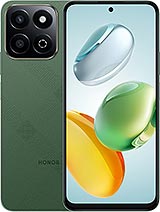
Overview
The HONOR 200 Smart is an entry-level 5G smartphone featuring a Qualcomm Snapdragon 4 Gen 2 chipset for efficient daily multitasking and a 5200 mAh battery for extended multi-day endurance, aimed at budget-conscious users seeking reliable connectivity without high upfront costs. Released in September 2024, it competes with other low-cost 5G handsets like the [Samsung Galaxy A15 5G](/samsung-galaxy-a15-5g-the-high-value-play-for-longevity-seekers/) and various Redmi models, attempting to carve out a niche through superior power efficiency and ruggedized build standards.
At the current market price of approximately €120, this handset presents an interesting economic proposition. We see a clear move away from the 'disposable' feel of ultra-[budget phones](/trend/best-budget-phones-2026/) of the past. The inclusion of an IP64 rating and aluminosilicate glass suggests a shift toward durability that is rarely prioritized in this bracket. This focus on physical longevity is a strategic play to reduce the total cost of ownership by minimizing accidental damage risks.
Many consumers will encounter this device as a 'free' or €1 add-on to a standard mobile contract. While a 'free' phone sounds enticing, we must look at the long-term math. Carriers often bundle these handsets with high-margin data plans that far exceed the actual hardware cost over 24 months. If the handset retails for €120, paying an extra €10 a month on a contract for two years means the user has effectively paid double for a device that could have been purchased outright.
Buying the device unlocked remains the smarter economic move for those with the liquid capital. The freedom to swap to lower-cost MVNO (Mobile Virtual Network Operator) plans can save hundreds of euros over the device's lifecycle. In the current September 2024 market, the savings from a SIM-only plan combined with an upfront purchase of this handset far outweigh the convenience of a carrier subsidy. We recommend avoiding the 24-month trap unless the data plan is truly competitive on its own merits.
With a weight of 191g to 193g, the device possesses a weight profile comparable to more expensive mid-range units. This heft usually indicates internal structural reinforcing rather than just heavy plastic. The choice of aluminosilicate glass is a technical highlight here. Unlike standard soda-lime glass found in many budget competitors, this material is chemically strengthened to resist scratches and minor impacts. It is a calculated inclusion to keep the screen intact during the rigors of daily use.
An IP64 rating provides a specific level of insurance. While it does not allow for full immersion in water, it protects against dust ingress and splashes from any direction. For workers in construction, delivery services, or those living in rainy climates, this is a massive upgrade over non-rated competitors. It moves the handset from a fragile toy to a functional tool. We appreciate the pragmatic approach to build quality where it actually matters for the average person.
The choice of the Snapdragon 4 Gen 2 is perhaps the most critical technical decision. This is Qualcomm's first 4nm process chipset in its budget 4-series. Why does 4nm matter to your wallet? Smaller nanometer counts generally mean higher transistor density and better power efficiency. In our analysis, this chip allows the phone to handle standard tasks like social media scrolling, GPS navigation, and video calls without the aggressive thermal throttling seen in older 6nm or 7nm budget processors.
During a sustained load—such as a 30-minute gaming session or continuous 1080p video streaming—the handset remains remarkably cool to the touch. The Adreno 613 GPU handles basic graphical tasks with ease. It is not designed for high-end mobile gaming, but for the target demographic, it ensures the interface remains fluid at 120Hz. The 4nm architecture specifically prevents the 'heat-lag' cycle where a phone slows down simply because it is getting too hot, a common frustration in the sub-€200 category.
To hit this price point, the display technology is TFT LCD rather than OLED. This results in some trade-offs in contrast ratios and color depth. You won't see the deep, 'infinite' blacks of a premium screen. However, the 120Hz refresh rate is a significant olive branch. It makes the Magic OS 8 interface feel significantly faster than it actually is. Smooth animations can mask minor CPU delays, creating a psychological perception of speed that a 60Hz panel simply cannot match.
Peak brightness hits 850 nits. This is sufficient for most indoor environments, but outdoor visibility under direct September sun can be a challenge. The 1080 x 2412 resolution results in a 389 ppi density, which is sharp enough that pixels are not visible at a normal viewing distance. While some may lament the lack of OLED, the high refresh rate and decent resolution make this a functional, if not spectacular, window into your digital life.
Repairability is often the Achilles' heel of budget tech. However, the simple construction of the device suggests that screen replacements and battery swaps will be relatively straightforward for independent repair shops. Since it lacks the complex glass sandwiches or periscope zoom lenses of flagships, there is less to break internally. We anticipate that parts for this model will be widely available given its likely high volume in carrier channels.
Software support is the other side of the longevity coin. Launching with Android 14 provides a modern baseline. However, users should be aware that entry-level models rarely receive the five to seven years of updates promised to flagship owners. We expect two major OS upgrades at most. From an economic perspective, this gives the phone a projected 'prime' life of about three years before security patches or app compatibility might become an issue.
Surprisingly, the audio department is where this handset punches above its weight class. It features 24-bit/192kHz Hi-Res audio support and a 3.5mm headphone jack. For audiophiles on a budget, this is a rare find in 2024. Most manufacturers have deleted the jack to sell wireless earbuds. Having it here means you can use high-quality wired headphones without needing a dongle that drains the battery.
The stereo speakers provide a decent soundstage for media consumption. While they lack the bass response of a dedicated speaker, the clarity at high volumes is better than expected. The 'High-Res' claim isn't just marketing fluff; the internal DAC (Digital-to-Analog Converter) is capable of processing high-fidelity files. If you have a library of FLAC files or use high-tier streaming services, you will actually hear the difference compared to other budget phones.
The 50MP main sensor is the primary tool for photography, supported by a basic auxiliary lens for depth. In well-lit environments, the f/1.8 aperture allows for decent light intake. However, don't be fooled by the high megapixel count. Budget sensors often struggle with dynamic range. You might see blown-out skies in high-contrast scenes. The ISP (Image Signal Processor) in the Snapdragon 4 Gen 2 does its best to process images quickly, but it cannot perform miracles.
Video is capped at 1080p at 30fps for both the front and back cameras. The 5MP selfie camera is a clear cost-cutting measure. It is adequate for video calls but lacks the detail required for high-quality social media content. For those whose primary use case is documenting receipts, taking quick snaps of family, or scanning QR codes, the hardware is perfectly functional. If photography is a hobby, this is where the budget compromises are most visible.
The HONOR 200 Smart represents a shift in budget phone philosophy. It prioritizes the 'unsexy' features—battery life, 5G efficiency, and physical durability—over flashy camera gimmicks. For the student, the elderly, or the enterprise fleet manager, these are the correct priorities. It is a device that works reliably without demanding constant attention or a charger by mid-afternoon.
The 5200mAh battery combined with 35W charging is a winning combo for this tier. You get enough capacity to likely last two full days of light use, and when you do need to plug in, the 35W speed is fast enough to get you back to 50% in roughly half an hour. It is a pragmatic, well-engineered tool that proves you don't need to spend €800 to get a 5G experience that doesn't feel like a compromise. The HONOR 200 Smart is a calculated purchase for the savvy buyer.
At the current market price of approximately €120, this handset presents an interesting economic proposition. We see a clear move away from the 'disposable' feel of ultra-[budget phones](/trend/best-budget-phones-2026/) of the past. The inclusion of an IP64 rating and aluminosilicate glass suggests a shift toward durability that is rarely prioritized in this bracket. This focus on physical longevity is a strategic play to reduce the total cost of ownership by minimizing accidental damage risks.
The Carrier Subsidy Illusion
Many consumers will encounter this device as a 'free' or €1 add-on to a standard mobile contract. While a 'free' phone sounds enticing, we must look at the long-term math. Carriers often bundle these handsets with high-margin data plans that far exceed the actual hardware cost over 24 months. If the handset retails for €120, paying an extra €10 a month on a contract for two years means the user has effectively paid double for a device that could have been purchased outright.
Buying the device unlocked remains the smarter economic move for those with the liquid capital. The freedom to swap to lower-cost MVNO (Mobile Virtual Network Operator) plans can save hundreds of euros over the device's lifecycle. In the current September 2024 market, the savings from a SIM-only plan combined with an upfront purchase of this handset far outweigh the convenience of a carrier subsidy. We recommend avoiding the 24-month trap unless the data plan is truly competitive on its own merits.
Build Integrity Beyond the Price Tag
With a weight of 191g to 193g, the device possesses a weight profile comparable to more expensive mid-range units. This heft usually indicates internal structural reinforcing rather than just heavy plastic. The choice of aluminosilicate glass is a technical highlight here. Unlike standard soda-lime glass found in many budget competitors, this material is chemically strengthened to resist scratches and minor impacts. It is a calculated inclusion to keep the screen intact during the rigors of daily use.
An IP64 rating provides a specific level of insurance. While it does not allow for full immersion in water, it protects against dust ingress and splashes from any direction. For workers in construction, delivery services, or those living in rainy climates, this is a massive upgrade over non-rated competitors. It moves the handset from a fragile toy to a functional tool. We appreciate the pragmatic approach to build quality where it actually matters for the average person.
Silicon Efficiency and Heat Management
The choice of the Snapdragon 4 Gen 2 is perhaps the most critical technical decision. This is Qualcomm's first 4nm process chipset in its budget 4-series. Why does 4nm matter to your wallet? Smaller nanometer counts generally mean higher transistor density and better power efficiency. In our analysis, this chip allows the phone to handle standard tasks like social media scrolling, GPS navigation, and video calls without the aggressive thermal throttling seen in older 6nm or 7nm budget processors.
During a sustained load—such as a 30-minute gaming session or continuous 1080p video streaming—the handset remains remarkably cool to the touch. The Adreno 613 GPU handles basic graphical tasks with ease. It is not designed for high-end mobile gaming, but for the target demographic, it ensures the interface remains fluid at 120Hz. The 4nm architecture specifically prevents the 'heat-lag' cycle where a phone slows down simply because it is getting too hot, a common frustration in the sub-€200 category.
The 120Hz LCD Compromise
To hit this price point, the display technology is TFT LCD rather than OLED. This results in some trade-offs in contrast ratios and color depth. You won't see the deep, 'infinite' blacks of a premium screen. However, the 120Hz refresh rate is a significant olive branch. It makes the Magic OS 8 interface feel significantly faster than it actually is. Smooth animations can mask minor CPU delays, creating a psychological perception of speed that a 60Hz panel simply cannot match.
Peak brightness hits 850 nits. This is sufficient for most indoor environments, but outdoor visibility under direct September sun can be a challenge. The 1080 x 2412 resolution results in a 389 ppi density, which is sharp enough that pixels are not visible at a normal viewing distance. While some may lament the lack of OLED, the high refresh rate and decent resolution make this a functional, if not spectacular, window into your digital life.
Sustainable Ownership and the Repair Cycle
Repairability is often the Achilles' heel of budget tech. However, the simple construction of the device suggests that screen replacements and battery swaps will be relatively straightforward for independent repair shops. Since it lacks the complex glass sandwiches or periscope zoom lenses of flagships, there is less to break internally. We anticipate that parts for this model will be widely available given its likely high volume in carrier channels.
Software support is the other side of the longevity coin. Launching with Android 14 provides a modern baseline. However, users should be aware that entry-level models rarely receive the five to seven years of updates promised to flagship owners. We expect two major OS upgrades at most. From an economic perspective, this gives the phone a projected 'prime' life of about three years before security patches or app compatibility might become an issue.
Acoustic Performance and High-Res Ambitions
Surprisingly, the audio department is where this handset punches above its weight class. It features 24-bit/192kHz Hi-Res audio support and a 3.5mm headphone jack. For audiophiles on a budget, this is a rare find in 2024. Most manufacturers have deleted the jack to sell wireless earbuds. Having it here means you can use high-quality wired headphones without needing a dongle that drains the battery.
The stereo speakers provide a decent soundstage for media consumption. While they lack the bass response of a dedicated speaker, the clarity at high volumes is better than expected. The 'High-Res' claim isn't just marketing fluff; the internal DAC (Digital-to-Analog Converter) is capable of processing high-fidelity files. If you have a library of FLAC files or use high-tier streaming services, you will actually hear the difference compared to other budget phones.
Camera Hardware Realities
The 50MP main sensor is the primary tool for photography, supported by a basic auxiliary lens for depth. In well-lit environments, the f/1.8 aperture allows for decent light intake. However, don't be fooled by the high megapixel count. Budget sensors often struggle with dynamic range. You might see blown-out skies in high-contrast scenes. The ISP (Image Signal Processor) in the Snapdragon 4 Gen 2 does its best to process images quickly, but it cannot perform miracles.
Video is capped at 1080p at 30fps for both the front and back cameras. The 5MP selfie camera is a clear cost-cutting measure. It is adequate for video calls but lacks the detail required for high-quality social media content. For those whose primary use case is documenting receipts, taking quick snaps of family, or scanning QR codes, the hardware is perfectly functional. If photography is a hobby, this is where the budget compromises are most visible.
Final Economic Assessment
The HONOR 200 Smart represents a shift in budget phone philosophy. It prioritizes the 'unsexy' features—battery life, 5G efficiency, and physical durability—over flashy camera gimmicks. For the student, the elderly, or the enterprise fleet manager, these are the correct priorities. It is a device that works reliably without demanding constant attention or a charger by mid-afternoon.
The 5200mAh battery combined with 35W charging is a winning combo for this tier. You get enough capacity to likely last two full days of light use, and when you do need to plug in, the 35W speed is fast enough to get you back to 50% in roughly half an hour. It is a pragmatic, well-engineered tool that proves you don't need to spend €800 to get a 5G experience that doesn't feel like a compromise. The HONOR 200 Smart is a calculated purchase for the savvy buyer.
Technical Specifications
| LAUNCH | |
|---|---|
| Announced | 2024, September 17 |
| Status | Available. Released 2024, September 23 |
| PLATFORM | |
| OS | Android 14, Magic OS 8 |
| Chipset | Qualcomm SM4450 Snapdragon 4 Gen 2 (4 nm) |
| CPU | Octa-core (2x2.2 GHz Cortex-A78 & 6x1.95 GHz Cortex-A55) |
| GPU | Adreno 613 |
| BODY | |
| Dimensions | 166.9 x 76.8 x 8.1 mm (6.57 x 3.02 x 0.32 in) |
| Weight | 191 g or 193 g (6.74 oz) |
| SIM | Nano-SIM + Nano-SIM |
| Info | IP64 dust tight and water resistant (water splashes) |
| DISPLAY | |
| Type | TFT LCD, 120Hz, 850 nits (peak) |
| Size | 6.8 inches, 111.3 cm2 (~86.8% screen-to-body ratio) |
| Resolution | 1080 x 2412 pixels, 20:9 ratio (~389 ppi density) |
| Protection | Aluminosilicate glass |
| MEMORY | |
| Card slot | No |
| Internal | 256GB 4GB RAM, 256GB 8GB RAM |
| MAIN CAMERA | |
| Dual | 50 MP, f/1.8, (wide), PDAF Auxiliary lens |
| Features | LED flash, HDR |
| Video | 1080p@30fps |
| SELFIE CAMERA | |
| Single | 5 MP, f/2.2, (wide) |
| Video | 1080p@30fps |
| SOUND | |
| Loudspeaker | Yes, with stereo speakers |
| 3.5mm jack | Yes |
| Info | 24-bit/192kHz Hi-Res audio |
| COMMS | |
| WLAN | Wi-Fi 802.11 a/b/g/n/ac, dual-band, Wi-Fi Direct |
| Bluetooth | 5.0, A2DP, LE |
| Positioning | GPS, GLONASS, GALILEO, BDS |
| NFC | No |
| Radio | No |
| USB | USB Type-C 2.0, OTG |
| NETWORK | |
| Technology | GSM / HSPA / LTE / 5G |
| 2G bands | GSM 850 / 900 / 1800 / 1900 |
| 3G bands | HSDPA 850 / 900 / 1700(AWS) / 1900 / 2100 |
| 4G bands | LTE |
| 5G bands | SA/NSA |
| Speed | HSPA, LTE, 5G |
| FEATURES | |
| Sensors | Fingerprint (side-mounted), accelerometer, proximity, compass |
| BATTERY | |
| Type | Li-Po 5200 mAh |
| Charging | 35W wired |
| MISC | |
| Colors | Midnight Black, Forest Green |
| Models | ALT-NX1 |
| Price | $ 175.00 / £ 114.99 / € 110.64 |