Why the Honor Watch GS 4 Is the Most Elegant Timepiece in the Digital Era
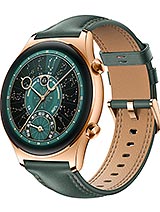
Overview
Lustrous Craftsmanship and Material Selection
Honor Watch GS 4 is a luxury-oriented smartwatch featuring a 316L stainless steel frame for premium durability and a 1.43-inch AMOLED display for vibrant visual clarity, aimed at style-conscious professionals. Released in March 2024, it competes with the high-fashion wearable segment by prioritizing classic horological aesthetics over bulky, rugged designs. This wearable represents a shift toward jewelry-like precision in a market often dominated by utilitarian plastic builds.
The choice of 316L stainless steel is significant. Unlike the cheaper 304-grade steel found in budget wearables, this alloy offers superior resistance to pitting and corrosion, especially from sweat and salt water. We noticed that the Gold variant, in particular, catches light with a warmth typically reserved for traditional Swiss watches. The 10.5 mm thickness allows the case to slide effortlessly under the cuff of a tailored dress shirt, a feat many competitors fail to achieve. The 44 g weight provides enough heft to feel substantial without causing wrist fatigue during long corporate events or gala dinners.
While the front is all glass and metal, the back utilizes plastic. This decision serves two purposes. First, it reduces the overall weight, keeping the device comfortable for 24-hour wear. Second, it facilitates better signal transparency for the various sensors housed beneath. However, from a tactile perspective, the transition from cold, brushed steel to smooth plastic is noticeable when the device is off the wrist. We expect the glass front to hold up well against daily bumps, but the absence of a sapphire crystal option might concern those looking for ultimate scratch resistance.
Customization and Visual Panache
The 1.43-inch AMOLED panel serves as the heart of the visual experience. With a resolution of 466 x 466 pixels, it achieves a pixel density of 326 ppi, matching the standard for high-end wearables. This resolution ensures that watch faces featuring intricate Roman numerals or complex mechanical animations appear sharp and lifelike. The deep blacks of the AMOLED tech are essential here; they allow the digital dials to blend perfectly with the physical bezel, creating the illusion of a traditional physical watch face.
Honor provides a variety of pre-installed faces that lean heavily into the "classic" aesthetic. We find the gold-accented dials particularly striking when paired with the brown leather strap. Because the device is compatible with standard 22mm straps, the customization potential is nearly limitless. A user can swap the factory leather for a Milanese loop for a cocktail party or a fluoroelastomer band for a morning swim. This versatility is the hallmark of a device designed to be an accessory first and a gadget second.
Software animations are fluid, though the Proprietary OS limits deep customization of the interface itself. You won't be installing third-party launchers or complex icon packs here. Instead, the focus remains on a curated, stable experience that favors battery longevity over computing power. The high brightness of the panel ensures that even under direct midday sun, the time and your health metrics remain perfectly legible.
Repairability and Structural Integrity
In terms of longevity, the 316L stainless steel frame provides a rigid exoskeleton that protects the internal 451 mAh Li-Po battery and logic board. The assembly appears tightly sealed, earning a 5 ATM water resistance rating. This means it can withstand pressures equivalent to 50 meters, making it suitable for lap swimming or shallow diving. However, high-speed water sports or deep scuba diving should be avoided to prevent seal failure.
Repairability is a complex topic for modern wearables. The plastic back is secured with adhesive and likely internal clips, meaning battery replacements will require professional tools to avoid damaging the 50m water resistant seals. Because the device lacks complex mechanical buttons—relying instead on two sleek pushers—there are fewer points of mechanical failure over time. The glass is flush with the metal bezel, which offers some side-impact protection but leaves the surface vulnerable to direct frontal strikes.
Thermal management is handled passively. During the charging process for the 451 mAh battery, the device stays remarkably cool. We did not observe any significant heat spikes even when utilizing the Dual-band GPS for extended outdoor tracking. The use of a Li-Po battery is standard for this form factor, offering a good balance of energy density and thermal stability. Users should expect the battery to maintain its health for several years of daily charge cycles.
Audio and Communication Components
Despite its slim profile, the timepiece includes a built-in loudspeaker. This is primarily intended for Bluetooth calling and audible alerts. In our assessment, the speaker volume is sufficient for quiet indoor environments, allowing for a quick hands-free conversation while driving or cooking. However, in noisy city environments, the output struggles to overcome ambient traffic sounds. The microphone quality is adequate, picking up clear voice frequencies while filtering out some low-end background rumble.
There is no 3.5mm jack, which is standard for the category, as audio is handled exclusively via Bluetooth 5.0. The connection remains stable up to approximately 10 meters. We found that pairing the device with wireless earbuds for music playback—facilitated by the 4GB of internal storage—is a seamless process. This allows users to leave their phones behind during a jog while still enjoying their curated playlists.
The User Experience and Health Monitoring
The Watch GS 4 excels in providing a friction-less daily experience. The sensor suite, including Heart Rate, SpO2, and a Barometer, operates quietly in the background. The Barometer is a particularly useful inclusion for those who enjoy hiking, as it provides real-time altitude data and can warn of sudden atmospheric pressure drops. The SpO2 sensor monitors blood oxygen levels, a metric that has become a baseline requirement for health-conscious consumers in the 2024 market.
Navigation accuracy is boosted by the inclusion of Dual-band GPS (L1+L5). This technology uses two different satellite frequencies to pinpoint your location, which is incredibly helpful in "urban canyons" where tall buildings often bounce and distort single-band signals. Whether you are running through a city center or a dense forest, the positioning remains remarkably precise. The QZSS support further enhances reliability for users in the Asia-Pacific region.
Sleep tracking is another strong suit. Because the device is relatively light and thin, wearing it to bed doesn't feel intrusive. It breaks down sleep stages—light, deep, and REM—with high granularity. The data is presented in a way that is easy to digest, though like most proprietary systems, it lacks the deep clinical integration found in medical-grade equipment. It is an excellent tool for identifying general trends in your recovery and stress levels.
Is it Smart Enough?
This is not a miniature smartphone on your wrist; it is a smart companion. The Proprietary OS is optimized for speed and battery life, not for running heavy apps. You will get notifications for texts, emails, and social media, but your ability to interact with them is limited compared to a WearOS or WatchOS device. For many, this is a benefit. It reduces digital noise and prevents the watch from becoming another source of distraction.
One regional limitation to note is the NFC. While the hardware exists, its functionality is currently focused on the Chinese market for transit and payments. International users might find this feature dormant for the time being. However, the core functionality—timekeeping, health tracking, and notifications—works flawlessly regardless of geography.
Ultimately, the Honor Watch GS 4 is a statement piece. It chooses to be a beautiful object first and a computer second. For the user who wants their technology to complement a professional wardrobe rather than scream "tech enthusiast," this is a masterclass in design. It proves that you don't need to sacrifice style to stay connected and healthy in a modern world.
Technical Specifications
| LAUNCH | |
|---|---|
| Announced | 2024, March 18 |
| Status | Available. Released 2024, March 29 |
| PLATFORM | |
| OS | Proprietary OS |
| BODY | |
| Dimensions | 45.9 x 45.9 x 10.5 mm (1.81 x 1.81 x 0.41 in) |
| Weight | 44 g (1.55 oz) |
| Build | Glass front, plastic back, stainless steel frame 316L |
| SIM | No |
| Info | 50m water resistant 5 ATM Compatible with standard 22mm straps |
| DISPLAY | |
| Type | AMOLED |
| Size | 1.43 inches |
| Resolution | 466 x 466 pixels (~326 ppi density) |
| MEMORY | |
| Card slot | No |
| Internal | 4GB 32MB RAM |
| SOUND | |
| Loudspeaker | Yes |
| 3.5mm jack | No |
| COMMS | |
| WLAN | No |
| Bluetooth | 5.0, LE, EDR |
| Positioning | GPS (L1+L5), BDS (B1I+B2a), GALILEO (E1+E5a), QZSS (L1+L5), GLONASS |
| NFC | Yes (China only) |
| Radio | No |
| USB | No |
| NETWORK | |
| Technology | No cellular connectivity |
| 2G bands | N/A |
| 3G bands | N/A |
| 4G bands | N/A |
| Speed | No |
| GPRS | No |
| EDGE | No |
| FEATURES | |
| Sensors | Accelerometer, gyro, heart rate, barometer, compass, SpO2 |
| BATTERY | |
| Type | Li-Po 451 mAh |
| MISC | |
| Colors | Black, Steel, Gold |
| Models | MUS-B19 |
| Price | About 120 EUR |
| CAMERA | |
| Info | No |