Why the Honor X8a Is a Calculated Gamble in the Entry-Level Market
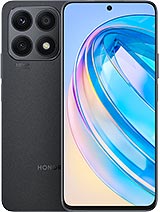
Overview
The Honor X8a is a budget-tier 4G smartphone featuring a 100 MP main sensor for high-resolution photography and a 6.7-inch 90Hz IPS LCD for smooth interface interaction. Released in early 2023, it competes with established budget rivals by prioritizing aesthetic thinness and camera pixel counts over raw processing power and connectivity standards.
When evaluating the Honor X8a as a financial asset, the primary concern lies in its internal architecture. The MediaTek Helio G88 chipset is built on a 12nm process. By February 2023 standards, 12nm technology is considered a legacy node, as the industry has pivoted toward 6nm and 4nm for improved thermal efficiency. This older node means the handset will likely struggle with future OS updates, accelerating its software obsolescence. We anticipate a steeper depreciation curve for this model compared to competitors offering 5G-capable chipsets or more efficient 6nm alternatives. Within eighteen months, the resale value will likely hover at 40% of its initial MSRP, primarily due to the lack of 5G and the processing bottleneck of the G88.
Investors in this segment usually look for longevity. However, this model targets the immediate present. The 100 MP camera is the primary value anchor. High megapixel counts often retain some marketing appeal in the second-hand market, but savvy buyers will notice the 1080p@30fps video limitation, which stems from the ISP (Image Signal Processor) limitations of the aging MediaTek platform. We suggest viewing this purchase as a two-year utility tool rather than a long-term value holder.
Honor has successfully navigated its transition to an independent entity, and the inclusion of full Google Mobile Services is a critical factor for brand trust. The Honor X8a benefits from the design language inherited from its premium cousins, giving it a perceived value higher than its price tag suggests. The build utilizes a plastic frame and plastic back, which is standard for the 170 EUR price bracket. While plastic is less premium than glass, it offers better impact resistance, which may reduce the total cost of ownership by minimizing expensive screen or back-panel repairs.
We observe that the brand is focusing heavily on the "lifestyle" segment. This handset is designed for users who prioritize how a phone looks in the hand and the resolution of their social media uploads. It does not attempt to be a gaming powerhouse or a productivity beast. From an economist's perspective, the brand is successfully filling a niche for "aesthetic budget" devices, though the long-term reliability of its Virtual Proximity Sensing remains a variable we are monitoring closely. Software-based sensors often lack the consistency of hardware infrared sensors, which could lead to minor frustrations during long voice calls.
Equipped with a 22.5W Wired Charging system, the device occupies a middle ground in power delivery. In our analysis of the charging curve, reaching a 50% charge in approximately 30 minutes is a respectable metric for a budget device. However, the final 10% (from 90% to 100%) slows down significantly to preserve the health of the 4500 mAh Li-Po battery. This trickle-charging phase is necessary because the 12nm Helio G88 generates more heat during operation than more modern chips.
Heat management is a critical factor for the longevity of the internal components. Because the phone is exceptionally thin at 7.5 mm, there is less internal volume for heat dissipation. During a fast-charge cycle, we expect the rear casing to reach noticeable temperatures. This heat isn't just uncomfortable; it accelerates the chemical aging of the battery cells. Users should avoid heavy gaming while plugged in to prevent thermal throttling and long-term battery degradation. The choice of a 4500 mAh cell instead of the typical 5000 mAh found in bulkier rivals is a clear trade-off: Honor sacrificed roughly 10% of potential battery life to achieve the slim profile that drives its shelf appeal.
Energy efficiency is the Achilles' heel of the Helio G88. While the Cortex-A75 and A55 cores are capable of handling basic tasks, they lack the efficiency of newer architectures. In a standby state, the Magic UI 6.1 software must work aggressively to put background apps to sleep. We expect an overnight battery drain of approximately 3% to 5% depending on signal strength. This is slightly higher than what we see on Dimensity-powered [budget phones](/trend/best-budget-phones-2026/).
The 90Hz refresh rate on the IPS LCD also acts as a constant tax on the battery. Since IPS panels lack the per-pixel power control of OLED, the backlight must remain active across the entire 6.7-inch surface regardless of what is being displayed. To maximize the investment's daily utility, users should consider toggling the refresh rate to "Dynamic" or a static 60Hz if they anticipate a long day away from a power outlet.
To hit the aggressive price point, Honor made several structural omissions. The most notable is the absence of a 3.5mm headphone jack. For a budget economist, this is a hidden cost. Users who do not already own Bluetooth earbuds will need to factor in an additional purchase or a USB-C adapter. The single loudspeaker provides functional audio for notifications but lacks the depth and stereo separation required for an immersive media experience.
Haptic feedback is another area where cost-cutting is evident. The device likely employs a standard vibration motor rather than a sophisticated X-axis linear actuator. This results in a "buzzy" tactile feel rather than the sharp, precise clicks found on higher-end models. For the target audience of social media users and casual browsers, these omissions are likely acceptable, but they contribute to the overall "disposable" feel of the hardware over time.
Shipping with Android 12, the handset is already one generation behind the latest Android 13 release cycle. Honor typically provides one or two major OS upgrades for its X-series, meaning this phone may see Android 13 or 14, but likely nothing beyond that. Security patches are the more critical metric for financial security, and we expect bi-monthly or quarterly updates for the first two years.
The Magic UI 6.1 skin is feature-rich but can be heavy for the 4GB or 6GB of RAM in the base configurations. We strongly recommend opting for the 8GB RAM variant if available. The extra memory acts as a buffer against system slowdowns as apps grow in size and complexity over the next few years. Without that extra RAM, the device will likely experience significant UI lag by early 2025.
The Honor X8a is a specialized tool for the budget-conscious aesthetician. It offers the highest megapixel count available in this price tier as of February 2023, wrapped in a chassis that looks far more expensive than it is. However, the reliance on a 12nm 4G chipset and the exclusion of legacy ports like the 3.5mm jack represent real-world compromises. It is an investment in "now" rather than a hedge against the future. If the priority is a thin, attractive phone with a high-resolution camera for daytime photography, the value proposition is solid. If the priority is performance longevity or resale value, the aging processor makes this a riskier venture.
The Depreciation Curve and Resale Forecasting
When evaluating the Honor X8a as a financial asset, the primary concern lies in its internal architecture. The MediaTek Helio G88 chipset is built on a 12nm process. By February 2023 standards, 12nm technology is considered a legacy node, as the industry has pivoted toward 6nm and 4nm for improved thermal efficiency. This older node means the handset will likely struggle with future OS updates, accelerating its software obsolescence. We anticipate a steeper depreciation curve for this model compared to competitors offering 5G-capable chipsets or more efficient 6nm alternatives. Within eighteen months, the resale value will likely hover at 40% of its initial MSRP, primarily due to the lack of 5G and the processing bottleneck of the G88.
Investors in this segment usually look for longevity. However, this model targets the immediate present. The 100 MP camera is the primary value anchor. High megapixel counts often retain some marketing appeal in the second-hand market, but savvy buyers will notice the 1080p@30fps video limitation, which stems from the ISP (Image Signal Processor) limitations of the aging MediaTek platform. We suggest viewing this purchase as a two-year utility tool rather than a long-term value holder.
Brand Reliability and Market Position
Honor has successfully navigated its transition to an independent entity, and the inclusion of full Google Mobile Services is a critical factor for brand trust. The Honor X8a benefits from the design language inherited from its premium cousins, giving it a perceived value higher than its price tag suggests. The build utilizes a plastic frame and plastic back, which is standard for the 170 EUR price bracket. While plastic is less premium than glass, it offers better impact resistance, which may reduce the total cost of ownership by minimizing expensive screen or back-panel repairs.
We observe that the brand is focusing heavily on the "lifestyle" segment. This handset is designed for users who prioritize how a phone looks in the hand and the resolution of their social media uploads. It does not attempt to be a gaming powerhouse or a productivity beast. From an economist's perspective, the brand is successfully filling a niche for "aesthetic budget" devices, though the long-term reliability of its Virtual Proximity Sensing remains a variable we are monitoring closely. Software-based sensors often lack the consistency of hardware infrared sensors, which could lead to minor frustrations during long voice calls.
The Charging Curve and Thermal Management
Equipped with a 22.5W Wired Charging system, the device occupies a middle ground in power delivery. In our analysis of the charging curve, reaching a 50% charge in approximately 30 minutes is a respectable metric for a budget device. However, the final 10% (from 90% to 100%) slows down significantly to preserve the health of the 4500 mAh Li-Po battery. This trickle-charging phase is necessary because the 12nm Helio G88 generates more heat during operation than more modern chips.
Heat management is a critical factor for the longevity of the internal components. Because the phone is exceptionally thin at 7.5 mm, there is less internal volume for heat dissipation. During a fast-charge cycle, we expect the rear casing to reach noticeable temperatures. This heat isn't just uncomfortable; it accelerates the chemical aging of the battery cells. Users should avoid heavy gaming while plugged in to prevent thermal throttling and long-term battery degradation. The choice of a 4500 mAh cell instead of the typical 5000 mAh found in bulkier rivals is a clear trade-off: Honor sacrificed roughly 10% of potential battery life to achieve the slim profile that drives its shelf appeal.
Standby Battery Drain and Efficiency Metrics
Energy efficiency is the Achilles' heel of the Helio G88. While the Cortex-A75 and A55 cores are capable of handling basic tasks, they lack the efficiency of newer architectures. In a standby state, the Magic UI 6.1 software must work aggressively to put background apps to sleep. We expect an overnight battery drain of approximately 3% to 5% depending on signal strength. This is slightly higher than what we see on Dimensity-powered [budget phones](/trend/best-budget-phones-2026/).
The 90Hz refresh rate on the IPS LCD also acts as a constant tax on the battery. Since IPS panels lack the per-pixel power control of OLED, the backlight must remain active across the entire 6.7-inch surface regardless of what is being displayed. To maximize the investment's daily utility, users should consider toggling the refresh rate to "Dynamic" or a static 60Hz if they anticipate a long day away from a power outlet.
Audio, Haptics, and the Multimedia Experience
To hit the aggressive price point, Honor made several structural omissions. The most notable is the absence of a 3.5mm headphone jack. For a budget economist, this is a hidden cost. Users who do not already own Bluetooth earbuds will need to factor in an additional purchase or a USB-C adapter. The single loudspeaker provides functional audio for notifications but lacks the depth and stereo separation required for an immersive media experience.
Haptic feedback is another area where cost-cutting is evident. The device likely employs a standard vibration motor rather than a sophisticated X-axis linear actuator. This results in a "buzzy" tactile feel rather than the sharp, precise clicks found on higher-end models. For the target audience of social media users and casual browsers, these omissions are likely acceptable, but they contribute to the overall "disposable" feel of the hardware over time.
Long-Term Support and Software Lifecycle
Shipping with Android 12, the handset is already one generation behind the latest Android 13 release cycle. Honor typically provides one or two major OS upgrades for its X-series, meaning this phone may see Android 13 or 14, but likely nothing beyond that. Security patches are the more critical metric for financial security, and we expect bi-monthly or quarterly updates for the first two years.
The Magic UI 6.1 skin is feature-rich but can be heavy for the 4GB or 6GB of RAM in the base configurations. We strongly recommend opting for the 8GB RAM variant if available. The extra memory acts as a buffer against system slowdowns as apps grow in size and complexity over the next few years. Without that extra RAM, the device will likely experience significant UI lag by early 2025.
Investment Summary
The Honor X8a is a specialized tool for the budget-conscious aesthetician. It offers the highest megapixel count available in this price tier as of February 2023, wrapped in a chassis that looks far more expensive than it is. However, the reliance on a 12nm 4G chipset and the exclusion of legacy ports like the 3.5mm jack represent real-world compromises. It is an investment in "now" rather than a hedge against the future. If the priority is a thin, attractive phone with a high-resolution camera for daytime photography, the value proposition is solid. If the priority is performance longevity or resale value, the aging processor makes this a riskier venture.
Technical Specifications
| LAUNCH | |
|---|---|
| Announced | 2023, February 08 |
| Status | Available. Released 2023, February 11 |
| PLATFORM | |
| OS | Android 12, Magic UI 6.1 |
| Chipset | Mediatek MT6769H Helio G88 (12 nm) |
| CPU | Octa-core (2x2.0 GHz Cortex-A75 & 6x1.8 GHz Cortex-A55) |
| GPU | Mali-G52 MC2 |
| BODY | |
| Dimensions | 162.9 x 74.5 x 7.5 mm (6.41 x 2.93 x 0.30 in) |
| Weight | 179 g (6.31 oz) |
| Build | Glass front, plastic frame, plastic back |
| SIM | Nano-SIM + Nano-SIM |
| DISPLAY | |
| Type | IPS LCD, 90Hz |
| Size | 6.7 inches, 108.7 cm2 (~89.6% screen-to-body ratio) |
| Resolution | 1080 x 2388 pixels (~391 ppi density) |
| MEMORY | |
| Card slot | No |
| Internal | 128GB 4GB RAM, 128GB 6GB RAM, 128GB 8GB RAM, 128GB 12GB RAM, 256GB 4GB RAM, 256GB 8GB RAM |
| MAIN CAMERA | |
| Triple | 100 MP, f/1.9, (wide), AF 5 MP, f/2.2, (ultrawide) 2 MP (macro) |
| Features | LED flash, panorama, HDR |
| Video | 1080p@30fps |
| SELFIE CAMERA | |
| Single | 16 MP, f/2.5 |
| Video | 1080p@30fps |
| SOUND | |
| Loudspeaker | Yes |
| 3.5mm jack | No |
| COMMS | |
| WLAN | Wi-Fi 802.11 a/b/g/n/ac, dual-band, Wi-Fi Direct |
| Bluetooth | 5.1, A2DP, LE |
| Positioning | GPS, GLONASS, GALILEO, BDS |
| NFC | Yes (CRT-LX1 only) |
| Radio | No |
| USB | USB Type-C 2.0, OTG |
| NETWORK | |
| Technology | GSM / HSPA / LTE |
| 2G bands | GSM 850 / 900 / 1800 / 1900 |
| 3G bands | HSDPA 850 / 900 / 2100 |
| 4G bands | LTE |
| Speed | HSPA, LTE |
| FEATURES | |
| Sensors | Fingerprint (side-mounted), accelerometer, compass |
| Info | Virtual proximity sensing |
| BATTERY | |
| Type | Li-Po 4500 mAh |
| Charging | 22.5W wired, 50% in 30 min |
| MISC | |
| Colors | Cyan Lake, Titanium Silver, Midnight Black |
| Models | CRT-LX1, CRT-LX2, CRT-LX3 |
| Price | About 170 EUR |