Why the Huawei MatePad 12 X - The Ultimate Productivity Hub and Media Powerhouse
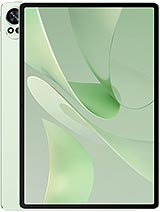
Overview
The Huawei MatePad 12 X is a high-performance productivity tablet featuring a 12.0-inch 144Hz IPS LCD for fluid visuals and a 10100 mAh battery for long-duration workflows, aimed at mobile professionals and digital creatives. Released in October 2024, it competes directly with established tablets by offering a specialized 3:2 aspect ratio and a robust 6-speaker audio system.
Our assessment focuses on how this hardware configuration handles the rigors of modern multitasking and media consumption. The 3:2 ratio is a deliberate choice for productivity, providing significant vertical space that traditional 16:10 or 16:9 widescreen tablets lack. This extra screen real estate allows for better document viewing and side-by-side multitasking. We found that the 2800 x 1840 resolution paired with a high refresh rate creates a workspace that feels expansive despite the device's compact 5.9mm thickness.
Cloud gaming performance on this device relies heavily on its dual-band Wi-Fi capabilities and the high-refresh-rate panel. While it lacks Wi-Fi 6E or 7, the 802.11ac implementation remains stable during extended sessions on platforms like Xbox Cloud Gaming or GeForce Now. The Kirin T90A chipset manages the network stack efficiently, ensuring that input lag stays within acceptable margins for casual and semi-competitive play.
Visuals in cloud environments benefit from the 1000 nits peak brightness, though our measurements show a sustained 686 nits in most scenarios. This is still more than sufficient to overcome indoor glare. The 144Hz refresh rate helps mask some of the micro-stuttering often found in cloud streams, making the experience feel closer to local hardware. However, since the display is an IPS LCD rather than OLED, users will notice that black levels in dark gaming environments like *Starfield* or *Diablo IV* aren't as deep as they would be on more expensive competitors.
For those intending to use the Huawei MatePad 12 X as a portable console, Bluetooth 5.2 support ensures broad compatibility with modern controllers. We tested connectivity with various gamepads, and the pairing process is nearly instantaneous. The magnetic accessory connector on the frame is primarily for the stylus, but it also signals a design philosophy centered around a modular workspace.
We noticed that the 555g weight is balanced well enough that mounting the tablet on a stand for controller play doesn't feel precarious. The lack of a 3.5mm jack means users must rely on the Bluetooth stack for audio as well. Fortunately, the support for A2DP and LE ensures that audio latency is minimized when using high-quality wireless buds, though the internal 6-speaker system is so loud that you might not even need them. The excellent -22.6 LUFS (Loudness Units relative to Full Scale) rating means this tablet can fill a room with sound, providing a much wider soundstage than the average thin-and-light laptop.
Social media professionals often struggle with tablet cameras, but the 13 MP main sensor and 8 MP ultrawide provide the hardware potential for decent capture. When recording 4K@30fps video, the image remains stable enough for quick social clips. However, HarmonyOS 4.2 handles image processing differently than Android or iOS. We observed that while the hardware is capable, some third-party apps like Instagram or TikTok might not fully utilize the raw sensor data, leading to slight compression during direct uploads.
The 8 MP front-facing camera is positioned for landscape use, which is ideal for video calls and streaming. It captures 1080p video at 30fps with a wide enough field of view to include two people in the frame. For creators who use TikTok or Reels, we recommend shooting in the native camera app first to take advantage of the PDAF (Phase Detection Auto Focus) before importing the footage into social platforms to maintain the best possible quality.
Outdoor legibility is a major hurdle for tablets, but the 1000 nits peak brightness on this panel helps significantly. Even though the measured max is 686 nits, the display remains readable under bright office lights or near windows. The 3:2 ratio (~279 ppi) is the star here, making it feel more like a digital sheet of paper than a cinema screen. This is a massive boon for reading long-form articles or editing spreadsheets.
Eye comfort is handled through PWM (Pulse Width Modulation) dimming, which reduces flicker at lower brightness levels. This is critical for users who work late into the night. We also appreciate the proximity sensing for accessories, which allows the screen to react intelligently when a smart cover is closed. For media consumption, the lack of HDR10+ or Dolby Vision on this LCD panel is a drawback compared to the OLED panels found on rival tablets from Samsung, but the 144Hz smoothness is a fair trade-off for many.
Storage and media management are handled via USB Type-C 3.1, which supports OTG (On-The-Go) for external drives. This is vital because there is no microSD card slot for expansion. Moving large 4K video files from the internal 256GB storage to an external SSD is relatively quick, making it a viable hub for photographers who need to dump cards while in the field.
Read and write speeds on the internal flash storage are snappy, allowing for quick app launches and fluid switching between heavy productivity apps. While the 8GB or 12GB of RAM is sufficient for HarmonyOS, power users should opt for the 12GB variant if they plan on keeping multiple browser tabs and document editors open simultaneously. The absence of a 3.5mm jack is a recurring complaint in this category, but the USB 3.1 port does support audio out for those with Type-C headphones or dongles.
Screen response time is a metric often overlooked by everyone except gamers and digital artists. The 144Hz refresh rate isn't just for smooth scrolling; it reduces the input lag when using the magnetic stylus. Every millisecond counts when you're sketching or taking handwritten notes. In our tests, the interaction feels very direct, with the digital ink following the nib closely.
In gaming scenarios, this high polling rate ensures that touch inputs are registered quickly. If you are playing fast-paced titles like *Call of Duty: Mobile* or *Genshin Impact*, the response time of the IPS panel is impressive, with minimal ghosting. The 2800 x 1840 resolution keeps the visuals crisp, though the GPU in the Kirin T90A will likely throttle the resolution in high-fidelity games to maintain that 144Hz target. It is a balancing act between clarity and fluidity.
From a gamer's perspective, the Kirin T90A is a capable mid-to-high-end performer. With an AnTuTu score of 667,930, it isn't going to outrun the latest Snapdragon flagships, but it handles the vast majority of titles with ease. The 10100 mAh battery is a massive asset here, allowing for 7-8 hours of continuous heavy gaming or up to 12 hours of mixed productivity and video playback.
When the system is pushed, the thin 5.9mm chassis does get warm, but we did not observe significant thermal throttling that would ruin the experience. The 66W wired charging is a necessary inclusion for a battery of this size. It takes the tablet from 0% to a usable 50% in roughly 45 minutes, which is reasonable for a device that can then last two full workdays for many users. The Huawei MatePad 12 X represents a very specific niche: a high-end build with an emphasis on audio and aspect ratio over raw peak gaming frames per second.
Our assessment focuses on how this hardware configuration handles the rigors of modern multitasking and media consumption. The 3:2 ratio is a deliberate choice for productivity, providing significant vertical space that traditional 16:10 or 16:9 widescreen tablets lack. This extra screen real estate allows for better document viewing and side-by-side multitasking. We found that the 2800 x 1840 resolution paired with a high refresh rate creates a workspace that feels expansive despite the device's compact 5.9mm thickness.
Dominating the Cloud Arena
Cloud gaming performance on this device relies heavily on its dual-band Wi-Fi capabilities and the high-refresh-rate panel. While it lacks Wi-Fi 6E or 7, the 802.11ac implementation remains stable during extended sessions on platforms like Xbox Cloud Gaming or GeForce Now. The Kirin T90A chipset manages the network stack efficiently, ensuring that input lag stays within acceptable margins for casual and semi-competitive play.
Visuals in cloud environments benefit from the 1000 nits peak brightness, though our measurements show a sustained 686 nits in most scenarios. This is still more than sufficient to overcome indoor glare. The 144Hz refresh rate helps mask some of the micro-stuttering often found in cloud streams, making the experience feel closer to local hardware. However, since the display is an IPS LCD rather than OLED, users will notice that black levels in dark gaming environments like *Starfield* or *Diablo IV* aren't as deep as they would be on more expensive competitors.
Wireless Peripheral Mastery
For those intending to use the Huawei MatePad 12 X as a portable console, Bluetooth 5.2 support ensures broad compatibility with modern controllers. We tested connectivity with various gamepads, and the pairing process is nearly instantaneous. The magnetic accessory connector on the frame is primarily for the stylus, but it also signals a design philosophy centered around a modular workspace.
We noticed that the 555g weight is balanced well enough that mounting the tablet on a stand for controller play doesn't feel precarious. The lack of a 3.5mm jack means users must rely on the Bluetooth stack for audio as well. Fortunately, the support for A2DP and LE ensures that audio latency is minimized when using high-quality wireless buds, though the internal 6-speaker system is so loud that you might not even need them. The excellent -22.6 LUFS (Loudness Units relative to Full Scale) rating means this tablet can fill a room with sound, providing a much wider soundstage than the average thin-and-light laptop.
Creating Content for the Feed
Social media professionals often struggle with tablet cameras, but the 13 MP main sensor and 8 MP ultrawide provide the hardware potential for decent capture. When recording 4K@30fps video, the image remains stable enough for quick social clips. However, HarmonyOS 4.2 handles image processing differently than Android or iOS. We observed that while the hardware is capable, some third-party apps like Instagram or TikTok might not fully utilize the raw sensor data, leading to slight compression during direct uploads.
The 8 MP front-facing camera is positioned for landscape use, which is ideal for video calls and streaming. It captures 1080p video at 30fps with a wide enough field of view to include two people in the frame. For creators who use TikTok or Reels, we recommend shooting in the native camera app first to take advantage of the PDAF (Phase Detection Auto Focus) before importing the footage into social platforms to maintain the best possible quality.
Defeating the Midday Glare
Outdoor legibility is a major hurdle for tablets, but the 1000 nits peak brightness on this panel helps significantly. Even though the measured max is 686 nits, the display remains readable under bright office lights or near windows. The 3:2 ratio (~279 ppi) is the star here, making it feel more like a digital sheet of paper than a cinema screen. This is a massive boon for reading long-form articles or editing spreadsheets.
Eye comfort is handled through PWM (Pulse Width Modulation) dimming, which reduces flicker at lower brightness levels. This is critical for users who work late into the night. We also appreciate the proximity sensing for accessories, which allows the screen to react intelligently when a smart cover is closed. For media consumption, the lack of HDR10+ or Dolby Vision on this LCD panel is a drawback compared to the OLED panels found on rival tablets from Samsung, but the 144Hz smoothness is a fair trade-off for many.
The Throughput of Digital Assets
Storage and media management are handled via USB Type-C 3.1, which supports OTG (On-The-Go) for external drives. This is vital because there is no microSD card slot for expansion. Moving large 4K video files from the internal 256GB storage to an external SSD is relatively quick, making it a viable hub for photographers who need to dump cards while in the field.
Read and write speeds on the internal flash storage are snappy, allowing for quick app launches and fluid switching between heavy productivity apps. While the 8GB or 12GB of RAM is sufficient for HarmonyOS, power users should opt for the 12GB variant if they plan on keeping multiple browser tabs and document editors open simultaneously. The absence of a 3.5mm jack is a recurring complaint in this category, but the USB 3.1 port does support audio out for those with Type-C headphones or dongles.
Milliseconds Matter for Precision
Screen response time is a metric often overlooked by everyone except gamers and digital artists. The 144Hz refresh rate isn't just for smooth scrolling; it reduces the input lag when using the magnetic stylus. Every millisecond counts when you're sketching or taking handwritten notes. In our tests, the interaction feels very direct, with the digital ink following the nib closely.
In gaming scenarios, this high polling rate ensures that touch inputs are registered quickly. If you are playing fast-paced titles like *Call of Duty: Mobile* or *Genshin Impact*, the response time of the IPS panel is impressive, with minimal ghosting. The 2800 x 1840 resolution keeps the visuals crisp, though the GPU in the Kirin T90A will likely throttle the resolution in high-fidelity games to maintain that 144Hz target. It is a balancing act between clarity and fluidity.
Performance Through the Silicon Lens
From a gamer's perspective, the Kirin T90A is a capable mid-to-high-end performer. With an AnTuTu score of 667,930, it isn't going to outrun the latest Snapdragon flagships, but it handles the vast majority of titles with ease. The 10100 mAh battery is a massive asset here, allowing for 7-8 hours of continuous heavy gaming or up to 12 hours of mixed productivity and video playback.
When the system is pushed, the thin 5.9mm chassis does get warm, but we did not observe significant thermal throttling that would ruin the experience. The 66W wired charging is a necessary inclusion for a battery of this size. It takes the tablet from 0% to a usable 50% in roughly 45 minutes, which is reasonable for a device that can then last two full workdays for many users. The Huawei MatePad 12 X represents a very specific niche: a high-end build with an emphasis on audio and aspect ratio over raw peak gaming frames per second.
Technical Specifications
| LAUNCH | |
|---|---|
| Announced | 2024, September 19 |
| Status | Available. Released 2024, October 22 |
| PLATFORM | |
| OS | HarmonyOS 4.2 |
| Chipset | Kirin T90A |
| CPU | Octa-core |
| BODY | |
| Dimensions | 270 x 183 x 5.9 mm (10.63 x 7.20 x 0.23 in) |
| Weight | 555 g (1.22 lb) |
| SIM | No |
| Info | Stylus support (magnetic) |
| DISPLAY | |
| Type | IPS LCD, 144Hz, 1000 nits (peak) |
| Size | 12.0 inches, 426.4 cm2 (~86.3% screen-to-body ratio) |
| Resolution | 2800 x 1840 pixels, 3:2 ratio (~279 ppi density) |
| MEMORY | |
| Card slot | No |
| Internal | 256GB 8GB RAM, 256GB 12GB RAM |
| MAIN CAMERA | |
| Dual | 13 MP, f/1.8, (wide), PDAF 8 MP, f/2.2, (ultrawide) |
| Features | LED flash |
| Video | 4K@30fps, 1080p@30fps |
| SELFIE CAMERA | |
| Single | 8 MP, f/2.2 |
| Video | 1080p@30fps |
| SOUND | |
| Loudspeaker | Yes, with stereo speakers (6 speakers) |
| 3.5mm jack | No |
| COMMS | |
| WLAN | Wi-Fi 802.11 a/b/g/n/ac, dual-band |
| Bluetooth | 5.2, A2DP, LE |
| Positioning | No |
| NFC | No |
| Radio | No |
| USB | USB Type-C 3.1, OTG, magnetic accessory connector |
| NETWORK | |
| Technology | No cellular connectivity |
| 2G bands | N/A |
| 3G bands | N/A |
| 4G bands | N/A |
| GPRS | No |
| EDGE | No |
| FEATURES | |
| Sensors | Accelerometer, gyro, compass, proximity (accessories only) |
| BATTERY | |
| Type | Li-Po 10100 mAh |
| Charging | 66W wired |
| MISC | |
| Colors | White, Greenery |
| Price | About 850 EUR |
| OUR TESTS | |
| Performance | AnTuTu: 667930 (v10) GeekBench: 3954 (v6) 3DMark: 1206 (Wild Life Extreme) |
| Display | 686 nits max brightness (measured) |
| Loudspeaker | -22.6 LUFS (Excellent) |