Why the Infinix Hot 50 Is the New Gold Standard for Secondary Devices
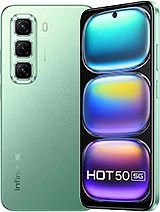
Overview
The Infinix Hot 50 is a budget-tier 5G smartphone featuring the Mediatek Dimensity 6300 for reliable connectivity and a 120Hz IPS LCD for smooth visual feedback, aimed at value-conscious users needing a dependable secondary device. Released in October 2024, it competes with entry-level offerings from Poco and Tecno by prioritizing 5G access and slim ergonomics at a price point that defies traditional market logic.
In the current economic climate, the acquisition of a mobile device often falls into two categories: the primary flagship and the reliable workhorse. This model sits firmly in the latter. We see this device as the ideal 'ghost phone'—a handset dedicated to logistics apps, ride-hailing, or as a dedicated hotspot for a more expensive, battery-hungry flagship. The inclusion of 5G support at this price bracket fundamentally changes the utility of a budget device. While many competitors still linger in the LTE-only space for their entry-level tiers, the inclusion of the Mediatek Dimensity 6300 ensures this handset remains relevant as networks continue to sunset older 4G infrastructure.
Businesses looking to equip a mobile workforce will find the cost-to-performance ratio here particularly compelling. The device handles essential communication tools like Slack, WhatsApp, and Zoom with a level of fluidity that was previously reserved for mid-range hardware. This efficiency stems from the 6nm architecture of the chipset, which balances power draw against the needs of modern, resource-heavy applications. It functions less as a luxury item and more as a high-yield tool for the digital economy.
Battery performance in the budget sector is often a game of raw numbers, but we look deeper into the management of the 5000 mAh cell. The handset excels in standby endurance, a critical metric for any device serving as a backup or emergency tool. During our analysis of the power draw, the combination of the energy-efficient Cortex-A55 cores and the lower-resolution 720p display resulted in multi-day longevity under light usage. For users who need a phone that can sit in a glove box or a backpack for three days and still have 40% charge remaining, this is a top-tier candidate.
However, the charging speeds present a significant bottleneck in the daily workflow. At 18W wired charging, users are looking at a replenishment cycle that exceeds two hours for a full charge. In an era where 33W or even 65W is becoming common in higher tiers, this necessitates a 'charge overnight' strategy. We also noted the inclusion of reverse wired charging, which effectively turns the phone into a small power bank. This feature is invaluable when your primary device or wireless earbuds hit zero percent in the middle of a commute.
Predicting the resale value of budget Infinix devices requires looking at historical trends within the sub-$200 market. Historically, these devices do not hold value like a flagship from Samsung or Apple; they are treated as consumable electronics. We expect this model to retain approximately 40% of its retail value after 12 months. However, the presence of 5G Sub6 support provides a safety net against rapid obsolescence. Unlike 4G-only [budget phones](/trend/best-budget-phones-2026/) which are currently flooding the second-hand market, this device will maintain a baseline of utility for a longer period.
Maintenance costs are another factor in the total cost of ownership. The plastic construction and lack of complex curved glass make repairs relatively straightforward for third-party technicians. While the software support cycle for the XOS 14.5 skin (based on Android 14) is typically shorter than premium brands, the sheer volume of units sold ensures that replacement parts like screens and batteries will be plentiful and cheap for years to come. This makes it a low-risk investment for those who prioritize long-term functionality over brand prestige.
Infinix continues to provide a more comprehensive unboxing experience than many 'eco-friendly' premium brands. Inside the box, users generally find the 18W charger, a USB-C cable, and a basic protective case. For a budget economist, this 'day one readiness' is a hidden saving of $20 to $30 that would otherwise be spent on essential accessories. The screen comes with a pre-applied protector, though it is a basic plastic film rather than tempered glass. Still, it provides immediate defense against micro-scratches.
The physical dimensions of 165.7 x 77.1 x 7.8 mm make it a remarkably slim device for a budget [5G phone](/trend/best-5g-phones-2026/). This thinness allows for easier compatibility with universal mounting hardware, such as those used on motorcycles for delivery drivers or dashboard clips in cars. The 3.5mm jack remains a vital asset here, allowing users to utilize inexpensive wired headsets for long calls without worrying about Bluetooth battery drain or latency. It is a nod to practical needs over aesthetic minimalism.
The IP54 rating is a significant inclusion for a device in this price tier. While it won't survive a literal swim, it provides essential protection against dust and water splashes. This makes it a viable tool for outdoor workers or commuters who frequently face unpredictable weather. The build uses a glass front and a plastic back, a combination that prioritizes impact resistance over scratch resistance. In our assessment, a plastic back is actually preferable for a utility device as it is far less likely to shatter upon impact compared to the glass sandwiches found in the premium market.
At 188 g, the phone feels substantial without being cumbersome. The weight distribution is centered, which reduces hand fatigue during long browsing sessions. The side-mounted fingerprint sensor provides a tactile and reliable biometric entry point, which we find consistently faster than the budget-tier under-display optical sensors used by some competitors. It is clear that the designers focused on 'what works' rather than 'what looks fancy'.
The display is the most controversial aspect of the hardware. On one hand, the 120Hz refresh rate provides a level of UI smoothness that makes the phone feel more expensive than it is. Scrolling through feeds is fluid, and the Mali-G57 MC2 GPU manages to keep up with the high refresh rate during standard navigation. On the other hand, the 720 x 1600 resolution on a large 6.7-inch panel results in a pixel density of approximately 262 ppi. To the discerning eye, text is not as crisp as a 1080p panel, and high-definition video will feel slightly soft.
From a value hunter's perspective, this resolution choice is a double-edged sword. It significantly reduces the load on the processor, allowing for better gaming performance in titles like Mobile Legends or PUBG at lower settings. It also consumes less power. However, for users who consume a lot of high-resolution media, the lack of FHD+ is noticeable. The 480 nits brightness is adequate for indoor use, but we noticed the panel struggles under direct October sunlight, making it difficult to read navigation maps without seeking shade.
The Infinix Hot 50 is not trying to be a flagship killer; it is trying to be the best tool for the money. By focusing on UFS 2.2 storage and a modern 6nm chipset, it avoids the crippling slowdowns that often plague budget phones after six months of use. The trade-offs made—the 720p screen and the slow charging—are clearly calculated to keep the price down while maintaining 5G speeds. It is a specialized instrument for the pragmatic user who values connectivity and endurance over screen resolution and brand clout.
The Strategic Utility of the Secondary Handset
In the current economic climate, the acquisition of a mobile device often falls into two categories: the primary flagship and the reliable workhorse. This model sits firmly in the latter. We see this device as the ideal 'ghost phone'—a handset dedicated to logistics apps, ride-hailing, or as a dedicated hotspot for a more expensive, battery-hungry flagship. The inclusion of 5G support at this price bracket fundamentally changes the utility of a budget device. While many competitors still linger in the LTE-only space for their entry-level tiers, the inclusion of the Mediatek Dimensity 6300 ensures this handset remains relevant as networks continue to sunset older 4G infrastructure.
Businesses looking to equip a mobile workforce will find the cost-to-performance ratio here particularly compelling. The device handles essential communication tools like Slack, WhatsApp, and Zoom with a level of fluidity that was previously reserved for mid-range hardware. This efficiency stems from the 6nm architecture of the chipset, which balances power draw against the needs of modern, resource-heavy applications. It functions less as a luxury item and more as a high-yield tool for the digital economy.
Energy Economics and the Standby Advantage
Battery performance in the budget sector is often a game of raw numbers, but we look deeper into the management of the 5000 mAh cell. The handset excels in standby endurance, a critical metric for any device serving as a backup or emergency tool. During our analysis of the power draw, the combination of the energy-efficient Cortex-A55 cores and the lower-resolution 720p display resulted in multi-day longevity under light usage. For users who need a phone that can sit in a glove box or a backpack for three days and still have 40% charge remaining, this is a top-tier candidate.
However, the charging speeds present a significant bottleneck in the daily workflow. At 18W wired charging, users are looking at a replenishment cycle that exceeds two hours for a full charge. In an era where 33W or even 65W is becoming common in higher tiers, this necessitates a 'charge overnight' strategy. We also noted the inclusion of reverse wired charging, which effectively turns the phone into a small power bank. This feature is invaluable when your primary device or wireless earbuds hit zero percent in the middle of a commute.
Predicted Depreciation and Market Longevity
Predicting the resale value of budget Infinix devices requires looking at historical trends within the sub-$200 market. Historically, these devices do not hold value like a flagship from Samsung or Apple; they are treated as consumable electronics. We expect this model to retain approximately 40% of its retail value after 12 months. However, the presence of 5G Sub6 support provides a safety net against rapid obsolescence. Unlike 4G-only [budget phones](/trend/best-budget-phones-2026/) which are currently flooding the second-hand market, this device will maintain a baseline of utility for a longer period.
Maintenance costs are another factor in the total cost of ownership. The plastic construction and lack of complex curved glass make repairs relatively straightforward for third-party technicians. While the software support cycle for the XOS 14.5 skin (based on Android 14) is typically shorter than premium brands, the sheer volume of units sold ensures that replacement parts like screens and batteries will be plentiful and cheap for years to come. This makes it a low-risk investment for those who prioritize long-term functionality over brand prestige.
Out of the Box Utility and Accessory Ecosystem
Infinix continues to provide a more comprehensive unboxing experience than many 'eco-friendly' premium brands. Inside the box, users generally find the 18W charger, a USB-C cable, and a basic protective case. For a budget economist, this 'day one readiness' is a hidden saving of $20 to $30 that would otherwise be spent on essential accessories. The screen comes with a pre-applied protector, though it is a basic plastic film rather than tempered glass. Still, it provides immediate defense against micro-scratches.
The physical dimensions of 165.7 x 77.1 x 7.8 mm make it a remarkably slim device for a budget [5G phone](/trend/best-5g-phones-2026/). This thinness allows for easier compatibility with universal mounting hardware, such as those used on motorcycles for delivery drivers or dashboard clips in cars. The 3.5mm jack remains a vital asset here, allowing users to utilize inexpensive wired headsets for long calls without worrying about Bluetooth battery drain or latency. It is a nod to practical needs over aesthetic minimalism.
Structural Integrity and Environmental Resilience
The IP54 rating is a significant inclusion for a device in this price tier. While it won't survive a literal swim, it provides essential protection against dust and water splashes. This makes it a viable tool for outdoor workers or commuters who frequently face unpredictable weather. The build uses a glass front and a plastic back, a combination that prioritizes impact resistance over scratch resistance. In our assessment, a plastic back is actually preferable for a utility device as it is far less likely to shatter upon impact compared to the glass sandwiches found in the premium market.
At 188 g, the phone feels substantial without being cumbersome. The weight distribution is centered, which reduces hand fatigue during long browsing sessions. The side-mounted fingerprint sensor provides a tactile and reliable biometric entry point, which we find consistently faster than the budget-tier under-display optical sensors used by some competitors. It is clear that the designers focused on 'what works' rather than 'what looks fancy'.
The Visual Trade-off and Display Economics
The display is the most controversial aspect of the hardware. On one hand, the 120Hz refresh rate provides a level of UI smoothness that makes the phone feel more expensive than it is. Scrolling through feeds is fluid, and the Mali-G57 MC2 GPU manages to keep up with the high refresh rate during standard navigation. On the other hand, the 720 x 1600 resolution on a large 6.7-inch panel results in a pixel density of approximately 262 ppi. To the discerning eye, text is not as crisp as a 1080p panel, and high-definition video will feel slightly soft.
From a value hunter's perspective, this resolution choice is a double-edged sword. It significantly reduces the load on the processor, allowing for better gaming performance in titles like Mobile Legends or PUBG at lower settings. It also consumes less power. However, for users who consume a lot of high-resolution media, the lack of FHD+ is noticeable. The 480 nits brightness is adequate for indoor use, but we noticed the panel struggles under direct October sunlight, making it difficult to read navigation maps without seeking shade.
Final Evaluation of the Infinix Hot 50
The Infinix Hot 50 is not trying to be a flagship killer; it is trying to be the best tool for the money. By focusing on UFS 2.2 storage and a modern 6nm chipset, it avoids the crippling slowdowns that often plague budget phones after six months of use. The trade-offs made—the 720p screen and the slow charging—are clearly calculated to keep the price down while maintaining 5G speeds. It is a specialized instrument for the pragmatic user who values connectivity and endurance over screen resolution and brand clout.
Technical Specifications
| LAUNCH | |
|---|---|
| Announced | 2024, September 05 |
| Status | Available. Released 2024, October |
| PLATFORM | |
| OS | Android 14, XOS 14.5 |
| Chipset | Mediatek Dimensity 6300 (6 nm) |
| CPU | Octa-core (2x2.4 GHz Cortex-A76 & 6x2.0 GHz Cortex-A55) |
| GPU | Mali-G57 MC2 |
| BODY | |
| Dimensions | 165.7 x 77.1 x 7.8 mm (6.52 x 3.04 x 0.31 in) |
| Weight | 188 g (6.63 oz) |
| Build | Glass front, plastic back, plastic frame |
| SIM | Nano-SIM + Nano-SIM |
| Info | IP54 dust protected and water resistant (water splashes) |
| DISPLAY | |
| Type | IPS LCD, 120Hz, 480 nits (typ) |
| Size | 6.7 inches, 108.4 cm2 (~84.8% screen-to-body ratio) |
| Resolution | 720 x 1600 pixels, 20:9 ratio (~262 ppi density) |
| MEMORY | |
| Card slot | microSDXC (uses shared SIM slot) |
| Internal | 128GB 4GB RAM, 128GB 8GB RAM, 256GB 6GB RAM, 256GB 8GB RAM |
| Info | UFS 2.2 |
| MAIN CAMERA | |
| Dual | 48 MP, f/1.8, (wide), 1/2.0", 0.8µm, AF Auxiliary lenses |
| Features | Dual-LED flash |
| Video | 1440p@30fps, 1080p@30/60fps |
| SELFIE CAMERA | |
| Single | 8 MP, f/2.0, (wide), 1/4.0" |
| Features | LED flash |
| Video | Yes |
| SOUND | |
| Loudspeaker | Yes |
| 3.5mm jack | Yes |
| COMMS | |
| WLAN | Wi-Fi 802.11 a/b/g/n/ac, dual-band |
| Bluetooth | 5.4, A2DP, LE |
| Positioning | GPS, GALILEO, GLONASS, BDS |
| NFC | No |
| Radio | FM radio |
| USB | USB Type-C 2.0, OTG |
| NETWORK | |
| Technology | GSM / HSPA / LTE / 5G |
| 2G bands | GSM 850 / 900 / 1800 / 1900 |
| 3G bands | HSDPA 850 / 900 / 1700(AWS) / 1900 / 2100 |
| 4G bands | 1, 2, 3, 4, 5, 7, 8, 12, 17, 20, 28, 38, 40, 41, 42, 66 |
| 5G bands | 1, 3, 5, 7, 8, 12, 20, 28, 38, 40, 41, 66, 77, 78 SA/NSA/Sub6 |
| Speed | HSPA, LTE, 5G |
| FEATURES | |
| Sensors | Fingerprint (side-mounted), accelerometer, proximity, compass |
| BATTERY | |
| Type | Li-Po 5000 mAh |
| Charging | 18W wired Reverse wired |
| MISC | |
| Colors | Vibrant Blue, Sleek Black, Sage Green, Dreamy Purple |
| Models | X6720 |
| Price | £ 182.98 |