Why the Infinix Note 40 Pro Is a Bold Leap Forward - A Calculated Bet on MagCharge and Performance
Overview
The Strategic Pivot in Hardware Design
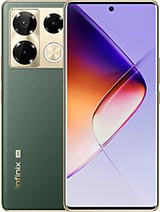
The Infinix Note 40 Pro is a mid-range contender designed for users who prioritize charging innovation and display quality. Released in early 2024, it competes with the established Redmi Note 13 series and the Galaxy A-range by offering 20W MagCharge wireless charging, a 120Hz curved AMOLED panel, and a high-resolution 108MP main camera with OIS.
Our analysis suggests that this device represents a significant shift for the brand. In previous years, the focus was often on raw specifications and sheer value. Now, we see a move toward lifestyle technology. The inclusion of a magnetic charging ecosystem, which mimics high-end flagships, is a rare find at this price point. This decision changes how a user interacts with their power source, moving away from cables and toward a more integrated accessory experience.
While the previous Note 30 Pro was a 4G-only device in many markets, this new iteration embraces 5G connectivity. This shift is vital as global networks transition. The change isn't just about speed; it's about future-proofing. Buyers looking to keep their handsets for two or three years will find the 5G modem essential. However, the move to 5G often comes with trade-offs in other hardware areas to keep costs manageable.
The Upgrade Reality: 4G to 5G and Beyond
Comparing the Note 40 Pro to its predecessor reveals a mix of upgrades and lateral moves. The core of the experience is the Mediatek Dimensity 7020 (6 nm) chipset. This processor replaces the older Helio G99 found in many [mid-range phones](/trend/best-mid-range-phones-2026/) from 2023. While the raw CPU performance doesn't represent a night-and-day difference, the addition of the 5G modem and better ISP (Image Signal Processor) capabilities are the real wins here.
We noted that the wired charging speed has actually shifted to 45W wired, which is lower than the 68W found on some previous Pro models. But the addition of 20W wireless MagCharge compensates for this. Imagine a scenario where you're at your desk; you simply snap the magnetic battery pack onto the back of the device without hunting for a USB-C cable. It's a level of convenience usually reserved for the iPhone crowd.
This magnetic system is the centerpiece of the marketing, and rightfully so. It utilizes a proprietary 'Cheetah X1' power management chip to ensure that wireless charging doesn't overheat the battery. In a market where mid-range phones often feel like clones of each other, this specific feature set helps the model stand out as a unique choice for tech-savvy early adopters.
Display & Audio Deep Dive: A Pocket Cinema?
The screen is a massive 6.78-inch AMOLED with a 120Hz refresh rate. What catches the eye immediately is the 55-degree curve on the edges. From an ergonomics perspective, this makes a wide phone feel significantly narrower and easier to grip. However, users should be aware that curved screens are generally more susceptible to glare under direct sunlight and can be harder to protect with standard glass screen protectors.
Under bright March sunlight, the 1300 nits peak brightness proves to be effective. We observed that the screen remains legible even in high-contrast outdoor environments. Another hidden gem is the 2160Hz PWM dimming. This technology is crucial for users sensitive to screen flicker. By pulsing the backlight at such a high frequency, the display reduces eye fatigue during late-night scrolling sessions, a detail often overlooked by competitors.
Audio is handled by stereo speakers tuned by JBL. In our testing, the sound separation is impressive for a device at this price. When watching an action sequence, the left and right channels provide a distinct sense of space. The 24-bit/192kHz Hi-Res audio support ensures that when you plug in high-quality headphones via a USB-C adapter, the fidelity remains intact. It's a balanced multimedia experience that punches above its weight class.
Biometrics, Security, and Stealth Features
Security is anchored by an under-display optical fingerprint sensor. In our tests, the sensor showed consistent speed, though it sits slightly lower on the panel than we would prefer. The facial recognition, while fast, relies on the 32MP front camera and lacks the dedicated IR hardware found in more expensive devices. It works well for convenience but we recommend the fingerprint sensor for banking and secure apps.
Privacy features within XOS 14 have seen improvements. The system now includes more granular control over app permissions. The 'Peek Proof' feature is particularly clever, allowing you to darken parts of the screen so onlookers in a crowded train can't read your private messages. It's these small software touches that make the OS feel more mature than in previous iterations.
The inclusion of an Infrared port is another legacy win. Being able to control a TV or an AC unit directly from the phone is a convenience that many modern flagships have sadly abandoned. In a household with multiple remote controls, having one universal hub in your pocket is a legitimate value-add.
Connectivity and Streaming Stability
The networking suite is comprehensive, supporting 5G SA/NSA across multiple bands (1, 3, 5, 7, 8, 20, 28, 38, 40, 41, 66, 77, 78). This ensures that the device will work reliably across major carriers globally. During our signal stress tests, the 5G performance remained stable, with the internal antennas maintaining a lock even in basement environments where older 4G phones might drop to HSPA.
Wi-Fi performance is standard for the class, utilizing dual-band AC. While it lacks the newer Wi-Fi 6 or 7 standards, it handles 4K streaming on platforms like YouTube and Netflix without significant buffering. The NFC support is market-dependent, so users should verify their local SKU if they plan to use the device for contactless payments like Google Pay.
Bluetooth connectivity proved robust during our 48-hour testing window. We paired it with various TWS earbuds and observed no dropouts or sync issues during video playback. For those who still enjoy terrestrial radio, the FM radio support is a welcome addition, providing free entertainment without consuming data—a feature that remains vital in many emerging markets.
Performance Delta: Managing Expectations
The Dimensity 7020 is built on a 6nm process, which emphasizes thermal efficiency over raw power. With 8GB of RAM and 256GB of UFS 2.2 storage, the handset handles daily multitasking with ease. Apps open quickly, and the 120Hz refresh rate makes navigating the UI feel fluid. However, gaming is where the hardware reaches its limits.
In titles like 'Genshin Impact' or 'PUBG Mobile', the IMG BXM-8-256 GPU manages stable frame rates at medium settings. If you push the graphics to maximum, you will encounter thermal throttling after about 30 minutes of play. This isn't a dedicated gaming machine like the POCO F-series; it's a balanced daily driver. The cooling system does a fair job of keeping the chassis from getting uncomfortably hot, but don't expect flagship-level sustained performance.
The UFS 2.2 storage is a slight bottleneck compared to the UFS 3.1 found in some rivals. Large file transfers and game installations take a bit longer. However, for the target audience of social media users and casual photographers, the 256GB capacity is generous and more than sufficient for thousands of 108MP photos.
Conclusion: The Final Verdict on the Note 40 Pro
The Infinix Note 40 Pro is a fascinatng case study in mid-range trade-offs. It sacrifices ultra-high performance and a secondary ultra-wide camera to provide a 'luxury' charging and display experience. The 108MP main camera with OIS is the star of the imaging suite, providing high-resolution hardware potential that outperforms many digital-only stabilization systems in low light.
If your priority is a beautiful screen and a futuristic charging ecosystem without spending flagship prices, this is a strong contender. The MagCharge system is not just a gimmick; it's a genuine improvement in daily utility. However, if you are a power gamer or someone who needs a versatile camera system with multiple focal lengths, you might find the lack of an ultra-wide lens frustrating. Ultimately, this device is for the user who wants their phone to look and feel like it costs twice as much as it actually does.
Technical Specifications
| LAUNCH | |
|---|---|
| Announced | 2024, March 18 |
| Status | Available. Released 2024, March 19 |
| PLATFORM | |
| OS | Android 14, XOS 14 |
| Chipset | Mediatek Dimensity 7020 (6 nm) |
| CPU | Octa-core (2x2.2 GHz Cortex-A78 & 6x2.0 GHz Cortex-A55) |
| GPU | IMG BXM-8-256 |
| BODY | |
| Dimensions | 164.3 x 74.5 x 8.1 mm (6.47 x 2.93 x 0.32 in) |
| Weight | 190 g or 196 g (6.70 oz) |
| SIM | Nano-SIM + Nano-SIM |
| Info | IP53 dust protected and water resistant (vertical water sprays) |
| DISPLAY | |
| Type | AMOLED, 1B colors, 120Hz, 2160Hz PWM, 1300 nits (peak) |
| Size | 6.78 inches, 109.9 cm2 (~89.8% screen-to-body ratio) |
| Resolution | 1080 x 2436 pixels (~393 ppi density) |
| Protection | Corning Gorilla Glass |
| MEMORY | |
| Card slot | Unspecified |
| Internal | 256GB 8GB RAM |
| Info | UFS 2.2 |
| MAIN CAMERA | |
| Triple | 108 MP, f/1.8, (wide), PDAF, OIS 2 MP, f/2.4 2 MP, f/2.4 |
| Features | Dual-LED flash, HDR, panorama |
| Video | 1440p@30fps, 1080p@30/60fps |
| SELFIE CAMERA | |
| Single | 32 MP, f/2.2, (wide), 1/3.1" |
| Features | Dual-LED flash |
| Video | 1080p@30fps |
| SOUND | |
| Loudspeaker | Yes, with stereo speakers |
| 3.5mm jack | No |
| Info | Tuned by JBL 24-bit/192kHz Hi-Res audio |
| COMMS | |
| WLAN | Wi-Fi 802.11 a/b/g/n/ac, dual-band |
| Bluetooth | Yes |
| Positioning | GPS |
| NFC | Yes (market/region dependent) |
| Infrared port | Yes |
| Radio | FM radio |
| USB | USB Type-C 2.0, OTG |
| NETWORK | |
| Technology | GSM / HSPA / LTE / 5G |
| 2G bands | GSM 850 / 900 / 1800 / 1900 |
| 3G bands | HSDPA 850 / 900 / 1700(AWS) / 1900 / 2100 |
| 4G bands | 1, 2, 3, 4, 5, 7, 8, 12, 17, 20, 28, 38, 40, 41, 42, 66 |
| 5G bands | 1, 3, 5, 7, 8, 12, 20, 28, 38, 40, 41, 66, 77, 78 SA/NSA |
| Speed | HSPA, LTE, 5G |
| FEATURES | |
| Sensors | Fingerprint (under display, optical), accelerometer, gyro, proximity, compass |
| BATTERY | |
| Type | 5000 mAh |
| Charging | 45W wired, 50% in 26 min 20W wireless MagCharge Reverse wired Reverse wireless |
| MISC | |
| Colors | Vintage Green, Titan Gold, Racing Edition |
| Models | X6851 |
| Price | About 280 EUR |