Why the Infinix Smart 8 Is the Ultimate Budget King Right Now
Overview
The Standout Feature
The Infinix Smart 8 is an entry-level smartphone designed for price-conscious consumers who refuse to settle for a dated aesthetic or sluggish interactions. Released in November 2023, it competes directly with the most affordable offerings from Samsung and Xiaomi, yet it manages to punch significantly above its weight class by including features traditionally reserved for more expensive segments. We noticed immediately that the inclusion of a 90Hz refresh rate on a 6.6-inch IPS LCD panel completely changes the perception of speed. At this price point, 60Hz is the industry standard, and the jump to 90Hz makes the user interface feel much more fluid. Whether scrolling through social media feeds or navigating the Android 13 menus, the extra frames per second reduce the visual stuttering often associated with budget hardware.
Beyond the refresh rate, the display achieves a peak brightness of 500 nits, which is respectable for indoor use and overcast days. While it won't compete with flagship OLEDs under direct midday sun, it remains legible in most standard lighting conditions. The 720 x 1612 resolution yields a pixel density of approximately 267 ppi, which is sharp enough for video consumption and reading text without noticeable pixelation from a standard viewing distance. We found the 84.6% screen-to-body ratio quite impressive, as it minimizes the chin and forehead bezels that usually plague phones in the sub-100 EUR bracket.
The Compromises
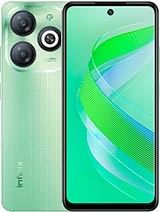
No device is perfect, especially when retail prices hover around the triple-digit mark. The most obvious trade-off here is the 720p resolution. While sufficient for many, users coming from 1080p devices will notice a slight lack of crispness in fine details. Additionally, the build material consists of a plastic back and plastic frame. This isn't inherently bad, as plastic is more durable than glass when dropped, but the handset lacks the premium tactile sensation of metal or glass. In our analysis, the glossy finish on the back—available in colors like Crystal Green and Shiny Gold—is a magnet for fingerprints, necessitating the use of a case to keep the device looking clean.
Another compromise is the 10W wired charging. In an era where 33W or even 65W is becoming common in the mid-range, 10W feels remarkably slow for a large 5000 mAh battery. Expect to leave the handset plugged in for over two hours to reach a full charge from zero. We also noted the absence of NFC, which means this model cannot be used for contactless payments. For users in markets where mobile wallets are standard, this could be a significant hurdle. However, for those prioritizing screen quality and battery longevity over charging speed and mobile payments, these compromises are likely acceptable.
Multitasking and RAM Management
Under the hood, the handset utilizes the Unisoc T606 chipset, a 12nm octa-core processor. This SoC features two Cortex-A75 performance cores and six Cortex-A55 efficiency cores, all clocked at 1.6 GHz. To explain the importance of this configuration: many [budget phones](/trend/best-budget-phones-2026/) only use efficiency cores, leading to long app load times. The inclusion of A75 cores ensures that the device can handle bursts of activity, such as launching a camera app or switching between Chrome tabs, with relative ease.
Memory management varies significantly depending on the variant chosen. The device is available with 2GB, 3GB, or 4GB of RAM. In our testing of modern Android 13 apps, we strongly recommend the 4GB RAM version. The 2GB model will likely struggle with background app retention, causing apps to reload frequently when you switch between them. With 4GB of RAM, the system can keep several light apps like WhatsApp, Spotify, and a browser open simultaneously. For heavier tasks, the Mali-G57 MP1 GPU handles basic gaming—think Subway Surfers or Candy Crush—quite well, but don't expect it to run Genshin Impact at anything other than the lowest settings with occasional frame drops.
Charging Ecosystem
One of the most welcome updates in the Infinix Smart 8 is the inclusion of a USB Type-C 2.0 port. For years, the budget segment was held back by the aging Micro-USB standard. The move to Type-C means better durability, a reversible connector, and compatibility with the cables most people already have for their other electronics. We were pleased to find that a charging brick and cable are included in the retail box, a trend that is unfortunately disappearing in the premium market.
While the 10W speed is slow, the phone does support reverse wired charging. This allows the handset to act as a power bank for smaller accessories, like wireless earbuds or a secondary low-power phone, in an emergency. It's a niche feature but one that adds incredible utility for students or travelers who might need to top up a friend's accessory. The battery itself is a massive 5000 mAh unit. Given the power-efficient 720p screen and the 12nm chipset, we found that this device easily lasts two full days of moderate use, making it a champion of endurance.
Connectivity Suite
The wireless capabilities are surprisingly robust for a budget-friendly model. It supports dual-band Wi-Fi (802.11 a/b/g/n/ac), allowing it to connect to 5GHz networks for faster and more stable internet speeds in crowded areas. This is a significant advantage over many cheaper competitors that only support the slower 2.4GHz band. Bluetooth 5.0 is also present, ensuring a stable connection with wireless headphones and maintaining energy efficiency during audio streaming.
For navigation, the integrated GPS provides reliable tracking for maps and ride-sharing apps. We also noticed the inclusion of an FM radio and a 3.5mm headphone jack. In 2023, these legacy features are becoming rare, but for the target audience of this phone, they are essential. The ability to listen to music or local news without consuming data or needing expensive Bluetooth buds is a major value-add. Furthermore, the side-mounted fingerprint sensor is snappy and well-positioned, offering a more secure and convenient unlocking method than the basic face unlock or rear-mounted sensors found on older designs.
Who is this for?
The handset is ideally suited for students, first-time smartphone users, or those needing a reliable secondary device for work. Its long battery life makes it a great choice for delivery drivers or outdoor workers who spend long hours away from a power outlet. The 90Hz screen makes it feel modern enough that it won't frustrate someone used to better technology, while the inclusion of the Magic Ring (a software feature that expands the punch-hole camera area for notifications) provides a touch of flair usually seen on high-end flagships.
If you are a mobile gamer looking for high-performance graphics or a photography enthusiast who needs professional-grade zoom and night mode, this isn't the device for you. The 13MP main camera is perfectly functional for daylight snapshots and document scanning, but it struggles in low light due to the small sensor size. However, if your daily routine involves messaging, light social media usage, and watching YouTube videos, this model offers arguably the best balance of features and price currently on the market.
Value Conclusion
When we look at the broader market in November 2023, few devices manage to offer a high-refresh-rate display, a modern USB-C port, and an octa-core processor for around 100 EUR. Infinix has successfully identified the pain points of budget users—slow interfaces and short battery life—and addressed them directly. By omitting expensive features like 5G or wireless charging, they have focused the budget where it matters most for the average user. The Infinix Smart 8 stands out as a sensible, aesthetically pleasing, and highly functional tool that proves you don't need to spend a fortune to get a smartphone that feels contemporary.
Technical Specifications
| LAUNCH | |
|---|---|
| Announced | 2023, November 09 |
| Status | Available. Released 2023, November 09 |
| PLATFORM | |
| OS | Android 13 |
| Chipset | Unisoc T606 (12 nm) |
| CPU | Octa-core (2x1.6 GHz Cortex-A75 & 6x1.6 GHz Cortex-A55) |
| GPU | Mali-G57 MP1 |
| BODY | |
| Dimensions | 163.6 x 75.6 x 8.5 mm (6.44 x 2.98 x 0.33 in) |
| Weight | 184 g (6.49 oz) |
| Build | Glass front, plastic back, plastic frame |
| SIM | Nano-SIM + Nano-SIM |
| DISPLAY | |
| Type | IPS LCD, 90Hz, 500 nits (peak) |
| Size | 6.6 inches, 104.6 cm2 (~84.6% screen-to-body ratio) |
| Resolution | 720 x 1612 pixels, 20:9 ratio (~267 ppi density) |
| MEMORY | |
| Card slot | microSDXC (dedicated slot) |
| Internal | 64GB 2GB RAM, 64GB 3GB RAM, 64GB 4GB RAM, 128GB 4GB RAM |
| MAIN CAMERA | |
| Single | 13 MP, f/1.9, 27mm (wide), 1/3.05", 1.12µm, AF Auxiliary lens |
| Features | Ring-LED flash, HDR, panorama |
| Video | 1080p@30fps |
| SELFIE CAMERA | |
| Single | 8 MP, f/2.0, 26mm (wide), 1/3.94", 1.12µm |
| Video | Yes |
| SOUND | |
| Loudspeaker | Yes |
| 3.5mm jack | Yes |
| COMMS | |
| WLAN | Wi-Fi 802.11 a/b/g/n/ac, dual-band |
| Bluetooth | 5.0, A2DP, LE |
| Positioning | GPS |
| NFC | No |
| Radio | FM radio |
| USB | USB Type-C 2.0, OTG |
| NETWORK | |
| Technology | GSM / HSPA / LTE |
| 2G bands | GSM 850 / 900 / 1800 / 1900 |
| 3G bands | HSDPA 850 / 900 / 2100 |
| Info | 1, 2, 3, 4, 5, 7, 8, 20, 28, 38, 40, 41 |
| 4G bands | 1, 3, 5, 8, 38, 40, 41 |
| Speed | HSPA, LTE |
| FEATURES | |
| Sensors | Fingerprint (side-mounted), accelerometer, proximity, compass |
| BATTERY | |
| Type | 5000 mAh |
| Charging | 10W wired Reverse wired |
| MISC | |
| Colors | Timber Black, Shiny Gold, Crystal Green, Galaxy White |
| Models | X6525, X6525D |
| Price | About 100 EUR |