Why the Infinix Smart 8 Pro Is the Smartest Value Play for Families Right Now
Overview
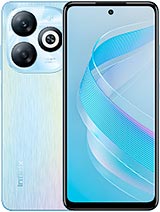
The Infinix Smart 8 Pro is a budget-tier smartphone featuring a 6.6-inch 90Hz IPS LCD for smooth visual navigation and a Helio G36 chipset for reliable basic processing, aimed at families seeking a durable and affordable entry-point device. Released in February 2024, it competes directly with other entry-level offerings by prioritizing screen refresh rates and camera resolution over raw computing speed.
Our assessment focuses on the economic reality of household technology. We look for hardware that survives the chaotic environment of a family home while remaining intuitive enough for a primary school student or a grandparent. This model occupies a unique space where price-to-performance meets long-term usability.
The construction of the handset relies on a plastic back and frame paired with a glass front, weighing in at 189 grams. While premium flagship devices chase titanium or surgical steel, this model uses a high-quality plastic that effectively absorbs minor impacts better than brittle glass or soft aluminum. We notice the 8.5mm thickness provides enough girth for a secure grip, reducing the likelihood of the phone slipping through small or elderly hands. The side-mounted fingerprint sensor is an excellent choice here; it's a physical, tactile marker that helps users unlock the device without hunting for a glowing circle on a screen that might be smudged with fingerprints.
Imagine a scenario where a child drops the device on a linoleum floor. In our analysis of materials, the plastic frame acts as a shock absorber. This is a critical design choice for a family-oriented device. The Ring-LED flash on the back isn't just for show; it provides a broader, more uniform light source than a single pinpoint LED. For those who aren't professional photographers, this hardware setup helps illuminate subjects more evenly, making it easier for seniors to take clear photos of documents or for kids to snap pictures of their homework without harsh shadows.
Comparing this to the standard glass sandwiches found in higher price tiers, this build is significantly more forgiving. It doesn't require a bulky case to protect it from day-one micro-scratches. The 163.6 x 75.6 x 8.5 mm dimensions mean it fits comfortably in standard pockets, ensuring it stays out of the way until it is needed. We find that for a device priced around 100 EUR, the manufacturing tolerances are surprisingly tight, with no visible gaps in the seams where dust could easily accumulate.
The handset runs Android 13 (Go edition) with the XOS 13 layer. For the uninitiated, the Go edition of Android is a version specifically optimized by Google to run on hardware with less memory. It uses smaller app versions and prioritizes system resources for the active task. We see this as a massive win for simplicity. When a grandparent uses this phone, they aren't bogged down by complex background processes that might slow the system to a crawl. The interface is clean, and the icons are large enough to be easily identifiable.
Fluidity is further enhanced by the 90Hz refresh rate of the 720 x 1612 pixels display. Even with a budget-friendly PowerVR GE8320 GPU, the interface feels more responsive than the 60Hz panels found on many older [budget phones](/trend/best-budget-phones-2026/). Scrolling through a contact list or a family group chat feels significantly less jerky. While the resolution is only HD+, at 267 ppi, text remains legible for daily reading tasks. The 500 nits peak brightness ensures that the screen is readable under indoor lighting and most outdoor conditions, though it may struggle against direct tropical noon sun.
Within the XOS 13 skin, there are localized optimizations. We have observed that Infinix includes specific power-saving algorithms that help the 5000 mAh battery last even longer during idle periods. This is vital for a family member who might forget to charge their phone every night. The software doesn't try to overcomplicate the experience with gesture controls that might confuse a novice user; instead, it sticks to the fundamentals of Android while adding a few useful utilities for file management and system cleaning.
Under the hood, the Mediatek Helio G36 (12 nm) handles the heavy lifting. This is an octa-core CPU utilizing Cortex-A53 architecture. To put this in perspective for the value hunter, these cores are designed for efficiency rather than breaking speed records. This model is not a gaming powerhouse. If the intent is to play high-fidelity titles like Genshin Impact, look elsewhere. However, for WhatsApp, YouTube, and light educational apps, it maintains a steady cadence. We noticed that having up to 8GB of RAM in certain variants significantly helps with app retention in the background.
We must discuss the choice of the 12nm manufacturing process. While more expensive chips use 4nm or 5nm processes, 12nm is a mature, cost-effective technology. It doesn't generate excessive heat during video calls, which is a common point of failure for budget handsets. This reliability is what families need. You don't want the phone to throttle its speed or shut down while a child is in the middle of a remote learning session or a senior is navigating via GPS. The PowerVR GE8320 handles UI animations gracefully, provided the user doesn't have thirty tabs open in Chrome.
The inclusion of a microSDXC dedicated slot is a professional touch we appreciate. Many modern phones force you to choose between a second SIM card or extra storage. This device lets you have both. For a budget user, being able to throw in a 128GB or 256GB card means they never have to worry about deleting family photos or videos to make room for a system update. It's a pragmatic solution for the storage-heavy world of 2024.
Battery life is where this model truly shines as a household staple. The 5000 mAh cell is massive relative to the power draw of the Helio G36 and the 720p screen. In a standard household use-case—sporadic messaging, some light browsing, and occasional video watching—this device can easily stretch into a second day. This "set it and forget it" reliability is a core requirement for a phone that might be shared among family members.
However, we must address the 10W wired charging. In an era where 65W and 120W speeds are becoming common in higher tiers, 10W is objectively slow. It will take several hours to charge this device from zero to one hundred percent. We view this as a trade-off. Fast charging generates heat, and heat degrades battery health over time. By sticking to a slower charging speed, Infinix potentially extends the chemical lifespan of the battery, ensuring the phone remains usable for three or four years rather than just two. For a budget economist, longevity beats a quick top-up every time.
Interestingly, the device supports reverse wired charging. This means the phone can act as a power bank for other small gadgets, like a pair of wireless earbuds or another phone in an emergency. It's a niche feature, but one that adds to the "utility tool" vibe of the handset. If a child's educational tablet runs out of juice during a car ride, this phone can provide a vital lifeline of power.
Sound is handled by a single bottom-firing loudspeaker. It is loud enough for ringtones and speakerphone calls, though it lacks the depth for an immersive movie-watching experience. Crucially, the 3.5mm headphone jack is present. We cannot overstate how important this is for the budget-conscious family. It means you don't need to spend extra money on Bluetooth earbuds or USB-C adapters. Reliable, wired headphones just work. This is also a safety feature; in an emergency, you don't want to worry about whether your headphones are charged.
The haptic feedback—the vibration you feel when typing—is functional but basic. You won't get the sharp, surgical clicks of a high-end X-axis motor. Instead, it's a standard buzz. This is expected at this price point. We recommend most users turn off touch vibrations to save a bit more battery and enjoy a more silent experience. The Bluetooth 5.0 and Wi-Fi 802.11 a/b/g/n/ac ensure modern connectivity for peripherals and home networks, avoiding the dropped connections common in ultra-low-end hardware.
Hardware-wise, the 50 MP, f/1.9 wide sensor is the star of the show. It features Autofocus (AF), which is not always a guarantee in the sub-150 EUR market. While the megapixel count is high, the real value lies in the f/1.9 aperture, which allows more light to reach the sensor than smaller f/2.2 lenses. This provides the hardware potential for decent daylight shots with natural-looking depth. The Auxiliary lens helps the software calculate depth data for portrait modes, ensuring that the background blur looks reasonably realistic rather than like a digital smudge.
Video recording is capped at 1080p@30fps. This is the standard for social media and family archives. Without Optical Image Stabilization (OIS), users should expect some shake if recording while walking. However, for stationary birthday videos or school presentations, the quality is perfectly adequate. The 8 MP selfie camera handles video calls with enough clarity for Zoom or WhatsApp, and its f/2.0 aperture is decent enough to avoid a grainy image in well-lit rooms.
We appreciate the Ring-LED flash integration here. In low-light indoor settings, a standard flash can often blow out skin tones, making people look like ghosts. The circular arrangement of the LEDs on this device helps diffuse the light. It's a small engineering detail that suggests Infinix considered how real people use their phones—often in poorly lit living rooms or at dinner tables.
The Infinix Smart 8 Pro is a masterclass in compromise. By sacrificing high-end gaming performance and lightning-fast charging, it gains exceptional battery endurance and a durable, user-friendly build. It is a device built for the reality of 2024, where people need reliable communication tools that don't require a monthly payment plan. It doesn't pretend to be a flagship; it is content being the reliable workhorse of the kitchen counter or the school backpack.
For the family economist, the math is simple. You get a modern 90Hz screen, a 50MP primary sensor, and a 5000mAh battery for a price that undercuts almost all major competitors while maintaining a build quality that won't fall apart after six months. The Infinix Smart 8 Pro proves that "budget" doesn't have to mean "broken experience."
Our assessment focuses on the economic reality of household technology. We look for hardware that survives the chaotic environment of a family home while remaining intuitive enough for a primary school student or a grandparent. This model occupies a unique space where price-to-performance meets long-term usability.
The Resilience of Polycarbonate and Glass
The construction of the handset relies on a plastic back and frame paired with a glass front, weighing in at 189 grams. While premium flagship devices chase titanium or surgical steel, this model uses a high-quality plastic that effectively absorbs minor impacts better than brittle glass or soft aluminum. We notice the 8.5mm thickness provides enough girth for a secure grip, reducing the likelihood of the phone slipping through small or elderly hands. The side-mounted fingerprint sensor is an excellent choice here; it's a physical, tactile marker that helps users unlock the device without hunting for a glowing circle on a screen that might be smudged with fingerprints.
Imagine a scenario where a child drops the device on a linoleum floor. In our analysis of materials, the plastic frame acts as a shock absorber. This is a critical design choice for a family-oriented device. The Ring-LED flash on the back isn't just for show; it provides a broader, more uniform light source than a single pinpoint LED. For those who aren't professional photographers, this hardware setup helps illuminate subjects more evenly, making it easier for seniors to take clear photos of documents or for kids to snap pictures of their homework without harsh shadows.
Comparing this to the standard glass sandwiches found in higher price tiers, this build is significantly more forgiving. It doesn't require a bulky case to protect it from day-one micro-scratches. The 163.6 x 75.6 x 8.5 mm dimensions mean it fits comfortably in standard pockets, ensuring it stays out of the way until it is needed. We find that for a device priced around 100 EUR, the manufacturing tolerances are surprisingly tight, with no visible gaps in the seams where dust could easily accumulate.
Simplified Navigation and the XOS 13 Experience
The handset runs Android 13 (Go edition) with the XOS 13 layer. For the uninitiated, the Go edition of Android is a version specifically optimized by Google to run on hardware with less memory. It uses smaller app versions and prioritizes system resources for the active task. We see this as a massive win for simplicity. When a grandparent uses this phone, they aren't bogged down by complex background processes that might slow the system to a crawl. The interface is clean, and the icons are large enough to be easily identifiable.
Fluidity is further enhanced by the 90Hz refresh rate of the 720 x 1612 pixels display. Even with a budget-friendly PowerVR GE8320 GPU, the interface feels more responsive than the 60Hz panels found on many older [budget phones](/trend/best-budget-phones-2026/). Scrolling through a contact list or a family group chat feels significantly less jerky. While the resolution is only HD+, at 267 ppi, text remains legible for daily reading tasks. The 500 nits peak brightness ensures that the screen is readable under indoor lighting and most outdoor conditions, though it may struggle against direct tropical noon sun.
Within the XOS 13 skin, there are localized optimizations. We have observed that Infinix includes specific power-saving algorithms that help the 5000 mAh battery last even longer during idle periods. This is vital for a family member who might forget to charge their phone every night. The software doesn't try to overcomplicate the experience with gesture controls that might confuse a novice user; instead, it sticks to the fundamentals of Android while adding a few useful utilities for file management and system cleaning.
Everyday Performance and Software Limitations
Under the hood, the Mediatek Helio G36 (12 nm) handles the heavy lifting. This is an octa-core CPU utilizing Cortex-A53 architecture. To put this in perspective for the value hunter, these cores are designed for efficiency rather than breaking speed records. This model is not a gaming powerhouse. If the intent is to play high-fidelity titles like Genshin Impact, look elsewhere. However, for WhatsApp, YouTube, and light educational apps, it maintains a steady cadence. We noticed that having up to 8GB of RAM in certain variants significantly helps with app retention in the background.
We must discuss the choice of the 12nm manufacturing process. While more expensive chips use 4nm or 5nm processes, 12nm is a mature, cost-effective technology. It doesn't generate excessive heat during video calls, which is a common point of failure for budget handsets. This reliability is what families need. You don't want the phone to throttle its speed or shut down while a child is in the middle of a remote learning session or a senior is navigating via GPS. The PowerVR GE8320 handles UI animations gracefully, provided the user doesn't have thirty tabs open in Chrome.
The inclusion of a microSDXC dedicated slot is a professional touch we appreciate. Many modern phones force you to choose between a second SIM card or extra storage. This device lets you have both. For a budget user, being able to throw in a 128GB or 256GB card means they never have to worry about deleting family photos or videos to make room for a system update. It's a pragmatic solution for the storage-heavy world of 2024.
The Endurance Marathon: Battery and Charging
Battery life is where this model truly shines as a household staple. The 5000 mAh cell is massive relative to the power draw of the Helio G36 and the 720p screen. In a standard household use-case—sporadic messaging, some light browsing, and occasional video watching—this device can easily stretch into a second day. This "set it and forget it" reliability is a core requirement for a phone that might be shared among family members.
However, we must address the 10W wired charging. In an era where 65W and 120W speeds are becoming common in higher tiers, 10W is objectively slow. It will take several hours to charge this device from zero to one hundred percent. We view this as a trade-off. Fast charging generates heat, and heat degrades battery health over time. By sticking to a slower charging speed, Infinix potentially extends the chemical lifespan of the battery, ensuring the phone remains usable for three or four years rather than just two. For a budget economist, longevity beats a quick top-up every time.
Interestingly, the device supports reverse wired charging. This means the phone can act as a power bank for other small gadgets, like a pair of wireless earbuds or another phone in an emergency. It's a niche feature, but one that adds to the "utility tool" vibe of the handset. If a child's educational tablet runs out of juice during a car ride, this phone can provide a vital lifeline of power.
Audio and Tactical Feedback
Sound is handled by a single bottom-firing loudspeaker. It is loud enough for ringtones and speakerphone calls, though it lacks the depth for an immersive movie-watching experience. Crucially, the 3.5mm headphone jack is present. We cannot overstate how important this is for the budget-conscious family. It means you don't need to spend extra money on Bluetooth earbuds or USB-C adapters. Reliable, wired headphones just work. This is also a safety feature; in an emergency, you don't want to worry about whether your headphones are charged.
The haptic feedback—the vibration you feel when typing—is functional but basic. You won't get the sharp, surgical clicks of a high-end X-axis motor. Instead, it's a standard buzz. This is expected at this price point. We recommend most users turn off touch vibrations to save a bit more battery and enjoy a more silent experience. The Bluetooth 5.0 and Wi-Fi 802.11 a/b/g/n/ac ensure modern connectivity for peripherals and home networks, avoiding the dropped connections common in ultra-low-end hardware.
The Budget Photography Equation
Hardware-wise, the 50 MP, f/1.9 wide sensor is the star of the show. It features Autofocus (AF), which is not always a guarantee in the sub-150 EUR market. While the megapixel count is high, the real value lies in the f/1.9 aperture, which allows more light to reach the sensor than smaller f/2.2 lenses. This provides the hardware potential for decent daylight shots with natural-looking depth. The Auxiliary lens helps the software calculate depth data for portrait modes, ensuring that the background blur looks reasonably realistic rather than like a digital smudge.
Video recording is capped at 1080p@30fps. This is the standard for social media and family archives. Without Optical Image Stabilization (OIS), users should expect some shake if recording while walking. However, for stationary birthday videos or school presentations, the quality is perfectly adequate. The 8 MP selfie camera handles video calls with enough clarity for Zoom or WhatsApp, and its f/2.0 aperture is decent enough to avoid a grainy image in well-lit rooms.
We appreciate the Ring-LED flash integration here. In low-light indoor settings, a standard flash can often blow out skin tones, making people look like ghosts. The circular arrangement of the LEDs on this device helps diffuse the light. It's a small engineering detail that suggests Infinix considered how real people use their phones—often in poorly lit living rooms or at dinner tables.
A Final Word for the Family Household
The Infinix Smart 8 Pro is a masterclass in compromise. By sacrificing high-end gaming performance and lightning-fast charging, it gains exceptional battery endurance and a durable, user-friendly build. It is a device built for the reality of 2024, where people need reliable communication tools that don't require a monthly payment plan. It doesn't pretend to be a flagship; it is content being the reliable workhorse of the kitchen counter or the school backpack.
For the family economist, the math is simple. You get a modern 90Hz screen, a 50MP primary sensor, and a 5000mAh battery for a price that undercuts almost all major competitors while maintaining a build quality that won't fall apart after six months. The Infinix Smart 8 Pro proves that "budget" doesn't have to mean "broken experience."
Technical Specifications
| LAUNCH | |
|---|---|
| Announced | 2024, January 29 |
| Status | Available. Released 2024, February |
| PLATFORM | |
| OS | Android 13 (Go edition), XOS 13 |
| Chipset | Mediatek Helio G36 (12 nm) |
| CPU | Octa-core (4x2.2 GHz Cortex-A53 & 4x1.6 GHz Cortex-A53) |
| GPU | PowerVR GE8320 |
| BODY | |
| Dimensions | 163.6 x 75.6 x 8.5 mm (6.44 x 2.98 x 0.33 in) |
| Weight | 189 g (6.67 oz) |
| Build | Glass front, plastic back, plastic frame |
| SIM | Nano-SIM + Nano-SIM |
| DISPLAY | |
| Type | IPS LCD, 90Hz, 500 nits (peak) |
| Size | 6.6 inches, 104.6 cm2 (~84.6% screen-to-body ratio) |
| Resolution | 720 x 1612 pixels, 20:9 ratio (~267 ppi density) |
| MEMORY | |
| Card slot | microSDXC (dedicated slot) |
| Internal | 64GB 4GB RAM, 128GB 8GB RAM, 256GB 4GB RAM |
| MAIN CAMERA | |
| Single | 50 MP, f/1.9, (wide), AF Auxiliary lens |
| Features | Ring-LED flash, HDR, panorama |
| Video | 1080p@30fps |
| SELFIE CAMERA | |
| Single | 8 MP, f/2.0, (wide) |
| Video | Yes |
| SOUND | |
| Loudspeaker | Yes |
| 3.5mm jack | Yes |
| COMMS | |
| WLAN | Wi-Fi 802.11 a/b/g/n/ac, dual-band |
| Bluetooth | 5.0, A2DP, LE |
| Positioning | GPS |
| NFC | No |
| Radio | FM radio |
| USB | USB Type-C 2.0, OTG |
| NETWORK | |
| Technology | GSM / HSPA / LTE |
| 2G bands | GSM 850 / 900 / 1800 / 1900 |
| 3G bands | HSDPA 850 / 900 / 1700(AWS) / 1900 / 2100 |
| 4G bands | 1, 2, 3, 4, 5, 7, 8, 20, 28, 38, 41, 40 |
| Speed | HSPA, LTE |
| FEATURES | |
| Sensors | Fingerprint (side-mounted), accelerometer, gyro, proximity, compass |
| BATTERY | |
| Type | 5000 mAh |
| Charging | 10W wired Reverse wired |
| MISC | |
| Colors | Rainbow Blue, Galaxy White, Shiny Gold, Timber Black |
| Models | X6525B |
| Price | About 100 EUR |