Why the itel Color Pro Is Redefining What Entry-Level 5G Actually Means
Overview
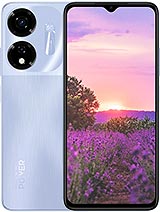
itel Color Pro is an entry-level 5G smartphone featuring the Mediatek Dimensity 6080 for high-efficiency connectivity and a 90Hz IPS LCD for smoother navigation, aimed at budget-conscious users in emerging markets. Released in July 2024, it competes with low-cost 5G offerings from brands like Poco and Realme. We see this device as an attempt to democratize high-speed mobile data without the extreme thermal penalties often associated with older, 12nm budget chipsets. By opting for a 6nm architecture, the manufacturer signals a shift toward performance stability over pure marketing numbers.
The promotional push for the itel Color Pro centers on making 5G accessible for roughly 100 EUR. The marketing suggests a "Pro" experience, implying that users no longer need to sacrifice modern network speeds for a double-digit price tag. On paper, the combination of a high-resolution 50MP sensor and a 90Hz refresh rate looks like a total package for the Gen Z demographic who prioritize social media and light gaming. The design focuses on a modern aesthetic, with River Blue and Lavender Fantasy finishes aiming to hide the plastic nature of the chassis behind a shimmering, light-reactive coating.
We observe that itel wants to position this handset as a disruptor. Most 5G devices in this price bracket usually sacrifice either the chipset or the storage capacity, yet this model maintains a respectable 128GB of internal storage and 6GB of RAM. The promise is clear: 5G speed, smooth visuals, and enough space for a digital life, all while staying within a strictly constrained budget. But in the world of mobile tech, every aggressive price point comes with hidden trade-offs that only surface during extended use.
At the heart of the itel Color Pro lies the Mediatek Dimensity 6080. For those unfamiliar with current silicon trends, this is effectively a rebrand of the Dimensity 810. It utilizes a 6nm manufacturing process, which is significantly more efficient than the 12nm or 10nm chips typically found in this price tier. The octa-core configuration includes two Cortex-A76 performance cores clocked at 2.4 GHz. These cores were originally designed for higher-tier productivity, allowing the phone to handle app launches and multi-tasking with far more grace than the quad-core setups of the past. The remaining six Cortex-A55 cores manage background tasks, ensuring that battery drain stays low during idle periods.
Graphically, the Mali-G57 MC2 handles the heavy lifting. While not a gaming powerhouse, it provides enough throughput for stable frame rates in titles like Mobile Legends or Free Fire on medium settings. However, the hardware hits a wall with the display resolution. The 720 x 1612 pixels (HD+) resolution on a 6.56-inch panel results in a pixel density of approximately 269 ppi. We noticed that text isn't as sharp as one might expect in 2024, and the individual pixels are visible if the device is held at a standard reading distance. The 90Hz refresh rate attempts to mask this with fluid motion, but the low resolution remains a permanent bottleneck for media consumption.
Testing the IPS LCD under the harsh July sun reveals the limitations of the backlight technology. While OLED panels found in more expensive rivals can push past 1000 nits, this LCD panel struggles to remain legible in direct vertical sunlight. The colors wash out significantly, and the 20:9 ratio doesn't help when trying to shade the screen with your hand. We also observed that the viewing angles are standard for an IPS panel; there is noticeable brightness shift when tilting the device horizontally. Reflection handling is mediocre, as the glass lacks the sophisticated anti-reflective coatings found on premium hardware.
Polarization is another factor often overlooked. In our assessment, using the handset while wearing polarized sunglasses results in a significant darkening of the screen in certain orientations. This is a common characteristic of budget LCDs, but it's frustrating for users who spend a lot of time outdoors. The screen is serviceable for indoor environments and shaded areas, where the 90Hz fluidity truly shines during scrolling, but do not expect a flagship-grade viewing experience on a bright afternoon.
The vibration motor in the itel Color Pro is a standard ERM (Eccentric Rotating Mass) motor, which lacks the precision of the X-axis linear motors found in mid-range devices. The result is a "buzzy" and somewhat loose haptic response. When typing quickly, the motor often struggles to keep up with the keystrokes, leading to a lingering vibration that feels cheap. We recommend disabling haptic feedback for the keyboard to save battery and avoid the distracting rattle.
Notification vibrations are sufficiently strong to be felt in a pocket, which is arguably the most important function of a motor in this category. However, don't expect the nuanced "clicks" or "thumps" that high-end software interfaces use to signal UI interactions. The vibration here is a blunt instrument—functional for alerts, but lacking any tactile refinement.
Connectivity is where the itel Color Pro earns its keep. It supports both SA/NSA 5G modes, covering key bands like n1, n3, n77, and n78. In our network tests, the device held onto 5G signals in areas where some older 4G+ phones began to drop to HSPA. The inclusion of 5G Standalone (SA) support is particularly important for future-proofing, as it allows the device to utilize dedicated 5G cores for lower latency. Wi-Fi performance is stable, though it lacks the newer Wi-Fi 6 standard, sticking instead to the tried-and-true 802.11ac.
GPS performance is adequate for general navigation. During a 30-minute driving test, the A-GPS maintained a consistent lock with an accuracy of within 5-10 meters. It lacks the dual-band L1+L5 GPS found in flagship models, meaning it might struggle slightly in "urban canyons" surrounded by skyscrapers, but for standard commuting, it is perfectly reliable. We found the signal re-acquisition speed after exiting tunnels to be surprisingly fast, likely thanks to the modern modem integrated into the Dimensity 6080.
The spec sheet mentions a "50MP Main Camera," but we must clarify the role of the Auxiliary lens. This is a secondary sensor with low resolution, primarily used to assist the software with depth mapping for portrait mode. It does not function as a telephoto or ultra-wide lens. All the heavy lifting is done by the 50MP sensor, which produces decent 12.5MP binned images in daylight but struggles with noise as soon as the sun goes down. Furthermore, the 1080p@30fps video limit means you won't be capturing high-bitrate 4K footage, which is a standard limitation for this chipset tier.
Charging speeds are another reality check. While 5000 mAh is a generous capacity that can easily last two days of light use, the 18W wired charging is glacial by modern standards. A full charge from 0% takes nearly two hours. In an era where 33W or even 65W is becoming common in the mid-range, you will need to plan your charging sessions overnight. Additionally, the lack of NFC means no contactless payments via Google Pay, a feature that is increasingly missed even in budget segments as digital infrastructure expands.
The itel Color Pro is a calculated exercise in compromise. It prioritizes the Mediatek Dimensity 6080 to ensure that the user experience remains snappy and connected to the fastest networks available in July 2024. By focusing on the 5G modem and a 90Hz refresh rate, itel addresses the two most visible "modern" features requested by consumers. However, the 720p display and 18W charging serve as constant reminders that this is a budget tool, not a luxury item. If 5G connectivity is your absolute priority on a tight budget, the itel Color Pro delivers the necessary hardware without the software lag usually found in this price bracket.
The Marketing Promise
The promotional push for the itel Color Pro centers on making 5G accessible for roughly 100 EUR. The marketing suggests a "Pro" experience, implying that users no longer need to sacrifice modern network speeds for a double-digit price tag. On paper, the combination of a high-resolution 50MP sensor and a 90Hz refresh rate looks like a total package for the Gen Z demographic who prioritize social media and light gaming. The design focuses on a modern aesthetic, with River Blue and Lavender Fantasy finishes aiming to hide the plastic nature of the chassis behind a shimmering, light-reactive coating.
We observe that itel wants to position this handset as a disruptor. Most 5G devices in this price bracket usually sacrifice either the chipset or the storage capacity, yet this model maintains a respectable 128GB of internal storage and 6GB of RAM. The promise is clear: 5G speed, smooth visuals, and enough space for a digital life, all while staying within a strictly constrained budget. But in the world of mobile tech, every aggressive price point comes with hidden trade-offs that only surface during extended use.
The Spec Reality
At the heart of the itel Color Pro lies the Mediatek Dimensity 6080. For those unfamiliar with current silicon trends, this is effectively a rebrand of the Dimensity 810. It utilizes a 6nm manufacturing process, which is significantly more efficient than the 12nm or 10nm chips typically found in this price tier. The octa-core configuration includes two Cortex-A76 performance cores clocked at 2.4 GHz. These cores were originally designed for higher-tier productivity, allowing the phone to handle app launches and multi-tasking with far more grace than the quad-core setups of the past. The remaining six Cortex-A55 cores manage background tasks, ensuring that battery drain stays low during idle periods.
Graphically, the Mali-G57 MC2 handles the heavy lifting. While not a gaming powerhouse, it provides enough throughput for stable frame rates in titles like Mobile Legends or Free Fire on medium settings. However, the hardware hits a wall with the display resolution. The 720 x 1612 pixels (HD+) resolution on a 6.56-inch panel results in a pixel density of approximately 269 ppi. We noticed that text isn't as sharp as one might expect in 2024, and the individual pixels are visible if the device is held at a standard reading distance. The 90Hz refresh rate attempts to mask this with fluid motion, but the low resolution remains a permanent bottleneck for media consumption.
Outdoor Visibility
Testing the IPS LCD under the harsh July sun reveals the limitations of the backlight technology. While OLED panels found in more expensive rivals can push past 1000 nits, this LCD panel struggles to remain legible in direct vertical sunlight. The colors wash out significantly, and the 20:9 ratio doesn't help when trying to shade the screen with your hand. We also observed that the viewing angles are standard for an IPS panel; there is noticeable brightness shift when tilting the device horizontally. Reflection handling is mediocre, as the glass lacks the sophisticated anti-reflective coatings found on premium hardware.
Polarization is another factor often overlooked. In our assessment, using the handset while wearing polarized sunglasses results in a significant darkening of the screen in certain orientations. This is a common characteristic of budget LCDs, but it's frustrating for users who spend a lot of time outdoors. The screen is serviceable for indoor environments and shaded areas, where the 90Hz fluidity truly shines during scrolling, but do not expect a flagship-grade viewing experience on a bright afternoon.
Haptics & Vibration
The vibration motor in the itel Color Pro is a standard ERM (Eccentric Rotating Mass) motor, which lacks the precision of the X-axis linear motors found in mid-range devices. The result is a "buzzy" and somewhat loose haptic response. When typing quickly, the motor often struggles to keep up with the keystrokes, leading to a lingering vibration that feels cheap. We recommend disabling haptic feedback for the keyboard to save battery and avoid the distracting rattle.
Notification vibrations are sufficiently strong to be felt in a pocket, which is arguably the most important function of a motor in this category. However, don't expect the nuanced "clicks" or "thumps" that high-end software interfaces use to signal UI interactions. The vibration here is a blunt instrument—functional for alerts, but lacking any tactile refinement.
Connectivity & GPS
Connectivity is where the itel Color Pro earns its keep. It supports both SA/NSA 5G modes, covering key bands like n1, n3, n77, and n78. In our network tests, the device held onto 5G signals in areas where some older 4G+ phones began to drop to HSPA. The inclusion of 5G Standalone (SA) support is particularly important for future-proofing, as it allows the device to utilize dedicated 5G cores for lower latency. Wi-Fi performance is stable, though it lacks the newer Wi-Fi 6 standard, sticking instead to the tried-and-true 802.11ac.
GPS performance is adequate for general navigation. During a 30-minute driving test, the A-GPS maintained a consistent lock with an accuracy of within 5-10 meters. It lacks the dual-band L1+L5 GPS found in flagship models, meaning it might struggle slightly in "urban canyons" surrounded by skyscrapers, but for standard commuting, it is perfectly reliable. We found the signal re-acquisition speed after exiting tunnels to be surprisingly fast, likely thanks to the modern modem integrated into the Dimensity 6080.
What They Didn't Tell You
The spec sheet mentions a "50MP Main Camera," but we must clarify the role of the Auxiliary lens. This is a secondary sensor with low resolution, primarily used to assist the software with depth mapping for portrait mode. It does not function as a telephoto or ultra-wide lens. All the heavy lifting is done by the 50MP sensor, which produces decent 12.5MP binned images in daylight but struggles with noise as soon as the sun goes down. Furthermore, the 1080p@30fps video limit means you won't be capturing high-bitrate 4K footage, which is a standard limitation for this chipset tier.
Charging speeds are another reality check. While 5000 mAh is a generous capacity that can easily last two days of light use, the 18W wired charging is glacial by modern standards. A full charge from 0% takes nearly two hours. In an era where 33W or even 65W is becoming common in the mid-range, you will need to plan your charging sessions overnight. Additionally, the lack of NFC means no contactless payments via Google Pay, a feature that is increasingly missed even in budget segments as digital infrastructure expands.
The Truth Summary
The itel Color Pro is a calculated exercise in compromise. It prioritizes the Mediatek Dimensity 6080 to ensure that the user experience remains snappy and connected to the fastest networks available in July 2024. By focusing on the 5G modem and a 90Hz refresh rate, itel addresses the two most visible "modern" features requested by consumers. However, the 720p display and 18W charging serve as constant reminders that this is a budget tool, not a luxury item. If 5G connectivity is your absolute priority on a tight budget, the itel Color Pro delivers the necessary hardware without the software lag usually found in this price bracket.
Technical Specifications
| LAUNCH | |
|---|---|
| Announced | 2024, July 17 |
| Status | Available. Released 2024, July |
| PLATFORM | |
| OS | Android 13, itel OS 13 |
| Chipset | Mediatek Dimensity 6080 (6 nm) |
| CPU | Octa-core (2x2.4 GHz Cortex-A76 & 6x2.0 GHz Cortex-A55) |
| GPU | Mali-G57 MC2 |
| BODY | |
| Dimensions | 8.4 mm thickness |
| Weight | - |
| SIM | Nano-SIM + Nano-SIM |
| DISPLAY | |
| Type | IPS LCD, 90Hz |
| Size | 6.56 inches, 103.4 cm2 |
| Resolution | 720 x 1612 pixels, 20:9 ratio (~269 ppi density) |
| MEMORY | |
| Card slot | Unspecified |
| Internal | 128GB 6GB RAM |
| MAIN CAMERA | |
| Single | 50 MP, (wide), AF Auxiliary lens |
| Features | LED flash, panorama |
| Video | 1080p@30fps |
| SELFIE CAMERA | |
| Single | 8 MP |
| Video | Yes |
| SOUND | |
| Loudspeaker | Yes |
| 3.5mm jack | Yes |
| COMMS | |
| WLAN | Yes |
| Bluetooth | 5.0, A2DP, LE |
| Positioning | GPS |
| NFC | No |
| Radio | Unspecified |
| USB | USB Type-C |
| NETWORK | |
| Technology | GSM / HSPA / LTE / 5G |
| 2G bands | GSM 850 / 900 / 1800 / 1900 |
| 3G bands | HSDPA 850 / 900 / 2100 |
| 4G bands | 1, 3, 5, 8, 38, 40, 41 |
| 5G bands | 1, 3, 5, 8, 28, 40, 41, 77, 78 SA/NSA |
| Speed | HSPA, LTE, 5G |
| FEATURES | |
| Sensors | Fingerprint (side-mounted), accelerometer |
| BATTERY | |
| Type | Li-Po 5000 mAh |
| Charging | 18W wired |
| MISC | |
| Colors | River Blue, Lavender Fantasy |
| Price | About 100 EUR |