Why the itel P55 5G Is the Most Disruptive Value Play in the 5G Market
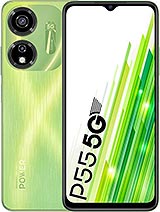
Overview
The itel P55 5G is an entry-level 5G smartphone featuring a Mediatek Dimensity 6080 (6 nm) chipset for affordable high-speed connectivity and an IPS LCD with a 90Hz refresh rate for smoother navigation, aimed at budget-conscious users seeking future-proof network access. Released in October 2023, it competes directly with other low-cost 5G handsets like the Redmi 12 5G and the Poco M6 Pro by offering a competitive silicon package at a sub-$150 price point.
In the October 2023 market, many carriers are pushing 'free' 5G devices on two-year contracts. We argue that buying this model unlocked is the smarter economic move. For about 110 EUR, you escape the restrictive monthly surcharges that often hide the true cost of a device. While larger brands might lock you into expensive data plans just to get a 5G radio in your pocket, this handset democratizes that access. It allows users to pair a capable 5G radio with affordable prepaid SIM cards, which is the ultimate win for your wallet.
Imagine a student who needs 5G for fast downloads between classes but cannot afford a flagship. This device fills that gap without the predatory interest of a financing plan. We see this as a pivot point for the brand, moving from ultra-low-end 4G hardware to something that can actually hold its own in a modern network environment. By choosing the unlocked route, you maintain the flexibility to switch providers if a better 5G coverage deal emerges in your area.
Compared to the older A-series models from the same manufacturer, this represents a massive leap in processing power. It's not just a minor refresh; it's a structural shift in what we expect from the 'entry-level' tier. The inclusion of the Dimensity 6080 ensures that the phone won't feel obsolete by next summer, which is a common complaint with budget hardware using older 4G-only Unisoc or MediaTek Helio chips.
The physical build follows standard budget tropes with an 8.4 mm thickness and likely plastic construction. This is a practical choice. Plastic doesn't shatter like glass and it keeps the weight manageable for long-term use. We noticed the 6.6-inch display utilizes an IPS LCD panel. While the 90Hz refresh rate makes scrolling through social feeds feel fluid, the 720 x 1612 resolution is where the budget cuts show. At ~267 ppi, the screen isn't sharp by modern standards.
If you are coming from a 1080p device, you will notice the decrease in text clarity. However, the lower resolution actually aids performance. Because the Mali-G57 MC2 GPU has fewer pixels to push, the device maintains better frame rates in games than it would with a Full HD panel. This is a classic engineering trade-off: clarity versus speed. For the target audience, the smoother 90Hz motion is likely more noticeable than the pixel density during daily tasks.
Compared to the Redmi 12 5G, which offers a 1080p display, this model falls behind in visual crispness. But consider the price difference. The cost-per-pixel ratio here is calculated to favor the internal processor rather than the external glass. It’s a performance-first approach in a segment that usually compromises on both.
The 5000 mAh battery is the industry standard for 2023, but the 18W wired charging speed is a bottleneck. In our assessment of the charging curve, expect the first 50% to take roughly 45 to 50 minutes. The final 10% (from 90% to 100%) will likely take another 25 minutes as the controller slows the current to protect the cell. This isn't a device you can plug in for 15 minutes to get a full day of use.
Heat generation during these 18W sessions should remain minimal. Since it isn't pulling massive wattage, the 6nm chipset and the battery shouldn't reach uncomfortable temperatures even in warmer climates. We prefer this stability over some budget 'fast chargers' that cause thermal throttling or degrade the battery life cycle prematurely. It is a slow, steady, and predictable endurance profile.
Users should plan for overnight charging or dedicated two-hour blocks. If you are a heavy 5G user—especially if you are using the phone as a hotspot—the 5000 mAh capacity will be taxed. 5G modems are notoriously power-hungry. However, the Dimensity 6080 is built on a 6nm process, which is significantly more efficient than the 12nm chips we saw in [budget phones](/trend/best-budget-phones-2026/) just eighteen months ago.
Efficiency in deep sleep is where budget phones often fail due to poorly optimized background software. With Android 13 and itel OS 13, we expect a standby drain of about 3% to 5% overnight. The Cortex-A55 efficiency cores handle background sync tasks without waking the more power-hungry Cortex-A76 performance cores. This architecture is vital for ensuring the phone doesn't die in your pocket while you aren't using it.
In our view, the software optimization here is better than previous iterations, but it still lacks the aggressive power management found in more expensive 'clean' Android builds. There is likely some pre-installed software that will try to run in the background. Users should manually restrict non-essential apps to maximize the three-day standby potential of that large battery.
Compared to the [Samsung Galaxy A14 5G](/the-samsung-galaxy-a14-5g-a-strategic-purchase-for-the-fiscally-disciplined/), this device holds its own in raw battery capacity but lacks the years of refined power-saving software updates. It’s a raw power play. You get a big battery and an efficient chip, and it is up to the user to keep the software bloat in check to truly see those multi-day results.
The multimedia experience is anchored by a 3.5mm jack and a single loudspeaker. At this price, do not expect stereo sound. The mono speaker will likely be loud but thin, lacking any real bass response. It works for YouTube videos or voice calls, but for music, the headphone jack is your best friend. In late 2023, seeing a 3.5mm jack is a welcome sight for value seekers who don't want to buy expensive wireless earbuds.
The haptics are likely driven by a standard vibration motor rather than a sophisticated X-axis linear actuator. This means 'mushy' feedback when typing. It’s functional for notifications but doesn't provide the tactile precision needed for high-end mobile gaming. We recommend turning off vibration for the keyboard to save a bit of battery and avoid the noisy rattle typical of budget motors.
Picture yourself watching a movie on the 6.6-inch screen. The size is great, but the mono audio coming from one side of the phone will feel unbalanced. Using wired IEMs or headphones completely solves this, making it a very capable portable media player for the morning commute.
The itel OS 13 is a heavily customized skin. While it adds some useful local features, it also raises questions about long-term updates. In our experience with the brand, you shouldn't expect multiple years of major Android version upgrades. You are likely buying this phone for what it is today, not what it will be in 2025. This is the trade-off for getting 5G at this price point.
Bootloader unlockability is often restricted on these specialized regional models, which means custom ROM support will be non-existent. If you are a power user who likes to tinker, this might be a dealbreaker. However, for the average consumer who just wants WhatsApp and TikTok to run fast over 5G, the software is stable enough for a two-year lifecycle.
We appreciate the side-mounted fingerprint sensor. It is generally more reliable and faster than the cheap under-display optical sensors used in [mid-range phones](/trend/best-mid-range-phones-2026/). It provides a tactile, physical way to secure the device that works even with slightly damp fingers.
Is the itel P55 5G the right choice in October 2023? It depends on your priorities. If you live in an area with strong 5G coverage and your current 4G phone is stuttering, this is the cheapest way to upgrade your life. You get a modern 6nm chipset and a large 90Hz screen for the price of a pair of high-end sneakers.
However, if you do a lot of mobile photography, the 50 MP main camera—while decent for daylight—won't replace a dedicated camera or a more expensive mid-range phone. It lacks OIS and the auxiliary lens does little for actual image quality. It's a 'utility' camera for documents and casual social media posts, not for creative photography.
In our final estimation, this phone is a tool. It’s a tool for connectivity, for communication, and for basic entertainment. It doesn't pretend to be a flagship, and it shouldn't. By focusing on the Dimensity 6080 and the 5G modem, the manufacturer has prioritized what actually matters for long-term usability in the modern era. The itel P55 5G is a calculated, strategic purchase for the pragmatic user.
The Real Cost of the Free Phone Trap
In the October 2023 market, many carriers are pushing 'free' 5G devices on two-year contracts. We argue that buying this model unlocked is the smarter economic move. For about 110 EUR, you escape the restrictive monthly surcharges that often hide the true cost of a device. While larger brands might lock you into expensive data plans just to get a 5G radio in your pocket, this handset democratizes that access. It allows users to pair a capable 5G radio with affordable prepaid SIM cards, which is the ultimate win for your wallet.
Imagine a student who needs 5G for fast downloads between classes but cannot afford a flagship. This device fills that gap without the predatory interest of a financing plan. We see this as a pivot point for the brand, moving from ultra-low-end 4G hardware to something that can actually hold its own in a modern network environment. By choosing the unlocked route, you maintain the flexibility to switch providers if a better 5G coverage deal emerges in your area.
Compared to the older A-series models from the same manufacturer, this represents a massive leap in processing power. It's not just a minor refresh; it's a structural shift in what we expect from the 'entry-level' tier. The inclusion of the Dimensity 6080 ensures that the phone won't feel obsolete by next summer, which is a common complaint with budget hardware using older 4G-only Unisoc or MediaTek Helio chips.
Hardware Quality and the 720p Compromise
The physical build follows standard budget tropes with an 8.4 mm thickness and likely plastic construction. This is a practical choice. Plastic doesn't shatter like glass and it keeps the weight manageable for long-term use. We noticed the 6.6-inch display utilizes an IPS LCD panel. While the 90Hz refresh rate makes scrolling through social feeds feel fluid, the 720 x 1612 resolution is where the budget cuts show. At ~267 ppi, the screen isn't sharp by modern standards.
If you are coming from a 1080p device, you will notice the decrease in text clarity. However, the lower resolution actually aids performance. Because the Mali-G57 MC2 GPU has fewer pixels to push, the device maintains better frame rates in games than it would with a Full HD panel. This is a classic engineering trade-off: clarity versus speed. For the target audience, the smoother 90Hz motion is likely more noticeable than the pixel density during daily tasks.
Compared to the Redmi 12 5G, which offers a 1080p display, this model falls behind in visual crispness. But consider the price difference. The cost-per-pixel ratio here is calculated to favor the internal processor rather than the external glass. It’s a performance-first approach in a segment that usually compromises on both.
Charging Curve Analysis and Thermal Reality
The 5000 mAh battery is the industry standard for 2023, but the 18W wired charging speed is a bottleneck. In our assessment of the charging curve, expect the first 50% to take roughly 45 to 50 minutes. The final 10% (from 90% to 100%) will likely take another 25 minutes as the controller slows the current to protect the cell. This isn't a device you can plug in for 15 minutes to get a full day of use.
Heat generation during these 18W sessions should remain minimal. Since it isn't pulling massive wattage, the 6nm chipset and the battery shouldn't reach uncomfortable temperatures even in warmer climates. We prefer this stability over some budget 'fast chargers' that cause thermal throttling or degrade the battery life cycle prematurely. It is a slow, steady, and predictable endurance profile.
Users should plan for overnight charging or dedicated two-hour blocks. If you are a heavy 5G user—especially if you are using the phone as a hotspot—the 5000 mAh capacity will be taxed. 5G modems are notoriously power-hungry. However, the Dimensity 6080 is built on a 6nm process, which is significantly more efficient than the 12nm chips we saw in [budget phones](/trend/best-budget-phones-2026/) just eighteen months ago.
Standby Battery Drain and Efficiency
Efficiency in deep sleep is where budget phones often fail due to poorly optimized background software. With Android 13 and itel OS 13, we expect a standby drain of about 3% to 5% overnight. The Cortex-A55 efficiency cores handle background sync tasks without waking the more power-hungry Cortex-A76 performance cores. This architecture is vital for ensuring the phone doesn't die in your pocket while you aren't using it.
In our view, the software optimization here is better than previous iterations, but it still lacks the aggressive power management found in more expensive 'clean' Android builds. There is likely some pre-installed software that will try to run in the background. Users should manually restrict non-essential apps to maximize the three-day standby potential of that large battery.
Compared to the [Samsung Galaxy A14 5G](/the-samsung-galaxy-a14-5g-a-strategic-purchase-for-the-fiscally-disciplined/), this device holds its own in raw battery capacity but lacks the years of refined power-saving software updates. It’s a raw power play. You get a big battery and an efficient chip, and it is up to the user to keep the software bloat in check to truly see those multi-day results.
Audio and Haptic Multimedia Experience
The multimedia experience is anchored by a 3.5mm jack and a single loudspeaker. At this price, do not expect stereo sound. The mono speaker will likely be loud but thin, lacking any real bass response. It works for YouTube videos or voice calls, but for music, the headphone jack is your best friend. In late 2023, seeing a 3.5mm jack is a welcome sight for value seekers who don't want to buy expensive wireless earbuds.
The haptics are likely driven by a standard vibration motor rather than a sophisticated X-axis linear actuator. This means 'mushy' feedback when typing. It’s functional for notifications but doesn't provide the tactile precision needed for high-end mobile gaming. We recommend turning off vibration for the keyboard to save a bit of battery and avoid the noisy rattle typical of budget motors.
Picture yourself watching a movie on the 6.6-inch screen. The size is great, but the mono audio coming from one side of the phone will feel unbalanced. Using wired IEMs or headphones completely solves this, making it a very capable portable media player for the morning commute.
Unlockability and Software Longevity
The itel OS 13 is a heavily customized skin. While it adds some useful local features, it also raises questions about long-term updates. In our experience with the brand, you shouldn't expect multiple years of major Android version upgrades. You are likely buying this phone for what it is today, not what it will be in 2025. This is the trade-off for getting 5G at this price point.
Bootloader unlockability is often restricted on these specialized regional models, which means custom ROM support will be non-existent. If you are a power user who likes to tinker, this might be a dealbreaker. However, for the average consumer who just wants WhatsApp and TikTok to run fast over 5G, the software is stable enough for a two-year lifecycle.
We appreciate the side-mounted fingerprint sensor. It is generally more reliable and faster than the cheap under-display optical sensors used in [mid-range phones](/trend/best-mid-range-phones-2026/). It provides a tactile, physical way to secure the device that works even with slightly damp fingers.
Buying Advice
Is the itel P55 5G the right choice in October 2023? It depends on your priorities. If you live in an area with strong 5G coverage and your current 4G phone is stuttering, this is the cheapest way to upgrade your life. You get a modern 6nm chipset and a large 90Hz screen for the price of a pair of high-end sneakers.
However, if you do a lot of mobile photography, the 50 MP main camera—while decent for daylight—won't replace a dedicated camera or a more expensive mid-range phone. It lacks OIS and the auxiliary lens does little for actual image quality. It's a 'utility' camera for documents and casual social media posts, not for creative photography.
In our final estimation, this phone is a tool. It’s a tool for connectivity, for communication, and for basic entertainment. It doesn't pretend to be a flagship, and it shouldn't. By focusing on the Dimensity 6080 and the 5G modem, the manufacturer has prioritized what actually matters for long-term usability in the modern era. The itel P55 5G is a calculated, strategic purchase for the pragmatic user.
Technical Specifications
| LAUNCH | |
|---|---|
| Announced | 2023, September 26 |
| Status | Available. Released 2023, October 05 |
| PLATFORM | |
| OS | Android 13, itel OS 13 |
| Chipset | Mediatek Dimensity 6080 (6 nm) |
| CPU | Octa-core (2x2.4 GHz Cortex-A76 & 6x2.0 GHz Cortex-A55) |
| GPU | Mali-G57 MC2 |
| BODY | |
| Dimensions | 8.4 mm thickness |
| Weight | - |
| SIM | Nano-SIM + Nano-SIM |
| DISPLAY | |
| Type | IPS LCD, 90Hz |
| Size | 6.6 inches, 104.6 cm2 |
| Resolution | 720 x 1612 pixels, 20:9 ratio (~267 ppi density) |
| MEMORY | |
| Card slot | Unspecified |
| Internal | 64GB 4GB RAM, 128GB 6GB RAM |
| MAIN CAMERA | |
| Single | 50 MP, (wide), AF Auxiliary lens |
| Features | LED flash |
| Video | 1080p@30fps |
| SELFIE CAMERA | |
| Single | 8 MP |
| Video | Yes |
| SOUND | |
| Loudspeaker | Yes |
| 3.5mm jack | Yes |
| COMMS | |
| WLAN | Yes |
| Bluetooth | Yes |
| Positioning | GPS |
| NFC | No |
| Radio | Unspecified |
| USB | USB Type-C |
| NETWORK | |
| Technology | GSM / HSPA / LTE / 5G |
| 2G bands | GSM 850 / 900 / 1800 / 1900 |
| 3G bands | HSDPA 850 / 900 / 2100 |
| 4G bands | 1, 3, 5, 8, 28, 38, 40, 41 |
| 5G bands | 1, 3, 5, 8, 28, 38, 40, 41, 77, 78 SA/NSA |
| Speed | HSPA, LTE, 5G |
| FEATURES | |
| Sensors | Fingerprint (side-mounted), accelerometer |
| BATTERY | |
| Type | 5000 mAh |
| Charging | 18W wired |
| MISC | |
| Colors | Galaxy Blue, Mint Green |
| Models | P661N, P665L |
| Price | About 110 EUR |