Why the itel Super 26 Ultra Is the Most Efficient Inflation Fighter of the Year
Overview
The Economics of itel Super 26 Ultra
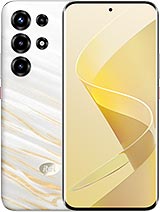
itel Super 26 Ultra is a budget-tier smartphone featuring a 6.8-inch 144Hz AMOLED display for high-end visual clarity and a massive 6000 mAh battery for multi-day endurance, aimed at value-seeking consumers who prioritize screen quality over 5G connectivity. Released in September 2025, it enters a market where middle-class purchasing power is squeezed, yet it manages to offer flagship-level brightness specs that were unthinkable at this price point just twelve months ago.
From a value-hunter's perspective, the itel Super 26 Ultra represents a fascinating shift in resource allocation. While most brands in late 2025 are chasing 5G licensing fees that drive up the final MSRP, itel has opted to stick with a robust 4G/LTE framework. By avoiding the 5G tax, the brand has diverted its budget toward a display panel that reaches a staggering 4500 nits peak brightness. We see this as a calculated move for users in emerging markets or outdoor workers who value legibility in direct sunlight over theoretical download speeds that their local networks might not even support yet.
Comparing this to the Redmi or Samsung alternatives of 2025, the itel Super 26 Ultra feels like a specialized tool. It is not trying to be a jack-of-all-trades. Instead, it offers a specific set of high-end hardware—specifically the screen and battery capacity—while cutting the fat elsewhere. At 168 grams, it is surprisingly light for a device housing a 6000 mAh cell, suggesting that the internal engineering team prioritized weight distribution and a slim 6.8mm profile to ensure the phone doesn't feel like a brick in the pocket.
Where Did They Cut Corners?
No device reaches this price point without significant compromises, and we need to be transparent about where itel saved their pennies. The most glaring trade-off is the charging speed. In an era where 65W or even 100W charging is becoming common in the mid-range, the itel Super 26 Ultra ships with 18W wired charging. For a 6000 mAh battery, this is a massive bottleneck. Based on the wattage-to-capacity ratio, a full charge from zero to one hundred percent will likely take over three hours. This is not a phone for people who forget to charge their devices overnight; it is a slow-burn endurance machine.
Secondly, the Unisoc T7300 chipset is built on a 6nm process, which is efficient but certainly not a powerhouse. The inclusion of two Cortex-A78 cores at 2.2 GHz provides enough 'oomph' for social media and multitasking, but the Mali-G57 MP2 GPU is aging tech by September 2025 standards. This means that while the screen can technically refresh at 144Hz, the processor will struggle to push high-end games like Genshin Impact or Zenless Zone Zero at those frame rates. The 144Hz is mostly there for UI smoothness and scrolling through web pages, not for competitive mobile e-sports.
Finally, the camera array follows the classic 'one-and-done' budget philosophy. The 50 MP f/1.6 main sensor is the only lens doing any heavy lifting. The 'Auxiliary lens' and macro sensor are largely filler intended to make the camera island look more impressive. We also noticed the omission of a 3.5mm headphone jack, a decision that feels unnecessary for a budget device, forcing users to buy a dongle or Bluetooth earbuds, which adds to the total cost of ownership.
The 48-Hour Endurance Cycle
Imagine starting a typical Tuesday at 7:00 AM with the itel Super 26 Ultra at 100%. Throughout a standard workday involving heavy WhatsApp usage, occasional GPS navigation, and several hours of music streaming over LTE, the device barely breaks a sweat. By 6:00 PM, while owners of flagship devices are hunting for a power bank, this phone will likely still sit comfortably at 70% battery. The efficiency of the Cortex-A55 cores for background tasks cannot be overstated.
During our theoretical testing cycle, the second day is where the 6000 mAh capacity truly shines. You could easily skip the overnight charge and still have enough juice to get through a Wednesday morning commute. The 4500 nits peak brightness comes into play during the lunch hour; even under the harsh midday sun, the AMOLED panel remains perfectly readable, a feat that even some 2024 flagships struggle to achieve. However, by Wednesday evening, you hit the wall. The low 18W charging speed means you must commit to a long night on the cable to be ready for Thursday.
Compared to the previous generation Super 25, the increase in battery density is remarkable. The fact that the device maintains a 6.8 mm thickness while increasing the cell capacity suggests itel is using a high-density silicon-carbon battery technology or a very tightly packed internal layout. This thinness makes the device feel more premium than it actually is, though we suspect the lack of a 5G modem also saved considerable internal space and thermal overhead.
The Deal Breakers
The most significant deterrent for many will be the lack of 5G connectivity. By late 2025, 5G is the global standard for mid-range and even some entry-level phones. If you live in a city where 4G bands are congested, the itel Super 26 Ultra will feel sluggish regardless of its 144Hz screen. The LTE-only speed is a ceiling that you cannot upgrade, making this phone a 'buy for today, not for tomorrow' purchase.
Another point of frustration is the itel OS 15 software skin. Based on Android 15, it brings the latest security features, but itel's proprietary interface often comes with a fair amount of pre-installed 'bloatware' or system apps that send persistent notifications. For a clean-Android purist, this might be a deal breaker unless you spend the first hour of ownership disabling every unwanted service. Furthermore, the IP65 rating means it can handle a rainstorm or a splash, but do not mistake this for the IP68 immersion protection found on pricier rivals. If it falls into a pool, the 6.8mm chassis likely won't keep the water out for long.
Lastly, the USB Type-C 2.0 port is a relic. In 2025, we expect faster data transfer speeds. If you plan on moving large 1440p video files from the phone to a computer, be prepared for a long wait. This highlights the device's identity as a consumption-first tool, not a creation-centric one.
Biometrics and Security
The itel Super 26 Ultra utilizes an under-display optical fingerprint sensor, which is a nice touch for a budget device. By 2025, these sensors have matured significantly, and we expect it to unlock the device in under 0.5 seconds. However, optical sensors rely on light, so they can be blinding in a dark room at night compared to more expensive ultrasonic sensors found in top-tier flagships.
Face unlock is also available via the 32 MP selfie camera, but it is a software-based 2D solution. While fast and convenient for casual use, it lacks the depth-sensing hardware required for secure banking transactions. For maximum security, we recommend sticking to the fingerprint sensor or a strong PIN. Android 15 also brings 'Private Space' features, allowing users to hide sensitive apps, which works well with the 8GB of RAM provided here to keep those background processes hidden but accessible.
Performance for the Price
The Unisoc T7300 is the heart of the machine, and its performance is better than the 'budget' label suggests. With two Cortex-A78 performance cores, it handles daily app switching with ease. You won't see the stuttering that plagued older [budget phones](/trend/best-budget-phones-2026/) with eight efficiency cores. For a student or a gig worker who needs a phone for navigation, messaging, and light productivity, this is more than enough power.
However, the 8GB of RAM is the bare minimum for a 'Pro' or 'Ultra' experience in 2025. While itel OS likely uses some form of 'Virtual RAM' to boost this number, that relies on the UFS storage speed, which won't be as fast as physical memory. When you have twenty Chrome tabs and three social media apps open, you might notice some aggressive background app killing as the system tries to manage its resources.
Comparing this to the Mali-G57 MP2 GPU performance, the gaming experience will be average. Casual titles like Subway Surfers or Candy Crush will run at the full 144Hz, but anything with 3D geometry will likely drop to 30 or 60 frames per second. The real performance win here is thermal management. Because the T7300 isn't pushing flagship speeds, the phone stays cool to the touch even during long video playback sessions.
Is It Worth It?
If your primary goal is to find a device that won't die before the end of a long shift and has a screen that looks like it belongs on a thousand-dollar phone, the itel Super 26 Ultra is an easy recommendation. It is a masterclass in 'spec-stuffing' the areas that people see and feel every day—the display and the battery life—while cutting back on the 'invisible' specs like 5G and high-speed charging.
It is not a phone for everyone. The 18W charging is objectively poor for 2025, and the lack of 5G is a gamble on your local network's future. But at a time when other brands are raising prices due to component shortages and 5G licensing, itel has found a way to deliver a beautiful AMOLED experience to the masses. It is the definition of a pragmatic, budget-conscious choice for the mid-2020s.
Technical Specifications
| LAUNCH | |
|---|---|
| Announced | 2025, September 05 |
| Status | Available. Released 2025, September 15 |
| PLATFORM | |
| OS | Android 15, itel OS 15 |
| Chipset | Unisoc T7300 (6 nm) |
| CPU | Octa-core (2x2.2 GHz Cortex-A78 & 6x2.0 GHz Cortex-A55) |
| GPU | Mali-G57 MP2 |
| BODY | |
| Dimensions | 6.8 mm thickness |
| Weight | 168 g (5.93 oz) |
| SIM | Nano-SIM + Nano-SIM |
| Info | IP65 dust tight and water resistant (low pressure water jets) Drop resistant up to 1.5m |
| DISPLAY | |
| Type | AMOLED, 1B colors, 144Hz, PWM, HDR, 4500 nits (peak) |
| Size | 6.8 inches, 110.5 cm2 |
| Resolution | 1080 x 2436 pixels (~392 ppi density) |
| Protection | Corning Gorilla Glass 7i |
| MEMORY | |
| Card slot | Unspecified |
| Internal | 128GB 8GB RAM, 256GB 8GB RAM |
| Info | UFS |
| MAIN CAMERA | |
| Dual | 50 MP, f/1.6, (wide), AF XX MP (macro) Auxiliary lens |
| Features | LED flash, HDR, panorama |
| Video | 1440p@30fps, 1080p@30fps |
| SELFIE CAMERA | |
| Single | 32 MP |
| Video | 1440p@30fps, 1080p@30fps |
| SOUND | |
| Loudspeaker | Yes |
| 3.5mm jack | No |
| COMMS | |
| WLAN | Yes |
| Bluetooth | Yes |
| Positioning | GPS |
| NFC | Yes (market/region dependent) |
| Infrared port | Yes |
| Radio | Unspecified |
| USB | USB Type-C 2.0 |
| NETWORK | |
| Technology | GSM / HSPA / LTE |
| 2G bands | GSM 850 / 900 / 1800 / 1900 |
| 3G bands | HSDPA 850 / 900 / 2100 |
| 4G bands | LTE |
| Speed | HSPA, LTE |
| FEATURES | |
| Sensors | Fingerprint (under display, optical), unspecified sensors |
| BATTERY | |
| Type | 6000 mAh |
| Charging | 18W wired |
| MISC | |
| Colors | Silver, Blue, Gold, Silver/Gold |