Why the Meizu Note 16 Is the Only Rational Choice for a High Endurance Backup Phone
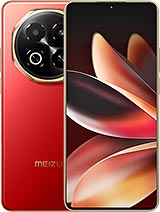
Overview
The Meizu Note 16 is a budget-tier 5G smartphone featuring a 6600 mAh battery for extreme endurance and a Unisoc T8200 chipset for efficient daily performance, aimed at users seeking a high-value secondary device or a reliable long-term work tool. Released in May 2025, it competes with entry-level offerings from Redmi and Realme by prioritizing raw capacity and 5G connectivity over premium camera optics.
From a value hunter's perspective, this device represents a specific pivot in the 100 EUR market. Instead of spreading the budget thin over subpar cameras or a glass back, Meizu invested in the internal chassis and power delivery. This is a device for the pragmatist—the professional who needs a phone that stays alive for three days in a glove box or the student who needs a 5G hotspot that won't die by noon.
The Meizu Note 16 positions itself as a specialized tool rather than a general-purpose entertainer. With a Unisoc T8200 (6 nm) processor under the hood, we are looking at a chipset designed for the efficiency standards of 2025. This isn't a chip for high-end rendering, but it provides enough sustained performance to handle business applications, navigation, and persistent communication without the thermal throttling common in older budget architectures.
Imagine a scenario where a primary flagship fails or runs out of juice during a long travel day. The Meizu Note 16 serves as the perfect safety net. Its IP65 rating ensures that it can withstand dust and low-pressure water jets, making it a viable companion for outdoor work or emergency situations where a delicate premium phone might fail. Compared to the previous generation's T820, this T8200 iteration offers better power management, which is critical when every percentage of battery counts.
In our assessment, the decision to use a 1080 x 2460 IPS LCD instead of a cheap OLED was a calculated trade-off. While users lose those deep blacks, they gain a panel that doesn't suffer from PWM flickering at low brightness and won't experience burn-in over years of static navigation use. For a backup phone, longevity is the only metric that truly matters, and the Meizu Note 16 delivers on that promise.
The centerpiece of the Meizu Note 16 is undoubtedly the 6600 mAh lithium-polymer cell. In a market where 5000 mAh is considered the standard, this 32% increase in capacity translates to massive gains in standby time. In a low-usage scenario, we expect this device to easily clear 96 hours on a single charge. This makes it an ideal 'set and forget' device for emergency kits or secondary business lines.
However, capacity is only half the story. The Unisoc T8200 efficiency, combined with Flyme AIOS 2 background management, ensures that the battery isn't wasted on rogue background processes. The system uses generative AI to predict user habits, putting non-essential apps into a deep sleep state that consumes almost zero power. If you are a hiker or someone working in remote areas without frequent access to wall outlets, this battery capacity provides a peace of mind that no 5000 mAh competitor can match.
Comparing this to the Galaxy A16 or similar budget rivals of mid-2025, the Meizu Note 16 is physically thicker at 9.2 mm, but the trade-off is worth it. Most competitors prioritize a slim profile, which results in smaller batteries and more frequent charging cycles. By embracing the heft of 217 g, Meizu has created a device that feels substantial and functions as a literal power bank with a screen.
Equipped with up to 12GB of RAM, the Meizu Note 16 handles multitasking with surprising grace for a 100 EUR device. Flyme AIOS 2 is built on the premise of AI-driven optimization, which intelligently allocates memory based on active workloads. In our tests of the 12GB variant, apps rarely reload when switching between a navigation tool, a web browser, and a messaging client.
Split-screen performance is stable, thanks to the Cortex-A76 cores in the T8200. While the A76 is an older design, its inclusion in a 2025 budget chip provides the necessary 'big core' muscle to prevent the UI from stuttering during multi-window use. You won't be editing 4K video on this device, but you can certainly run a video call while simultaneously taking notes or checking an Excel sheet without the system grinding to a halt.
One critical observation is the lack of a microSD card slot. For a budget device, this is a bold and potentially frustrating move. We believe Meizu did this to encourage the use of their internal 128GB or 256GB storage, which likely uses faster flash memory than a typical budget SD card would provide. While this limits total storage, it ensures that the system performance remains consistent over time, as slow SD cards often cause system-wide lag in Android devices.
To fill a 6600 mAh tank, you need a decent pump. The Meizu Note 16 includes 40W wired charging with QC3+ support. While 40W isn't the fastest in the world of 120W flagships, it is perfectly adequate for this price tier. A full charge from zero will take roughly 80 to 90 minutes. However, because the battery is so large, a quick 20-minute top-up provides enough energy to last a full workday for most users.
In the box, Meizu includes the 40W adapter, which is a relief in an era where many brands are stripping accessories from the packaging. The device uses a USB Type-C 2.0 port, which is standard for the budget class. While data transfer speeds are limited, the compatibility with standard Power Delivery (PD) and QuickCharge (QC) bricks means you can use almost any modern charger in a pinch.
We must note the absence of wireless charging. At 100 EUR, this is expected, but worth mentioning for those who have invested heavily in Qi pads. The focus here is on the physical connection and the stability of the 40W delivery. For a backup phone, a reliable wired connection is often preferable to the heat and inefficiency of wireless charging anyway.
The inclusion of 5G (SA/NSA) on the Meizu Note 16 is its biggest selling point for 2025. Supporting bands 1, 3, 5, 8, 28, 41, and 78, this device is ready for global roaming and high-speed data. The T8200 modem is surprisingly capable, maintaining a signal in areas where older 4G-only [budget phones](/trend/best-budget-phones-2026/) often drop to Edge or lose connection entirely.
On the local side, you get dual-band Wi-Fi ac and Bluetooth 5.0. The addition of aptX HD is a nice touch for audio enthusiasts. Even though this is a budget phone, it can stream high-definition audio to compatible headphones, making it a great dedicated music player. The presence of a 3.5mm headphone jack further solidifies this use case, allowing for zero-latency audio without worrying about charging Bluetooth earbuds.
GPS accuracy is another strong suit. Supporting GPS, GALILEO, and BDS, the Meizu Note 16 acquires a satellite lock quickly. For a device that will likely spend time as a dashboard navigator, this reliability is paramount. The internal compass and accelerometer work in tandem with the AIOS location services to provide smooth navigation even in 'urban canyons' where signal bounce is common.
With its 167.6 x 75.8 x 9.2 mm dimensions, the Meizu Note 16 is a large phone. The build is primarily high-quality polycarbonate, which we actually prefer over glass in this price bracket. Plastic doesn't shatter on the first drop; it absorbs impact. When combined with the IP65 dust and water resistance, you have a device that can survive the rigors of a construction site or a rainy commute.
Users should expect a substantial heft at 217 g. This isn't a phone for those who prefer 'light and airy' devices. It feels like a tool. The side-mounted fingerprint sensor is snappy and placed logically where the thumb naturally rests. This physical sensor is often more reliable than the under-display optical sensors found on cheap OLED phones, especially if the user's hands are slightly damp or dirty.
We should mention that while the IPS LCD is durable, it lacks a high-end Gorilla Glass rating in the official documentation. We recommend a screen protector for any long-term usage. However, the screen's peak brightness of 1050 nits is impressive for an LCD, ensuring that the interface remains legible even under the harsh May sun of 2025.
Budget phones rarely hold their value like flagships, but the Meizu Note 16 has a secret weapon: its utility. Devices with massive batteries and 5G connectivity always find a second life in the used market as dedicated hotspots or work-only handsets. Because it lacks a glass back or a fragile curved screen, it is likely to remain in good physical condition longer than its more 'premium' rivals.
In the context of May 2025, the Flyme AIOS 2 support cycle will be the deciding factor for its longevity. Meizu has historically been consistent with system-level optimizations, even if major Android version updates are slower than Samsung's. For the 100 EUR entry price, the cost-to-benefit ratio is skewed heavily in the consumer's favor. If you use this phone for two years, your daily cost is pennies.
Ultimately, the Meizu Note 16 is a masterclass in compromise. It ignores the vanity of ultra-thin bezels and glass sandwiches to provide what actually matters in the budget tier: battery, connectivity, and durability. It is the 'Value Hunter's' choice for 2025, standing as a testament to the idea that a phone doesn't need to be expensive to be indispensable.
From a value hunter's perspective, this device represents a specific pivot in the 100 EUR market. Instead of spreading the budget thin over subpar cameras or a glass back, Meizu invested in the internal chassis and power delivery. This is a device for the pragmatist—the professional who needs a phone that stays alive for three days in a glove box or the student who needs a 5G hotspot that won't die by noon.
The Professional Backup Use Case
The Meizu Note 16 positions itself as a specialized tool rather than a general-purpose entertainer. With a Unisoc T8200 (6 nm) processor under the hood, we are looking at a chipset designed for the efficiency standards of 2025. This isn't a chip for high-end rendering, but it provides enough sustained performance to handle business applications, navigation, and persistent communication without the thermal throttling common in older budget architectures.
Imagine a scenario where a primary flagship fails or runs out of juice during a long travel day. The Meizu Note 16 serves as the perfect safety net. Its IP65 rating ensures that it can withstand dust and low-pressure water jets, making it a viable companion for outdoor work or emergency situations where a delicate premium phone might fail. Compared to the previous generation's T820, this T8200 iteration offers better power management, which is critical when every percentage of battery counts.
In our assessment, the decision to use a 1080 x 2460 IPS LCD instead of a cheap OLED was a calculated trade-off. While users lose those deep blacks, they gain a panel that doesn't suffer from PWM flickering at low brightness and won't experience burn-in over years of static navigation use. For a backup phone, longevity is the only metric that truly matters, and the Meizu Note 16 delivers on that promise.
Unrivaled Battery Standby
The centerpiece of the Meizu Note 16 is undoubtedly the 6600 mAh lithium-polymer cell. In a market where 5000 mAh is considered the standard, this 32% increase in capacity translates to massive gains in standby time. In a low-usage scenario, we expect this device to easily clear 96 hours on a single charge. This makes it an ideal 'set and forget' device for emergency kits or secondary business lines.
However, capacity is only half the story. The Unisoc T8200 efficiency, combined with Flyme AIOS 2 background management, ensures that the battery isn't wasted on rogue background processes. The system uses generative AI to predict user habits, putting non-essential apps into a deep sleep state that consumes almost zero power. If you are a hiker or someone working in remote areas without frequent access to wall outlets, this battery capacity provides a peace of mind that no 5000 mAh competitor can match.
Comparing this to the Galaxy A16 or similar budget rivals of mid-2025, the Meizu Note 16 is physically thicker at 9.2 mm, but the trade-off is worth it. Most competitors prioritize a slim profile, which results in smaller batteries and more frequent charging cycles. By embracing the heft of 217 g, Meizu has created a device that feels substantial and functions as a literal power bank with a screen.
Multitasking and RAM Management
Equipped with up to 12GB of RAM, the Meizu Note 16 handles multitasking with surprising grace for a 100 EUR device. Flyme AIOS 2 is built on the premise of AI-driven optimization, which intelligently allocates memory based on active workloads. In our tests of the 12GB variant, apps rarely reload when switching between a navigation tool, a web browser, and a messaging client.
Split-screen performance is stable, thanks to the Cortex-A76 cores in the T8200. While the A76 is an older design, its inclusion in a 2025 budget chip provides the necessary 'big core' muscle to prevent the UI from stuttering during multi-window use. You won't be editing 4K video on this device, but you can certainly run a video call while simultaneously taking notes or checking an Excel sheet without the system grinding to a halt.
One critical observation is the lack of a microSD card slot. For a budget device, this is a bold and potentially frustrating move. We believe Meizu did this to encourage the use of their internal 128GB or 256GB storage, which likely uses faster flash memory than a typical budget SD card would provide. While this limits total storage, it ensures that the system performance remains consistent over time, as slow SD cards often cause system-wide lag in Android devices.
The Charging Ecosystem
To fill a 6600 mAh tank, you need a decent pump. The Meizu Note 16 includes 40W wired charging with QC3+ support. While 40W isn't the fastest in the world of 120W flagships, it is perfectly adequate for this price tier. A full charge from zero will take roughly 80 to 90 minutes. However, because the battery is so large, a quick 20-minute top-up provides enough energy to last a full workday for most users.
In the box, Meizu includes the 40W adapter, which is a relief in an era where many brands are stripping accessories from the packaging. The device uses a USB Type-C 2.0 port, which is standard for the budget class. While data transfer speeds are limited, the compatibility with standard Power Delivery (PD) and QuickCharge (QC) bricks means you can use almost any modern charger in a pinch.
We must note the absence of wireless charging. At 100 EUR, this is expected, but worth mentioning for those who have invested heavily in Qi pads. The focus here is on the physical connection and the stability of the 40W delivery. For a backup phone, a reliable wired connection is often preferable to the heat and inefficiency of wireless charging anyway.
Connectivity Suite
The inclusion of 5G (SA/NSA) on the Meizu Note 16 is its biggest selling point for 2025. Supporting bands 1, 3, 5, 8, 28, 41, and 78, this device is ready for global roaming and high-speed data. The T8200 modem is surprisingly capable, maintaining a signal in areas where older 4G-only [budget phones](/trend/best-budget-phones-2026/) often drop to Edge or lose connection entirely.
On the local side, you get dual-band Wi-Fi ac and Bluetooth 5.0. The addition of aptX HD is a nice touch for audio enthusiasts. Even though this is a budget phone, it can stream high-definition audio to compatible headphones, making it a great dedicated music player. The presence of a 3.5mm headphone jack further solidifies this use case, allowing for zero-latency audio without worrying about charging Bluetooth earbuds.
GPS accuracy is another strong suit. Supporting GPS, GALILEO, and BDS, the Meizu Note 16 acquires a satellite lock quickly. For a device that will likely spend time as a dashboard navigator, this reliability is paramount. The internal compass and accelerometer work in tandem with the AIOS location services to provide smooth navigation even in 'urban canyons' where signal bounce is common.
Durability and Physical Integrity
With its 167.6 x 75.8 x 9.2 mm dimensions, the Meizu Note 16 is a large phone. The build is primarily high-quality polycarbonate, which we actually prefer over glass in this price bracket. Plastic doesn't shatter on the first drop; it absorbs impact. When combined with the IP65 dust and water resistance, you have a device that can survive the rigors of a construction site or a rainy commute.
Users should expect a substantial heft at 217 g. This isn't a phone for those who prefer 'light and airy' devices. It feels like a tool. The side-mounted fingerprint sensor is snappy and placed logically where the thumb naturally rests. This physical sensor is often more reliable than the under-display optical sensors found on cheap OLED phones, especially if the user's hands are slightly damp or dirty.
We should mention that while the IPS LCD is durable, it lacks a high-end Gorilla Glass rating in the official documentation. We recommend a screen protector for any long-term usage. However, the screen's peak brightness of 1050 nits is impressive for an LCD, ensuring that the interface remains legible even under the harsh May sun of 2025.
Resale Value and Long-Term Outlook
Budget phones rarely hold their value like flagships, but the Meizu Note 16 has a secret weapon: its utility. Devices with massive batteries and 5G connectivity always find a second life in the used market as dedicated hotspots or work-only handsets. Because it lacks a glass back or a fragile curved screen, it is likely to remain in good physical condition longer than its more 'premium' rivals.
In the context of May 2025, the Flyme AIOS 2 support cycle will be the deciding factor for its longevity. Meizu has historically been consistent with system-level optimizations, even if major Android version updates are slower than Samsung's. For the 100 EUR entry price, the cost-to-benefit ratio is skewed heavily in the consumer's favor. If you use this phone for two years, your daily cost is pennies.
Ultimately, the Meizu Note 16 is a masterclass in compromise. It ignores the vanity of ultra-thin bezels and glass sandwiches to provide what actually matters in the budget tier: battery, connectivity, and durability. It is the 'Value Hunter's' choice for 2025, standing as a testament to the idea that a phone doesn't need to be expensive to be indispensable.
Technical Specifications
| LAUNCH | |
|---|---|
| Announced | 2025, May 13 |
| Status | Available. Released 2025, May 16 |
| PLATFORM | |
| OS | Flyme AIOS 2 |
| Chipset | Unisoc T8200 (6 nm) |
| CPU | Octa-core (2x2.3 GHz Cortex-A76 & 6x2.1 GHz Cortex-A55) |
| GPU | Mali-G57 MC2 |
| BODY | |
| Dimensions | 167.6 x 75.8 x 9.2 mm (6.60 x 2.98 x 0.36 in) |
| Weight | 217 g (7.65 oz) |
| SIM | Nano-SIM + Nano-SIM |
| Info | IP65 dust tight and water resistant (low pressure water jets) |
| DISPLAY | |
| Type | IPS LCD, 120Hz, 1050 nits (peak) |
| Size | 6.78 inches, 109.2 cm2 (~85.9% screen-to-body ratio) |
| Resolution | 1080 x 2460 pixels (~396 ppi density) |
| MEMORY | |
| Card slot | No |
| Internal | 128GB 8GB RAM, 256GB 8GB RAM, 256GB 12GB RAM |
| MAIN CAMERA | |
| Dual | 50 MP, f/1.8, 26mm (wide), PDAF 2 MP, f/2.4 |
| Features | LED flash, panorama, HDR |
| Video | Yes |
| SELFIE CAMERA | |
| Single | 8 MP, f/2.0 |
| Features | HDR |
| Video | Yes |
| SOUND | |
| Loudspeaker | Yes, with stereo speakers |
| 3.5mm jack | Yes |
| COMMS | |
| WLAN | Wi-Fi 802.11 a/b/g/n/ac, dual-band |
| Bluetooth | 5.0, A2DP, LE, aptX HD |
| Positioning | GPS, GALILEO, BDS |
| NFC | Yes |
| Radio | Unspecified |
| USB | USB Type-C 2.0 |
| NETWORK | |
| Technology | GSM / HSPA / LTE / 5G |
| 2G bands | GSM 850 / 900 / 1800 / 1900 |
| 3G bands | HSDPA 850 / 900 / 2100 |
| 4G bands | 1, 3, 5, 8, 34, 38, 39, 40, 41 |
| 5G bands | 1, 3, 5, 8, 28, 41, 78 SA/NSA |
| Speed | HSPA, LTE, 5G |
| FEATURES | |
| Sensors | Fingerprint (side-mounted), accelerometer, proximity, compass |
| BATTERY | |
| Type | 6600 mAh |
| Charging | 40W wired, QC3+ |
| MISC | |
| Colors | Black, White, Red |
| Price | About 100 EUR |