Why the Mid-Range OPPO Pad Air5 Is the Ultimate Ecosystem Trojan Horse
Overview
The Strategic Pivot of the BBK Tablet Strategy
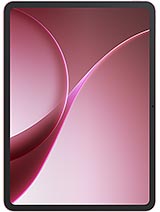
The OPPO Pad Air5 is a mid-range tablet featuring a 12.1-inch 120Hz IPS LCD for immersive media consumption and the Mediatek Dimensity 7300 Ultra for efficient multitasking, aimed at students and digital professionals within the OPPO device family. Released in December 2025, it competes with the [Samsung Galaxy Tab S10 FE](/transform-your-workflow-with-the-samsung-galaxy-tab-s10-fe-the-most-capable-external-display-for-professionals/) and the base-model iPad (11th Gen) by offering superior color depth and a larger canvas for a lower entry price.
Our analysis identifies this device not as a standalone powerhouse, but as a deliberate anchor for the ColorOS ecosystem. By pricing the unit at approximately 230 EUR, the brand is prioritizing user acquisition over hardware margins. The inclusion of Android 16 out of the box suggests a commitment to long-term software support that many other mid-range competitors lack as we head into 2026.
Ecosystem Integration: The Invisible Glue
In the final weeks of 2025, the value of a tablet is measured by how well it talks to the glass slab in your pocket. The OPPO Pad Air5 utilizes the updated O-Sync protocols within ColorOS 16 to create a unified workspace. We observed that the tablet detects a nearby OPPO phone instantly, allowing for a shared clipboard and notification sync that feels almost telepathic. This isn't just about moving files; it’s about the seamless transition of active app states.
If you are editing a document on your phone during a commute, the OPPO Pad Air5 offers a prompt to continue that exact task on the larger 12.1-inch screen the moment you sit down. The lack of NFC is a missed opportunity for 'tap-to-share' functionality, but the Wi-Fi 6 based local network discovery compensates for this. For users already carrying a Find X8 or a Reno 13, this tablet acts as a natural extension of their mobile identity rather than a secondary gadget.
Software Features: Android 16 on a Large Canvas
Android 16 introduces the new 'Task Continuity' framework, which this tablet leverages to handle its 8GB of RAM with surprising grace. The ColorOS 16 skin focuses heavily on 'Windowing 4.0,' which allows for three active apps and a floating video player without significant frame drops. We attribute this stability to the Mediatek Dimensity 7300 Ultra (4 nm), a chipset that prioritizes sustained thermal performance over synthetic benchmark peaks.
The OS also introduces enhanced privacy dashboards that track which accessories are accessing the 8 MP selfie camera. Since this tablet uses Android 16, it also benefits from the latest security patches and the new 'App Archiving' feature, which is vital for the 128GB base model. This ensures that users don't run out of space for their educational or work apps, even if they aren't used daily.
The Day in the Life Test
7:00 AM: The tablet wakes up on the nightstand. The 12.1-inch screen, set to its minimum brightness, displays a morning briefing. The 600 nits (typ) brightness is overkill for a dark room, but the software's 'Eye Comfort 3.0' mode shifts the 68B colors toward warmer tones to reduce blue light exposure. At this point, the battery is at 100%.
10:00 AM: During a morning lecture or office meeting, the stylus support becomes the focal point. Using the tablet for handwritten notes, the 120Hz refresh rate keeps latency low enough that the digital ink follows the pen tip without a noticeable gap. The Mali-G615 MC2 GPU handles the rendering of these vector paths smoothly. After two hours of constant note-taking, the battery has only dipped to 92%.
2:00 PM: Lunch break involves streaming high-definition content. The 1980 x 2800 pixels resolution provides a sharp 283 ppi density, making text crisp and video textures pop. The 4 speakers provide a wide soundstage with aptX HD support for those using wireless headphones. The Color spectrum sensor on the rear helps the display adjust its white balance to the fluorescent lighting of a café, ensuring the screen doesn't look overly blue or yellow.
6:00 PM: The commute home involves a cellular model using 5G (SA/NSA) to download a 2GB update for a mobile game. The UFS 3.1 storage writes this data quickly, avoiding the bottlenecks seen in older eMMC-based budget tablets. By the time the user reaches home, the battery sits at 64%.
10:00 PM: After an evening of casual web browsing and a brief video call, the device hits 45%. Because of the massive 10050 mAh capacity, a light user could easily stretch this into a second day. However, plugging it in at night is mandatory because the 33W wired charging is slow, taking nearly three hours for a full cycle.
The Deal Breakers
No device is perfect, and the OPPO Pad Air5 has two significant flaws that could deter power users. First is the charging speed. In an era where 65W is standard for phones, 33W for a battery this large is a bottleneck. If you forget to charge it overnight, a 30-minute 'top-up' in the morning will only give you about 15-18%, which isn't enough for a full day of heavy use.
Second, the 'Proximity (Accessories only)' sensor is a frustration for those who don't want to buy the official smart cover. Without an internal proximity sensor, the tablet relies on touch logic to keep the screen off in a bag. We've seen instances where the screen stays active if the lid isn't perfectly aligned, leading to phantom touches and battery drain. Lastly, the 597g weight is substantial. Holding this for an hour-long movie without a stand will lead to wrist fatigue.
Biometrics & Security
The OPPO Pad Air5 lacks a physical fingerprint scanner. Users are forced to rely on 8 MP face unlock or traditional PINs. In 2025, this feels like a cost-cutting measure too far. While the face unlock is fast in well-lit environments, it struggles in low light because it lacks dedicated IR hardware. On the privacy front, ColorOS 16 does include a physical toggle in the software to kill microphone access, which is a welcome addition for the security-conscious.
Standalone Merit
Does the OPPO Pad Air5 work if you don't own an OPPO phone? Yes, but it loses its 'magic.' As a standalone tablet, it is a very high-quality media machine. The IPS LCD with 68B colors is one of the best in the sub-300 EUR category. Most competitors still use 10-bit panels (1.07 billion colors), so the 12-bit gradients here are noticeably smoother when watching 4K HDR content. The Mediatek Dimensity 7300 Ultra provides more than enough power for gaming and productivity, outperforming the Snapdragon 6 series found in many rivals.
The Walled Garden Conclusion
The OPPO Pad Air5 is a calculated piece of engineering. It offers a premium visual experience that punches well above its price tag, specifically to entice users into the wider ColorOS ecosystem. While the slow charging and lack of a fingerprint sensor are disappointing, they are compromises made to keep the price at 230 EUR. If you are already in the BBK family, this is the most logical tablet upgrade of late 2025. If you aren't, it is a very tempting reason to switch.
Technical Specifications
| LAUNCH | |
|---|---|
| Announced | 2025, December 25 |
| Status | Available. Released 2025, December 31 |
| PLATFORM | |
| OS | Android 16, ColorOS 16 |
| Chipset | Mediatek Dimensity 7300 Ultra (4 nm) |
| CPU | Octa-core (4x2.5 GHz Cortex-A78 & 4x2.0 GHz Cortex-A55) |
| GPU | Mali-G615 MC2 |
| BODY | |
| Dimensions | 266 x 192.8 x 6.8 mm (10.47 x 7.59 x 0.27 in) |
| Weight | 597 g or 599 g (1.32 lb) |
| SIM | Nano-SIM - cellular model only |
| Info | Stylus support |
| DISPLAY | |
| Type | IPS LCD, 68B colors, 120Hz, 600 nits (typ), 900 nits (HBM) |
| Size | 12.1 inches, 445.3 cm2 (~86.8% screen-to-body ratio) |
| Resolution | 1980 x 2800 pixels (~283 ppi density) |
| MEMORY | |
| Card slot | microSDXC - cellular model only |
| Internal | 128GB 8GB RAM, 256GB 8GB RAM, 256GB 12GB RAM |
| Info | UFS 3.1 |
| MAIN CAMERA | |
| Single | 8 MP |
| Features | Color spectrum sensor, LED flash |
| Video | 1080p@30fps |
| SELFIE CAMERA | |
| Single | 8 MP |
| Video | 1080p@30fps |
| SOUND | |
| Loudspeaker | Yes, with stereo speakers (4 speakers) |
| 3.5mm jack | No |
| COMMS | |
| WLAN | Wi-Fi 802.11 a/b/g/n/ac/6, dual-band |
| Bluetooth | 5.4, A2DP, LE, aptX HD |
| Positioning | GPS, GLONASS, GALILEO, BDS, QZSS - cellular model only |
| NFC | No |
| Radio | No |
| USB | USB Type-C 2.0 |
| NETWORK | |
| Technology | GSM / HSPA / LTE / 5G |
| 2G bands | GSM 850 / 900 / 1800 / 1900 - cellular model only |
| 3G bands | HSDPA 850 / 900 / 1900 / 2100 - cellular model only |
| 4G bands | LTE - cellular model only |
| 5G bands | SA/NSA - cellular model only |
| Speed | HSPA, LTE, 5G - cellular model only |
| FEATURES | |
| Sensors | Accelerometer, proximity (accessories only), compass (cellular model only) |
| BATTERY | |
| Type | 10050 mAh |
| Charging | 33W wired, 33W UFCS, 33W PPS, 13.5W PD |
| MISC | |
| Display | 12.1-inch IPS LCD, 120Hz, 68B colors, 900 nits (HBM) |
| Chipset | Mediatek Dimensity 7300 Ultra (4 nm) |
| Battery | 10050 mAh with 33W wired charging |
| Operating System | Android 16, ColorOS 16 |
| Storage/RAM | Up to 256GB 12GB RAM, UFS 3.1 |
| Weight | 597 g (1.32 lb) |
| Connectivity | 5G (Cellular model), Wi-Fi 6, Bluetooth 5.4 |
| Audio | Stereo speakers (4 speakers), aptX HD |
| Colors | Gray, Pink |
| Models | OPD2501 |
| Price | About 230 EUR |