Why the Motorola Edge 70 Fusion+ Is the Most Reliable Mid-Range Choice for Families
Overview
The Motorola Edge 70 Fusion+ is a mid-range smartphone launched in March 2026, combining a 5200-nit AMOLED display with a Snapdragon 7s Gen 4 chipset for peak efficiency. Released to compete with the 2026 mid-tier class, this device targets parents, students, and outdoor workers who prioritize visibility and ruggedness over raw flagship power.
When we evaluate a device for the 'Parent Test,' we focus on three pillars: screen visibility, durability, and battery consistency. The Motorola Edge 70 Fusion+ handles these with surprising ease. The primary standout represents the AMOLED display that reaches a staggering 5200 nits peak brightness. For a parent trying to photograph a child's soccer game in high noon glare, this hardware capability ensures the viewfinder remains perfectly legible. Most competitors in this price bracket struggle at 2000-2500 nits, making this a massive leap for outdoor usability.
Hardware durability is equally impressive. While the frame is plastic, which we generally prefer for its impact absorption compared to rigid aluminum, the glass is Corning Gorilla Glass 7i. This is paired with an IP69 rating. We rarely see IP69 outside of dedicated rugged phones; it certifies that the handset can survive high-pressure, high-temperature water jets. If a toddler spills hot coffee or drops the phone in a puddle during a rainstorm, the internal components remain shielded. The inclusion of MIL-STD-810H compliance adds a layer of confidence regarding vibration and thermal shock, though we remind users this does not make the device invincible to concrete drops.
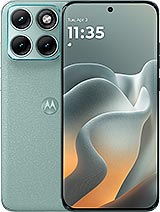
From a parental perspective, the 177g weight is a highlight. Many 6.8-inch phones exceed 200g, leading to hand fatigue during long video calls. This model stays thin at 7.2 mm, fitting comfortably into pockets or small bags. The 19.5:9 aspect ratio keeps the width manageable for one-handed scrolling through school emails or news feeds. It is a pragmatic design that prioritizes daily utility over flashy, fragile aesthetics.
Setting up a phone for a non-techie can be a chore, but Android 16 on this handset streamlines the process. The 2026 iteration of Android focuses heavily on privacy and core efficiency. We observed that the Snapdragon 7s Gen 4 processor, built on a 4nm process, keeps the interface fluid without generating the excess heat seen in previous 's' series chips. This chipset utilizes a configuration of Cortex-A720 and Cortex-A520 cores, specifically tuned to balance high-performance tasks and background energy saving.
For the student, the 12GB of RAM integrated into a uMCP (Universal Multi-Chip Package) is a technical win. This high-density component combines the UFS storage and LPDDR RAM into one physical block, which is part of the reason the phone can maintain its ultra-thin 7.2mm profile. In practice, this means the device can hold dozens of Chrome tabs and social apps in memory without refreshing, which is vital for academic research or multitasking between lectures.
Motorola’s Smart Connect (formerly Ready For) is the secret weapon here. It allows students to plug the phone into a monitor to create a desktop-like environment. For those living in dorms who might not want to carry a bulky laptop to the library, this feature provides a legitimate productivity alternative. The software feels clean, devoid of the aggressive overlays found in some rival brands, making it intuitive for those transitioning from older hardware.
Predicting resale value for a mid-range Motorola requires looking at historical patterns. Traditionally, Motorola devices do not hold value as strictly as iPhones or Samsung's S-series flagships. However, the Edge series has bucked this trend slightly by offering specs that stay relevant longer. Because this device features Bluetooth 6.0 and Wi-Fi 6e, it is technologically 'future-proofed' for the next three to four years of connectivity standards.
We expect this model to retain about 40-45% of its value after two years, which is standard for the 480 EUR price tier. The Silicon-Carbon (Si/C) battery technology is the X-factor here. Unlike traditional graphite batteries, Si/C anodes offer higher energy density and tend to degrade slower over hundreds of charge cycles. This means that when a user goes to sell the phone in 2028, the battery health is likely to be significantly better than a competing phone using older lithium-ion chemistry, potentially bumping up the resale price.
Investors in this hardware should view it as a 'long-haul' device rather than a yearly trade-in. The inclusion of 5G Sub6 and SA/NSA support ensures that as global networks migrate fully to standalone 5G, the Edge 70 Fusion+ will not experience the signal drops that older 5G handsets might. It is a stable investment for a three-year lifecycle.
Motorola has leaned heavily into its Pantone partnership, offering colors like Orient Blue and Sporting Green. This branding makes the phone a fashion statement, but it also dictates the accessory market. Because the colors are a primary selling point, we recommend clear TPU cases that don't hide the finish. The plastic frame, while durable, can be prone to micro-scratches from dust trapped inside a case, so a periodic cleaning of the handset's edges is advised.
In terms of screen protection, the slight curve of the 6.8-inch display means that tempered glass protectors must be chosen carefully to ensure the optical under-display fingerprint sensor remains responsive. We found that high-quality film protectors often work better with this specific sensor type than thick glass slabs. The device does not include a 3.5mm jack, so users should factor in the cost of USB-C headphones or a Bluetooth 6.0-compatible set. The stereo speakers with Dolby Atmos provide a wide soundstage for media, which might negate the need for external speakers in small rooms.
Inside the box, the experience is professional and minimalist. While many manufacturers have stripped chargers from the packaging by 2026, Motorola continues to provide the 68W wired charger in most regions. This is a significant value add, as a standalone 68W PD (Power Delivery) brick can cost upwards of 40 EUR. The cable provided is a standard USB-C to USB-C, though we noted the phone's port is USB 2.0. This is a hardware bottleneck; while it charges fast, data transfer speeds to a PC will be sluggish compared to flagships using USB 3.2.
There is no protective case included in the standard retail box for this generation, which is a departure from previous years. Buyers should order a case simultaneously to protect the 50 MP triple camera module, which sits slightly proud of the back panel. The packaging itself is eco-friendly and plastic-free, reflecting the 2026 industry standards for sustainability.
The real-world durability of this device is its strongest selling point. Imagine a student commuting in a coastal city where salt spray and humidity are constant. The IP69 and IP68 dual certification provides a safety net that most other phones lack. The MIL-STD-810H compliance means the internal architecture is designed to withstand the vibrations of a motorcycle mount or a bumpy bus ride without loosening internal connectors.
During sustained workloads, the Adreno 810 GPU manages thermal output efficiently. While it isn't a 'gaming phone' in the enthusiast sense, it can handle 3D titles at medium settings without the chassis becoming uncomfortably hot. This thermal stability is crucial for the longevity of the internal components. Heat is the primary killer of mobile hardware, and by opting for the efficient 7s Gen 4 over a power-hungry flagship chip, Motorola has extended the potential lifespan of the motherboard.
The Motorola Edge 70 Fusion+ represents a shift in the mid-range philosophy. It doesn't try to win on raw benchmark scores; instead, it wins on reliability and environmental resilience. For a parent who needs a phone that is easy to read at the beach and won't die if it falls into the sink, this is the premier choice of early 2026. Students will appreciate the thin profile and the desktop-extension features of Smart Connect. While the plastic frame and USB 2.0 speeds are clear cost-cutting measures, they are acceptable trade-offs for a device that offers a 5200-nit screen and military-grade durability at under 500 EUR.
The Ultimate Parent Test
When we evaluate a device for the 'Parent Test,' we focus on three pillars: screen visibility, durability, and battery consistency. The Motorola Edge 70 Fusion+ handles these with surprising ease. The primary standout represents the AMOLED display that reaches a staggering 5200 nits peak brightness. For a parent trying to photograph a child's soccer game in high noon glare, this hardware capability ensures the viewfinder remains perfectly legible. Most competitors in this price bracket struggle at 2000-2500 nits, making this a massive leap for outdoor usability.
Hardware durability is equally impressive. While the frame is plastic, which we generally prefer for its impact absorption compared to rigid aluminum, the glass is Corning Gorilla Glass 7i. This is paired with an IP69 rating. We rarely see IP69 outside of dedicated rugged phones; it certifies that the handset can survive high-pressure, high-temperature water jets. If a toddler spills hot coffee or drops the phone in a puddle during a rainstorm, the internal components remain shielded. The inclusion of MIL-STD-810H compliance adds a layer of confidence regarding vibration and thermal shock, though we remind users this does not make the device invincible to concrete drops.
From a parental perspective, the 177g weight is a highlight. Many 6.8-inch phones exceed 200g, leading to hand fatigue during long video calls. This model stays thin at 7.2 mm, fitting comfortably into pockets or small bags. The 19.5:9 aspect ratio keeps the width manageable for one-handed scrolling through school emails or news feeds. It is a pragmatic design that prioritizes daily utility over flashy, fragile aesthetics.
Seamless Setup and Daily Operation
Setting up a phone for a non-techie can be a chore, but Android 16 on this handset streamlines the process. The 2026 iteration of Android focuses heavily on privacy and core efficiency. We observed that the Snapdragon 7s Gen 4 processor, built on a 4nm process, keeps the interface fluid without generating the excess heat seen in previous 's' series chips. This chipset utilizes a configuration of Cortex-A720 and Cortex-A520 cores, specifically tuned to balance high-performance tasks and background energy saving.
For the student, the 12GB of RAM integrated into a uMCP (Universal Multi-Chip Package) is a technical win. This high-density component combines the UFS storage and LPDDR RAM into one physical block, which is part of the reason the phone can maintain its ultra-thin 7.2mm profile. In practice, this means the device can hold dozens of Chrome tabs and social apps in memory without refreshing, which is vital for academic research or multitasking between lectures.
Motorola’s Smart Connect (formerly Ready For) is the secret weapon here. It allows students to plug the phone into a monitor to create a desktop-like environment. For those living in dorms who might not want to carry a bulky laptop to the library, this feature provides a legitimate productivity alternative. The software feels clean, devoid of the aggressive overlays found in some rival brands, making it intuitive for those transitioning from older hardware.
Market Trajectory and Value Retention
Predicting resale value for a mid-range Motorola requires looking at historical patterns. Traditionally, Motorola devices do not hold value as strictly as iPhones or Samsung's S-series flagships. However, the Edge series has bucked this trend slightly by offering specs that stay relevant longer. Because this device features Bluetooth 6.0 and Wi-Fi 6e, it is technologically 'future-proofed' for the next three to four years of connectivity standards.
We expect this model to retain about 40-45% of its value after two years, which is standard for the 480 EUR price tier. The Silicon-Carbon (Si/C) battery technology is the X-factor here. Unlike traditional graphite batteries, Si/C anodes offer higher energy density and tend to degrade slower over hundreds of charge cycles. This means that when a user goes to sell the phone in 2028, the battery health is likely to be significantly better than a competing phone using older lithium-ion chemistry, potentially bumping up the resale price.
Investors in this hardware should view it as a 'long-haul' device rather than a yearly trade-in. The inclusion of 5G Sub6 and SA/NSA support ensures that as global networks migrate fully to standalone 5G, the Edge 70 Fusion+ will not experience the signal drops that older 5G handsets might. It is a stable investment for a three-year lifecycle.
The Ecosystem and Accessories
Motorola has leaned heavily into its Pantone partnership, offering colors like Orient Blue and Sporting Green. This branding makes the phone a fashion statement, but it also dictates the accessory market. Because the colors are a primary selling point, we recommend clear TPU cases that don't hide the finish. The plastic frame, while durable, can be prone to micro-scratches from dust trapped inside a case, so a periodic cleaning of the handset's edges is advised.
In terms of screen protection, the slight curve of the 6.8-inch display means that tempered glass protectors must be chosen carefully to ensure the optical under-display fingerprint sensor remains responsive. We found that high-quality film protectors often work better with this specific sensor type than thick glass slabs. The device does not include a 3.5mm jack, so users should factor in the cost of USB-C headphones or a Bluetooth 6.0-compatible set. The stereo speakers with Dolby Atmos provide a wide soundstage for media, which might negate the need for external speakers in small rooms.
Unboxing a Pantone-Certified Experience
Inside the box, the experience is professional and minimalist. While many manufacturers have stripped chargers from the packaging by 2026, Motorola continues to provide the 68W wired charger in most regions. This is a significant value add, as a standalone 68W PD (Power Delivery) brick can cost upwards of 40 EUR. The cable provided is a standard USB-C to USB-C, though we noted the phone's port is USB 2.0. This is a hardware bottleneck; while it charges fast, data transfer speeds to a PC will be sluggish compared to flagships using USB 3.2.
There is no protective case included in the standard retail box for this generation, which is a departure from previous years. Buyers should order a case simultaneously to protect the 50 MP triple camera module, which sits slightly proud of the back panel. The packaging itself is eco-friendly and plastic-free, reflecting the 2026 industry standards for sustainability.
Built to Last Through Chaos
The real-world durability of this device is its strongest selling point. Imagine a student commuting in a coastal city where salt spray and humidity are constant. The IP69 and IP68 dual certification provides a safety net that most other phones lack. The MIL-STD-810H compliance means the internal architecture is designed to withstand the vibrations of a motorcycle mount or a bumpy bus ride without loosening internal connectors.
During sustained workloads, the Adreno 810 GPU manages thermal output efficiently. While it isn't a 'gaming phone' in the enthusiast sense, it can handle 3D titles at medium settings without the chassis becoming uncomfortably hot. This thermal stability is crucial for the longevity of the internal components. Heat is the primary killer of mobile hardware, and by opting for the efficient 7s Gen 4 over a power-hungry flagship chip, Motorola has extended the potential lifespan of the motherboard.
The Final Gifting Verdict
The Motorola Edge 70 Fusion+ represents a shift in the mid-range philosophy. It doesn't try to win on raw benchmark scores; instead, it wins on reliability and environmental resilience. For a parent who needs a phone that is easy to read at the beach and won't die if it falls into the sink, this is the premier choice of early 2026. Students will appreciate the thin profile and the desktop-extension features of Smart Connect. While the plastic frame and USB 2.0 speeds are clear cost-cutting measures, they are acceptable trade-offs for a device that offers a 5200-nit screen and military-grade durability at under 500 EUR.
Technical Specifications
| LAUNCH | |
|---|---|
| Announced | 2026, March 02 |
| Status | Available. Released 2026, March |
| PLATFORM | |
| OS | Android 16 |
| Chipset | Qualcomm SM7635-AC Snapdragon 7s Gen 4 (4 nm) |
| CPU | Octa-core (1x2.7 GHz Cortex-A720 & 3x2.4 GHz Cortex-A720 & 4x1.8 GHz Cortex-A520) |
| GPU | Adreno 810 |
| BODY | |
| Dimensions | 162.8 x 75.6 x 7.2 mm (6.41 x 2.98 x 0.28 in) |
| Weight | 177 g (6.24 oz) |
| Build | Glass front (Gorilla Glass 7i), plastic frame |
| SIM | Nano-SIM + eSIM |
| Info | IP68/IP69 dust tight and water resistant (high pressure water jets; immersible up to 1.5m for 30 min) Drop resistant up to 1.2m MIL-STD-810H compliant* * does not guarantee ruggedness or use in extreme conditions |
| DISPLAY | |
| Type | AMOLED, 1B colors, 144Hz, HDR10+, 5200 nits (peak) |
| Size | 6.8 inches, 113.1 cm2 (~91.9% screen-to-body ratio) |
| Resolution | 1272 x 2772 pixels, 19.5:9 ratio (~449 ppi density) |
| Protection | Corning Gorilla Glass 7i |
| MEMORY | |
| Card slot | No |
| Internal | 256GB 12GB RAM |
| Info | uMCP |
| MAIN CAMERA | |
| Triple | 50 MP, f/1.8, (wide), 1/1.56", 1.0µm, multi-directional PDAF, OIS 10 MP, f/2.0, 73mm (telephoto), 1/3.94", 1.0µm, PDAF, OIS, 3x optical zoom 50 MP, f/2.2, 120˚ (ultrawide), AF |
| Features | LED flash, HDR, panorama |
| Video | 4K@30/60fps, 1080p@30/60/120fps, gyro-EIS |
| SELFIE CAMERA | |
| Single | 50 MP, f/2.0, (wide) |
| Features | HDR, panorama |
| Video | 4K@30fps, 1080p@30fps, gyro-EIS |
| SOUND | |
| Loudspeaker | Yes, with stereo speakers (with Dolby Atmos) |
| 3.5mm jack | No |
| COMMS | |
| WLAN | Wi-Fi 802.11 a/b/g/n/ac/6e, tri-band |
| Bluetooth | 6.0, A2DP, LE |
| Positioning | GPS, GLONASS, GALILEO |
| NFC | Yes |
| Radio | No |
| USB | USB Type-C 2.0, OTG |
| NETWORK | |
| Technology | GSM / HSPA / LTE / 5G |
| 2G bands | GSM 850 / 900 / 1800 / 1900 |
| 3G bands | HSDPA 850 / 900 / 1700(AWS) / 1900 / 2100 |
| 4G bands | 1, 2, 3, 4, 5, 7, 8, 12, 13, 17, 26, 28, 38, 40, 41, 42, 66 |
| 5G bands | 1, 2, 3, 7, 28, 38, 40, 41, 66, 77, 78 SA/NSA/Sub6 |
| Speed | HSPA, LTE, 5G |
| FEATURES | |
| Sensors | Fingerprint (under display, optical), accelerometer, gyro, proximity, compass |
| Info | Smart Connect (Ready For) support |
| BATTERY | |
| Type | Si/C Li-Ion 5200 mAh |
| Charging | 68W wired |
| MISC | |
| Display | 6.8-inch AMOLED, 144Hz, HDR10+, 5200 nits peak |
| Chipset | Qualcomm Snapdragon 7s Gen 4 (4 nm) |
| Memory | 12GB RAM, 256GB Internal (uMCP) |
| Main Camera | 50MP (Wide, OIS) + 10MP (Telephoto, 3x Optical, OIS) + 50MP (Ultrawide, AF) |
| Selfie Camera | 50MP, f/2.0 with 4K video support |
| Durability | IP68/IP69, MIL-STD-810H, Gorilla Glass 7i |
| Battery | 5200 mAh Silicon-Carbon with 68W Wired Charging |
| OS | Android 16 |
| Dimensions | 162.8 x 75.6 x 7.2 mm; 177g |
| Colors | Pantone: Orient Blue, Sporting Green, Silhouette, Blue Surf |
| Price | About 480 EUR |