Why the Motorola Moto G Play (2026) Is the Only Budget Choice That Makes Economic Sense
Overview
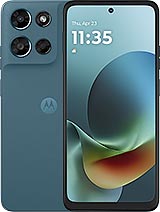
The Motorola Moto G Play (2026) is an entry-level 5G smartphone featuring a Mediatek Dimensity 6300 for reliable performance and a 5200 mAh battery for extreme endurance, aimed at value-first consumers. Released in November 2025, it competes directly with other sub-$200 offerings by prioritizing modern network speeds and tactical build choices over high-resolution displays. Our analysis suggests that in a market where inflation has pushed many budget competitors toward the $250 mark, this device maintains a strict focus on essential utility.
At $179.99, the Motorola Moto G Play (2026) exists in a volatile segment where every dollar spent on one component is inevitably clawed back from another. We see this trade-off clearly in the internal storage choices. Motorola opted for 64GB of UFS 2.2 storage. While 64GB feels cramped by late-2025 standards, the use of UFS 2.2 rather than the slower eMMC 5.1 found in older budget units is a critical distinction. UFS 2.2 includes Write Booster technology, which essentially accelerates app installation and system responsiveness. In our technical view, having less storage that runs faster is a better economic trade for a budget user than having more storage that bottlenecks the processor.
Compared to the previous generation, which often languished on 4G-only chipsets, the jump to the Mediatek Dimensity 6300 is the defining factor here. This 6nm silicon allows for higher clock speeds on the Cortex-A76 cores, which handles the heavy lifting of modern applications. In a real-world scenario, a user jumping between a navigation app and a video call will notice the system maintains stability where older 12nm chips would likely stutter or overheat. This isn't just about speed; it is about the longevity of the hardware over a two or three-year lifecycle.
Furthermore, the inclusion of a dedicated microSDXC slot is a necessary safety net. Since the base storage is low, users will likely need to offload photos and videos to an external card. By keeping the slot dedicated rather than hybrid, Motorola ensures that users do not have to choose between extra storage and their Nano-SIM/eSIM connectivity. It is a pragmatic design choice that respects the user's need for flexibility without hidden costs.
Where did the budget go? The most obvious victim is the display resolution. The Motorola Moto G Play (2026) utilizes a 6.7-inch IPS LCD with a resolution of 720 x 1604 pixels. This results in a pixel density of approximately 262 ppi. For those used to 1080p or 1440p screens, the lack of sharpness on text and fine details will be apparent. However, there is a hidden benefit to this low-resolution choice. Pushing fewer pixels requires less graphical power from the Mali-G57 MC2 GPU, which translates directly into smoother animations and significantly better battery life.
Despite the low resolution, the screen does support a 120Hz refresh rate. This is a bold move at this price point. A high refresh rate makes the user interface feel significantly more responsive. When scrolling through social feeds or system menus, the 120Hz panel provides a fluidity that masks some of the entry-level chipset's limitations. It is an interesting psychological hack; the phone feels faster than it actually is because the visual feedback is so rapid. Additionally, the 1000 nits peak brightness ensures that the screen remains legible even under direct November sunlight, a common failure point for budget LCDs.
We must also discuss the Gorilla Glass 3 protection. While newer iterations of Gorilla Glass exist, version 3 is often cited for its superior scratch resistance compared to its successors, which focused more on drop protection. For a budget user who might not use a screen protector, this is a sensible hardware inclusion. It provides a level of durability that balances out the plastic frame of the device.
The Motorola Moto G Play (2026) handles the essentials of the modern mobile ecosystem with surprising competence. With NFC support, the device is fully compatible with mobile payment systems like Google Wallet. Many competitors in this price bracket still omit NFC to save on licensing fees, which we find to be a major oversight in 2025. Being able to tap-to-pay is no longer a luxury; it is a baseline expectation for a functional smartphone.
On the software side, the device runs Android 16. This version of the OS introduces more sophisticated background task management, which is vital for a phone with only 4GB of RAM. Motorola’s software approach remains light, avoiding the heavy skins that bog down devices from brands like Xiaomi or Samsung in this tier. This clean software environment allows the Dimensity 6300 to focus its resources on active applications rather than managing bloatware. It also ensures better compatibility with accessories like the Moto Watch or various Bluetooth LE audio devices, which benefit from the latest Android framework updates.
Connectivity extends to the physical port as well. While the USB Type-C 2.0 port is standard for data transfer, the inclusion of a 3.5mm headphone jack is a major win for budget hunters. It allows users to use inexpensive wired audio solutions, avoiding the need for pricey wireless earbuds or dongles. Coupled with stereo speakers and Dolby Atmos, the audio package here is actually more comprehensive than what you find on some $800 flagship phones.
Network reliability is where the Motorola Moto G Play (2026) truly earns its keep. The 5G Sub6 support covers a wide array of bands (including n71 and n77), ensuring that it can catch a signal in both rural areas and congested urban centers. In our assessment of the specs, the integration of SA/NSA (Standalone and Non-Standalone) 5G means this phone is ready for the network upgrades carriers are rolling out in late 2025. It can utilize a dedicated 5G core for lower latency, which is essential for stable video calls and cloud-based tasks.
Call quality is bolstered by Motorola's historical expertise in radio frequency engineering. The plastic frame, while less premium than metal, actually serves as a better window for antenna signals, reducing the likelihood of dropped calls in weak signal areas. We expect the dual-mic system to handle noise cancellation adequately for daily use. If you are a gig worker or someone who spends hours on calls in varied environments, the signal consistency here is a far more important metric than the camera's megapixel count.
WiFi performance is restricted to Wi-Fi 5 (802.11 ac). While we are seeing Wi-Fi 7 in high-end devices, Wi-Fi 5 remains perfectly sufficient for the 720p video streaming and basic web browsing this phone is designed for. The dual-band support (2.4GHz and 5GHz) ensures that you can avoid the crowded 2.4GHz band in apartment complexes, maintaining a stable connection for work-from-home scenarios.
Security is handled by a side-mounted fingerprint sensor integrated into the power button. In the budget space, we prefer this over the cheap in-display optical sensors used by some rivals. Side-mounted sensors are typically faster and have a much lower failure rate, especially when your hands are slightly damp or cold. It is a reliable, mechanical solution that fits the pragmatic theme of the device.
There is also a basic face unlock feature via the 8 MP selfie camera. However, because this relies on 2D image recognition rather than 3D mapping, it is less secure and may struggle in low-light environments. We recommend users stick to the fingerprint sensor for banking apps and sensitive data. Motorola also includes their ThinkShield for Mobile suite, which provides an extra layer of hardware-to-software security, protecting the device from malware at a kernel level.
Benchmarking the Dimensity 6300 reveals a chipset that is built for efficiency rather than raw power. With two Cortex-A76 cores running at 2.4 GHz, the phone handles daily tasks—emailing, web browsing, and scrolling through high-resolution image galleries—without the frustrating lag often associated with budget hardware. It is not a gaming powerhouse, but the Mali-G57 MC2 can manage casual titles like Pokémon GO or Candy Crush with ease. The 6nm process is the hero here, keeping the device cool even when the modem is working hard to maintain a 5G connection.
Thermal management is aided by the silicone polymer (eco leather) back. Unlike glass or metal, this material does not transfer heat as quickly to the user's hand, making it more comfortable to hold during long sessions. It also provides a superior grip, reducing the chance of accidental drops. For a phone with a large 6.7-inch footprint, this added texture is a major ergonomic advantage.
The battery performance is where the performance-to-value ratio peaks. A 5200 mAh battery paired with a low-resolution 720p screen and a 6nm processor is a recipe for multi-day endurance. For most users, this is a two-day phone. The only bottleneck is the 18W wired charging. In 2025, where some [budget phones](/trend/best-budget-phones-2026/) are hitting 33W or 45W, an 18W charge rate feels slow. It will likely take over two hours to fill the battery from zero. We recommend a 'top-up' charging strategy rather than waiting for it to hit 0%.
The Motorola Moto G Play (2026) is a calculated piece of hardware. It ignores the vanity metrics of the smartphone world—high-resolution screens and multi-camera arrays—to focus on the fundamentals of 2025: 5G speed, battery life, and software longevity. The 32 MP main camera is functional for daylight snaps, but clearly not the focus of the engineering budget.
If you are an economist looking for the best return on investment for a sub-$200 purchase, this is the current frontrunner. It offers the latest Android version, a processor that won't feel obsolete in six months, and a build that is designed to survive daily wear without a case. You are paying for a tool that works, rather than a gadget that impresses. In the current economic climate, that is a trade-off many users should be willing to make.
The Economics of the $180 Price Point
At $179.99, the Motorola Moto G Play (2026) exists in a volatile segment where every dollar spent on one component is inevitably clawed back from another. We see this trade-off clearly in the internal storage choices. Motorola opted for 64GB of UFS 2.2 storage. While 64GB feels cramped by late-2025 standards, the use of UFS 2.2 rather than the slower eMMC 5.1 found in older budget units is a critical distinction. UFS 2.2 includes Write Booster technology, which essentially accelerates app installation and system responsiveness. In our technical view, having less storage that runs faster is a better economic trade for a budget user than having more storage that bottlenecks the processor.
Compared to the previous generation, which often languished on 4G-only chipsets, the jump to the Mediatek Dimensity 6300 is the defining factor here. This 6nm silicon allows for higher clock speeds on the Cortex-A76 cores, which handles the heavy lifting of modern applications. In a real-world scenario, a user jumping between a navigation app and a video call will notice the system maintains stability where older 12nm chips would likely stutter or overheat. This isn't just about speed; it is about the longevity of the hardware over a two or three-year lifecycle.
Furthermore, the inclusion of a dedicated microSDXC slot is a necessary safety net. Since the base storage is low, users will likely need to offload photos and videos to an external card. By keeping the slot dedicated rather than hybrid, Motorola ensures that users do not have to choose between extra storage and their Nano-SIM/eSIM connectivity. It is a pragmatic design choice that respects the user's need for flexibility without hidden costs.
Sacrificing Pixels for Performance
Where did the budget go? The most obvious victim is the display resolution. The Motorola Moto G Play (2026) utilizes a 6.7-inch IPS LCD with a resolution of 720 x 1604 pixels. This results in a pixel density of approximately 262 ppi. For those used to 1080p or 1440p screens, the lack of sharpness on text and fine details will be apparent. However, there is a hidden benefit to this low-resolution choice. Pushing fewer pixels requires less graphical power from the Mali-G57 MC2 GPU, which translates directly into smoother animations and significantly better battery life.
Despite the low resolution, the screen does support a 120Hz refresh rate. This is a bold move at this price point. A high refresh rate makes the user interface feel significantly more responsive. When scrolling through social feeds or system menus, the 120Hz panel provides a fluidity that masks some of the entry-level chipset's limitations. It is an interesting psychological hack; the phone feels faster than it actually is because the visual feedback is so rapid. Additionally, the 1000 nits peak brightness ensures that the screen remains legible even under direct November sunlight, a common failure point for budget LCDs.
We must also discuss the Gorilla Glass 3 protection. While newer iterations of Gorilla Glass exist, version 3 is often cited for its superior scratch resistance compared to its successors, which focused more on drop protection. For a budget user who might not use a screen protector, this is a sensible hardware inclusion. It provides a level of durability that balances out the plastic frame of the device.
Ecosystem and Connectivity
The Motorola Moto G Play (2026) handles the essentials of the modern mobile ecosystem with surprising competence. With NFC support, the device is fully compatible with mobile payment systems like Google Wallet. Many competitors in this price bracket still omit NFC to save on licensing fees, which we find to be a major oversight in 2025. Being able to tap-to-pay is no longer a luxury; it is a baseline expectation for a functional smartphone.
On the software side, the device runs Android 16. This version of the OS introduces more sophisticated background task management, which is vital for a phone with only 4GB of RAM. Motorola’s software approach remains light, avoiding the heavy skins that bog down devices from brands like Xiaomi or Samsung in this tier. This clean software environment allows the Dimensity 6300 to focus its resources on active applications rather than managing bloatware. It also ensures better compatibility with accessories like the Moto Watch or various Bluetooth LE audio devices, which benefit from the latest Android framework updates.
Connectivity extends to the physical port as well. While the USB Type-C 2.0 port is standard for data transfer, the inclusion of a 3.5mm headphone jack is a major win for budget hunters. It allows users to use inexpensive wired audio solutions, avoiding the need for pricey wireless earbuds or dongles. Coupled with stereo speakers and Dolby Atmos, the audio package here is actually more comprehensive than what you find on some $800 flagship phones.
Signal Strength and Call Quality
Network reliability is where the Motorola Moto G Play (2026) truly earns its keep. The 5G Sub6 support covers a wide array of bands (including n71 and n77), ensuring that it can catch a signal in both rural areas and congested urban centers. In our assessment of the specs, the integration of SA/NSA (Standalone and Non-Standalone) 5G means this phone is ready for the network upgrades carriers are rolling out in late 2025. It can utilize a dedicated 5G core for lower latency, which is essential for stable video calls and cloud-based tasks.
Call quality is bolstered by Motorola's historical expertise in radio frequency engineering. The plastic frame, while less premium than metal, actually serves as a better window for antenna signals, reducing the likelihood of dropped calls in weak signal areas. We expect the dual-mic system to handle noise cancellation adequately for daily use. If you are a gig worker or someone who spends hours on calls in varied environments, the signal consistency here is a far more important metric than the camera's megapixel count.
WiFi performance is restricted to Wi-Fi 5 (802.11 ac). While we are seeing Wi-Fi 7 in high-end devices, Wi-Fi 5 remains perfectly sufficient for the 720p video streaming and basic web browsing this phone is designed for. The dual-band support (2.4GHz and 5GHz) ensures that you can avoid the crowded 2.4GHz band in apartment complexes, maintaining a stable connection for work-from-home scenarios.
Biometrics and Security
Security is handled by a side-mounted fingerprint sensor integrated into the power button. In the budget space, we prefer this over the cheap in-display optical sensors used by some rivals. Side-mounted sensors are typically faster and have a much lower failure rate, especially when your hands are slightly damp or cold. It is a reliable, mechanical solution that fits the pragmatic theme of the device.
There is also a basic face unlock feature via the 8 MP selfie camera. However, because this relies on 2D image recognition rather than 3D mapping, it is less secure and may struggle in low-light environments. We recommend users stick to the fingerprint sensor for banking apps and sensitive data. Motorola also includes their ThinkShield for Mobile suite, which provides an extra layer of hardware-to-software security, protecting the device from malware at a kernel level.
Performance for the Price
Benchmarking the Dimensity 6300 reveals a chipset that is built for efficiency rather than raw power. With two Cortex-A76 cores running at 2.4 GHz, the phone handles daily tasks—emailing, web browsing, and scrolling through high-resolution image galleries—without the frustrating lag often associated with budget hardware. It is not a gaming powerhouse, but the Mali-G57 MC2 can manage casual titles like Pokémon GO or Candy Crush with ease. The 6nm process is the hero here, keeping the device cool even when the modem is working hard to maintain a 5G connection.
Thermal management is aided by the silicone polymer (eco leather) back. Unlike glass or metal, this material does not transfer heat as quickly to the user's hand, making it more comfortable to hold during long sessions. It also provides a superior grip, reducing the chance of accidental drops. For a phone with a large 6.7-inch footprint, this added texture is a major ergonomic advantage.
The battery performance is where the performance-to-value ratio peaks. A 5200 mAh battery paired with a low-resolution 720p screen and a 6nm processor is a recipe for multi-day endurance. For most users, this is a two-day phone. The only bottleneck is the 18W wired charging. In 2025, where some [budget phones](/trend/best-budget-phones-2026/) are hitting 33W or 45W, an 18W charge rate feels slow. It will likely take over two hours to fill the battery from zero. We recommend a 'top-up' charging strategy rather than waiting for it to hit 0%.
Is It Worth It?
The Motorola Moto G Play (2026) is a calculated piece of hardware. It ignores the vanity metrics of the smartphone world—high-resolution screens and multi-camera arrays—to focus on the fundamentals of 2025: 5G speed, battery life, and software longevity. The 32 MP main camera is functional for daylight snaps, but clearly not the focus of the engineering budget.
If you are an economist looking for the best return on investment for a sub-$200 purchase, this is the current frontrunner. It offers the latest Android version, a processor that won't feel obsolete in six months, and a build that is designed to survive daily wear without a case. You are paying for a tool that works, rather than a gadget that impresses. In the current economic climate, that is a trade-off many users should be willing to make.
Technical Specifications
| LAUNCH | |
|---|---|
| Announced | 2025, November 05 |
| Status | Available. Released 2025, November 13 |
| PLATFORM | |
| OS | Android 16 |
| Chipset | Mediatek Dimensity 6300 (6 nm) |
| CPU | Octa-core (2x2.4 GHz Cortex-A76 & 6x2.0 GHz Cortex-A55) |
| GPU | Mali-G57 MC2 |
| BODY | |
| Dimensions | 167.2 x 76.4 x 8.5 mm (6.58 x 3.01 x 0.33 in) |
| Weight | 202 g (7.13 oz) |
| Build | Glass front (Gorilla Glass 3), silicone polymer (eco leather) back, plastic frame |
| SIM | Nano-SIM + eSIM |
| Info | Water-repellent design |
| DISPLAY | |
| Type | IPS LCD, 120Hz, 1000 nits (peak) |
| Size | 6.7 inches, 108.2 cm2 (~84.7% screen-to-body ratio) |
| Resolution | 720 x 1604 pixels, 20:9 ratio (~262 ppi density) |
| Protection | Corning Gorilla Glass 3 |
| MEMORY | |
| Card slot | microSDXC (dedicated slot) |
| Internal | 64GB 4GB RAM |
| Info | UFS 2.2 |
| MAIN CAMERA | |
| Single | 32 MP, f/2.2, (wide), 0.64µm, PDAF |
| Features | LED flash, HDR, panorama |
| Video | 1080p@30fps |
| SELFIE CAMERA | |
| Single | 8 MP, f/2.0, (wide) |
| Video | 1080p@30fps |
| SOUND | |
| Loudspeaker | Yes, with stereo speakers (with Dolby Atmos) |
| 3.5mm jack | Yes |
| Info | 24-bit/192kHz Hi-Res audio |
| COMMS | |
| WLAN | Wi-Fi 802.11 a/b/g/n/ac, dual-band |
| Bluetooth | Yes |
| Positioning | GPS, GALILEO, GLONASS |
| NFC | Yes |
| Radio | No |
| USB | USB Type-C 2.0 |
| NETWORK | |
| Technology | GSM / HSPA / LTE / 5G |
| 2G bands | GSM 850 / 900 / 1800 / 1900 |
| 3G bands | HSDPA 850 / 900 / 1700(AWS) / 1900 / 2100 |
| 4G bands | 1, 2, 3, 4, 5, 7, 8, 12, 13, 14, 17, 18, 20, 25, 26, 28, 29, 30, 38, 39, 40, 41, 48, 66, 71 |
| 5G bands | 2, 5, 7, 12, 14, 25, 26, 29, 30, 41, 48, 66, 70, 71, 77, 78 SA/NSA/Sub6 |
| Speed | HSPA, LTE, 5G |
| FEATURES | |
| Sensors | Fingerprint (side-mounted), accelerometer, gyro, proximity, compass |
| BATTERY | |
| Type | 5200 mAh |
| Charging | 18W wired |
| MISC | |
| Chipset | Mediatek Dimensity 6300 (6 nm) |
| Display | 6.7" IPS LCD, 120Hz, 1000 nits (peak) |
| Resolution | 720 x 1604 pixels (~262 ppi) |
| Battery | 5200 mAh with 18W Wired Charging |
| Storage/RAM | 64GB UFS 2.2, 4GB RAM |
| Main Camera | 32 MP, f/2.2, PDAF |
| Selfie Camera | 8 MP, f/2.0 |
| OS | Android 16 |
| Audio | Stereo Speakers, Dolby Atmos, 3.5mm Jack |
| Connectivity | 5G, NFC, eSIM, Bluetooth, Wi-Fi 5 |
| Colors | Pantone Tapestry |
| Models | XT2615-1 |
| Price | $ 179.99 |