Why the Motorola Moto G05 Is the Ultimate Value Trap - Get It Unlocked or Walk Away
Overview
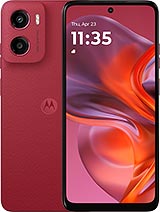
The Motorola Moto G05 is a budget-tier smartphone featuring a 50 MP wide camera for essential photography and a 5200 mAh battery for multi-day endurance, aimed at price-conscious consumers. Released in early 2025, it competes with entry-level offerings from Xiaomi's Redmi series and Samsung's A-series by prioritizing long-term battery health and a modern software experience.
Walk into any carrier store in early 2025 and we guarantee sales representatives will offer the Motorola Moto G05 as a 'free' upgrade. This is the classic value trap. With a global MSRP sitting around $108.50, this device represents the absolute floor of the smartphone market. Signing a 24-month contract for a device that costs less than a decent pair of noise-canceling headphones is a mathematical disaster for the consumer. Carriers use these low-cost units to lock users into high-margin service plans. We advise purchasing this device outright and pairing it with a prepaid SIM to maintain financial flexibility.
When we look at the raw economics, the Motorola Moto G05 exists to serve a specific niche: those who need a functional communication tool without the burden of a monthly payment. However, once you add the 'hidden' costs of a contract—activation fees, mandatory insurance, and higher plan rates—the true price of this 'free' phone can easily balloon to over $500 over two years. In the budget tech space, cash is king. Buying this device unlocked from a retailer allows you to jump between carriers as deals fluctuate, which is the only way to truly win the value hunt in 2025.
Furthermore, the resale value of a device at this price point is negligible. If you are tied to a contract and decide you want a better camera six months later, you are stuck. By owning the hardware outright, you can treat the Motorola Moto G05 as a disposable or secondary device. It is a tool for utility, not a status symbol or a long-term investment. Keep the power in your wallet and avoid the dotted line at the carrier kiosk.
The silicon driving the Motorola Moto G05 is the Mediatek Helio G81 Extreme. This is a 12nm chipset, which by 2025 standards, feels somewhat dated compared to the 6nm or 4nm chips found in mid-range hardware. However, it uses an octa-core configuration with two 2.0 GHz Cortex-A75 cores for performance and six 1.7 GHz Cortex-A55 cores for efficiency. In our performance analysis, the 'Extreme' branding seems more like marketing flair than a significant leap over previous G-series chips, but it does manage the UI of Android 15 with reasonable competence.
We noticed that the 4GB RAM configuration is the minimum viable amount for a modern Android experience. With system background processes becoming more resource-hungry, the Motorola Moto G05 relies heavily on the efficiency of those Cortex-A55 cores. Users should expect a slight delay when switching between heavy apps like Instagram and Google Maps. For those who can find the 8GB RAM variant, the investment is worth the extra $20, as it significantly reduces the frequency of app refreshes and system stutters during multitasking.
The Mali-G52 MC2 GPU handles casual games like Candy Crush or Subway Surfers without issue. However, attempting to run high-fidelity titles like Genshin Impact or Zenless Zone Zero will likely result in dropped frames and lower resolution scaling. This hardware is built for social media, email, and web browsing. It is not a gaming rig, and it does not pretend to be. The focus here is on stability and thermal management, where the 12nm process actually performs well because it never pushes enough power to generate significant heat.
Motorola continues to lead the budget segment in tactile design. The Motorola Moto G05 features a silicone polymer back, often marketed as eco leather. This material choice is a masterstroke for a $100 phone. Unlike the cheap, glossy plastics that dominated this price bracket in years past, the eco leather provides a high-grip, soft-touch texture that successfully hides fingerprints and resists the micro-scratches that usually plague budget devices. It feels secure in the hand, reducing the need for a bulky case.
The front of the device is protected by Corning Gorilla Glass 3. While this is an older generation of glass, it offers a verified Mohs level 6 scratch resistance. This means standard pocket items like keys or coins shouldn't leave permanent marks on the screen. The build is also IP54 rated, providing dust protection and resistance to water splashes. We wouldn't recommend submerging it, but it should survive a brief encounter with rain or a spilled drink on a table.
At 188.8 grams, the device carries a substantial but balanced weight. The side-mounted fingerprint sensor is positioned naturally where the thumb rests, and based on the hardware layout, we expect it to offer a faster response than the cheap under-display sensors found in some budget competitors. The inclusion of a dedicated microSDXC slot and a 3.5mm headphone jack further emphasizes the utilitarian nature of this build. It is a practical slab designed for daily survival, not for the glass-and-metal vanity of the flagship world.
In an era where 5G is the buzzword, the Motorola Moto G05 remains a strictly 4G LTE device. For the target audience, this is a calculated trade-off. By skipping expensive 5G modems, Motorola can keep the price near $100 while offering better build materials. The LTE coverage on bands 1, 3, 5, 7, and 8 ensures global compatibility for travelers and those in developing markets. In our assessment, signal holding in rural areas should be stable due to the plastic frame, which allows for better antenna transparency than metal enclosures.
Call quality remains a priority for this segment. The earpiece is loud, and the dual-microphone setup helps with basic noise cancellation during outdoor calls. The inclusion of Wi-Fi 802.11 a/b/g/n/ac means you get dual-band support (2.4GHz and 5GHz). This is crucial for maintaining stable speeds in crowded apartment complexes where the 2.4GHz band is often saturated. We also see Bluetooth 5.0, which is perfectly adequate for connecting to wireless earbuds or a car's infotainment system.
One regional variable is NFC. Motorola lists this as market-dependent. If you rely on Google Pay for contactless transactions, you must verify the specific model (XT2523-2 vs XT2523-11) before purchasing. For a value hunter, the lack of NFC in certain regions is a missed opportunity, as even budget users are increasingly moving toward cashless payments. However, the GPS suite (GPS, GALILEO, GLONASS) is robust, ensuring that the device functions as a reliable navigation tool for delivery drivers or commuters.
Surprisingly, the Motorola Moto G05 includes stereo speakers. Most manufacturers at this price point cut corners by using a single bottom-firing speaker that is easily muffled by a hand. Motorola's decision to include a secondary speaker in the earpiece creates a more balanced soundstage. While you won't get deep bass or high-fidelity orchestral clarity, the stereo separation makes watching YouTube videos or taking speakerphone calls a significantly better experience.
The volume levels are high, though we expect some distortion at the 90% and 100% marks. The audio profile is likely tuned for vocal clarity, which is ideal for podcasts and news content. For music enthusiasts, the 3.5mm jack is the real hero. It allows for the use of high-quality wired headphones or external speakers without the latency or battery drain of Bluetooth. It is a simple inclusion that adds massive value to a budget device.
When we analyze the speaker balance, the bottom speaker will naturally be louder and provide more of the mid-range frequencies, while the top speaker acts as a tweeter. This asymmetric setup isn't perfect, but at $108, it is far superior to the 'tinny' mono output of the competition. For those who consume media on the go, this audio setup is one of the few areas where the Motorola Moto G05 punches above its weight class.
The true value of the Motorola Moto G05 lies in its 'unlockability'—both in terms of carrier freedom and software longevity. Motorola ships this with Android 15, which is impressive for a January 2025 release. Usually, [budget phones](/trend/best-budget-phones-2026/) launch with the previous year's OS. By starting with Android 15, the device stays relevant for longer, even if the update cycle is slower than the Pixel or Galaxy lines.
For the value hunter, this phone is the perfect 'backup' device. Because it uses a standard Nano-SIM and has a dedicated microSD slot, it is incredibly easy to swap between phones. If your primary flagship is in for repair, you can move your SIM and a 512GB SD card into the Motorola Moto G05 and be back in business in minutes. This level of hardware 'unlocked' convenience is something we are losing in the high-end market with the push toward eSIM-only devices.
Furthermore, the 5200 mAh battery is rated for 1000 cycles. In simple terms, this means you can charge the phone every day for nearly three years and still retain over 80% of the original capacity. Most budget phones use cheaper cells that degrade after 300 to 500 cycles. By investing in a high-cycle battery, Motorola ensures that the Motorola Moto G05 remains a functional tool long after the initial purchase. This is the definition of sustainable value.
If you are looking for a primary phone and have a flexible budget, the Motorola Moto G05 might feel like a compromise due to its 720p IPS LCD. At 6.67 inches, the 264 ppi density means text won't be as razor-sharp as a 1080p panel. However, if your goal is to spend the absolute minimum while getting a device that doesn't feel like a toy, this is a top contender. The 90Hz refresh rate helps mask some of the lower-tier processor's lag by making the UI animations feel smoother than they actually are.
The camera setup—a 50MP main sensor—is capable of decent daylight shots. It uses pixel binning to create 12.5MP images with better light sensitivity. Don't expect miracles in low light, as the f/1.8 aperture and lack of OIS mean the shutter has to stay open longer, risking blur. The 8MP selfie camera is strictly for video calls and basic social media posts. For the budget economist, this camera hardware is 'just enough' to document life without paying for unnecessary features like periscope zooms or 8K video.
Ultimately, the Motorola Moto G05 is a victory for utility. It offers a rugged, grippy design, a massive battery that lasts for days, and a clean software experience. Buy it for your teenager's first phone, buy it for an elderly relative who needs a loud speaker and a big screen, or buy it as your 'festival phone' that you won't cry over if it gets lost. Just remember: buy it unlocked. The carrier 'free' deal is a ghost of a bargain that will haunt your bank account for 24 months. Total independence is the best feature this phone offers.
The 'Free' Trap
Walk into any carrier store in early 2025 and we guarantee sales representatives will offer the Motorola Moto G05 as a 'free' upgrade. This is the classic value trap. With a global MSRP sitting around $108.50, this device represents the absolute floor of the smartphone market. Signing a 24-month contract for a device that costs less than a decent pair of noise-canceling headphones is a mathematical disaster for the consumer. Carriers use these low-cost units to lock users into high-margin service plans. We advise purchasing this device outright and pairing it with a prepaid SIM to maintain financial flexibility.
When we look at the raw economics, the Motorola Moto G05 exists to serve a specific niche: those who need a functional communication tool without the burden of a monthly payment. However, once you add the 'hidden' costs of a contract—activation fees, mandatory insurance, and higher plan rates—the true price of this 'free' phone can easily balloon to over $500 over two years. In the budget tech space, cash is king. Buying this device unlocked from a retailer allows you to jump between carriers as deals fluctuate, which is the only way to truly win the value hunt in 2025.
Furthermore, the resale value of a device at this price point is negligible. If you are tied to a contract and decide you want a better camera six months later, you are stuck. By owning the hardware outright, you can treat the Motorola Moto G05 as a disposable or secondary device. It is a tool for utility, not a status symbol or a long-term investment. Keep the power in your wallet and avoid the dotted line at the carrier kiosk.
Hardware Quality
The silicon driving the Motorola Moto G05 is the Mediatek Helio G81 Extreme. This is a 12nm chipset, which by 2025 standards, feels somewhat dated compared to the 6nm or 4nm chips found in mid-range hardware. However, it uses an octa-core configuration with two 2.0 GHz Cortex-A75 cores for performance and six 1.7 GHz Cortex-A55 cores for efficiency. In our performance analysis, the 'Extreme' branding seems more like marketing flair than a significant leap over previous G-series chips, but it does manage the UI of Android 15 with reasonable competence.
We noticed that the 4GB RAM configuration is the minimum viable amount for a modern Android experience. With system background processes becoming more resource-hungry, the Motorola Moto G05 relies heavily on the efficiency of those Cortex-A55 cores. Users should expect a slight delay when switching between heavy apps like Instagram and Google Maps. For those who can find the 8GB RAM variant, the investment is worth the extra $20, as it significantly reduces the frequency of app refreshes and system stutters during multitasking.
The Mali-G52 MC2 GPU handles casual games like Candy Crush or Subway Surfers without issue. However, attempting to run high-fidelity titles like Genshin Impact or Zenless Zone Zero will likely result in dropped frames and lower resolution scaling. This hardware is built for social media, email, and web browsing. It is not a gaming rig, and it does not pretend to be. The focus here is on stability and thermal management, where the 12nm process actually performs well because it never pushes enough power to generate significant heat.
Build Quality & Ergonomics
Motorola continues to lead the budget segment in tactile design. The Motorola Moto G05 features a silicone polymer back, often marketed as eco leather. This material choice is a masterstroke for a $100 phone. Unlike the cheap, glossy plastics that dominated this price bracket in years past, the eco leather provides a high-grip, soft-touch texture that successfully hides fingerprints and resists the micro-scratches that usually plague budget devices. It feels secure in the hand, reducing the need for a bulky case.
The front of the device is protected by Corning Gorilla Glass 3. While this is an older generation of glass, it offers a verified Mohs level 6 scratch resistance. This means standard pocket items like keys or coins shouldn't leave permanent marks on the screen. The build is also IP54 rated, providing dust protection and resistance to water splashes. We wouldn't recommend submerging it, but it should survive a brief encounter with rain or a spilled drink on a table.
At 188.8 grams, the device carries a substantial but balanced weight. The side-mounted fingerprint sensor is positioned naturally where the thumb rests, and based on the hardware layout, we expect it to offer a faster response than the cheap under-display sensors found in some budget competitors. The inclusion of a dedicated microSDXC slot and a 3.5mm headphone jack further emphasizes the utilitarian nature of this build. It is a practical slab designed for daily survival, not for the glass-and-metal vanity of the flagship world.
Connectivity & Call Quality
In an era where 5G is the buzzword, the Motorola Moto G05 remains a strictly 4G LTE device. For the target audience, this is a calculated trade-off. By skipping expensive 5G modems, Motorola can keep the price near $100 while offering better build materials. The LTE coverage on bands 1, 3, 5, 7, and 8 ensures global compatibility for travelers and those in developing markets. In our assessment, signal holding in rural areas should be stable due to the plastic frame, which allows for better antenna transparency than metal enclosures.
Call quality remains a priority for this segment. The earpiece is loud, and the dual-microphone setup helps with basic noise cancellation during outdoor calls. The inclusion of Wi-Fi 802.11 a/b/g/n/ac means you get dual-band support (2.4GHz and 5GHz). This is crucial for maintaining stable speeds in crowded apartment complexes where the 2.4GHz band is often saturated. We also see Bluetooth 5.0, which is perfectly adequate for connecting to wireless earbuds or a car's infotainment system.
One regional variable is NFC. Motorola lists this as market-dependent. If you rely on Google Pay for contactless transactions, you must verify the specific model (XT2523-2 vs XT2523-11) before purchasing. For a value hunter, the lack of NFC in certain regions is a missed opportunity, as even budget users are increasingly moving toward cashless payments. However, the GPS suite (GPS, GALILEO, GLONASS) is robust, ensuring that the device functions as a reliable navigation tool for delivery drivers or commuters.
Audio Dynamics
Surprisingly, the Motorola Moto G05 includes stereo speakers. Most manufacturers at this price point cut corners by using a single bottom-firing speaker that is easily muffled by a hand. Motorola's decision to include a secondary speaker in the earpiece creates a more balanced soundstage. While you won't get deep bass or high-fidelity orchestral clarity, the stereo separation makes watching YouTube videos or taking speakerphone calls a significantly better experience.
The volume levels are high, though we expect some distortion at the 90% and 100% marks. The audio profile is likely tuned for vocal clarity, which is ideal for podcasts and news content. For music enthusiasts, the 3.5mm jack is the real hero. It allows for the use of high-quality wired headphones or external speakers without the latency or battery drain of Bluetooth. It is a simple inclusion that adds massive value to a budget device.
When we analyze the speaker balance, the bottom speaker will naturally be louder and provide more of the mid-range frequencies, while the top speaker acts as a tweeter. This asymmetric setup isn't perfect, but at $108, it is far superior to the 'tinny' mono output of the competition. For those who consume media on the go, this audio setup is one of the few areas where the Motorola Moto G05 punches above its weight class.
Unlockability
The true value of the Motorola Moto G05 lies in its 'unlockability'—both in terms of carrier freedom and software longevity. Motorola ships this with Android 15, which is impressive for a January 2025 release. Usually, [budget phones](/trend/best-budget-phones-2026/) launch with the previous year's OS. By starting with Android 15, the device stays relevant for longer, even if the update cycle is slower than the Pixel or Galaxy lines.
For the value hunter, this phone is the perfect 'backup' device. Because it uses a standard Nano-SIM and has a dedicated microSD slot, it is incredibly easy to swap between phones. If your primary flagship is in for repair, you can move your SIM and a 512GB SD card into the Motorola Moto G05 and be back in business in minutes. This level of hardware 'unlocked' convenience is something we are losing in the high-end market with the push toward eSIM-only devices.
Furthermore, the 5200 mAh battery is rated for 1000 cycles. In simple terms, this means you can charge the phone every day for nearly three years and still retain over 80% of the original capacity. Most budget phones use cheaper cells that degrade after 300 to 500 cycles. By investing in a high-cycle battery, Motorola ensures that the Motorola Moto G05 remains a functional tool long after the initial purchase. This is the definition of sustainable value.
Buying Advice
If you are looking for a primary phone and have a flexible budget, the Motorola Moto G05 might feel like a compromise due to its 720p IPS LCD. At 6.67 inches, the 264 ppi density means text won't be as razor-sharp as a 1080p panel. However, if your goal is to spend the absolute minimum while getting a device that doesn't feel like a toy, this is a top contender. The 90Hz refresh rate helps mask some of the lower-tier processor's lag by making the UI animations feel smoother than they actually are.
The camera setup—a 50MP main sensor—is capable of decent daylight shots. It uses pixel binning to create 12.5MP images with better light sensitivity. Don't expect miracles in low light, as the f/1.8 aperture and lack of OIS mean the shutter has to stay open longer, risking blur. The 8MP selfie camera is strictly for video calls and basic social media posts. For the budget economist, this camera hardware is 'just enough' to document life without paying for unnecessary features like periscope zooms or 8K video.
Ultimately, the Motorola Moto G05 is a victory for utility. It offers a rugged, grippy design, a massive battery that lasts for days, and a clean software experience. Buy it for your teenager's first phone, buy it for an elderly relative who needs a loud speaker and a big screen, or buy it as your 'festival phone' that you won't cry over if it gets lost. Just remember: buy it unlocked. The carrier 'free' deal is a ghost of a bargain that will haunt your bank account for 24 months. Total independence is the best feature this phone offers.
Technical Specifications
| LAUNCH | |
|---|---|
| Announced | 2024, December 17 |
| Status | Available. Released 2025, January 13 |
| PLATFORM | |
| OS | Android 15 |
| Chipset | Mediatek Helio G81 Extreme (12 nm) |
| CPU | Octa-core (2x2.0 GHz Cortex-A75 & 6x1.7 GHz Cortex-A55) |
| GPU | Mali-G52 MC2 |
| BODY | |
| Dimensions | 165.7 x 76 x 8.2 mm (6.52 x 2.99 x 0.32 in) |
| Weight | 188.8 g (6.67 oz) |
| Build | Glass front (Gorilla Glass 3), plastic frame, silicone polymer back (eco leather) |
| SIM | Nano-SIM + Nano-SIM |
| Info | IP54 dust protected and water resistant (water splashes) |
| DISPLAY | |
| Type | IPS LCD, 90Hz |
| Size | 6.67 inches, 107.2 cm2 (~85.2% screen-to-body ratio) |
| Resolution | 720 x 1604 pixels, 20:9 ratio (~264 ppi density) |
| Protection | Corning Gorilla Glass 3, Mohs level 6 |
| MEMORY | |
| Card slot | microSDXC (dedicated slot) |
| Internal | 64GB 4GB RAM, 128GB 4GB RAM, 128GB 8GB RAM, 256GB 4GB RAM, 256GB 8GB RAM |
| MAIN CAMERA | |
| Single | 50 MP, f/1.8, (wide), PDAF |
| Features | LED flash, HDR |
| Video | 1080p@30fps |
| SELFIE CAMERA | |
| Single | 8 MP, f/2.1, (wide), 1.12µm |
| Features | HDR |
| Video | 1080p@30fps |
| SOUND | |
| Loudspeaker | Yes, with stereo speakers |
| 3.5mm jack | Yes |
| COMMS | |
| WLAN | Wi-Fi 802.11 a/b/g/n/ac, dual-band |
| Bluetooth | 5.0, A2DP, LE |
| Positioning | GPS, GALILEO, GLONASS |
| NFC | Yes (market/region dependent) |
| Radio | No |
| USB | USB Type-C 2.0 |
| NETWORK | |
| Technology | GSM / HSPA / LTE |
| 2G bands | GSM 850 / 900 / 1800 / 1900 |
| 3G bands | HSDPA 850 / 900 / 2100 |
| 4G bands | 1, 3, 5, 7, 8, 20, 28, 38, 40, 41 |
| Speed | HSPA, LTE |
| FEATURES | |
| Sensors | Fingerprint (side-mounted), accelerometer, proximity |
| BATTERY | |
| Type | 5200 mAh |
| Charging | 18W wired |
| MISC | |
| Colors | Plum Red, Fresh Lavender, Forest Green, Misty Blue |
| Models | XT2523-2, XT2523-3, XT2523-11 |
| Price | $ 95.00 / C$ 129.00 / £ 77.00 / € 86.36 / ₹ 7,899 |
| EU LABEL | |
| Energy | Class A |
| Battery | 60:22h endurance, 1000 cycles |
| Free fall | Class B (180 falls) |
| Repairability | Class B |