Why the Motorola Moto G15 Is the Smartest Play for Budget Economists Right Now
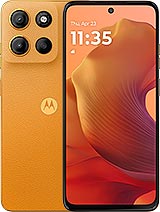
Overview
Motorola Moto G15 is an entry-level smartphone featuring a 6.72-inch IPS LCD for expansive viewing and a 5200 mAh battery for multi-day endurance, aimed at value-driven consumers and enterprise fleet deployments. Released in February 2025, it competes with the lower-tier Galaxy A-series and the Redmi numerical lineup by prioritizing long-term hardware durability over raw processing power.
In early 2025, the primary competition for the Motorola Moto G15 isn't just other [budget phones](/trend/best-budget-phones-2026/)—it's the refurbished flagship market. For the $118 price point, one could technically find a four-year-old iPhone 12 or a Galaxy S21 with a cracked back. However, the economic reality favors this new Motorola device. A used flagship carries a high probability of a degraded lithium-ion cell, often hovering at 80% health or less. The Motorola Moto G15 arrives with a fresh 5200 mAh battery rated for 1000 cycles. This means the device can maintain 80% of its original capacity for nearly three years of daily charging, a feat few older flagships can match.
Furthermore, the cost of ownership is significantly lower here. Repairing a three-year-old OLED flagship screen often costs more than the entire purchase price of the Motorola Moto G15. With its EU Label Repairability Class B, this device is designed for a longer lifecycle in the hands of the original owner. We see a clear preference for the 'New Budget' over 'Old Flagship' for users who cannot afford the downtime of a failing battery or the high cost of specialized repairs.
Moving away from the fragile glass sandwiches of yesteryear, the Motorola Moto G15 utilizes a silicone polymer back, often marketed as eco-leather. This material choice is a masterstroke for the budget tier. While glass feels premium for the first five minutes, it is a fingerprint magnet and prone to shattering upon the first impact with a sidewalk. The eco-leather back offers a high-grip texture that virtually eliminates the need for a bulky case. It resists the oily residue from palms and provides a tactile warmth that plastic or metal simply cannot replicate.
Underneath the aesthetics, the frame remains plastic, but the front is protected by Corning Gorilla Glass 3. While some might scoff at an older glass standard, Gorilla Glass 3 actually offers higher scratch resistance (Mohs level 4) against everyday pocket grit compared to some newer, softer 'shatter-resistant' versions. The inclusion of an IP54 rating is another defensive layer. It won't survive a dive into a swimming pool, but it ensures that a sudden rainstorm or an accidental coffee splash won't result in a total board failure. At $118, these durability metrics are non-negotiable for anyone who views a phone as a long-term utility rather than a status symbol.
We must address the elephant in the room: the Motorola Moto G15 lacks 5G. In 2025, this might seem like a dealbreaker, but let's look at the data. 5G infrastructure, while expanding, still suffers from higher battery drain and spotty indoor penetration in many suburban and rural regions. By sticking to GSM, HSPA, and LTE, this device maximizes its power efficiency. The Helio G81 Extreme chipset doesn't have to hunt for elusive 5G signals, which contributes to its exceptional battery life.
Wi-Fi performance is handled by a dual-band 802.11 a/b/g/n/ac chip. While it lacks the latest Wi-Fi 7 speeds, it is perfectly adequate for streaming 1080p video and handling video calls. The presence of NFC is market-dependent, but for regions where it is included, it transforms the Motorola Moto G15 into a viable digital wallet. For the budget economist, the omission of 5G is a calculated sacrifice that keeps the initial purchase price low without sacrificing the core functionality of a modern connected device.
The audio experience on the Motorola Moto G15 is surprisingly robust for its class. Unlike many competitors that rely on a single bottom-firing 'mono' speaker, Motorola has included stereo speakers. This provides a much wider soundstage for media consumption. While you shouldn't expect deep sub-bass from a $118 device, the clarity at mid-range volumes is sufficient for podcasts and YouTube tutorials. The speakers don't distort heavily until they hit about 90% volume, which is a testament to the internal damping.
For those who refuse to join the wireless-only revolution, the 3.5mm headphone jack remains present. This is a critical feature for users who prefer the reliability and zero-latency of wired audio. It also serves as the antenna for the built-in FM radio, a feature that is increasingly rare but vital in emergency scenarios or for users in areas with high data costs. The 6.72-inch IPS LCD with its 1080 x 2400 resolution complements this audio setup. While it lacks the deep blacks of an OLED, the 392 ppi density ensures that text is sharp and images don't look pixelated, even when held at close range.
The heart of the Motorola Moto G15 is the Mediatek Helio G81 Extreme. This is a 12nm chipset, which in 2025 is considered an older manufacturing process. However, the 'Extreme' branding indicates higher clock speeds for the two Cortex-A75 performance cores. In our assessment, this chip is perfectly capable of handling the Android 15 interface and everyday apps like WhatsApp, TikTok, and Gmail. The Mali-G52 MC2 GPU can even handle light gaming—think 'Subway Surfers' or 'Brawl Stars'—though 'Genshin Impact' will struggle even on the lowest settings.
Memory management is where users must be careful. While there are configurations with up to 8GB of RAM, the base 4GB RAM model will likely see background apps closing more frequently. We recommend the 6GB or 8GB variants if your budget allows. The microSDXC card slot is a massive win for value hunters, allowing for cheap storage expansion. You can buy a 128GB base model and add a 512GB card for a fraction of what Apple or Samsung charges for an internal storage jump. This flexibility is what makes the Motorola Moto G15 a superior economic choice.
The Motorola Moto G15 is a device built on the philosophy of 'enough'. It has enough resolution, enough battery, and enough durability to serve a user for three years without complaint. The 18W wired charging is admittedly slow by 2025 standards, taking nearly two hours for a full top-up, but the 5200 mAh cell ensures you only have to do this once every two days. It is a tool, not a toy. For the student, the grandparent, or the worker who needs a reliable communication device that won't break the bank or the floor if it falls, the Motorola Moto G15 is a definitive recommendation.
The New Hardware vs Used Flagship Dilemma
In early 2025, the primary competition for the Motorola Moto G15 isn't just other [budget phones](/trend/best-budget-phones-2026/)—it's the refurbished flagship market. For the $118 price point, one could technically find a four-year-old iPhone 12 or a Galaxy S21 with a cracked back. However, the economic reality favors this new Motorola device. A used flagship carries a high probability of a degraded lithium-ion cell, often hovering at 80% health or less. The Motorola Moto G15 arrives with a fresh 5200 mAh battery rated for 1000 cycles. This means the device can maintain 80% of its original capacity for nearly three years of daily charging, a feat few older flagships can match.
Furthermore, the cost of ownership is significantly lower here. Repairing a three-year-old OLED flagship screen often costs more than the entire purchase price of the Motorola Moto G15. With its EU Label Repairability Class B, this device is designed for a longer lifecycle in the hands of the original owner. We see a clear preference for the 'New Budget' over 'Old Flagship' for users who cannot afford the downtime of a failing battery or the high cost of specialized repairs.
Tactical Armor and Silicone Polymer Ergonomics
Moving away from the fragile glass sandwiches of yesteryear, the Motorola Moto G15 utilizes a silicone polymer back, often marketed as eco-leather. This material choice is a masterstroke for the budget tier. While glass feels premium for the first five minutes, it is a fingerprint magnet and prone to shattering upon the first impact with a sidewalk. The eco-leather back offers a high-grip texture that virtually eliminates the need for a bulky case. It resists the oily residue from palms and provides a tactile warmth that plastic or metal simply cannot replicate.
Underneath the aesthetics, the frame remains plastic, but the front is protected by Corning Gorilla Glass 3. While some might scoff at an older glass standard, Gorilla Glass 3 actually offers higher scratch resistance (Mohs level 4) against everyday pocket grit compared to some newer, softer 'shatter-resistant' versions. The inclusion of an IP54 rating is another defensive layer. It won't survive a dive into a swimming pool, but it ensures that a sudden rainstorm or an accidental coffee splash won't result in a total board failure. At $118, these durability metrics are non-negotiable for anyone who views a phone as a long-term utility rather than a status symbol.
Connectivity and the 4G LTE Frontier
We must address the elephant in the room: the Motorola Moto G15 lacks 5G. In 2025, this might seem like a dealbreaker, but let's look at the data. 5G infrastructure, while expanding, still suffers from higher battery drain and spotty indoor penetration in many suburban and rural regions. By sticking to GSM, HSPA, and LTE, this device maximizes its power efficiency. The Helio G81 Extreme chipset doesn't have to hunt for elusive 5G signals, which contributes to its exceptional battery life.
Wi-Fi performance is handled by a dual-band 802.11 a/b/g/n/ac chip. While it lacks the latest Wi-Fi 7 speeds, it is perfectly adequate for streaming 1080p video and handling video calls. The presence of NFC is market-dependent, but for regions where it is included, it transforms the Motorola Moto G15 into a viable digital wallet. For the budget economist, the omission of 5G is a calculated sacrifice that keeps the initial purchase price low without sacrificing the core functionality of a modern connected device.
Acoustic Integrity and Multimedia Value
The audio experience on the Motorola Moto G15 is surprisingly robust for its class. Unlike many competitors that rely on a single bottom-firing 'mono' speaker, Motorola has included stereo speakers. This provides a much wider soundstage for media consumption. While you shouldn't expect deep sub-bass from a $118 device, the clarity at mid-range volumes is sufficient for podcasts and YouTube tutorials. The speakers don't distort heavily until they hit about 90% volume, which is a testament to the internal damping.
For those who refuse to join the wireless-only revolution, the 3.5mm headphone jack remains present. This is a critical feature for users who prefer the reliability and zero-latency of wired audio. It also serves as the antenna for the built-in FM radio, a feature that is increasingly rare but vital in emergency scenarios or for users in areas with high data costs. The 6.72-inch IPS LCD with its 1080 x 2400 resolution complements this audio setup. While it lacks the deep blacks of an OLED, the 392 ppi density ensures that text is sharp and images don't look pixelated, even when held at close range.
The Helio G81 Extreme Reality Check
The heart of the Motorola Moto G15 is the Mediatek Helio G81 Extreme. This is a 12nm chipset, which in 2025 is considered an older manufacturing process. However, the 'Extreme' branding indicates higher clock speeds for the two Cortex-A75 performance cores. In our assessment, this chip is perfectly capable of handling the Android 15 interface and everyday apps like WhatsApp, TikTok, and Gmail. The Mali-G52 MC2 GPU can even handle light gaming—think 'Subway Surfers' or 'Brawl Stars'—though 'Genshin Impact' will struggle even on the lowest settings.
Memory management is where users must be careful. While there are configurations with up to 8GB of RAM, the base 4GB RAM model will likely see background apps closing more frequently. We recommend the 6GB or 8GB variants if your budget allows. The microSDXC card slot is a massive win for value hunters, allowing for cheap storage expansion. You can buy a 128GB base model and add a 512GB card for a fraction of what Apple or Samsung charges for an internal storage jump. This flexibility is what makes the Motorola Moto G15 a superior economic choice.
Final Take: The Long-Term ROI
The Motorola Moto G15 is a device built on the philosophy of 'enough'. It has enough resolution, enough battery, and enough durability to serve a user for three years without complaint. The 18W wired charging is admittedly slow by 2025 standards, taking nearly two hours for a full top-up, but the 5200 mAh cell ensures you only have to do this once every two days. It is a tool, not a toy. For the student, the grandparent, or the worker who needs a reliable communication device that won't break the bank or the floor if it falls, the Motorola Moto G15 is a definitive recommendation.
Technical Specifications
| LAUNCH | |
|---|---|
| Announced | 2024, December 17 |
| Status | Available. Released 2025, February 12 |
| PLATFORM | |
| OS | Android 15 |
| Chipset | Mediatek Helio G81 Extreme (12 nm) |
| CPU | Octa-core (2x2.0 GHz Cortex-A75 & 6x1.7 GHz Cortex-A55) |
| GPU | Mali-G52 MC2 |
| BODY | |
| Dimensions | 165.7 x 76 x 8.2 mm (6.52 x 2.99 x 0.32 in) |
| Weight | 190 g (6.70 oz) |
| Build | Glass front (Gorilla Glass 3), plastic frame, silicone polymer back (eco leather) |
| SIM | Nano-SIM + Nano-SIM |
| Info | IP54 dust protected and water resistant (water splashes) |
| DISPLAY | |
| Type | IPS LCD |
| Size | 6.72 inches, 109.0 cm2 (~86.6% screen-to-body ratio) |
| Resolution | 1080 x 2400 pixels, 20:9 ratio (~392 ppi density) |
| Protection | Corning Gorilla Glass 3, Mohs level 4 |
| MEMORY | |
| Card slot | microSDXC |
| Internal | 128GB 4GB RAM, 256GB 4GB RAM, 256GB 6GB RAM, 256GB 8GB RAM, 512GB 4GB RAM, 512GB 8GB RAM |
| MAIN CAMERA | |
| Dual | 50 MP, f/1.8, (wide), PDAF 5 MP, f/2.4, (ultrawide) |
| Features | LED flash, HDR, panorama |
| Video | 1080p@30fps |
| SELFIE CAMERA | |
| Single | 8 MP, f/2.0, (wide), 1.12µm |
| Video | 1080p@30fps |
| SOUND | |
| Loudspeaker | Yes, with stereo speakers |
| 3.5mm jack | Yes |
| COMMS | |
| WLAN | Wi-Fi 802.11 a/b/g/n/ac, dual-band |
| Bluetooth | 5.0, A2DP, LE |
| Positioning | GPS, GALILEO, GLONASS, BDS, QZSS |
| NFC | Yes (market/region dependent) |
| Radio | FM radio |
| USB | USB Type-C 2.0 |
| NETWORK | |
| Technology | GSM / HSPA / LTE |
| 2G bands | GSM 850 / 900 / 1800 / 1900 |
| 3G bands | HSDPA 850 / 900 / 1900 / 2100 |
| 4G bands | 1, 2, 3, 5, 7, 8, 20, 28, 38, 40, 41 |
| Speed | HSPA, LTE |
| FEATURES | |
| Sensors | Fingerprint (side-mounted), accelerometer, gyro, proximity, compass |
| BATTERY | |
| Type | 5200 mAh |
| Charging | 18W wired |
| MISC | |
| Colors | Gravity Grey, Iguana Green, Sunrise Orange, Sea Blue, Glacier Blue |
| Models | XT2521-3 |
| Price | $ 114.00 / € 97.12 / £ 84.49 |
| EU LABEL | |
| Energy | Class A |
| Battery | 57:13h endurance, 1000 cycles |
| Free fall | Class B (180 falls) |
| Repairability | Class B |