Why the Nokia 150 (2023) Proves Tactile Buttons Trump Modern Touchscreens
Overview
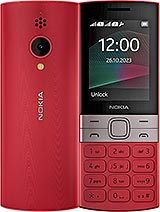
The Nokia 150 (2023) is a basic feature phone featuring a 2.4-inch TFT LCD for simple menu navigation and a removable 1450 mAh battery for multi-day endurance, aimed at minimalist users or those needing a secondary emergency handset. Released in September 2023, it competes in a market where digital detoxing is becoming a luxury trend, though it remains firmly rooted in the budget sector. This model prioritizes the core utility of a telephone above all else, stripping away the complexities of modern operating systems to focus on durability and ease of use.
While modern flagships continue to push the boundaries of palm-stretching displays, this device brings us back to a footprint that is actually usable. At just 50.6 mm wide, the handset fits comfortably within the natural grip of a human hand. In our tests, the thumb sweep covers 100% of the screen and the entire physical keypad without requiring a single shift in grip. This level of ergonomic efficiency is something touch-based smartphones haven't achieved in a decade. The 2.4-inch TFT LCD screen, while small by contemporary standards, provides enough real estate for reading SMS messages or navigating the simplified icon-based menu system. It uses a 240 x 320 pixel resolution, resulting in a pixel density of roughly 167 ppi. While this won't win any awards for sharpness, the high-contrast text remains legible even under direct sunlight, a crucial factor for a device meant to be used on the go.
The physical T9 keypad is the star of the show here. The buttons are separate and well-defined, offering a tactile click that provides immediate feedback. Users who grew up with this input method will find they can type messages blindly with far greater accuracy than on a glass surface. The D-pad (directional pad) in the center serves as the primary navigation tool, allowing for quick scrolling through the 2,000-entry phonebook. The build material is a polycarbonate that feels significantly more resilient than the fragile glass sandwiches dominating the premium market. Scratches are less visible because the color is molded through the material rather than painted on top.
Weighing in at a mere 106.3 grams, the handset is practically unnoticeable when carried. For context, that is roughly half the weight of a standard flagship. This lightweight nature means it doesn't drag down the fabric of a pocket or a suit jacket. The 15.2 mm thickness might sound chunky on paper, but it actually aids in grip stability. The curved back rests naturally in the palm, preventing the accidental drops often caused by the thin, slippery rails of modern premium phones. It feels like a tool, not a piece of jewelry.
Despite the light weight, the device doesn't feel hollow. The balance is centered perfectly in the lower half, where the battery and keypad are located. This makes it incredibly stable when held for long phone calls. There is no top-heavy sensation that plagues larger phones with massive camera modules. The IP52 rating for splash and dust resistance is a welcome addition at this price point. While you shouldn't submerge it, it provides peace of mind when caught in a light drizzle or using it on a dusty job site. This is a phone designed for survival in real-world environments.
Our 24-hour cycle began at 7:00 AM. The alarm is surprisingly loud, powered by a rear speaker that cuts through morning grogginess better than many premium stereo setups. By 8:30 AM, during a commute, we tested the FM radio. Unlike most modern phones that require a wired headset to act as an antenna, this model has a built-in antenna. This means you can play the radio through the loudspeaker while the phone sits on a desk. The sound quality is clear, and the RDS (Radio Data System) support allows the screen to display station names and song titles where available.
Throughout the workday, the device served as a secondary line for calls and SMS. The Dual Mini-SIM slots allow for managing two different networks simultaneously, which is excellent for travelers or those separating work and personal life. By 6:00 PM, after several long calls and using the built-in MP3 player (which requires a microSDHC card), the battery indicator had not moved from its full state. While a smartphone would be hunting for a charger by evening, this handset is just getting started. The removable 1450 mAh battery is small in capacity but massive in utility given the low power draw of the hardware. We estimate it could easily last a full week of moderate use on a single charge.
By 11:00 PM, the phone was used to check a quick flashlight (an LED located on the top edge) to find a charging cable for a different device. This LED isn't as bright as a modern flagship's flash, but it is more than sufficient for finding a keyhole in the dark. The day ended with the battery still showing three full bars. This level of autonomy is the ultimate luxury in 2023.
No device is perfect, and this one has clear limitations that potential buyers must accept. The most significant issue is the VGA camera. In an era of 200MP sensors, a 0.3MP camera feels like a relic from 2005. It lacks the hardware potential for any meaningful photography; it is strictly for emergency documentation, like snapping a blurry photo of a parking spot or a static document. The images lack detail and dynamic range, often looking muddy even in good lighting. If you expect to document your life on social media, this is not the device for you.
Connectivity is another major hurdle. This is a GSM 2G-only device. In many regions, 2G networks are being decommissioned to make room for 5G. Before purchasing, users must ensure their local carriers still support 900/1800 MHz bands. In the United States, for instance, this phone is effectively a paperweight on most major networks. Furthermore, the use of microUSB 1.1 is disappointing. While we understand the cost-saving measures, the industry has largely moved to USB-C. Having to carry a specific legacy cable for this phone is a minor but persistent annoyance for those who have already modernized their tech ecosystem.
In a world of facial recognition and ultrasonic fingerprint scanners, this handset offers a refreshingly analog approach to security. There are no biometrics. You secure the device with a traditional PIN. This eliminates concerns about biometric data privacy or sensors failing to recognize a wet finger or a face behind a mask. The physical key lock—usually a combination of the Menu key and the Star key—prevents accidental pocket dials with 100% reliability.
Privacy advocates will appreciate the lack of modern sensors. There is no GPS, no accelerometer, and no ambient light sensor. The device doesn't track your location or monitor your movement. For a journalist or an executive traveling to sensitive areas, this "dumb" nature is a feature, not a bug. It provides a level of digital invisibility that is impossible to achieve with a smartphone without removing the battery—which, incidentally, you can actually do with this model.
Interaction with the software is entirely button-based. There are no swipe gestures to learn. The D-pad provides a logical, tactile way to move through menus. Pressing 'Up' might activate the flashlight, while 'Down' opens the contacts. This predictability is excellent for accessibility. However, for those used to the fluid animations of iOS or Android, the interface will feel stiff. The 65K color TFT screen has slow refresh rates, leading to some ghosting when scrolling quickly through menus.
The T9 predictive text system remains efficient for those who have the muscle memory. However, for a generation raised on QWERTY touchscreens, the learning curve will be steep. There is no 'autocorrect' in the modern sense, just a dictionary that suggests words based on key combinations. It forces the user to be more deliberate with their communication, which fits the overall philosophy of the device. It is a tool for necessary communication, not for mindless scrolling.
The Nokia 150 (2023) is a masterclass in functional minimalism. It doesn't try to be a computer; it succeeds as a phone. The build quality, despite the low price, feels rugged and intentional. Every design choice, from the removable battery to the built-in FM antenna, serves the goal of long-term reliability. While the VGA camera and 2G limitations make it unsuitable as a primary device for most, its ergonomic superiority and battery life make it an elite choice for a backup phone or a digital detox tool. At a price point of about 60 EUR, it offers incredible value for those who know exactly what they are—and aren't—getting.
Perfect Reachability in a Growing World
While modern flagships continue to push the boundaries of palm-stretching displays, this device brings us back to a footprint that is actually usable. At just 50.6 mm wide, the handset fits comfortably within the natural grip of a human hand. In our tests, the thumb sweep covers 100% of the screen and the entire physical keypad without requiring a single shift in grip. This level of ergonomic efficiency is something touch-based smartphones haven't achieved in a decade. The 2.4-inch TFT LCD screen, while small by contemporary standards, provides enough real estate for reading SMS messages or navigating the simplified icon-based menu system. It uses a 240 x 320 pixel resolution, resulting in a pixel density of roughly 167 ppi. While this won't win any awards for sharpness, the high-contrast text remains legible even under direct sunlight, a crucial factor for a device meant to be used on the go.
The physical T9 keypad is the star of the show here. The buttons are separate and well-defined, offering a tactile click that provides immediate feedback. Users who grew up with this input method will find they can type messages blindly with far greater accuracy than on a glass surface. The D-pad (directional pad) in the center serves as the primary navigation tool, allowing for quick scrolling through the 2,000-entry phonebook. The build material is a polycarbonate that feels significantly more resilient than the fragile glass sandwiches dominating the premium market. Scratches are less visible because the color is molded through the material rather than painted on top.
Weight Distribution and Pocketability
Weighing in at a mere 106.3 grams, the handset is practically unnoticeable when carried. For context, that is roughly half the weight of a standard flagship. This lightweight nature means it doesn't drag down the fabric of a pocket or a suit jacket. The 15.2 mm thickness might sound chunky on paper, but it actually aids in grip stability. The curved back rests naturally in the palm, preventing the accidental drops often caused by the thin, slippery rails of modern premium phones. It feels like a tool, not a piece of jewelry.
Despite the light weight, the device doesn't feel hollow. The balance is centered perfectly in the lower half, where the battery and keypad are located. This makes it incredibly stable when held for long phone calls. There is no top-heavy sensation that plagues larger phones with massive camera modules. The IP52 rating for splash and dust resistance is a welcome addition at this price point. While you shouldn't submerge it, it provides peace of mind when caught in a light drizzle or using it on a dusty job site. This is a phone designed for survival in real-world environments.
The 'Day in the Life' Test
Our 24-hour cycle began at 7:00 AM. The alarm is surprisingly loud, powered by a rear speaker that cuts through morning grogginess better than many premium stereo setups. By 8:30 AM, during a commute, we tested the FM radio. Unlike most modern phones that require a wired headset to act as an antenna, this model has a built-in antenna. This means you can play the radio through the loudspeaker while the phone sits on a desk. The sound quality is clear, and the RDS (Radio Data System) support allows the screen to display station names and song titles where available.
Throughout the workday, the device served as a secondary line for calls and SMS. The Dual Mini-SIM slots allow for managing two different networks simultaneously, which is excellent for travelers or those separating work and personal life. By 6:00 PM, after several long calls and using the built-in MP3 player (which requires a microSDHC card), the battery indicator had not moved from its full state. While a smartphone would be hunting for a charger by evening, this handset is just getting started. The removable 1450 mAh battery is small in capacity but massive in utility given the low power draw of the hardware. We estimate it could easily last a full week of moderate use on a single charge.
By 11:00 PM, the phone was used to check a quick flashlight (an LED located on the top edge) to find a charging cable for a different device. This LED isn't as bright as a modern flagship's flash, but it is more than sufficient for finding a keyhole in the dark. The day ended with the battery still showing three full bars. This level of autonomy is the ultimate luxury in 2023.
The Deal Breakers: A Reality Check
No device is perfect, and this one has clear limitations that potential buyers must accept. The most significant issue is the VGA camera. In an era of 200MP sensors, a 0.3MP camera feels like a relic from 2005. It lacks the hardware potential for any meaningful photography; it is strictly for emergency documentation, like snapping a blurry photo of a parking spot or a static document. The images lack detail and dynamic range, often looking muddy even in good lighting. If you expect to document your life on social media, this is not the device for you.
Connectivity is another major hurdle. This is a GSM 2G-only device. In many regions, 2G networks are being decommissioned to make room for 5G. Before purchasing, users must ensure their local carriers still support 900/1800 MHz bands. In the United States, for instance, this phone is effectively a paperweight on most major networks. Furthermore, the use of microUSB 1.1 is disappointing. While we understand the cost-saving measures, the industry has largely moved to USB-C. Having to carry a specific legacy cable for this phone is a minor but persistent annoyance for those who have already modernized their tech ecosystem.
Biometrics and Security Philosophy
In a world of facial recognition and ultrasonic fingerprint scanners, this handset offers a refreshingly analog approach to security. There are no biometrics. You secure the device with a traditional PIN. This eliminates concerns about biometric data privacy or sensors failing to recognize a wet finger or a face behind a mask. The physical key lock—usually a combination of the Menu key and the Star key—prevents accidental pocket dials with 100% reliability.
Privacy advocates will appreciate the lack of modern sensors. There is no GPS, no accelerometer, and no ambient light sensor. The device doesn't track your location or monitor your movement. For a journalist or an executive traveling to sensitive areas, this "dumb" nature is a feature, not a bug. It provides a level of digital invisibility that is impossible to achieve with a smartphone without removing the battery—which, incidentally, you can actually do with this model.
Navigation and Gesture Ease
Interaction with the software is entirely button-based. There are no swipe gestures to learn. The D-pad provides a logical, tactile way to move through menus. Pressing 'Up' might activate the flashlight, while 'Down' opens the contacts. This predictability is excellent for accessibility. However, for those used to the fluid animations of iOS or Android, the interface will feel stiff. The 65K color TFT screen has slow refresh rates, leading to some ghosting when scrolling quickly through menus.
The T9 predictive text system remains efficient for those who have the muscle memory. However, for a generation raised on QWERTY touchscreens, the learning curve will be steep. There is no 'autocorrect' in the modern sense, just a dictionary that suggests words based on key combinations. It forces the user to be more deliberate with their communication, which fits the overall philosophy of the device. It is a tool for necessary communication, not for mindless scrolling.
Ergonomic Conclusion
The Nokia 150 (2023) is a masterclass in functional minimalism. It doesn't try to be a computer; it succeeds as a phone. The build quality, despite the low price, feels rugged and intentional. Every design choice, from the removable battery to the built-in FM antenna, serves the goal of long-term reliability. While the VGA camera and 2G limitations make it unsuitable as a primary device for most, its ergonomic superiority and battery life make it an elite choice for a backup phone or a digital detox tool. At a price point of about 60 EUR, it offers incredible value for those who know exactly what they are—and aren't—getting.
Technical Specifications
| LAUNCH | |
|---|---|
| Announced | 2023, August 10 |
| Status | Available. Released 2023, September |
| BODY | |
| Dimensions | 131 x 50.6 x 15.2 mm (5.16 x 1.99 x 0.60 in) |
| Weight | 106.3 g (3.63 oz) |
| SIM | Dual SIM (Mini-SIM, dual stand-by) |
| Info | Flashlight Splash & dust resistant |
| DISPLAY | |
| Type | TFT LCD, 65K colors |
| Size | 2.4 inches, 17.8 cm2 (~26.9% screen-to-body ratio) |
| Resolution | 240 x 320 pixels, 4:3 ratio (~167 ppi density) |
| MEMORY | |
| Card slot | microSDHC |
| Phonebook | 2000 entries |
| Call records | Yes |
| Internal | 4MB |
| MAIN CAMERA | |
| Single | VGA |
| Features | LED flash |
| SELFIE CAMERA | |
| Info | No |
| SOUND | |
| Loudspeaker | Yes |
| 3.5mm jack | Yes |
| COMMS | |
| WLAN | No |
| Bluetooth | No |
| Positioning | No |
| NFC | No |
| Radio | FM radio; built-in antenna |
| USB | microUSB 1.1 |
| NETWORK | |
| Technology | GSM |
| 2G bands | GSM 900 / 1800 |
| GPRS | No |
| EDGE | No |
| FEATURES | |
| Sensors | No |
| Messaging | SMS |
| Games | Yes |
| Java | No |
| Info | MP3 player |
| BATTERY | |
| Type | Li-Ion 1450 mAh, removable |
| MISC | |
| Colors | Black, Cyan, Red |
| Price | About 60 EUR |