Why the Nokia 5310 (2024) Is the Most Logical Purchase for Your Wallet and Sanity
Overview
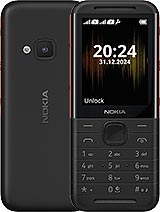
The Nokia 5310 (2024) is a budget-tier feature phone featuring a 2.8-inch IPS LCD for improved visibility and a removable 1450 mAh battery for longevity, aimed at users seeking a distraction-free secondary device. Released in April 2024, it competes with other modern revivals of classic handsets in the ultra-low-cost segment. This handset represents a specific niche where functionality is stripped to the essentials to maintain an aggressive price point while offering modern conveniences like a USB Type-C port.
Wireless carriers often bundle devices like this into low-tier contracts, marketing them as "free" additions to a family plan. From a budget economist's perspective, this is rarely a deal. Paying a monthly line access fee for a device that retails for approximately 60 EUR is a mathematical error for the consumer. It is always more cost-effective to buy this model unlocked. You avoid the bloat of carrier-specific firmware and maintain the freedom to swap between Nano-SIM providers at will.
Contracts often mask the true cost of ownership through hidden fees. When you buy this phone outright, you own a tool that functions as a backup communication device or a dedicated music player without a recurring financial burden. In the current market, where entry-level smartphones are increasingly expensive and fragile, owning an unlocked feature phone provides a safety net that doesn't depreciate as rapidly as a cheap Android device. The lack of a data-heavy operating system means you aren't paying for data you can't even use.
Choosing the unlocked route also prepares you for the inevitable shifting of network bands. While this specific model is limited to GSM 900 / 1800, having an unlocked device allows you to jump to whatever MVNO still supports these legacy bands in your region. Carriers would rather lock you into a 24-month payment plan for a device that might see its network coverage shrink before the contract ends. Ownership is the only way to mitigate that risk.
This handset utilizes a rugged polycarbonate shell that is designed to survive drops that would shatter a modern flagship. With dimensions of 132 x 57 x 13.1 mm, the device is noticeably taller than the original 2007 version and even the 2020 refresh. This increase in size accommodates the larger 2.8-inch display, which is a significant upgrade over the cramped screens of the past. The plastic build isn't a sign of weakness; it is a weight-saving measure that ensures the phone won't crack under tension.
Handling the device reveals a level of comfort that slab-style smartphones have long since abandoned. The curved edges and narrow width allow for a secure one-handed grip, making it an ideal companion for construction sites or outdoor activities. We noticed that the physical dedicated hardware music keys on the side are easy to locate by feel alone. This tactile certainty is something that touchscreens can never replicate, allowing for volume and track adjustments while the phone remains in a pocket.
Compared to the 2020 iteration, the 2024 model feels more substantial. The larger footprint allows for better weight distribution, even though the official weight hasn't been heavily advertised. The IPS LCD technology used for the screen is a massive win here. Unlike cheaper TFT panels found in extreme [budget phones](/trend/best-budget-phones-2026/), this screen maintains color accuracy and visibility even when viewed from an angle. It makes reading a text message in direct sunlight a far less frustrating experience.
The audio setup is the primary reason for the existence of this model. The inclusion of dual speakers positioned on the front of the device ensures that sound is projected toward the user rather than away. In our assessment, this configuration provides a surprisingly loud output for a device in this price bracket. While you shouldn't expect room-shaking bass, the midrange is clear, making it suitable for listening to podcasts or the built-in Wireless FM radio.
Distortion remains relatively low until you hit about 80% volume. Beyond that, the small plastic housing starts to vibrate, introducing some tinniness to the audio. However, for a 60 EUR investment, the speaker performance outperforms almost every budget smartphone which typically relies on a single bottom-firing speaker. The stereo separation is minimal given the narrow width of the phone, but the dual-driver approach provides a fuller soundstage than expected.
Using the MP3 player functionality requires a microSDHC card, as the 16MB of internal storage is essentially occupied by the operating system. When playing music through the 3.5mm jack, the audio quality is clean and free of the electronic hiss often found in cheap electronics. This makes the handset a legitimate alternative to a standalone MP3 player, especially for joggers or students who want to avoid the distractions of a smartphone while keeping their music library close.
Voice calls on the Unisoc 6531F chipset are handled with basic efficiency. The microphone quality is adequate for standard voice calls, though it lacks the sophisticated multi-mic noise cancellation found in high-end devices. In a quiet room, the person on the other end will hear you clearly. In a windy environment, however, the lack of secondary noise-canceling hardware means your voice will compete with ambient sounds. It's a functional tool, not a professional recording device.
We must address the elephant in the room: the GSM-only connectivity. In 2024, 2G networks are being phased out in several territories. If you live in a region where 2G is already dark, this phone is effectively a brick for communication. It is vital to check your local carrier's support for 900 and 1800 MHz bands before purchasing. For those in regions where 2G is stable, the signal penetration is often superior to 5G inside thick-walled buildings, making this a reliable emergency tool.
Digital communication is limited to SMS, MMS, and Email. There is no support for modern encrypted messaging apps like WhatsApp or Signal. This creates a hard barrier for social connectivity but an excellent environment for focus. The Bluetooth 5.0 support is a welcome modern touch, allowing you to pair modern wireless earbuds without the connectivity drops that plagued older Bluetooth versions. It ensures that while the network tech is old, your peripherals can be new.
The return to a physical T9 keypad is a sensory journey that requires a recalibration of muscle memory. The buttons on this model are large and well-spaced, which reduces the likelihood of double-pressing keys. The tactile response is soft but certain; you can feel the activation of the switch beneath the plastic. This feedback loop is essential for typing without looking, a skill that smartphone users have largely lost.
Haptics are handled by a standard vibration motor. It is strong enough to be felt through a heavy jacket pocket, which is more than can be said for many modern slim phones. There is no nuance to the vibration—it is either on or off—but in a device like this, subtlety isn't the goal. The UI provides a slight vibration feedback when a call connects, which is a helpful indicator in noisy environments.
Typing on a 2.8-inch screen using T9 is surprisingly fast once you get back into the rhythm. The Unisoc 6531F processor handles the text input without the lag that sometimes affected older budget chips. For those who find touchscreens frustrating due to dexterity issues or environmental factors like cold weather, these physical buttons are a significant accessibility feature. It is a no-nonsense interface that prioritizes input accuracy over flashy animations.
The 1450 mAh Li-Ion battery might sound small compared to the 5000 mAh monsters in modern smartphones, but the math changes when you remove the high-refresh-rate screens and power-hungry apps. This battery can easily last several days on a single charge with moderate usage. It is the antithesis of "battery anxiety." You can leave this phone in a glovebox for a week and still have enough power to make an emergency call.
Perhaps the most important feature is that the battery is removable. In an era of glued-in components, being able to swap a dead battery in seconds is a massive victory for the consumer. It extends the functional life of the phone indefinitely. If the battery degrades after three years, you spend a few dollars on a replacement rather than hundreds on a new phone. This is the definition of sustainable budget tech.
The transition to USB Type-C is the unsung hero of the 2024 update. Most households are now standardized on Type-C cables for laptops, tablets, and modern phones. Being able to use the same charger for your feature phone eliminates the need to keep old Micro-USB cables around. It simplifies your tech life and ensures that finding a charger at a friend's house or an airport is actually possible.
From a value hunter's perspective, the Nokia 5310 (2024) isn't just a phone; it's a productivity tool via subtraction. The lack of an app store means you aren't being monetized by attention-economy algorithms. The 60 EUR price tag is a one-time payment for peace of mind. When you consider that the average person spends hours a day on social media, the return on investment for a device that limits you to calls and music is measured in recovered time.
This model also serves as an excellent "first phone" for children. It allows parents to maintain contact without exposing minors to the unregulated world of the mobile internet. The VGA camera is admittedly poor by 2024 standards, but it serves for basic visual notes or simple memories. It’s not meant for Instagram; it’s meant for utility. The inclusion of an LED flash that doubles as a flashlight further enhances its role as a practical tool.
Ultimately, the Nokia 5310 (2024) is a specialized instrument. It excels at being a phone and a music player while failing at almost everything else by design. For the traveler who needs a dual-SIM backup that lasts for days, or the minimalist who wants to disconnect on weekends, this is a calculated purchase that respects your budget. It doesn't pretend to be a smartphone, and that is its greatest strength.
As we look at the market in April 2024, the Nokia 5310 (2024) stands out as a defiant piece of hardware that ignores the trend of planned obsolescence in favor of practical longevity and user-replaceable parts.
The 'Free' Trap and Why Carriers Love This Handset
Wireless carriers often bundle devices like this into low-tier contracts, marketing them as "free" additions to a family plan. From a budget economist's perspective, this is rarely a deal. Paying a monthly line access fee for a device that retails for approximately 60 EUR is a mathematical error for the consumer. It is always more cost-effective to buy this model unlocked. You avoid the bloat of carrier-specific firmware and maintain the freedom to swap between Nano-SIM providers at will.
Contracts often mask the true cost of ownership through hidden fees. When you buy this phone outright, you own a tool that functions as a backup communication device or a dedicated music player without a recurring financial burden. In the current market, where entry-level smartphones are increasingly expensive and fragile, owning an unlocked feature phone provides a safety net that doesn't depreciate as rapidly as a cheap Android device. The lack of a data-heavy operating system means you aren't paying for data you can't even use.
Choosing the unlocked route also prepares you for the inevitable shifting of network bands. While this specific model is limited to GSM 900 / 1800, having an unlocked device allows you to jump to whatever MVNO still supports these legacy bands in your region. Carriers would rather lock you into a 24-month payment plan for a device that might see its network coverage shrink before the contract ends. Ownership is the only way to mitigate that risk.
Polycarbonate Resilience and Ergonomic Reality
This handset utilizes a rugged polycarbonate shell that is designed to survive drops that would shatter a modern flagship. With dimensions of 132 x 57 x 13.1 mm, the device is noticeably taller than the original 2007 version and even the 2020 refresh. This increase in size accommodates the larger 2.8-inch display, which is a significant upgrade over the cramped screens of the past. The plastic build isn't a sign of weakness; it is a weight-saving measure that ensures the phone won't crack under tension.
Handling the device reveals a level of comfort that slab-style smartphones have long since abandoned. The curved edges and narrow width allow for a secure one-handed grip, making it an ideal companion for construction sites or outdoor activities. We noticed that the physical dedicated hardware music keys on the side are easy to locate by feel alone. This tactile certainty is something that touchscreens can never replicate, allowing for volume and track adjustments while the phone remains in a pocket.
Compared to the 2020 iteration, the 2024 model feels more substantial. The larger footprint allows for better weight distribution, even though the official weight hasn't been heavily advertised. The IPS LCD technology used for the screen is a massive win here. Unlike cheaper TFT panels found in extreme [budget phones](/trend/best-budget-phones-2026/), this screen maintains color accuracy and visibility even when viewed from an angle. It makes reading a text message in direct sunlight a far less frustrating experience.
Acoustic Performance of Dual Frontal Outlets
The audio setup is the primary reason for the existence of this model. The inclusion of dual speakers positioned on the front of the device ensures that sound is projected toward the user rather than away. In our assessment, this configuration provides a surprisingly loud output for a device in this price bracket. While you shouldn't expect room-shaking bass, the midrange is clear, making it suitable for listening to podcasts or the built-in Wireless FM radio.
Distortion remains relatively low until you hit about 80% volume. Beyond that, the small plastic housing starts to vibrate, introducing some tinniness to the audio. However, for a 60 EUR investment, the speaker performance outperforms almost every budget smartphone which typically relies on a single bottom-firing speaker. The stereo separation is minimal given the narrow width of the phone, but the dual-driver approach provides a fuller soundstage than expected.
Using the MP3 player functionality requires a microSDHC card, as the 16MB of internal storage is essentially occupied by the operating system. When playing music through the 3.5mm jack, the audio quality is clean and free of the electronic hiss often found in cheap electronics. This makes the handset a legitimate alternative to a standalone MP3 player, especially for joggers or students who want to avoid the distractions of a smartphone while keeping their music library close.
Voice Clarity and the 2G Network Obsolescence Risk
Voice calls on the Unisoc 6531F chipset are handled with basic efficiency. The microphone quality is adequate for standard voice calls, though it lacks the sophisticated multi-mic noise cancellation found in high-end devices. In a quiet room, the person on the other end will hear you clearly. In a windy environment, however, the lack of secondary noise-canceling hardware means your voice will compete with ambient sounds. It's a functional tool, not a professional recording device.
We must address the elephant in the room: the GSM-only connectivity. In 2024, 2G networks are being phased out in several territories. If you live in a region where 2G is already dark, this phone is effectively a brick for communication. It is vital to check your local carrier's support for 900 and 1800 MHz bands before purchasing. For those in regions where 2G is stable, the signal penetration is often superior to 5G inside thick-walled buildings, making this a reliable emergency tool.
Digital communication is limited to SMS, MMS, and Email. There is no support for modern encrypted messaging apps like WhatsApp or Signal. This creates a hard barrier for social connectivity but an excellent environment for focus. The Bluetooth 5.0 support is a welcome modern touch, allowing you to pair modern wireless earbuds without the connectivity drops that plagued older Bluetooth versions. It ensures that while the network tech is old, your peripherals can be new.
Tactile Feedback and the T9 Typing Experience
The return to a physical T9 keypad is a sensory journey that requires a recalibration of muscle memory. The buttons on this model are large and well-spaced, which reduces the likelihood of double-pressing keys. The tactile response is soft but certain; you can feel the activation of the switch beneath the plastic. This feedback loop is essential for typing without looking, a skill that smartphone users have largely lost.
Haptics are handled by a standard vibration motor. It is strong enough to be felt through a heavy jacket pocket, which is more than can be said for many modern slim phones. There is no nuance to the vibration—it is either on or off—but in a device like this, subtlety isn't the goal. The UI provides a slight vibration feedback when a call connects, which is a helpful indicator in noisy environments.
Typing on a 2.8-inch screen using T9 is surprisingly fast once you get back into the rhythm. The Unisoc 6531F processor handles the text input without the lag that sometimes affected older budget chips. For those who find touchscreens frustrating due to dexterity issues or environmental factors like cold weather, these physical buttons are a significant accessibility feature. It is a no-nonsense interface that prioritizes input accuracy over flashy animations.
Battery Autonomy and the Repairability Advantage
The 1450 mAh Li-Ion battery might sound small compared to the 5000 mAh monsters in modern smartphones, but the math changes when you remove the high-refresh-rate screens and power-hungry apps. This battery can easily last several days on a single charge with moderate usage. It is the antithesis of "battery anxiety." You can leave this phone in a glovebox for a week and still have enough power to make an emergency call.
Perhaps the most important feature is that the battery is removable. In an era of glued-in components, being able to swap a dead battery in seconds is a massive victory for the consumer. It extends the functional life of the phone indefinitely. If the battery degrades after three years, you spend a few dollars on a replacement rather than hundreds on a new phone. This is the definition of sustainable budget tech.
The transition to USB Type-C is the unsung hero of the 2024 update. Most households are now standardized on Type-C cables for laptops, tablets, and modern phones. Being able to use the same charger for your feature phone eliminates the need to keep old Micro-USB cables around. It simplifies your tech life and ensures that finding a charger at a friend's house or an airport is actually possible.
The Economic Justification for a Digital Detox
From a value hunter's perspective, the Nokia 5310 (2024) isn't just a phone; it's a productivity tool via subtraction. The lack of an app store means you aren't being monetized by attention-economy algorithms. The 60 EUR price tag is a one-time payment for peace of mind. When you consider that the average person spends hours a day on social media, the return on investment for a device that limits you to calls and music is measured in recovered time.
This model also serves as an excellent "first phone" for children. It allows parents to maintain contact without exposing minors to the unregulated world of the mobile internet. The VGA camera is admittedly poor by 2024 standards, but it serves for basic visual notes or simple memories. It’s not meant for Instagram; it’s meant for utility. The inclusion of an LED flash that doubles as a flashlight further enhances its role as a practical tool.
Ultimately, the Nokia 5310 (2024) is a specialized instrument. It excels at being a phone and a music player while failing at almost everything else by design. For the traveler who needs a dual-SIM backup that lasts for days, or the minimalist who wants to disconnect on weekends, this is a calculated purchase that respects your budget. It doesn't pretend to be a smartphone, and that is its greatest strength.
As we look at the market in April 2024, the Nokia 5310 (2024) stands out as a defiant piece of hardware that ignores the trend of planned obsolescence in favor of practical longevity and user-replaceable parts.
Technical Specifications
| LAUNCH | |
|---|---|
| Announced | 2024, April 11 |
| Status | Available. Released 2024, April 26 |
| PLATFORM | |
| Chipset | Unisoc 6531F |
| BODY | |
| Dimensions | 132 x 57 x 13.1 mm (5.20 x 2.24 x 0.52 in) |
| Weight | - |
| SIM | · Nano-SIM· Nano-SIM + Nano-SIM |
| Info | Dedicated hardware music keys |
| DISPLAY | |
| Type | IPS LCD |
| Size | 2.8 inches, 24.3 cm2 (~32.3% screen-to-body ratio) |
| Resolution | 240 x 320 pixels, 4:3 ratio (~143 ppi density) |
| MEMORY | |
| Card slot | microSDHC |
| Phonebook | Yes |
| Call records | Yes |
| Internal | 16MB 8MB RAM |
| MAIN CAMERA | |
| Single | VGA |
| Features | LED flash |
| Video | Yes |
| SELFIE CAMERA | |
| Info | No |
| SOUND | |
| Loudspeaker | Yes, with dual speakers |
| 3.5mm jack | Yes |
| COMMS | |
| WLAN | No |
| Bluetooth | 5.0, A2DP, LE |
| Positioning | No |
| NFC | No |
| Radio | Wireless FM radio |
| USB | USB Type-C |
| NETWORK | |
| Technology | GSM |
| 2G bands | GSM 900 / 1800 |
| Speed | No |
| GPRS | Yes |
| EDGE | Yes |
| FEATURES | |
| Messaging | SMS, MMS, Email, IM |
| Games | Yes |
| Java | No |
| Info | MP3 player |
| BATTERY | |
| Type | Li-Ion 1450 mAh, removable |
| MISC | |
| Colors | White/Red, Black/Red |
| Price | About 60 EUR |