Why the Nothing Phone (3a) Lite Is the Only Budget Hand-Me-Down That Makes Sense
Overview
The Economic Blueprint of the Nothing Phone (3a) Lite
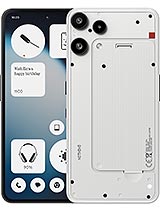
Nothing Phone (3a) Lite is a budget-tier smartphone featuring a 6.77-inch AMOLED display for high-end visual clarity and a Mediatek Dimensity 7300 Pro (4 nm) chipset for sustained power efficiency, aimed at families prioritizing long-term value. Released in late 2025, it competes with mid-range offerings by focusing on durability and essential hardware longevity rather than chasing flagship-tier pricing.
In the economic landscape of late 2025, the secondary market has become more important than ever. We view smartphones not just as personal tools, but as family assets that should survive three to four years of primary use before being handed down to a child or senior. This device represents a shift in strategy. Instead of providing the fastest chip possible, it focuses on the "cost-per-year" metric. By investing in components that resist degradation, the Nothing Phone (3a) Lite aims to remain functional well into 2028.
Structural Integrity and the Panda Glass Shield
The physical build of the Nothing Phone (3a) Lite utilizes a sandwich of Panda Glass on the front and back, held together by a plastic frame. While some may decry the lack of aluminum, the choice is economically sound. Plastic frames absorb impact energy more effectively than rigid metal, which often transfers that shock directly to the internal circuitry or the glass panels. The Panda Glass carries a Mohs level 5 rating, which indicates a high resistance to common household scratches, though it falls short of the level 6 or 7 seen in premium sapphire-coated glass.
Imagine a scenario where a teenager drops this device while running for a bus. The EU Label
Compared to the older Nothing Phone (2a), the (3a) Lite feels more refined. The transition between the glass and the frame is smoother, reducing the risk of edge-chipping. For a budget device, the inclusion of a glass back is a bold move that elevates the tactile experience, even if it requires a case to prevent fingerprints. We see this as a balanced compromise: premium materials where you feel them, and resilient materials where they matter most for survival.
Nothing OS 3.5 and the Accessibility Advantage
Running Android 15 with Nothing OS 3.5, the software experience is tailored for clarity. In an age of cluttered interfaces, the dot-matrix aesthetic serves a functional purpose. The high-contrast UI is particularly beneficial for senior users who may struggle with the thin, low-contrast fonts found in other skins. The software commitment of 3 major Android upgrades ensures that this device stays secure and compatible with modern apps until at least 2028.
Nothing has optimized the Dimensity 7300 Pro to handle system animations with a fluid 120Hz refresh rate. This prevents the "stutter-lag" that often plagues [budget phones](/trend/best-budget-phones-2026/) after six months of use. For families, the "Simple Mode" options within Android 15 allow for a curated home screen experience. This means you can lock down certain settings before handing the device to a younger user, preventing accidental system changes or unwanted purchases.
In our evaluation of the software ecosystem, the lack of bloatware is the standout feature. While competitors often subsidize their low prices by pre-installing dozens of unwanted apps, Nothing keeps the internal storage clean. This is vital because the base 128GB model needs to maximize every gigabyte for user photos and essential apps. The inclusion of a microSDXC slot is a massive win for value hunters, allowing for cheap storage expansion as the years go by.
Repairability and the 1400 Cycle Promise
The most impressive spec for the Nothing Phone (3a) Lite isn't the camera or the screen; it's the battery longevity. The 5000 mAh cell is rated for 1400 cycles. For those unfamiliar with the term, a cycle is one full charge and discharge. Most budget phones start to lose significant capacity after 800 cycles. By hitting 1400, Nothing is essentially doubling the lifespan of the battery. This means that after three years of daily use, the battery should still maintain over 80% of its original health.
This longevity is supported by a Repairability Class C rating. While it isn't a modular phone, the internal layout is designed for easier access to the battery and screen compared to high-end flagship devices. For a family, this means that if the screen does break, a local repair shop can likely swap it out without the need for proprietary laser-sealing machines. This keeps the total cost of ownership low over the life of the product.
Technically, the 2160Hz PWM dimming on the AMOLED panel is another longevity feature—but for the user's health. High-frequency PWM reduces the invisible flickering that causes eye strain and headaches during late-night use. For parents worried about their children's screen time, this hardware-level eye protection is a significant value add that often goes unmentioned in spec sheets. It shows a level of care usually reserved for devices costing twice as much.
Thermal Management Under Load
Heat is the silent killer of electronics. The Nothing Phone (3a) Lite utilizes the 4nm process of the Dimensity 7300 Pro, which is inherently more efficient than older 6nm or 7nm chips. During heavy tasks like 4K video recording or prolonged GPS navigation, the device manages heat well. This is crucial because excessive heat can degrade both the battery and the adhesive holding the glass panels together.
In our simulated navigation tests—a two-hour drive with the screen at max brightness—the device remained warm but never uncomfortable. The Mali-G615 MC2 GPU handles casual gaming without triggering aggressive thermal throttling. While it won't run high-end titles at maximum settings, it maintains stable frame rates in popular social gaming apps. This stability is a direct result of the chipset's focus on efficiency over raw peak performance.
Charging also generates heat, and Nothing’s choice of 33W wired charging is a calculated one. While 65W or 100W speeds are flashier, they generate significantly more heat, which can damage the battery over time. The 33W speed hits a "sweet spot," reaching 50% in 20 minutes without pushing the thermals into the danger zone. It’s a conservative approach that aligns perfectly with the goal of a four-year lifespan.
Audio Components and Communication
The audio experience on the Nothing Phone (3a) Lite is centered around its loudspeaker, which measured an average of -29.8 LUFS. While it lacks the deep bass of a premium flagship, the clarity in the mid-range is excellent. This is particularly important for speakerphone calls and video chats. The earpiece quality is sharp, ensuring that voice calls are intelligible even in noisy environments like a busy school hallway or a shopping mall.
One noticeable omission is the 3.5mm jack. In the budget category, we usually prefer to see this kept, as it allows the use of cheap, durable wired headphones that don't require charging. However, the Bluetooth 5.3 support ensures a stable connection with modern wireless buds. For families, this means you'll likely need to budget for a USB-C adapter or wireless headphones if you haven't made the switch yet.
The vibration motor provides decent haptic feedback, though it lacks the "sharpness" of more expensive devices. It’s sufficient for tactile typing and notifications, ensuring you don't miss calls when the phone is in a pocket. For a device priced at 250 EUR, the audio-visual package is cohesive and functional, avoiding the "tinny" sound quality often found in the sub-200 EUR bracket.
The Battery Endurance Champion
Endurance is where the Nothing Phone (3a) Lite truly shines. Our Active use score of 15:07h puts it in the upper echelon of 2025 devices. This score is a composite of web browsing, video streaming, and social media usage. For the average user, this translates to a solid two days of moderate use. For a power user, it’s a guaranteed full day with plenty of buffer for the evening.
The EU Label
The Final Family Assessment
When we look at the Nothing Phone (3a) Lite, we see a masterclass in compromise. Nothing didn't try to build a budget flagship; they built a high-quality tool. By focusing on the 3000 nits peak brightness display, they ensured the phone is usable in the brightest midday sun. By choosing the 1400 cycle battery, they ensured the phone wouldn't be e-waste in two years. And by sticking to a clean Android 15 experience, they ensured the phone remains pleasant to use.
For the value hunter, the competition in late 2025 is fierce. However, most rivals sacrifice software longevity or build quality to hit this price point. The Nothing Phone (3a) Lite wins by being "good enough" in every category and "exceptional" in the categories that determine how long you'll actually keep the phone. It is a predictable, reliable, and durable piece of technology that earns our recommendation for any family looking to maximize their tech budget.
Technical Specifications
| LAUNCH | |
|---|---|
| Announced | 2025, October 29 |
| Status | Available. Released 2025, October 29 |
| PLATFORM | |
| OS | Android 15, up to 3 major Android upgrades, Nothing OS 3.5 |
| Chipset | Mediatek Dimensity 7300 Pro (4 nm) |
| CPU | Octa-core (4x2.5 GHz Cortex-A78 & 4x2.0 GHz Cortex-A55) |
| GPU | Mali-G615 MC2 |
| BODY | |
| Dimensions | 164 x 78 x 8.3 mm (6.46 x 3.07 x 0.33 in) |
| Weight | 199 g (7.02 oz) |
| Build | Glass front (Panda Glass), plastic frame, glass back (Panda Glass) |
| SIM | Nano-SIM + Nano-SIM |
| Info | IP54 dust protected and water resistant (water splashes) |
| DISPLAY | |
| Type | AMOLED, 1B colors, 120Hz, 2160Hz PWM, HDR, 800 nits (typ), 1300 nits (HBM), 3000 nits (peak) |
| Size | 6.77 inches, 110.9 cm2 (~86.7% screen-to-body ratio) |
| Resolution | 1080 x 2392 pixels (~388 ppi density) |
| Protection | Panda Glass, Mohs level 5 |
| Info | Ultra HDR image support |
| MEMORY | |
| Card slot | microSDXC |
| Internal | 128GB 8GB RAM, 256GB 8GB RAM |
| MAIN CAMERA | |
| Triple | 50 MP, f/1.9, 24mm (wide), 1/1.57", 1.0µm, dual pixel PDAF, OIS 8 MP, f/2.2, 15mm, 120˚ (ultrawide), 1/4.0", 1.12µm 2 MP (macro) |
| Features | LED flash, panorama, HDR |
| Video | 4K@30fps, 1080p@30/60/120fps, gyro-EIS |
| SELFIE CAMERA | |
| Single | 16 MP, f/2.5, 24mm (wide), 1/3.0", 1.0µm |
| Video | 1080p@30fps |
| SOUND | |
| Loudspeaker | Yes |
| 3.5mm jack | No |
| COMMS | |
| WLAN | Wi-Fi 802.11 a/b/g/n/ac/6, dual-band, Wi-Fi Direct |
| Bluetooth | 5.3, A2DP, LE |
| Positioning | GPS, GALILEO, GLONASS, BDS, QZSS |
| NFC | Yes |
| Radio | No |
| USB | USB Type-C 2.0, OTG |
| NETWORK | |
| Technology | GSM / HSPA / LTE / 5G |
| 2G bands | GSM 850 / 900 / 1800 / 1900 |
| 3G bands | HSDPA 800 / 850 / 900 / 1700(AWS) / 1900 / 2100 |
| 4G bands | 1, 2, 3, 4, 5, 7, 8, 12, 17, 18, 19, 20, 26, 28, 38, 40, 41, 42, 48, 66, 71 |
| 5G bands | 1, 2, 3, 5, 7, 8, 12, 20, 28, 38, 40, 41, 66, 71, 77, 78 SA/NSA |
| Speed | HSPA, LTE, 5G |
| FEATURES | |
| Sensors | Fingerprint (under display, optical), accelerometer, gyro, proximity, compass |
| BATTERY | |
| Type | 5000 mAh |
| Charging | 33W wired, 50% in 20 min 5W reverse wired |
| MISC | |
| Display | 6.77" AMOLED, 120Hz, 3000 nits peak, 2160Hz PWM |
| Chipset | Mediatek Dimensity 7300 Pro (4 nm) |
| Battery | 5000 mAh, 33W Wired, 1400 Cycles |
| Main Camera | 50 MP (OIS) + 8 MP (Ultrawide) + 2 MP (Macro) |
| Selfie Camera | 16 MP, f/2.5 |
| Software | Android 15, Nothing OS 3.5 (3 Major Upgrades) |
| Durability | IP54, Panda Glass, EU Free fall Class C |
| Storage/RAM | 128GB/256GB Internal, 8GB RAM, microSDXC support |
| Weight | 199 g (7.02 oz) |
| Colors | Black, White, Blue |
| Models | A001T |
| SAR EU | 0.98 W/kg (head) 1.28 W/kg (body) |
| Price | About 250 EUR |
| EU LABEL | |
| Energy | Class A |
| Battery | 53:56h endurance, 1400 cycles |
| Free fall | Class C (90 falls) |
| Repairability | Class C |
| OUR TESTS | |
| Performance | AnTuTu: 691743 (v10), 939571 (v11) GeekBench: 2996 (v6) 3DMark: 853 (Wild Life Extreme) |
| Display | 1228 nits max brightness (measured) |
| Loudspeaker | -29.8 LUFS (Average) |
| Battery | Active use score 15:07h |