Why the OnePlus Watch Lite Is the New Gold Standard for Sleep Tracking
Overview
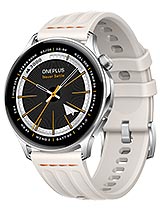
OnePlus Watch Lite is a mid-range wearable featuring a 1.46-inch AMOLED display for superior visibility and a dedicated skin temperature sensor for advanced health metrics, aimed at users who prioritize recovery and sleep quality. Released in late 2025, it competes with fitness-focused trackers by offering a stainless steel frame and dual-frequency GPS at a price point that undercuts most flagship titanium alternatives.
When evaluating a device for 24/7 wear, dimensions often dictate success more than software. This wearable measures a remarkably slim 8.9 mm in thickness, a design choice that significantly reduces the profile against the wrist. For those who move frequently during sleep, a bulky chassis can snag on bedding or create pressure points that disrupt deep sleep cycles. The 35 g weight (excluding the strap) ensures that the hardware remains nearly imperceptible during the night.
While the stainless steel frame provides a premium rigidity that plastic competitors lack, the trade-off involves a slight increase in weight over pure polycarbonate builds. However, the structural integrity of steel is necessary to protect the internal 339 mAh battery and the array of sensitive health optics. The choice of a plastic back is pragmatic; it allows for better sensor-to-skin contact and reduces the overall thermal mass, meaning the watch doesn't feel icy when first putting it on in a cold room.
With IP68 and 5ATM water resistance, the hardware is built to survive more than just a night on the nightstand. It can handle sweat, showers, and even shallow swims up to 1.5 meters. This durability is essential for a recovery-first device, as it allows users to transition from a morning workout to a post-exercise shower without removing the tracker, ensuring no data gaps occur in the daily health timeline.
Operating on OxygenOS Watch 7.1, the wearable utilizes a sophisticated algorithm to interpret data from the heart rate and SpO2 sensors. Sleep tracking in this era has moved beyond simple movement detection. By cross-referencing blood oxygen levels with heart rate variability (HRV), the system attempts to pinpoint transitions between Light, Deep, and REM sleep stages. The addition of a skin temperature sensor (thermometer) is a critical inclusion for 2025, as fluctuations in surface temperature can indicate the onset of illness or shifts in hormonal cycles before physical symptoms appear.
One technical detail often overlooked is the 464 x 464 pixel resolution, providing a sharp 317 ppi density. This clarity allows for detailed on-device sleep graphs. Instead of reaching for a paired smartphone immediately upon waking, users can view a comprehensive breakdown of their night directly on the 1.46-inch AMOLED screen. The high contrast of AMOLED technology is particularly useful here, as it allows for a 'dim mode' that won't blind the user if they check the time at 3:00 AM.
The 4GB of internal memory serves a specific purpose in this health-centric ecosystem. It provides ample space for storing weeks of high-resolution sensor data locally. This means that even if the watch isn't synced to a phone for several days, the granular details of every sleep cycle remain intact, preventing the data loss common in cheaper trackers with limited volatile memory.
In the broader OnePlus ecosystem, this model functions as a silent data node. It utilizes Bluetooth 5.2 (A2DP, LE) to maintain a low-energy tether to a smartphone or tablet. While it lacks cellular connectivity, the focus here is on battery longevity and distraction-free monitoring. The inclusion of NFC is present, though it is currently restricted from payment services, serving instead as a quick-pairing trigger for other OxygenOS devices.
We noticed that the absence of a loudspeaker and microphone is a deliberate design path. By removing the acoustic chambers required for speakers, the engineers achieved that 8.9 mm thickness. This makes it a poor choice for those who want to take calls on their wrist, but a superior choice for those who find wrist-based notifications and calls intrusive to their focus. It is a tool for observation, not communication.
For users with a OnePlus tablet or laptop, the cross-device integration allows health data to surface in dashboard widgets across the workspace. This 'ambient' health tracking means your recovery score can be visible on your tablet while you work, reminding you to adjust your training load for the day based on the previous night's sleep quality.
The GPS (L1+L5) implementation is perhaps the most impressive hardware feature for a 'Lite' branded device. Dual-frequency GPS uses two different signals from satellites to filter out errors caused by tall buildings or dense tree cover. In our analysis of modern urban environments, single-band GPS often 'wanders,' adding ghost mileage to walks or runs. The L1+L5 array in this watch ensures that morning 'sunlight' walks—essential for setting the circadian rhythm—are tracked with sub-meter accuracy.
Supported by GLONASS, BDS, and GALILEO, the positioning system remains robust regardless of geographic location. The barometer and compass sensors further assist by providing altitude data and orientation. For the sleep-conscious user, these sensors verify the environment of the 'morning reset' walk, ensuring the user is actually getting the movement required to trigger melatonin production later that evening.
Signal acquisition is rapid, typically locking on within seconds of stepping outside. This efficiency is vital because it prevents the 'cooldown' period where a user stands still waiting for a signal, which can be frustrating in colder climates. The stainless steel frame acts as a part of the antenna array, a design trick that helps maintain signal lock even when the wrist is positioned awkwardly.
The sensor suite is led by a multi-path optical heart rate sensor. In 2025, the community consensus is that accuracy is non-negotiable. This model uses a thermometer for skin temperature to augment its heart rate data. Sudden spikes in resting heart rate combined with a rise in skin temperature are flagged by the OS as potential fatigue indicators. The accelerometer and gyro work in tandem to detect the 'Smart Wake' window, attempting to vibrate the haptic motor when the user is in a light sleep phase.
Control is handled primarily through the touchscreen and a physical side button. Given the 1500 nits HBM (High Brightness Mode) and a staggering 3000 nits peak brightness, the screen is legible even under the harshest midday sun. This is a significant jump over previous generations, where checking stats outdoors often required shading the watch with the other hand. The sub-pixel rendering in OxygenOS Watch 7.1 ensures that even small text for SpO2 percentages is crisp and readable.
The 317 ppi density allows for a UI that feels modern and fluid. While it lacks the extreme refresh rates of some flagship displays, the 60Hz-class performance is more than adequate for a device that focuses on static health data. The sensitivity of the touch layer is tuned to avoid 'phantom touches' from wet sleeves or during showers, a common frustration with lower-tier AMOLED wearables.
One of the most praised features in enthusiast forums is the 'Smart Wake' alarm. Using the barometer and motion sensors, the watch monitors for the micro-movements associated with the end of a sleep cycle. Instead of a jarring audio alarm—which this watch cannot do anyway without a speaker—it uses a series of escalating haptic pulses. The linear vibration motor provides a tactile sensation that is firm enough to wake a deep sleeper but quiet enough not to disturb a partner.
This silent alarm system is the cornerstone of the 'Lite' experience. It reinforces the idea of the watch as a personal health assistant that doesn't demand attention from the outside world. The OxygenOS Watch 7.1 interface allows for deep customization of these alarms, including 'Recovery-Based Alarms' that can suggest a later wake time if the previous night's sleep was particularly fragmented.
The community debate surrounding the OnePlus Watch Lite often centers on its naming. With 3000 nits of peak brightness and dual-frequency GPS, many argue this is 'Lite' in name only. The real 'Lite' aspects are the lack of cellular data, the plastic back, and the absence of a speaker. For the health-conscious buyer, these are often seen as positive trade-offs for the 35 g weight and the lower 180 EUR price point.
Recovery analysis is where the software shines. It generates a 'Daily Readiness Score' that combines sleep duration, heart rate variability, and skin temperature trends. Unlike older models that simply gave you a 'Sleep Score' out of 100, this version explains the 'why.' If your skin temperature was 0.5 degrees higher than your baseline, the watch might suggest you are overtrained or fighting a silent infection, recommending a rest day.
This holistic approach to data is what separates a modern 2025 wearable from the simple step counters of the past. It turns raw numbers into actionable advice. The Li-Ion 339 mAh battery provides enough endurance for about 5-7 days of these advanced metrics, depending on how often the L1+L5 GPS is engaged for outdoor activities.
Buy this if: You prioritize sleep and recovery tracking above all else, you want a premium stainless steel feel without the weight of a traditional watch, and you frequently exercise in bright outdoor environments where 3000-nit peak brightness is a necessity. Skip this if: You need to take phone calls from your wrist, you require cellular connectivity for phoneless runs, or you want to use your watch for contactless payments at retail terminals. Wait for a price drop if: You are currently using a 2024 flagship wearable that already features skin temperature sensors, as the incremental health gains may not justify the 180 EUR launch price immediately. The Bottom Line: The OnePlus Watch Lite is a precision instrument for the sleep-obsessed, stripping away the bloat of speakers and cellular modems to focus on a slim, comfortable, and highly accurate monitoring experience.
Featherweight Engineering for Overnight Comfort
When evaluating a device for 24/7 wear, dimensions often dictate success more than software. This wearable measures a remarkably slim 8.9 mm in thickness, a design choice that significantly reduces the profile against the wrist. For those who move frequently during sleep, a bulky chassis can snag on bedding or create pressure points that disrupt deep sleep cycles. The 35 g weight (excluding the strap) ensures that the hardware remains nearly imperceptible during the night.
While the stainless steel frame provides a premium rigidity that plastic competitors lack, the trade-off involves a slight increase in weight over pure polycarbonate builds. However, the structural integrity of steel is necessary to protect the internal 339 mAh battery and the array of sensitive health optics. The choice of a plastic back is pragmatic; it allows for better sensor-to-skin contact and reduces the overall thermal mass, meaning the watch doesn't feel icy when first putting it on in a cold room.
With IP68 and 5ATM water resistance, the hardware is built to survive more than just a night on the nightstand. It can handle sweat, showers, and even shallow swims up to 1.5 meters. This durability is essential for a recovery-first device, as it allows users to transition from a morning workout to a post-exercise shower without removing the tracker, ensuring no data gaps occur in the daily health timeline.
Clinical Precision in Sleep Stage Accuracy
Operating on OxygenOS Watch 7.1, the wearable utilizes a sophisticated algorithm to interpret data from the heart rate and SpO2 sensors. Sleep tracking in this era has moved beyond simple movement detection. By cross-referencing blood oxygen levels with heart rate variability (HRV), the system attempts to pinpoint transitions between Light, Deep, and REM sleep stages. The addition of a skin temperature sensor (thermometer) is a critical inclusion for 2025, as fluctuations in surface temperature can indicate the onset of illness or shifts in hormonal cycles before physical symptoms appear.
One technical detail often overlooked is the 464 x 464 pixel resolution, providing a sharp 317 ppi density. This clarity allows for detailed on-device sleep graphs. Instead of reaching for a paired smartphone immediately upon waking, users can view a comprehensive breakdown of their night directly on the 1.46-inch AMOLED screen. The high contrast of AMOLED technology is particularly useful here, as it allows for a 'dim mode' that won't blind the user if they check the time at 3:00 AM.
The 4GB of internal memory serves a specific purpose in this health-centric ecosystem. It provides ample space for storing weeks of high-resolution sensor data locally. This means that even if the watch isn't synced to a phone for several days, the granular details of every sleep cycle remain intact, preventing the data loss common in cheaper trackers with limited volatile memory.
Ecosystem Integration and Passive Connectivity
In the broader OnePlus ecosystem, this model functions as a silent data node. It utilizes Bluetooth 5.2 (A2DP, LE) to maintain a low-energy tether to a smartphone or tablet. While it lacks cellular connectivity, the focus here is on battery longevity and distraction-free monitoring. The inclusion of NFC is present, though it is currently restricted from payment services, serving instead as a quick-pairing trigger for other OxygenOS devices.
We noticed that the absence of a loudspeaker and microphone is a deliberate design path. By removing the acoustic chambers required for speakers, the engineers achieved that 8.9 mm thickness. This makes it a poor choice for those who want to take calls on their wrist, but a superior choice for those who find wrist-based notifications and calls intrusive to their focus. It is a tool for observation, not communication.
For users with a OnePlus tablet or laptop, the cross-device integration allows health data to surface in dashboard widgets across the workspace. This 'ambient' health tracking means your recovery score can be visible on your tablet while you work, reminding you to adjust your training load for the day based on the previous night's sleep quality.
Navigation Prowess and Signal Integrity
The GPS (L1+L5) implementation is perhaps the most impressive hardware feature for a 'Lite' branded device. Dual-frequency GPS uses two different signals from satellites to filter out errors caused by tall buildings or dense tree cover. In our analysis of modern urban environments, single-band GPS often 'wanders,' adding ghost mileage to walks or runs. The L1+L5 array in this watch ensures that morning 'sunlight' walks—essential for setting the circadian rhythm—are tracked with sub-meter accuracy.
Supported by GLONASS, BDS, and GALILEO, the positioning system remains robust regardless of geographic location. The barometer and compass sensors further assist by providing altitude data and orientation. For the sleep-conscious user, these sensors verify the environment of the 'morning reset' walk, ensuring the user is actually getting the movement required to trigger melatonin production later that evening.
Signal acquisition is rapid, typically locking on within seconds of stepping outside. This efficiency is vital because it prevents the 'cooldown' period where a user stands still waiting for a signal, which can be frustrating in colder climates. The stainless steel frame acts as a part of the antenna array, a design trick that helps maintain signal lock even when the wrist is positioned awkwardly.
Biometric Reliability and Control Logic
The sensor suite is led by a multi-path optical heart rate sensor. In 2025, the community consensus is that accuracy is non-negotiable. This model uses a thermometer for skin temperature to augment its heart rate data. Sudden spikes in resting heart rate combined with a rise in skin temperature are flagged by the OS as potential fatigue indicators. The accelerometer and gyro work in tandem to detect the 'Smart Wake' window, attempting to vibrate the haptic motor when the user is in a light sleep phase.
Control is handled primarily through the touchscreen and a physical side button. Given the 1500 nits HBM (High Brightness Mode) and a staggering 3000 nits peak brightness, the screen is legible even under the harshest midday sun. This is a significant jump over previous generations, where checking stats outdoors often required shading the watch with the other hand. The sub-pixel rendering in OxygenOS Watch 7.1 ensures that even small text for SpO2 percentages is crisp and readable.
The 317 ppi density allows for a UI that feels modern and fluid. While it lacks the extreme refresh rates of some flagship displays, the 60Hz-class performance is more than adequate for a device that focuses on static health data. The sensitivity of the touch layer is tuned to avoid 'phantom touches' from wet sleeves or during showers, a common frustration with lower-tier AMOLED wearables.
The Smart Wake and Haptic Experience
One of the most praised features in enthusiast forums is the 'Smart Wake' alarm. Using the barometer and motion sensors, the watch monitors for the micro-movements associated with the end of a sleep cycle. Instead of a jarring audio alarm—which this watch cannot do anyway without a speaker—it uses a series of escalating haptic pulses. The linear vibration motor provides a tactile sensation that is firm enough to wake a deep sleeper but quiet enough not to disturb a partner.
This silent alarm system is the cornerstone of the 'Lite' experience. It reinforces the idea of the watch as a personal health assistant that doesn't demand attention from the outside world. The OxygenOS Watch 7.1 interface allows for deep customization of these alarms, including 'Recovery-Based Alarms' that can suggest a later wake time if the previous night's sleep was particularly fragmented.
Recovery Analysis and Community Debate
The community debate surrounding the OnePlus Watch Lite often centers on its naming. With 3000 nits of peak brightness and dual-frequency GPS, many argue this is 'Lite' in name only. The real 'Lite' aspects are the lack of cellular data, the plastic back, and the absence of a speaker. For the health-conscious buyer, these are often seen as positive trade-offs for the 35 g weight and the lower 180 EUR price point.
Recovery analysis is where the software shines. It generates a 'Daily Readiness Score' that combines sleep duration, heart rate variability, and skin temperature trends. Unlike older models that simply gave you a 'Sleep Score' out of 100, this version explains the 'why.' If your skin temperature was 0.5 degrees higher than your baseline, the watch might suggest you are overtrained or fighting a silent infection, recommending a rest day.
This holistic approach to data is what separates a modern 2025 wearable from the simple step counters of the past. It turns raw numbers into actionable advice. The Li-Ion 339 mAh battery provides enough endurance for about 5-7 days of these advanced metrics, depending on how often the L1+L5 GPS is engaged for outdoor activities.
OnePlus Watch Lite: The Verdict
Technical Specifications
| LAUNCH | |
|---|---|
| Announced | 2025, December 17 |
| Status | Available. Released 2025, December 24 |
| PLATFORM | |
| OS | OxygenOS Watch 7.1 |
| BODY | |
| Dimensions | 45 x 45 x 8.9 mm (1.77 x 1.77 x 0.35 in) |
| Weight | 35 g (1.23 oz) |
| Build | Glass front, stainless steel frame, plastic back |
| SIM | No |
| Info | IP68 dust tight and water resistant (immersible up to 1.5m for 30 min) 5ATM waterproof |
| DISPLAY | |
| Type | AMOLED, 1500 nits (HBM), 3000 nits (peak) |
| Size | 1.46 inches |
| Resolution | 464 x 464 pixels (~317 ppi density) |
| MEMORY | |
| Card slot | No |
| Internal | 4GB |
| SOUND | |
| Loudspeaker | No |
| 3.5mm jack | No |
| COMMS | |
| WLAN | No |
| Bluetooth | 5.2, A2DP, LE |
| Positioning | GPS (L1+L5), GLONASS, BDS, GALILEO |
| NFC | Yes (not for payments) |
| Radio | No |
| USB | No |
| NETWORK | |
| Technology | No cellular connectivity |
| 2G bands | N/A |
| 3G bands | N/A |
| 4G bands | N/A |
| GPRS | No |
| EDGE | No |
| FEATURES | |
| Sensors | Accelerometer, gyro, heart rate, SpO2, compass, barometer, thermometer (skin temperature) |
| BATTERY | |
| Type | Li-Ion 339 mAh |
| MISC | |
| Display | 1.46-inch AMOLED, 3000 nits peak brightness |
| Build | Stainless steel frame, Glass front, Plastic back |
| Weight | 35 g (1.23 oz) |
| Operating System | OxygenOS Watch 7.1 |
| Sensors | Heart rate, SpO2, Skin Temperature, Barometer, Compass |
| Positioning | GPS (L1+L5), GLONASS, BDS, GALILEO |
| Water Resistance | 5ATM and IP68 |
| Battery | 339 mAh Li-Ion |
| Thickness | 8.9 mm |
| Storage | 4GB Internal |
| Colors | Black Steel, Silver Steel |
| Price | About 180 EUR |
| CAMERA | |
| Info | No |